
20 years of pioneer in xinjiang tourism for overseas travelers
Born Here, Know Best, Your Journey's Blessed
No Shopping. No Detour, 99% Excellent Review

contact UsOn Wechat
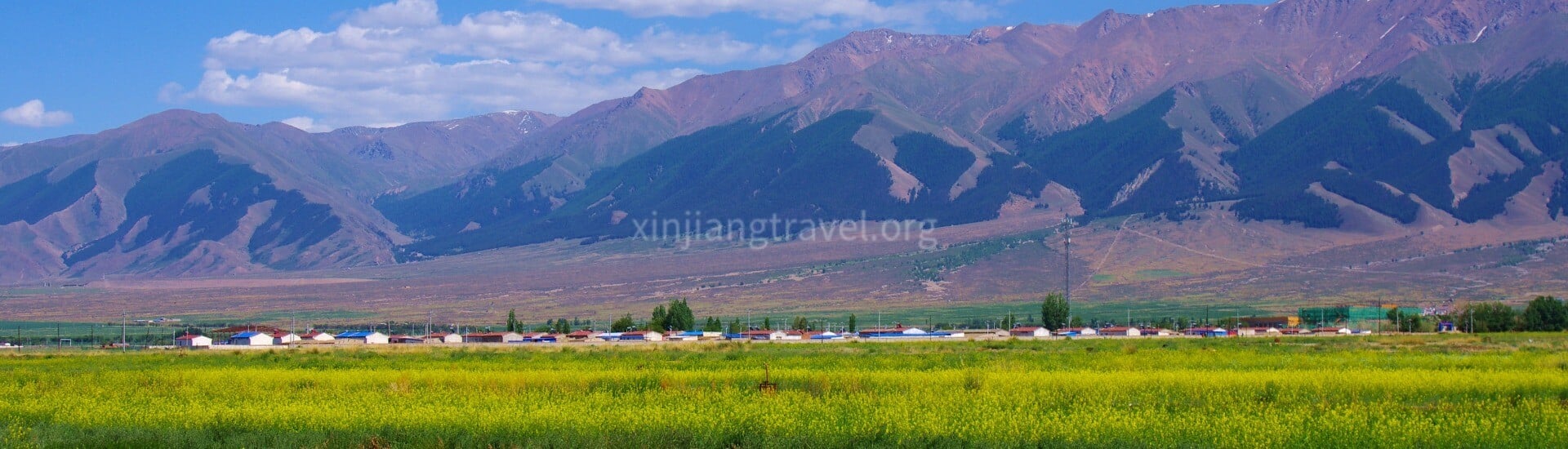
Barkol County brings together a broad salt lake, a town shaped by its former garrison role and wetland paths beneath the eastern Tianshan Mountains. The best visit gives each landscape a little room: walk beside the lake, spend an afternoon among the old town's walls and granaries, then return to a proper meal rather than another long drive.
Two days with one night in town make a useful first visit. A day trip from Hami can cover the old town and one outdoor attraction; three days allow all three main areas without making every stop brief.
Content›Where Barkol Is and How Long to Stay ›Barkol Lake and Its Open Shoreline ›Walking Through Gaojiahu Wetland ›How to Get to Barkol and Around ›Barkol Itineraries for One to Three Days |
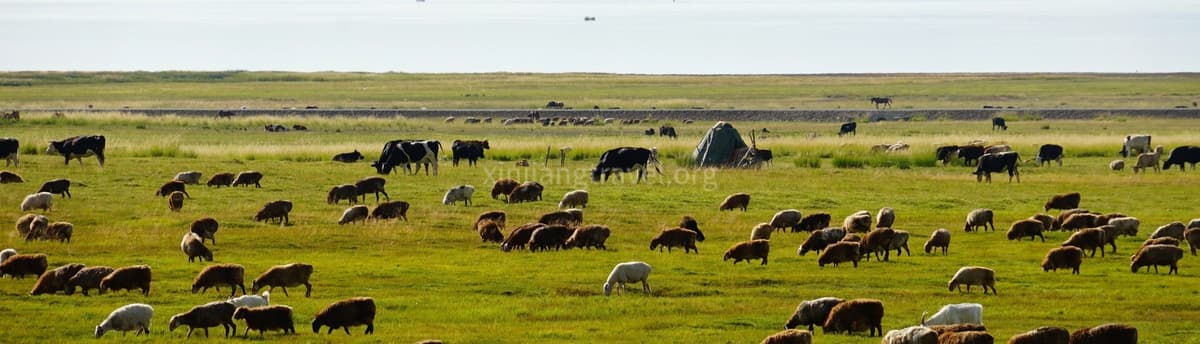
Barkol, also written as Balikun, is a county in the Hami region of eastern Xinjiang. Its Chinese name is 巴里坤哈萨克自治县. Hami city lies on the other side of the eastern Tianshan, so a visit involves a mountain crossing rather than a short drive into the city's outskirts.
The county town is the practical centre of the trip. It contains the ancient-city area, restaurants, shops and a choice of accommodation. Barkol Lake lies northwest of town, while Gaojiahu Wetland is a separate excursion in Shirenzi Township.
The surrounding grassland is the setting that connects these places. It is not one enclosed park with a single ticket office, and a map pin labelled "Barkol Grassland" may not identify somewhere useful to begin a walk.
For navigation, save these names:
Barkol Ancient City Scenic Area — 巴里坤古城景区
Barkol Lake Scenic Area — 巴里坤湖景区
Gaojiahu Wetland Scenic Area — 高家湖湿地景区
Barkol Dahe Airport — 巴里坤大河机场
If you have one day, choose the lake for broad water-and-mountain views or Gaojiahu for a longer wetland walk, then combine it with the town. Stay overnight if you want to see both outdoor areas without rushing back across the mountains.
Barkol Lake is a salt lake in Haiziyan Township, on the western side of the grassland basin. Its attraction is the scale of the scene: low shoreline, open water and mountains beyond, with much less enclosure than the channels and vegetation at Gaojiahu.
The lake has a working landscape as well as a visitor landscape. Salt-producing areas and visitor access points are not interchangeable. Give your driver the scenic-area name and agree on the public visitor entrance, rather than navigating to the nearest point beside the water.
Begin at the designated visitor area and follow the shoreline paths or boardwalk sections that are open. A relaxed visit can take around one to two hours, longer if photography is your main interest. This is a suggested sightseeing allowance, not a fixed walking circuit.
Look across the lake first, then turn back towards the shore. The contrast between grassland, water and the mountain edge can be more interesting than repeatedly photographing the same stretch of blue.
Calm weather may give reflections, while wind produces a more textured surface and makes exposed walking less comfortable. The lake's colour also changes with light and viewing angle; do not expect every visit to resemble a heavily saturated photograph.
For visitors who prefer little walking, plan a short out-and-back visit from the public access area. Ask about the actual path condition before arrival if uneven boards, steps or a long distance from parking would be difficult.
Give the lake a longer session if you want to wait for changing light and are sleeping in Barkol. For a day trip from Hami, an afternoon visit should still leave enough time for the return crossing.
Sunset is an option only when the visitor area's access and your transport support it. Arrange a collection time and meeting point before walking away from the car; do not rely on finding a taxi at the shore afterwards.
Stay off unmarked salt ground and closed shoreline areas. In winter, a frozen appearance does not establish that the ice is open for walking.
The separate Barkol Lake page introduces the lake itself; this county itinerary treats it as one stop alongside the old town and Gaojiahu, not a substitute for either.
Barkol Old Town is worth more than a meal stop between outdoor attractions. Its city walls, historic granaries and cultural buildings help explain why a substantial settlement developed in this grassland basin.
The historic layout includes the former Han and Manchu garrison towns. Surviving structures sit alongside restored or reconstructed buildings, so the visitor experience is not an untouched Qing-era town. The most useful approach is to explore a few places carefully rather than trying to identify every gate.
Use Barkol Wenbo Park, 巴里坤文博园, and the Qing Dynasty Granaries, 清代粮仓, as the focus of a daytime visit. The granaries make the town's military and agricultural history tangible: feeding a garrison required storage buildings and reliable supplies, not just defensive walls.
The thick-walled timber-and-earth buildings were designed to protect stored grain. Their exhibitions give context through agricultural tools and objects from everyday life. This is a useful stop for travellers who want to understand the town rather than photograph its gates alone.
Allow roughly one to two hours for the cultural complex and any exhibitions you choose to enter. Confirm the day's opening arrangements before building your visit around indoor displays; access to surrounding streets does not mean every exhibition is open.
Desheng Gate, 得胜门, is a useful landmark for finding the ancient-city area and meeting a driver. Walk through the public streets around the heritage sites, then pause for food rather than attempting to follow the entire historic wall.
Songfeng Academy, 松峰书院, and the town's temple buildings add another layer of history if they are open during your visit. Choose one additional interior that interests you instead of treating every building as a compulsory stop.
An easy town visit can therefore work as: Wenbo Park and the granaries, followed by the gate area, a street walk and a meal. Use local mapping between these named places; it need not be a continuous walk if someone in your group tires easily.
Seasonal performances may take place in the ancient-city area, but they are separate from an ordinary visit. If a show matters to you, confirm the actual date and venue rather than assuming an evening walk includes one.
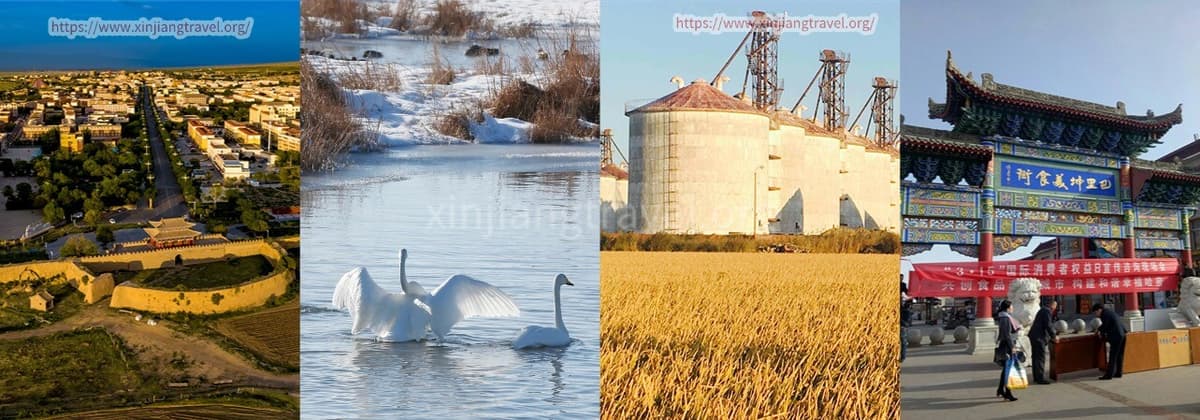
Gaojiahu Wetland offers the most varied walking landscape of the three main stops. Spring-fed water, ponds, reeds and grassland form a closer, more detailed scene than Barkol Lake's broad shoreline.
The scenic area is around 20 kilometres from the county town. Use 高家湖湿地景区 as the destination and confirm the visitor reception or parking point with your driver. A village address or a general wetland pin may take you somewhere different.
Start at the visitor area and find out which boardwalks are open. For a gentle outing, follow one accessible section and return the same way. You do not need a long hike to appreciate the channels, vegetation and mountain backdrop.
Allow two to three hours if you want a relaxed walk with time to stop. A shorter visit can work, but the journey from town makes it worth doing more than stepping out for a single photograph.
The wider wetland is much larger than the visitor paths. Stay on marked routes rather than interpreting the landscape as unrestricted walking ground. Wet surfaces and marshy edges are particularly unsuitable for shortcuts.
Gaojiahu supports water birds, and migration periods can add interest for patient observers. What you see depends on the season and the day; a visit should still appeal without a particular species appearing.
Bring binoculars or a longer lens if birds are a priority. Photograph from the paths rather than approaching feeding or resting birds, and do not use a drone to chase them into flight.
Guesthouses and places to eat exist around the Gaojiahu village area. Staying there can reduce the journey to the wetland, but the specific property matters: ask how you reach the paths, whether meals are available and what heating and bathroom facilities are provided.
For most first-time visitors, the county town remains the simpler base. Choose a wetland stay when being close to this landscape is more important than having a wider choice of restaurants.
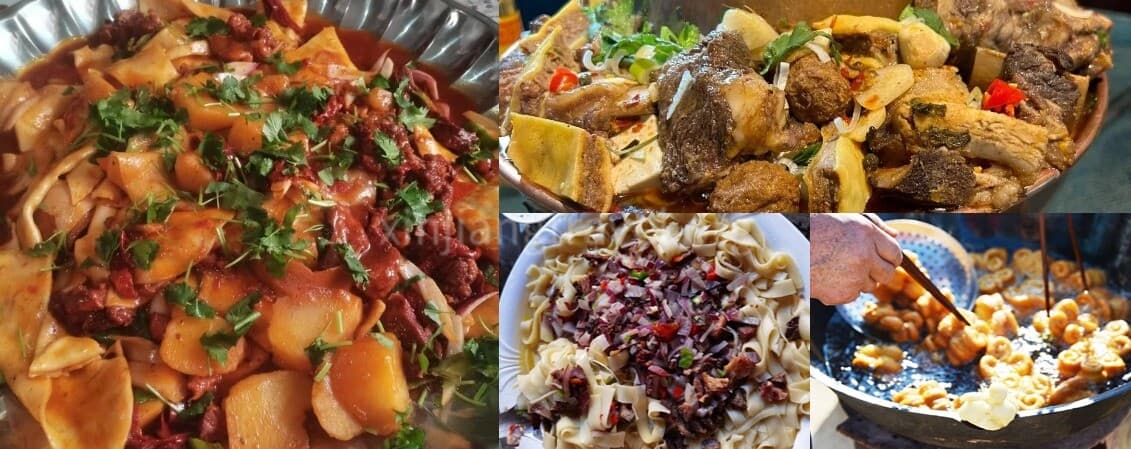
Barkol's food deserves time in the itinerary, especially after a windy lake visit or a long wetland walk. The ancient-city food-street area is a useful place to look for local dishes, although individual restaurants keep their own hours.
Yangrou menbingzi, 羊肉焖饼子, combines lamb with pieces of dough cooked with the meat and its juices. It is a substantial dish, well suited to a shared lunch or dinner after sightseeing.
Ask about the size of the serving before ordering several other dishes. For two people, one main dish and a lighter accompaniment may make more sense than choosing several large meat dishes.
Tu huoguo, 土火锅, is a local-style hotpot served with a mixture of ingredients in broth. The contents vary by restaurant, so ask what is included rather than assuming it is the same dish everywhere.
It makes a useful evening meal when you have finished driving and can sit down without watching a departure time. Tell the restaurant about dietary restrictions before ordering, including whether meat stock is a problem.
For a shorter meal, look for noodle dishes, soup with pieces of dough, or grilled lamb. These are easier to fit into a transfer day than a long shared hotpot meal.
Kazakh-style naryn, 那仁, is another dish to look for: meat served with noodles, with preparation varying between kitchens. Ask what meat is used and whether the portion is intended for sharing.
Milk tea and baked breads can accompany a lighter stop, but do not assume a roadside yurt operates as a café. Plan meals around an actual restaurant or a confirmed accommodation service.
Before an early lake or wetland outing, arrange breakfast the previous evening or buy something portable in town. A restaurant that serves dinner is not necessarily open before your departure.
Hami remains a useful gateway if you are already travelling through eastern Xinjiang by rail or air. From Hami city, the road journey to Barkol town takes approximately two hours in ordinary conditions, with the precise duration depending on the route and starting point.
That estimate does not include collecting luggage at an airport, waiting for a coach, stopping in the mountains or continuing from town to the lake. Treat those as separate parts of the day.
For a one-day excursion, a car with a driver gives the clearest arrangement. Agree on the named sightseeing stops, waiting time, meal break and final return to your Hami hotel before booking.
Do not assume the fastest route and the route with the most scenic roadside opportunities are identical. Ask the driver which road will be used, and do not build a winter itinerary around an older scenic-road recommendation.
Barkol Dahe Airport provides another way into the county. It is in Dahe Town and is separate from Hami's airport, so check the airport name carefully when comparing flights.
A suitable domestic flight may remove the need to approach through Hami. Compare the actual service on your travel date with the cost and timing of reaching your Barkol accommodation; a less frequent flight may not fit a short trip as well as a Hami arrival.
Arrange an airport pickup or confirm the airport-to-town service for your flight. Reaching the county by air still leaves local transport to Barkol Lake and Gaojiahu to organise.
Intercity coaches connect Hami and Barkol. They provide transport between towns, not a sightseeing service around the county.
For an independent visit, a practical sequence is to take the coach to Barkol, stay in town and book a local vehicle for the outdoor attractions. Confirm the station, departure and passport-ticketing procedure before travelling rather than relying on an old timetable screenshot.
A local taxi or hired car should be booked for the complete outing, including collection. Ask whether waiting time is included and agree what happens if you finish earlier or later.
Keep your passport with you for accommodation and transport formalities. The county's border location does not, by itself, establish one permit rule for every attraction; any proposed excursion towards restricted border areas needs a separate access check.
The county town is the best default base for a first trip. It gives you access to dinner, shops and the ancient-city area, while keeping the lake and wetland as planned excursions.
Choose a property with convenient vehicle access if you have heavy luggage or an early departure. A room close to the heritage area can be useful for an evening walk, but check the actual address rather than relying on "old town" in the hotel name.
Before booking, confirm that the hotel can complete registration using your foreign passport and that the room facilities suit your stay.
A guesthouse near the wetland can suit photographers and travellers who would rather spend more time on one landscape. It can also make a slower afternoon possible without immediately returning to town.
Ask about the distance from the property to the open visitor paths, dinner and breakfast arrangements, and the return transfer. For colder months, ask specifically about room heating and hot water.
Do not assume that a rural location guarantees dark skies, unrestricted dawn access or a room overlooking the wetland.
Accommodation described as lakeside or on the grassland may still require a drive to a permitted viewing area. Ask for the map location and a description of how you reach the shore or walking route.
A yurt or cabin stay should be chosen for its actual facilities and setting. Check the toilet, shower, bedding, heating and operating season rather than treating it as a standard hotel room with a different appearance.
Start and finish: Hami. Overnight: Hami.
Leave Hami in the morning and make Barkol Lake the main outdoor stop. Walk from the designated visitor access, then continue to the county town for lunch.
Spend the afternoon at the granaries and ancient-city area before returning to Hami. If exhibition hours do not fit, keep the public-street walk and meal rather than waiting so long that the return journey becomes rushed.
This plan leaves out Gaojiahu deliberately. If you prefer wetland walking to a broad lakeside view, substitute Gaojiahu for the lake; do not add it as a hurried third destination.
Start and finish: Hami, or adapt the arrival to a suitable Barkol flight. Overnight: Barkol town.
Day 1: Travel to Barkol and leave your luggage at the hotel. Have lunch, then explore Wenbo Park, the granaries and the ancient-city streets. Finish with dinner in town.
Day 2: Visit Barkol Lake in the morning, return towards town for a meal, then spend part of the afternoon at Gaojiahu before the onward journey.
This is a workable broad introduction with an arranged vehicle, but Day 2 is the busier day. If you want a long wetland walk or have an early departure, shorten the lake visit or move to the three-day plan.
An alternative in suitable weather is to visit the lake on the first afternoon and keep the town visit shorter. Use that order only if you are content to miss any indoor exhibitions that close earlier.
Overnights: two nights in Barkol town, or one town night and one confirmed Gaojiahu stay.
Day 1: Arrive and devote the afternoon to the old town. Visit the granaries while they are open, then have an unhurried local dinner.
Day 2: Spend the morning at Gaojiahu. Walk a comfortable section of boardwalk, stop for photographs and leave time for lunch. Return to town for a break; add a lake visit later only if you want evening light and the access arrangements allow it.
Day 3: Visit Barkol Lake if you have not already done so, then continue to Hami or Barkol Airport. If the departure is early, keep this morning for travel and complete the lake visit on Day 2.
The extra night gives you flexibility rather than a reason to add more distant attractions. A windy lake afternoon can be exchanged with a town visit, and a good wetland morning need not end because the group is racing towards the next stop.
June to August is the most straightforward period for travellers seeking green pasture and a fuller outdoor itinerary. Conditions still vary across the season, and flowering is not identical at every site.
Do not pack only for Hami city's summer heat. Barkol's upland setting, lake wind and cooler evenings call for a warm layer and a windproof jacket.
September can suit travellers who enjoy tawny grassland, cooler walks and seasonal bird activity. It does not reproduce the green summer landscape, and late autumn can bring much colder conditions.
Choose autumn for the landscape you expect to see then, not because an undated summer photograph looks appealing. Shorter days also make a town overnight more useful for photography.
Spring can be cold and windy before the grassland becomes green. Winter offers snow-covered scenery, but road conditions and visitor-path access matter more than completing the same circuit used in summer.
For these seasons, keep accommodation and transport flexible enough to shorten an outdoor outing. An open road does not mean every boardwalk, exhibition or rural restaurant is operating.
Wear comfortable shoes with grip for the wetland and town walks. Carry a waterproof layer, sunglasses and sun protection; in colder weather, add gloves and a warm hat for exposed lakeside stops.
At the lake, use the shoreline and mountain outline to give the scene structure. At Gaojiahu, look for the curves of water and reeds. In the old town, the granaries, walls and gate details provide a useful contrast to the open landscape.
Use public paths and viewing areas. Ask before close photographs of residents, do not enter pasture for a better angle, and do not assume drone use is permitted because somebody else has posted aerial footage.
Yes. Barkol and Balikun are different English renderings used for 巴里坤. Search with the Chinese name when you need a precise map location, then add the attraction name.
The county, county town, grassland and lake are not interchangeable destinations, even when a booking page uses "Barkol" for all of them.
It is enough for the ancient-city area and one substantial outdoor stop. It is not the best arrangement for long visits to the lake, Gaojiahu and the town together.
Choose one night if seeing all three is important. Choose two nights if you want slower walks, changing light or flexibility around weather.
Choose Barkol Lake for a wide shoreline landscape and mountain views. Choose Gaojiahu for a more varied walk among channels, reeds and grassland.
For companions who prefer a short stop, the lake may fit more easily, subject to the current parking-to-path distance. For someone who wants to spend a couple of hours walking, Gaojiahu is the stronger starting point.
Do not assume one rule covers the whole county. Public streets, indoor exhibitions, managed scenic areas, parking and optional activities can have different arrangements.
Some published descriptions mention free access, but confirm the specific place and service before relying on that in your budget. A free entrance also says nothing about vehicle access or an activity being included.
No. Historic structures survive, but the area also contains restored and reconstructed elements. Several gate buildings have been rebuilt.
Visit the granaries and exhibitions for context, and describe the town as a historic area rather than a completely untouched settlement.
Yes. Travel to Barkol by an available flight or intercity coach, stay in town and arrange local transport for the lake and wetland.
The key is organising the return from each outdoor stop. Do not depend on finding an empty taxi beside the lake or at Gaojiahu when you finish walking.
These may be available through individual operators, but neither should be assumed from the presence of yurts or grazing horses.
For accommodation, confirm facilities and the operating season. For riding, ask about supervision, the route, safety equipment and the experience required. Keep a non-riding alternative in the itinerary.
Choose according to the whole journey. Hami is useful when it connects with your rail trip or other eastern Xinjiang stops. Barkol Dahe Airport may be more convenient when the county itself is the main destination and a suitable flight operates.
Compare arrival time, onward transfer and departure options before buying the ticket. They are different airports on different sides of the regional journey.
If you only have a day from Hami, book the return transport first and choose between the lake and Gaojiahu. Keep the ancient-city visit and meal as the town portion of the day, rather than trying to cover every landmark.
For a fuller Barkol visit, one night in the county town makes the biggest difference. Two nights let you give the lake, wetland and historic streets separate parts of the trip—and leave enough time to sit down over a local dinner before deciding where to walk the next morning.


