20 years of pioneer in xinjiang tourism for overseas travelers
Born Here, Know Best, Your Journey's Blessed
No Shopping. No Detour, 99% Excellent Review

contact UsOn Wechat
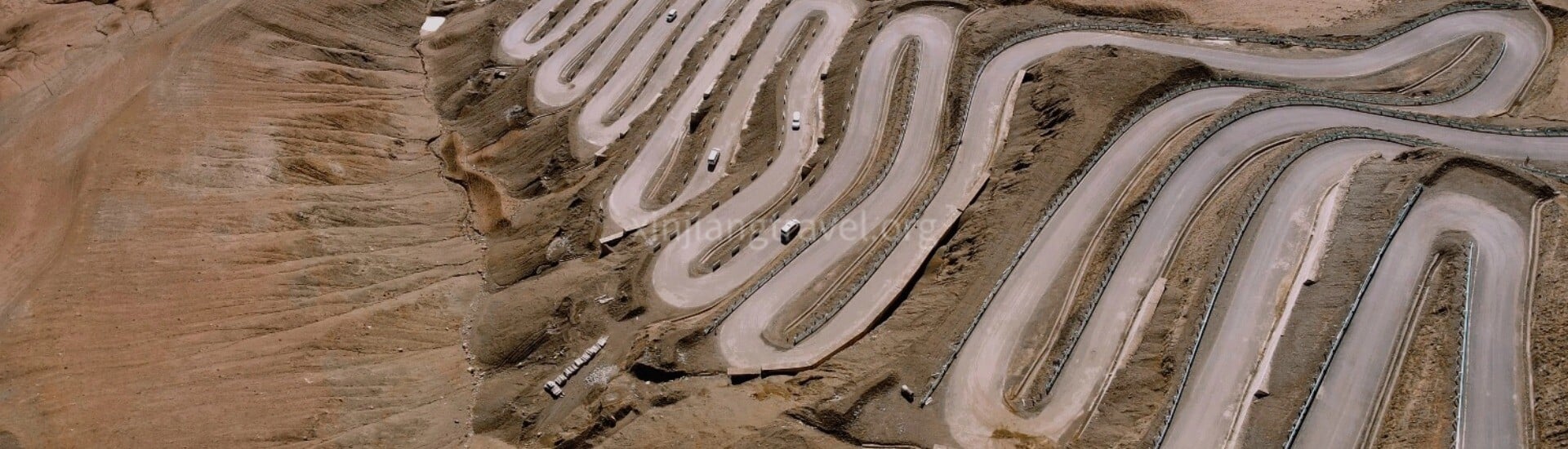
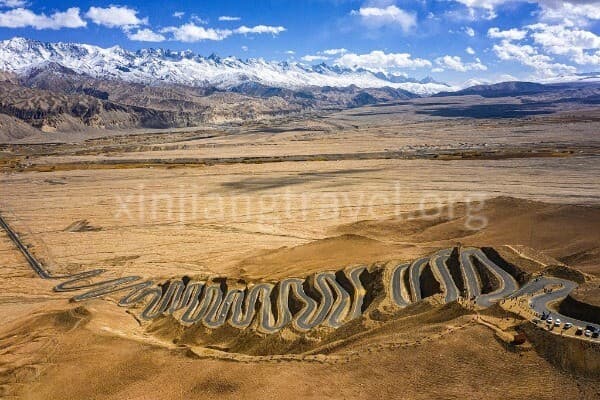
Panlong Ancient Road winds through the mountains near Tashkurgan in Xinjiang's eastern Pamirs, where stacked hairpin bends make the road itself the main attraction. Base yourself in Tashkurgan for the excursion, use a vehicle that meets the road restrictions, and leave time to stop at the viewpoints rather than simply driving through.
The decision is not just whether to visit. You also need to choose how much winding-road travel you want, whether to add Bandir Blue Lake, and how the higher viewpoints fit your adjustment to altitude. For a first visit, a local driver makes the one-way route and parking arrangements easier to manage.
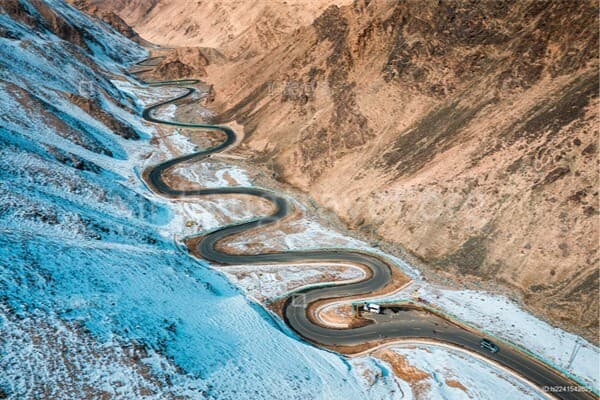
Panlong is worth visiting for the view down over successive bends, where a narrow ribbon of tarmac folds across otherwise bare mountain slopes. A viewpoint reveals the pattern far better than the view through a car window: individual corners become a continuous line running across the mountainside.
The road is also known as Waqia Road. It connects local communities with Tashkurgan and was improved in 2019; the name "Ancient Road" should not be taken to mean that today's surfaced road is an untouched historic caravan route.
The mountain section is commonly described as roughly 36 kilometres long, with more than 600 bends and a high point around 4,200 metres. These figures describe the mountain road, not your entire return journey from Tashkurgan. The approach, connecting roads and any lake extension add to the outing.
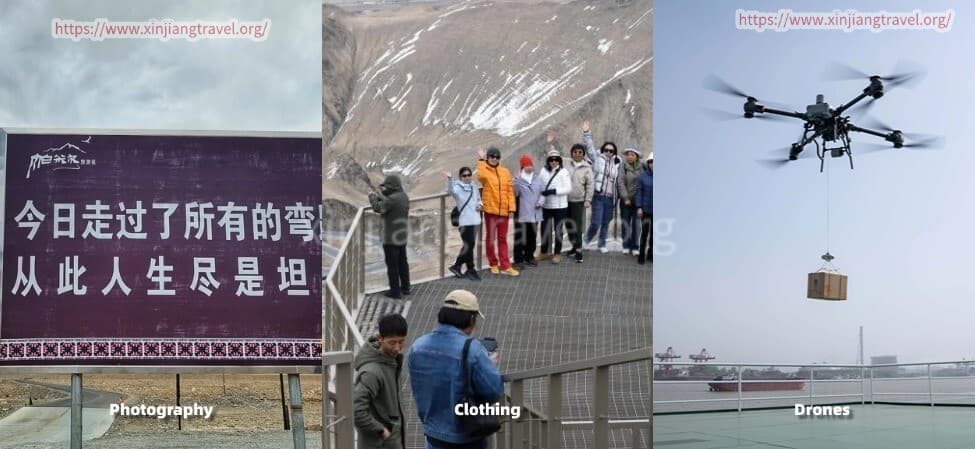
The sign reads: "今日走过了所有的弯路,从此人生尽是坦途." A natural English rendering is: "May all life's twists and turns be behind you, and the road ahead be smooth."
Its appeal comes from the double meaning of winding roads and life's difficulties. It is a modern travel slogan and a popular souvenir-photo subject, rather than an ancient inscription or a local religious tradition.
Panlong lies near Tashkurgan, also spelt Taxkorgan, in the mountains around Waqia Township. Tashkurgan town is the practical overnight base: it gives you somewhere to eat, arrange transport and leave your main luggage before the excursion.
Use separate map points for the entrance, viewpoints and exit. A search for "Panlong Ancient Road" alone may place the pin somewhere along the road rather than at the correct approach.
| Place | Chinese name | What it identifies |
Tashkurgan town | 塔什库尔干县城 | Your accommodation and departure base |
Panlong Ancient Road | 盘龙古道 | The mountain road, not necessarily its entrance |
Waqia Township | 瓦恰乡 | The township on the exit side |
Longji Mountain viewpoint area | 龙脊山步栈道 | A viewpoint and walking-access search term |
Xiaopanlong viewpoint | 小盘龙观景台 | A viewpoint associated with the tighter bends |
Bandir Blue Lake | 班迪尔蓝湖 | The reservoir landscape considered as an extension |
Bandir Blue Lake is associated with Xiabandi Reservoir. It is not White Sand Lake on the Kashgar–Tashkurgan approach, and a map pin for Bandir Township is not automatically the lake viewpoint you want.
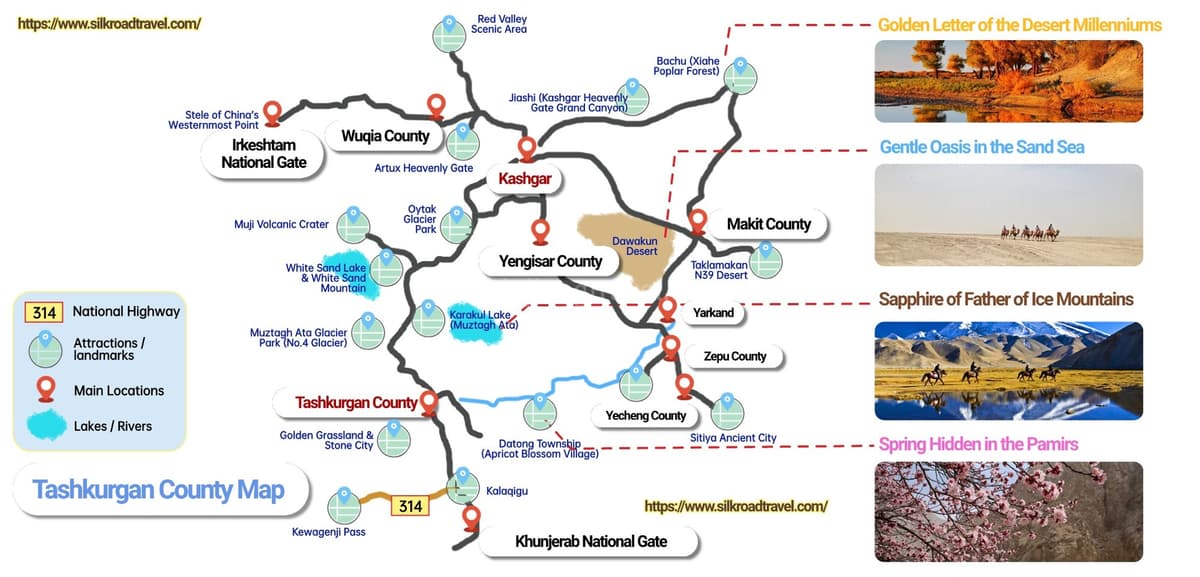
Panlong is a controlled mountain road. Arrange the correct entrance and a suitable vehicle before setting off; a driver cannot simply reverse the sightseeing route to suit the position of your hotel.
The designated direction is from the Bandir Township junction on Z710 towards the Waqia exit.
Permitted passenger vehicles have no more than seven seats and must meet the dimensional limits: less than 6,000 mm long, 2,400 mm wide and 2,300 mm high, with a wheelbase below 3,200 mm. A seven-seat label alone does not establish eligibility.
If travelling in a larger tour vehicle, ask whether a compliant smaller vehicle is arranged and whether that transfer costs extra.
The published traffic windows are:
| Season | Traffic window | Panlong ancient road scenery |
Summer | 09:00–20:00 | 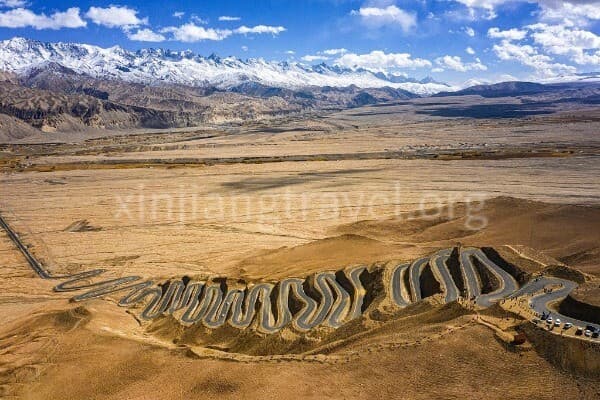 |
Winter | 10:00–19:00 | 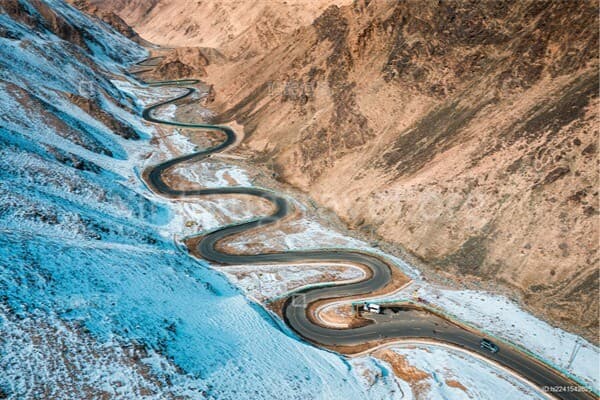 |
These are road-access windows, not recommended arrival times. Plan to complete the drive comfortably within them. Ask your driver which seasonal window applies to your date; snow, ice, rockfall or traffic management can override normal access.
China entry permission and access to a border-area excursion are separate matters. Before paying for transport, give your organiser your nationality, travel date and intended route, including Panlong and any Bandir Lake extension. Ask them to confirm the required local documents with the responsible public-security or border-management office.
Carry your original passport and any documents issued for the journey. Do not assume that a procedure written for Chinese identity-card holders applies to you, or that permission for one part of Tashkurgan automatically covers every side road.
Budget first for transport rather than treating Panlong as a conventional attraction with a single ticket package. A quoted excursion price may cover the vehicle and driver while leaving parking, meals, extra stops or a lake extension outside the price.
Before booking, ask for a breakdown of:
Vehicle and driver charges, including the return to Tashkurgan.
Any parking or managed-viewpoint charges.
A smaller-vehicle transfer, if needed.
Additional mileage or waiting time for Bandir Blue Lake.
Optional photography services.
Do not buy a generic "Panlong ticket" without knowing what it includes. For a separate charge at a parking area or viewpoint, ask to see the posted tariff. Keep enough cash for small purchases, but agree the main transport price before departure.
Visit Panlong from Tashkurgan after arriving in the county and allowing time to adjust to the altitude. Adding it to the end of the drive from Kashgar creates a much longer day and leaves less flexibility for weather, checkpoints and how you feel.
A car with a local driver is the simplest arrangement for visitors who want several photo stops. Agree the route, planned viewpoints, meal arrangements and return destination in advance. "Panlong excursion" and "Panlong plus Bandir Lake" should not be treated as interchangeable bookings.
The driver should establish the permitted approach to the Z710 entrance, follow the one-way mountain section and continue out towards Waqia. Agree the onward connection before leaving town rather than asking for an improvised detour at the exit.
Self-driving requires a suitable vehicle and valid authorisation to drive in mainland China. A foreign driving licence or international driving permit alone is not sufficient. Check the rental agreement as well as the vehicle's dimensions, and do not choose this road as your first experience of mountain driving.
For a shared excursion, ask how many passengers will travel, which vehicle is used and whether stops are fixed. A taxi ride to an entrance is not a complete sightseeing arrangement unless the onward drive and return are also agreed.
Keep at least half a day available for Panlong alone, and leave the rest of the day flexible if photography is a priority. Treat this as an itinerary allowance, not a measured driving time: the town approach, checks, parking and walking to platforms all sit outside the time spent negotiating the bends.
For Panlong and Bandir Blue Lake, reserve a full day from Tashkurgan. Avoid attaching a fixed onward departure to the end of the excursion.
Prioritise a few open viewpoints rather than stopping at every name on a map. The broader bends and tighter switchbacks give different pictures, and an extended stop at one platform is often more rewarding than repeatedly getting in and out of the car.
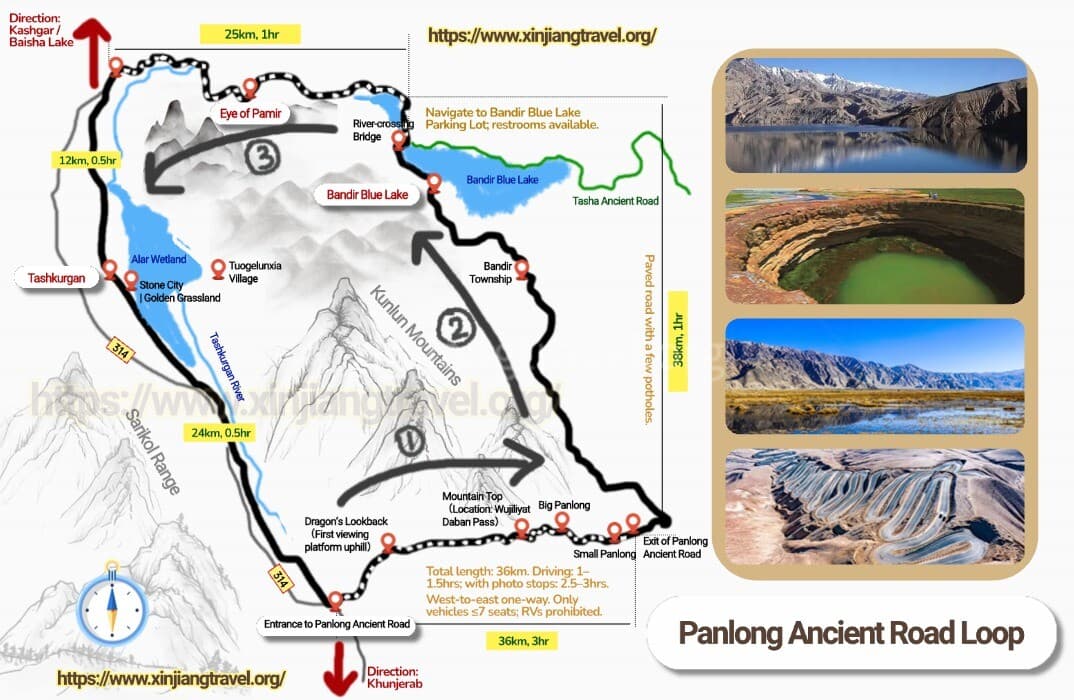
The Dapanlong section offers a broader view of the road crossing the slopes. The Longji Mountain viewpoint area, searchable as 龙脊山步栈道, is a useful place to discuss with your driver when choosing a stop for this landscape.
Allow time beyond the parking stop itself if the open viewing area requires a walk. Move slowly on uphill sections and do not follow informal tracks towards an exposed edge for a clearer angle.
Xiaopanlong is associated with the closely stacked hairpin bends that appear in many photographs of the road. This is the stop to prioritise if your main interest is the shape of the switchbacks rather than collecting pictures at every platform.
Look for the pattern from the authorised viewing area. You do not need to stand in the road—or fly a drone—to appreciate how the bends fit together.
Other named viewing areas appear along the route, but the useful stops depend on which access paths and parking areas are open. Ask your driver to select a supplementary stop for a different angle rather than promising a fixed number of platforms.
The slogan sign is a separate photo opportunity. Stop only where there is a designated place to leave the vehicle and a safe pedestrian area.
Use marked parking bays or areas directed by traffic staff. A viewpoint's map pin does not mean the adjacent roadside is a legal parking space.
If a parking area is full, follow the staff's instructions or continue. Do not wait on a bend, stop in a traffic lane or reverse along the one-way road to recover a missed photo stop.
Panlong photographs work best when the road remains visible against the mountain slope. Start with a wide landscape view, then use a modest zoom to isolate a group of bends. A person standing safely within the viewing area can give the scene scale without becoming the whole picture.
Bright sunlight can create strong shadows across the switchbacks. Rather than building the day around an exact sunrise or sunset shot, choose a departure that fits the access window and leaves time at the platforms. Keep a phone or camera strap secure in the wind.
Wear trousers and shoes with a firm grip for the viewing areas. Carry a windproof outer layer over a fleece or other warm layer; add a down jacket, gloves and a warm hat for colder conditions. Sunshine in Tashkurgan does not tell you how exposed the higher stops will feel.
For portraits, a solid red, mustard or blue layer can stand out against the muted slopes. Keep a warm coat close if removing it briefly for a photograph, and avoid trailing scarves, long hems or loose hats near steps and barriers. Sunglasses and sun protection are useful even when the air feels cold.
Do not assume that drone footage online means visitors are free to launch at the same spot. Before bringing a drone specifically for Panlong, ask your organiser to establish the requirements with the local authorities for your launch location, aircraft and operator nationality, including any registration or flight approval.
A drone app allowing take-off is not permission to fly. Nor does a local photography service establish that a visiting operator may do the same. Plan on taking photographs from the platforms unless the required authorisation is clear.
Eat breakfast and buy your main supplies in Tashkurgan before setting out. The mountain drive is easier to plan when lunch does not depend on finding a particular roadside stall open.
Naan, fruit and other ready-to-eat food make a practical packed lunch. For a hot meal, ask your driver to identify an operating place on the agreed route before departure, or plan to eat back in town. Lagman, pilaf and grilled meat are options to look for in Tashkurgan; do not assume every village stop serves the same dishes.
A Panlong-and-lake day needs a firmer lunch plan than a short excursion. If you have allergies or dietary restrictions, explain them when arranging food and carry something you can eat without relying on a roadside menu.
Bring drinking water and a flask if you want a hot drink at the viewpoints. Use a toilet before leaving town, and ask about the next available stop at the entrance. Carry tissues, hand sanitiser and a bag for rubbish rather than expecting full facilities at every platform.
Panlong reaches around 4,200 metres, so fit it into a gradual ascent rather than making it your first high-altitude outing. Time in Tashkurgan can help, but one night does not guarantee acclimatisation. Keep your arrival day easy and avoid adding a strenuous walk at the highest viewpoint.
A new headache with nausea, dizziness or unusual fatigue can indicate altitude illness. Stop ascending if symptoms develop. If they worsen or fail to improve with rest, descend and seek medical advice; confusion, difficulty walking or breathlessness at rest require urgent descent and medical help. Portable oxygen does not replace these steps.
The repeated bends can also cause motion sickness. Keep your eyes off a phone while the vehicle is moving, and tell the driver early if you feel unwell so they can stop somewhere permitted. Do not dismiss a headache and nausea as car sickness simply because the road is winding. Discuss preventive medication with a clinician or pharmacist before the trip if needed.
Choose clear weather and an open road over a particular calendar date. The warmer part of the year usually offers a simpler starting point for a first visit, but high viewpoints can still be cold and exposed. Low cloud can hide the bends even when traffic is allowed through.
Winter snow changes the appearance of the road but also makes the excursion less dependable. Do not build a short Tashkurgan stay around Panlong alone, and do not interpret published winter traffic hours as a promise that the road opens every day.
If the mountain road closes, use the time for Stone City and the accessible Golden Grassland paths near Tashkurgan, provided those visitor areas are open. If the problem is poor visibility or how you feel at altitude, a shorter town visit or rest is more useful than immediately substituting another high mountain drive.
Panlong and Bandir Blue Lake can form a full-day excursion from Tashkurgan when the connecting roads and visitor access permit it. Plan around Panlong's one-way direction first, then agree the onward route from the Waqia side to a permitted reservoir viewpoint and back to town.
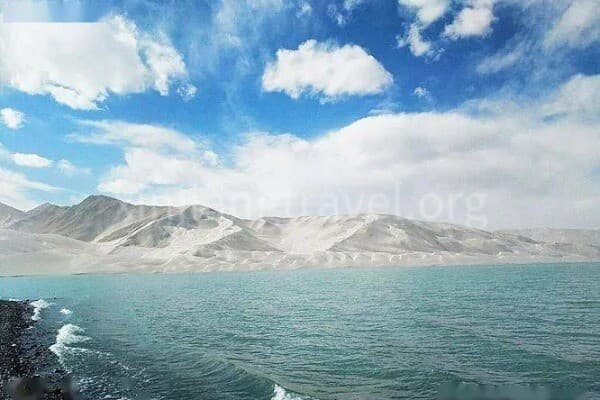
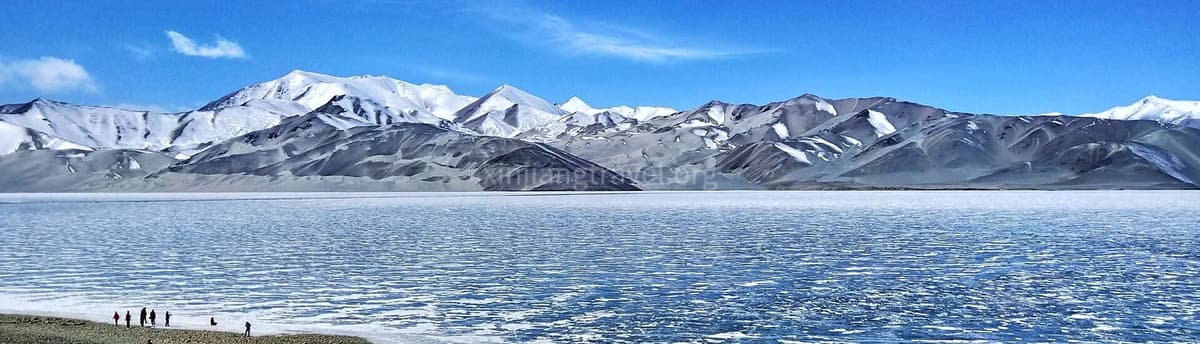
The lake gives the day a different emphasis: open water and mountain reflections after the concentrated bends of Panlong. Clear weather is more rewarding if water colour is your main reason for going. In dull weather, or if passengers are tired of winding roads, leave out the lake rather than rushing both stops.
Do not include unscheduled lakeshore tracks, camping areas or remote shortcuts simply because they appear close on a map.
A more forgiving arrangement is:
Day 1: Travel from Kashgar to Tashkurgan with selected stops on G314. Keep the evening easy.
Day 2: Spend time around Tashkurgan and assess how you feel before committing to a higher excursion.
Day 3: Drive Panlong, adding Bandir Blue Lake only if conditions and energy allow. Stay in Tashkurgan.
Day 4: Return towards Kashgar, leaving time for the road journey and checks.
This is a suggested allocation, not a guarantee of acclimatisation. With fewer days, choose between Panlong and other mountain side trips rather than combining Panlong, a glacier visit and the long return to Kashgar.
The Kashgar–Tashkurgan Pamir road guide explains how the main-road stops fit around your time in the county.
It can involve relatively little walking, but that does not remove the effects of altitude or repeated bends. Choose a comfortable vehicle, flexible stops and a shorter outing if needed; travellers with relevant health conditions should discuss the altitude with their clinician.
Do not plan it as a routine sightseeing day trip from Kashgar. The approach, mountain excursion and return create a long day with little room for delays or altitude adjustment. Stay in Tashkurgan.
Four-wheel drive is not a substitute for meeting the road's vehicle restrictions. Choose a compliant vehicle suited to the actual conditions; extra traction does not make a closed road accessible.
Do not assume that every part of the excursion is free. Confirm any road, viewpoint or parking charges separately from the vehicle hire, and ask what a quoted "ticket" or package actually includes.
You can focus on viewpoints with shorter access, but the distance between parking and the viewing position varies. Ask the driver which open stops involve the fewest steps rather than assuming all platforms are beside the car.
Tashkurgan town is the most practical base for a first visit, particularly if you want straightforward meal arrangements and a return to the same hotel. A more remote overnight stay should fit the next day's route rather than add an unnecessary transfer.
No. Visibility and the position of shadows matter more than a fixed clock time. Leave enough time at the viewpoints, but keep the drive within the permitted traffic window.
Agree the cancellation or alternative-route terms when booking. Ask whether the outing can move to another day and what happens to the vehicle charge if the road is closed.
Explore southern Xinjiang itineraries as a starting point for your trip. If Panlong is a priority, discuss a suitable vehicle, time in Tashkurgan and a possible Bandir Lake extension before choosing the final route.
|
|