20 years of pioneer in xinjiang tourism for overseas travelers
Born Here, Know Best, Your Journey's Blessed
No Shopping. No Detour, 99% Excellent Review

contact UsOn Wechat
Located in the northwest of Xinjiang, Tacheng Prefecture shares a border with Kazakhstan. Supported by the Bakhtu Port, its cross-border trade, agriculture and animal husbandry, and new energy industries have been developing steadily, making it a dynamic border city. It is home to multiple ethnic groups including Han, Kazakh, Uyghur and Hui, boasting a rich accordion culture and distinctive folk customs. Historical sites such as the Red Mansion Museum bear witness to its history of diverse cultural integration.
In terms of tourism, it boasts magnificent natural scenery including the Baerluke Mountains, Tarbagatai Mountains, the Weiren Mountain and wild fruit forests. Its local cuisine is truly unique: lamb leg bread, Maloshi ice cream, air-dried meat and boersak blend Chinese and Western flavors with an unforgettable taste. Tacheng is a pleasant and charming border treasure ideal for living and traveling. Here is a comprehensive travel guide for your immersive exploration in Tacheng.
Tacheng Prefecture is a semi-arid climate zone with four distinct seasons.
Spring (Mar–May): Mild but unstable with rapid temperature rise: -2–19°C (28–66°F).
Summer (Jun–Aug): Hot and arid with intense sunshine and low humidity: 16–30°C (61–86°F), often exceeding 35°C (95°F).
Autumn (Sep–Nov): Cool and crisp: 3–18°C (37–64°F). Temperatures drop swiftly over a short period.
Winter (Dec–Feb): Frigid and lengthy: -17–-5°C (1–23°F), with average low around -12°C (10°F) and minimum below -35°C (-31°F).
Overall, June to September is the best time to visit Tacheng Prefecture. The weather is mild and pleasant, with comfortable temperatures for travel. Grasslands, wild fruit forests and mountain scenery are at their most beautiful, while various ethnic festivals and cultural events are held one after another, letting you fully experience local folk customs, border charm and diverse cultures. It is also an ideal season for photographers, with well-preserved Russian-style old blocks and buildings offering perfecy photo backdrops.
A Rare Frontier Experience: Tacheng Prefecture shares a 540.6-kilometer border with Kazakhstan. You can wander the border trade zone at the Bakhtu Port and enjoy views of Kazakhstan from the Tarbagatai Mountains. Yumin County and Hoboksar Mongol Autonomous County also have border villages and integrated cross-border cultures, highlighting the prefecture’s unique borderland charm.
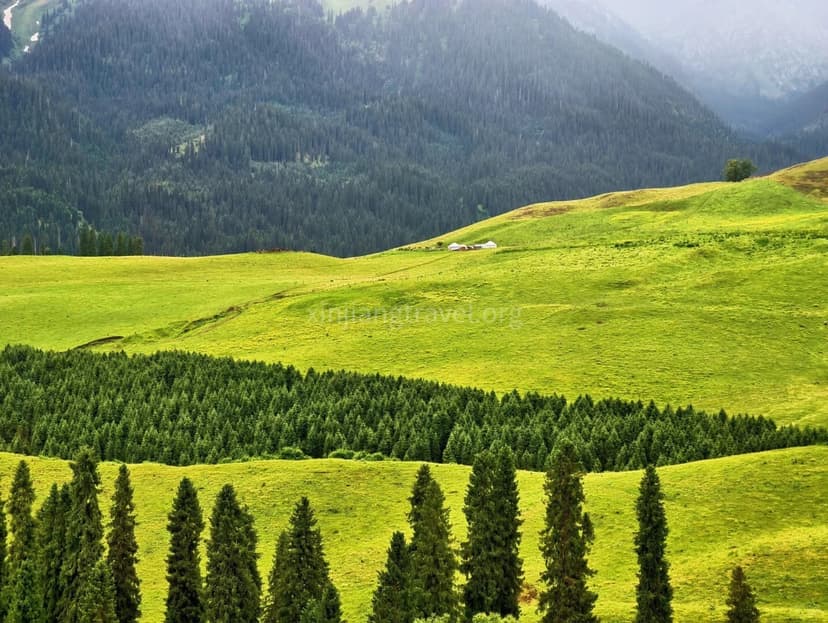
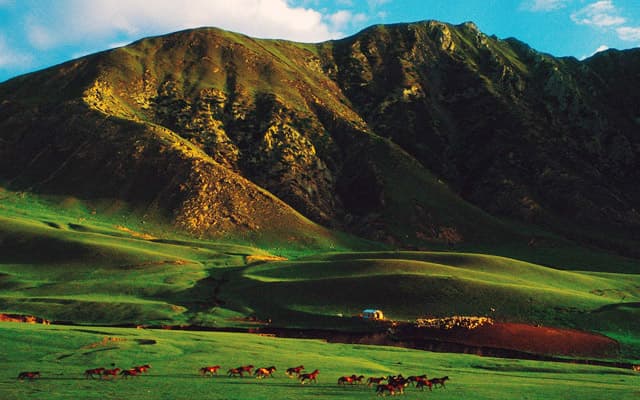
Breathtaking Natural Scenery: The Prefecture also has diverse natural scenery, with each county and city featuring unique landscape. Yumin County boasts the Barluk Mountains, Shawan City the Anjihai Grand Canyon, Tuoli County mountains and pastures, and Hoboksar Mongol Autonomous County grasslands and wetlands. Emin County’s fertile land and streams complement Wusu City’s proximity to the Gurbantunggut Desert. Beautiful scenery awaits wherever you travel in the region.
Multi-ethnic Flavors: Each county and city in Tacheng Prefecture has its own signature snacks. Tacheng City offers lamb leg bread, Maloshi ice cream and Boersak. Shawan City is known for big-plate chicken, Wusu City for beer, and Hoboksar Mongol Autonomous County for authentic Mongolian milk tea and dried meat. Yumin County has wild fruit preserves, while Tuoli County offers camel milk products. Every bite reflects the multi-ethnic food culture of Tacheng Prefecture.
Diverse Folk Culture: Tacheng Prefecture is a multi-ethnic region with rich folk culture spread across its counties and cities. Tacheng City, the "City of Accordions", hums with accordion melodies on the streets and the Red Mansion Museum witnesses multicultural history. In Axi’er Township, you can experience Daur customs and festivals; Xibe people hold their annual Westward Migration Festival. In Hoboksar, you can join Mongolian activities; in Yumin and Tuoli, you can experience Kazakh nomadic customs.
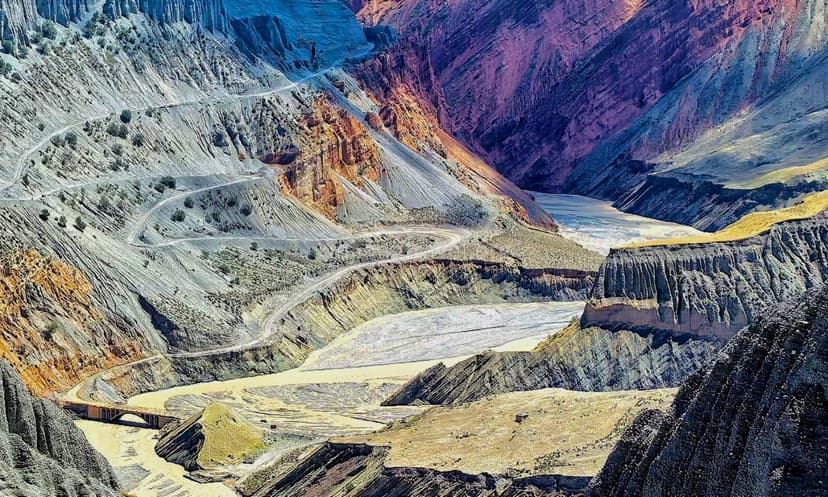
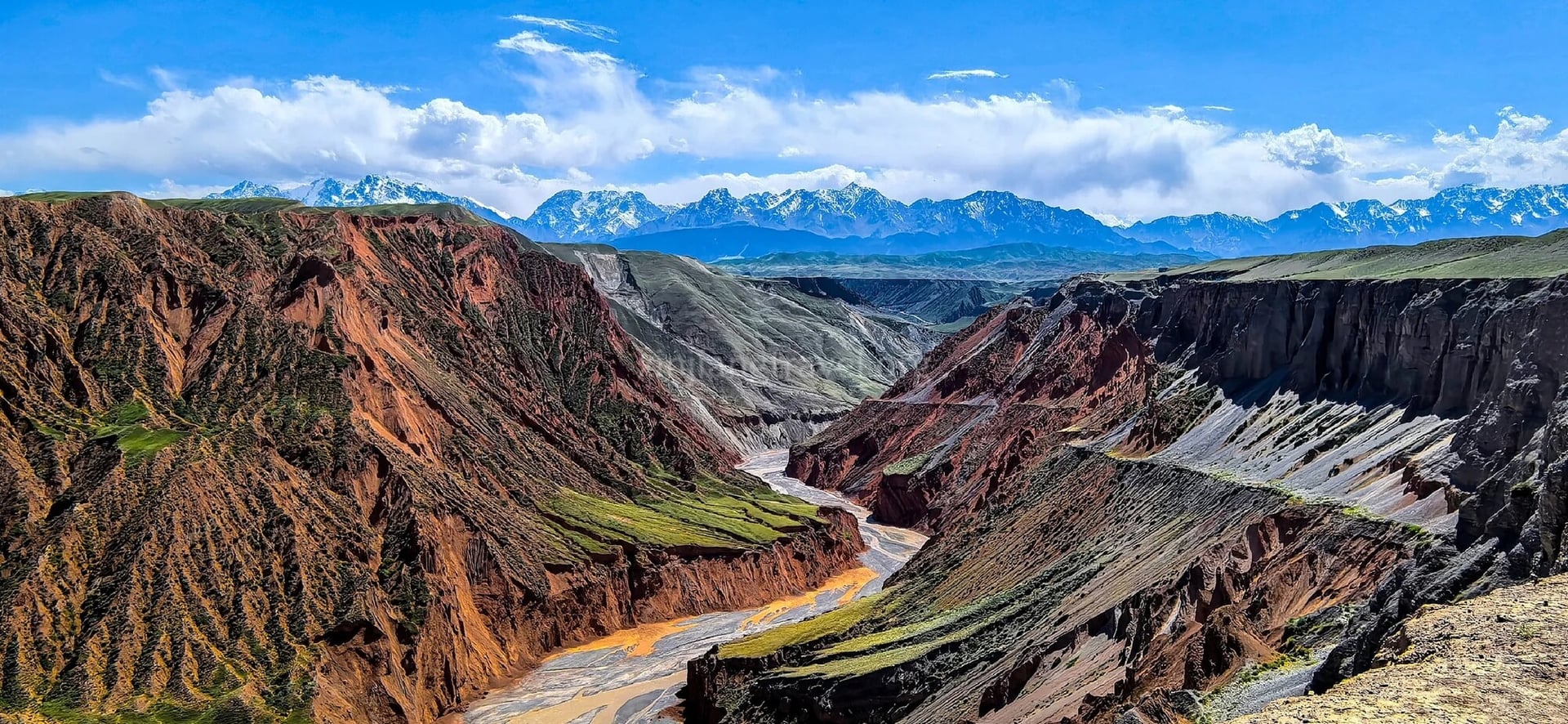
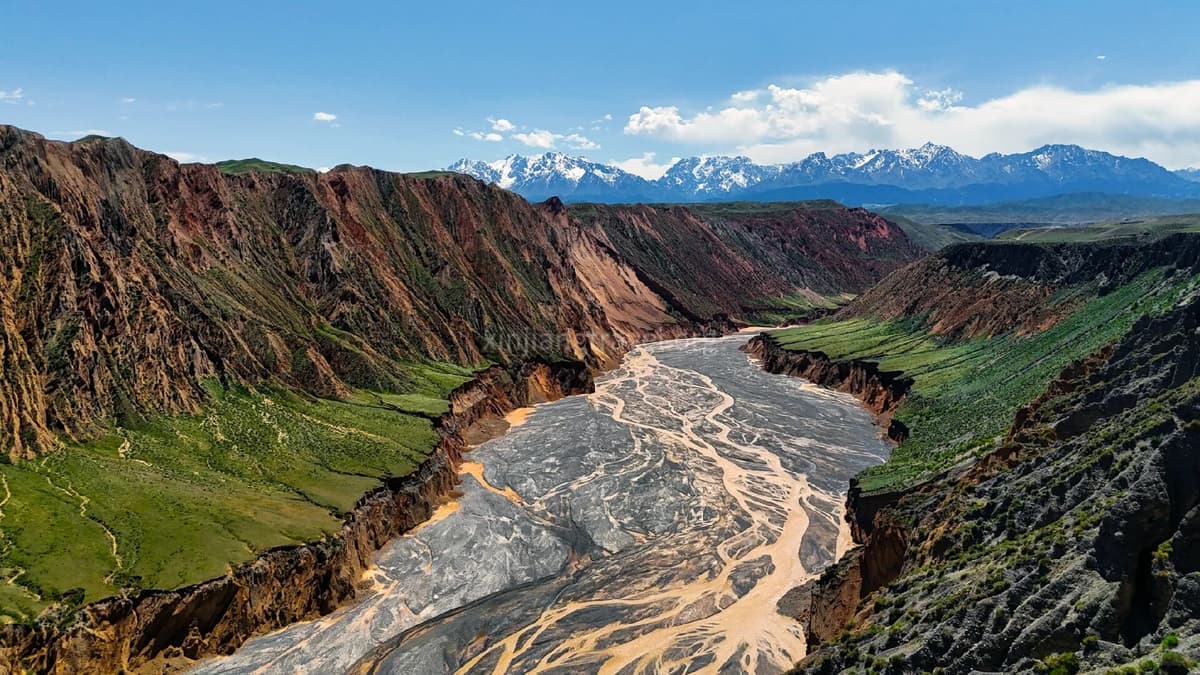
Anjihai Grand Canyon is well worth a visit in Shawan County. It’s in the geological fault zone on the northern slope of the Tianshan Mountains, roughly 100 kilometers from Urumqi. It’s like an impressionist oil painting come to life. The gullies formed by geological faults are a rich, deep red, so vivid that the green grasslands on the plains nearby seem pale in comparison. From a high vantage point, the mouth of the gully looks like an open turquoise fan, with a river rushing through it. In shallow sections, the water mixes with mud and takes on a yellow hue similar to the Yellow River. At other times, it blends with the surrounding mountains, creating a scene reminiscent of Mont Sainte-Victoire, the famous work by the Impressionist master Cézanne.
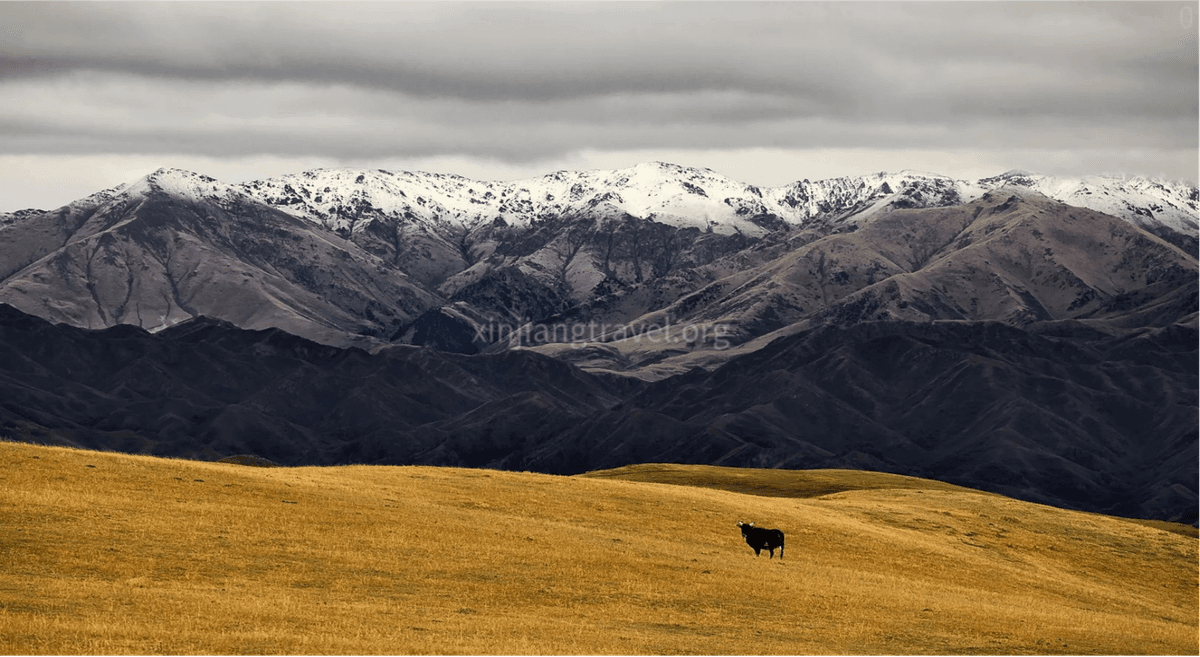
Balruk Mountain Scenic Area
Located in Yumin County, it is on the western side of the mountain stands the famous Xiaobaiyang Border Post. Further west, Kazakhstan’s Lake Arakhul is clearly visible within sight. The most common way to explore Balruk Mountain is on foot. Every year from late April to early May, the world’s largest wild almond reserve blooms with wild peonies and the precious medicinal herb safflower. Hiking through this landscape under clear skies and white clouds, surrounded by colorful flowers, then enjoying Tatar or Daur cuisine in a yurt beneath a starry sky will be quite an unforgettable experience.
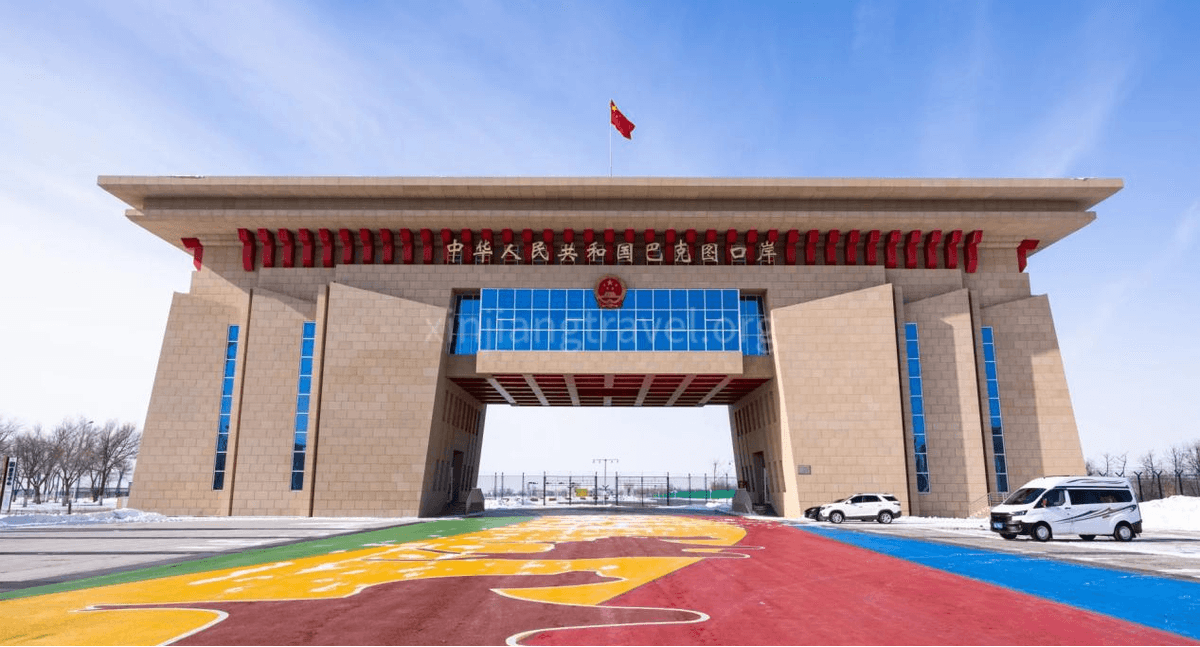
Baktu Port
Baktu Port is a first-class national port located about 12 kilometers southwest of Tacheng City. With a history of more than 260 years, it is one of the oldest trading ports on the ancient Silk Road in northern Xinjiang. Facing Kazakhstan directly, it is known as the "Gate to Dzungaria" and an important corridor for trade and exchanges between China and Central Asia. Visitors can admire the grand national gate, take photos with Boundary Marker No. 158, and experience the unique atmosphere of the national border, where two countries lie just a short distance apart.
Tacheng Prefecture is accessible by flights, long distance trains and highways. There are direct flights to Tacheng from several major cities: Beijing(6h), Shanghai(6-8h), Guangzhou(7-9h), Chengdu(4h), Xi’an(3h). Road travel is flexible and convenient for touring different areas of the prefecture.
If you plan to visit other counties in the prefecture, you can fly to Urumqi first and then transfer by car or by train. Below are common routes from Urumqi to each county for your reference.
From Urumqi:
-To Tacheng City: By car ~6.5 hours; By train ~7–10 hours
- To Emin County: By car ~6 hours; By train ~7 hours
- To Shawan City: By car ~2 hours; By train ~2 hours
- To Toli County: By car ~5 hours
- To Yumin County: By car ~7.5 hours
- To Wusu City: By car ~3 hours
- To Hoboksar Mongolian Autonomous County: By car ~5 hours