20 years of pioneer in xinjiang tourism for overseas travelers
Born Here, Know Best, Your Journey's Blessed
No Shopping. No Detour, 99% Excellent Review

contact UsOn Wechat
July in Xinjiang is the hottest month, but it is also the greenest. As the northern grasslands reach their peak—lush and vibrant after the summer rains—the southern oases burst into life with some of the sweetest fruit you will ever taste.
But this is a vast land, covering one-sixth of China's total area, and its climate is anything but uniform. The north enjoys pleasant, spring-like conditions, while the south endures intense summer heat. Temperatures can swing by more than 15°C between day and night, and the sun is relentless.
 Xinjiang Weather in July– Quick Overview
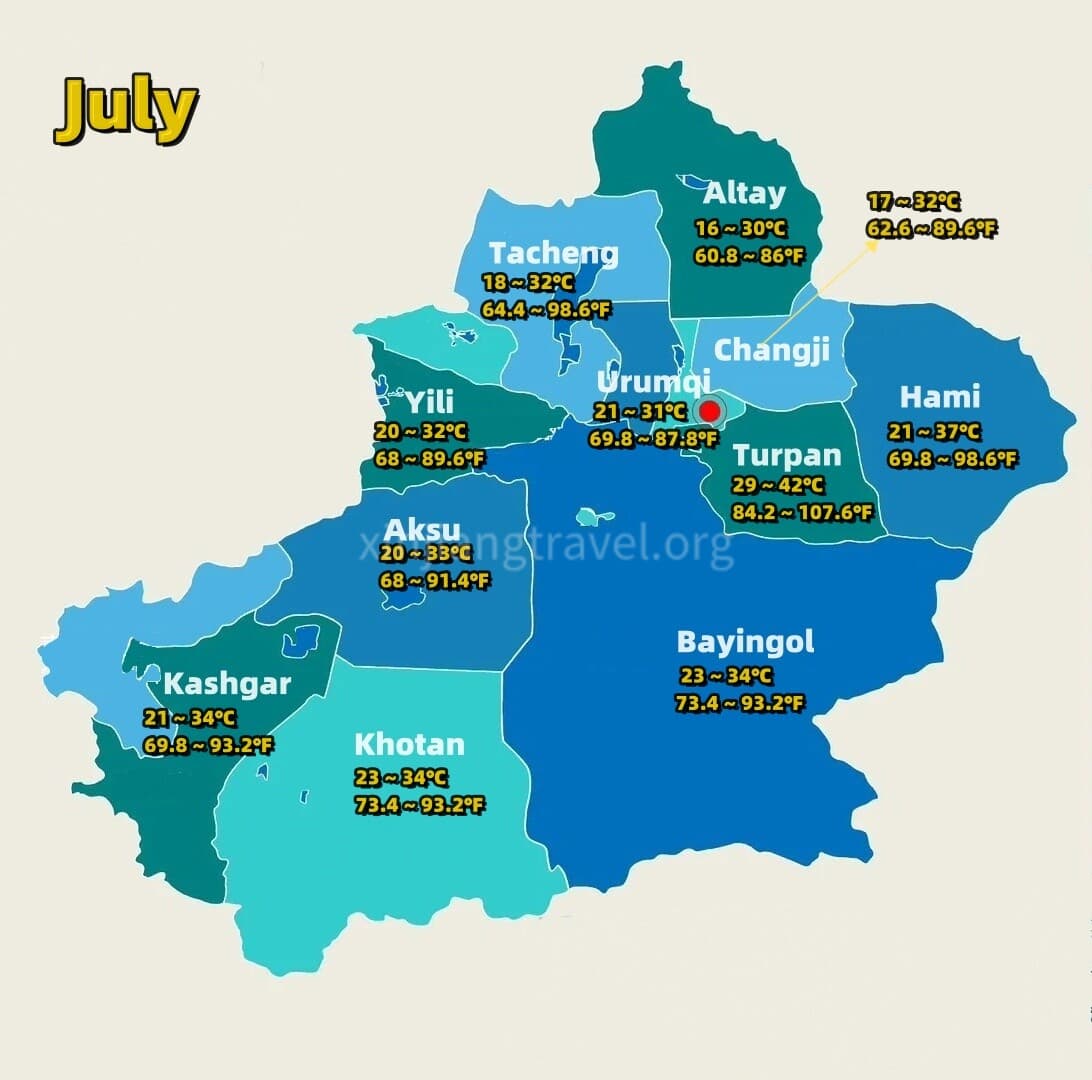
Weather Condition in Xinjiang
 Where to Go in Xinjiang in July
Northern Xinjiang: Cool Grasslands and Alpine Lakes
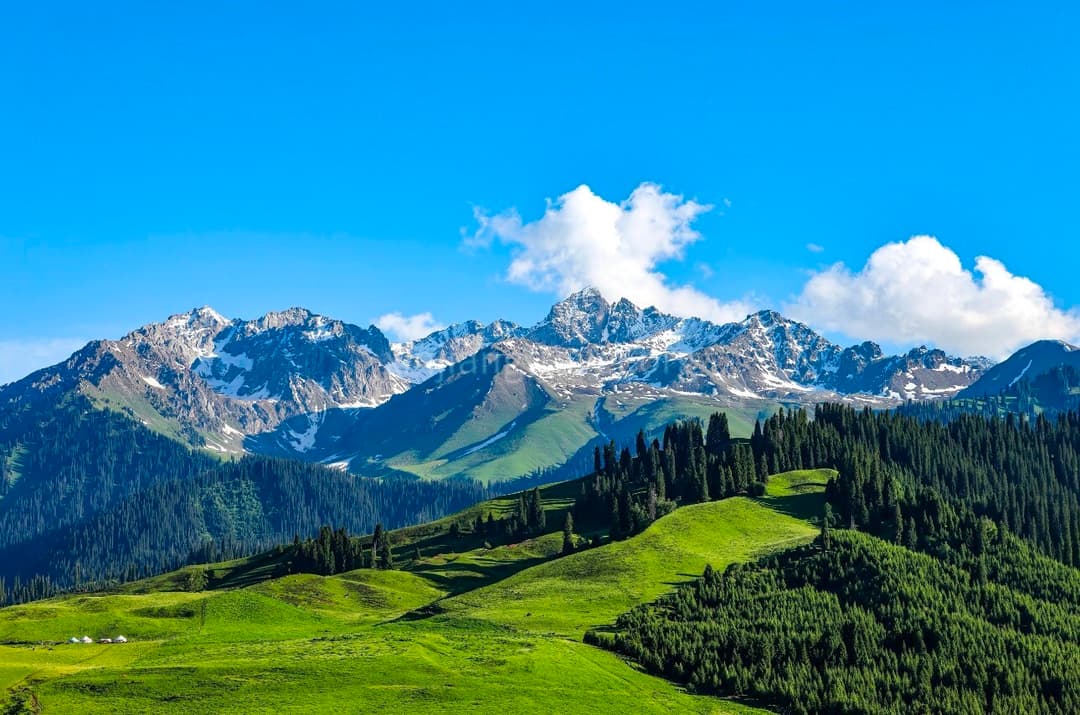
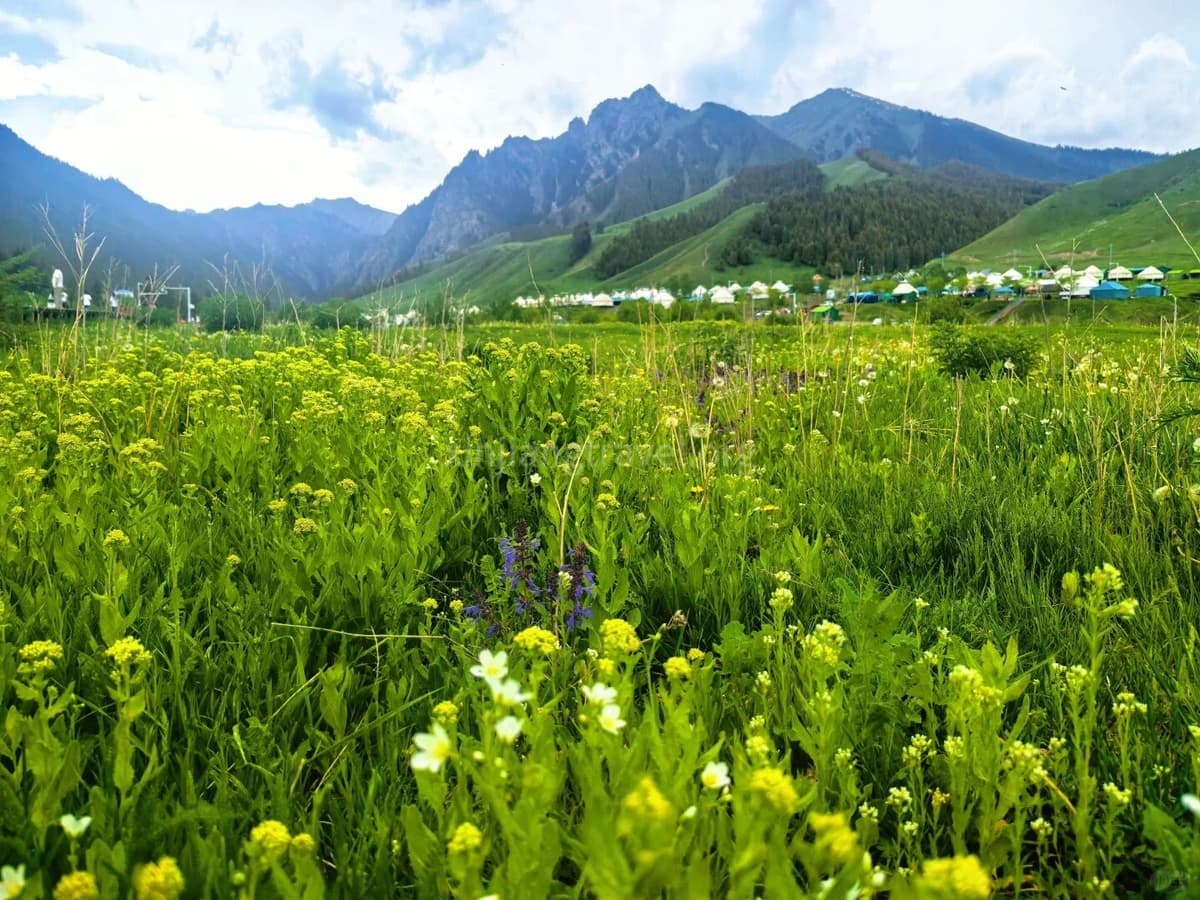
Northern Xinjiang in July is a pastoral dream—lush green pastures, wildflowers in bloom, snow-capped mountains in the distance, and temperatures that make you want to stay outside all day.
Sayram Lake
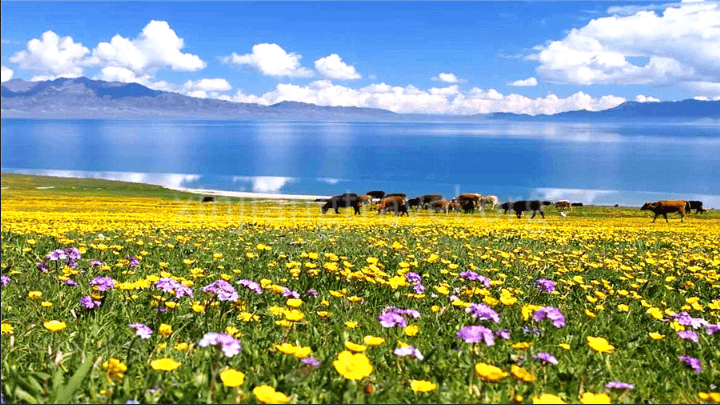
In July, Sayram Lake is a canvas of deep blue water and vivid green meadows. The lake takes on a rich sapphire hue, surrounded by grasslands at their peak—lush and dotted with wildflowers. With daytime temperatures between 15–25°C, it is ideal for cycling the lakeshore. Rent a bike or an electric scooter and take the scenic road that winds along the water, each bend revealing a new view. The Dianjiangtai platform offers a panoramic perspective, especially beautiful in the soft light of early morning or late afternoon. For a quieter experience, stay overnight in a yurt near the shore—on clear nights, the Milky Way stretches overhead. Even in July, the weather can shift quickly; a windproof jacket is a wise addition to your pack.
Xiata (Ili)
Xiata is where you can get closest to a glacier in Xinjiang during July. Starting from the hot spring area, a wooden boardwalk leads you toward the Muzart Glacier, which remains in view for much of the walk. July brings comfortable temperatures, wildflower-dotted meadows, clear streams, and the towering snow-capped peaks in the distance. The trail is manageable for most visitors, taking about 4–6 hours round trip. It is a peaceful hike—no crowds, just the sound of wind and water. Pack a picnic and find a spot to sit facing the glacier.
For a deeper experience, stay overnight at the on-site hot spring hotel; the early morning light on the glacier, tinged with pale blue, is worth the early start. Even in July, mornings and evenings are cold—bring warm layers.
Karajun Grassland (Ili)
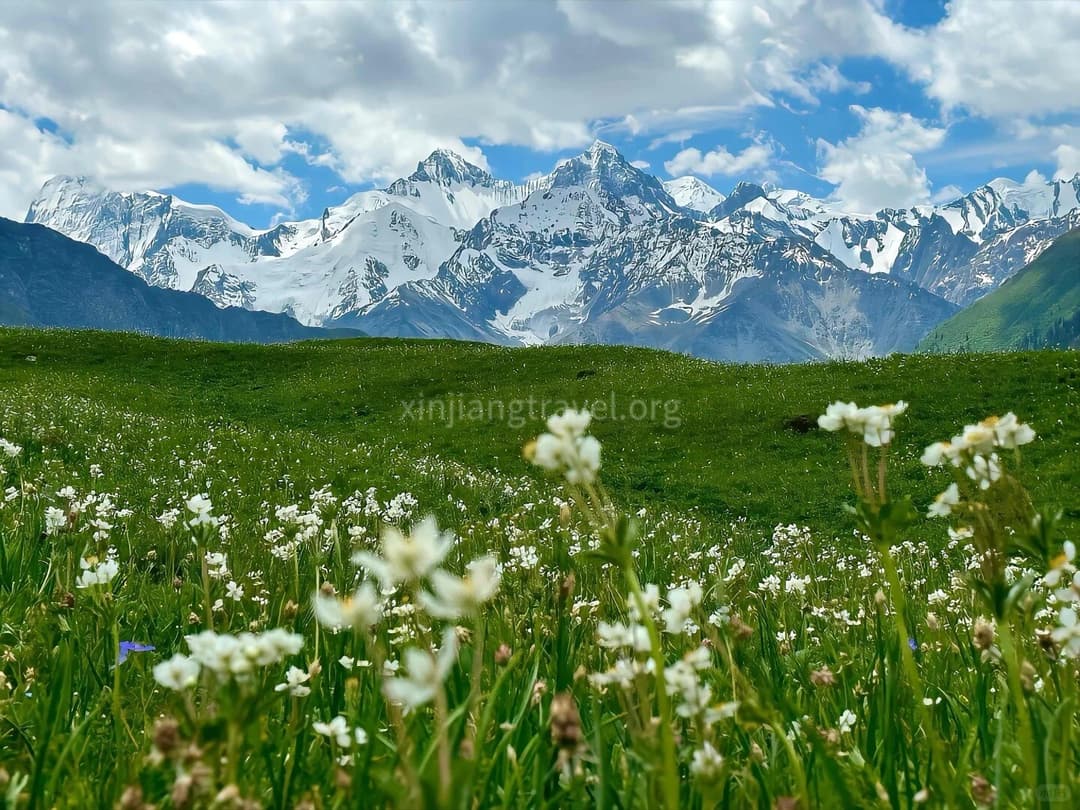
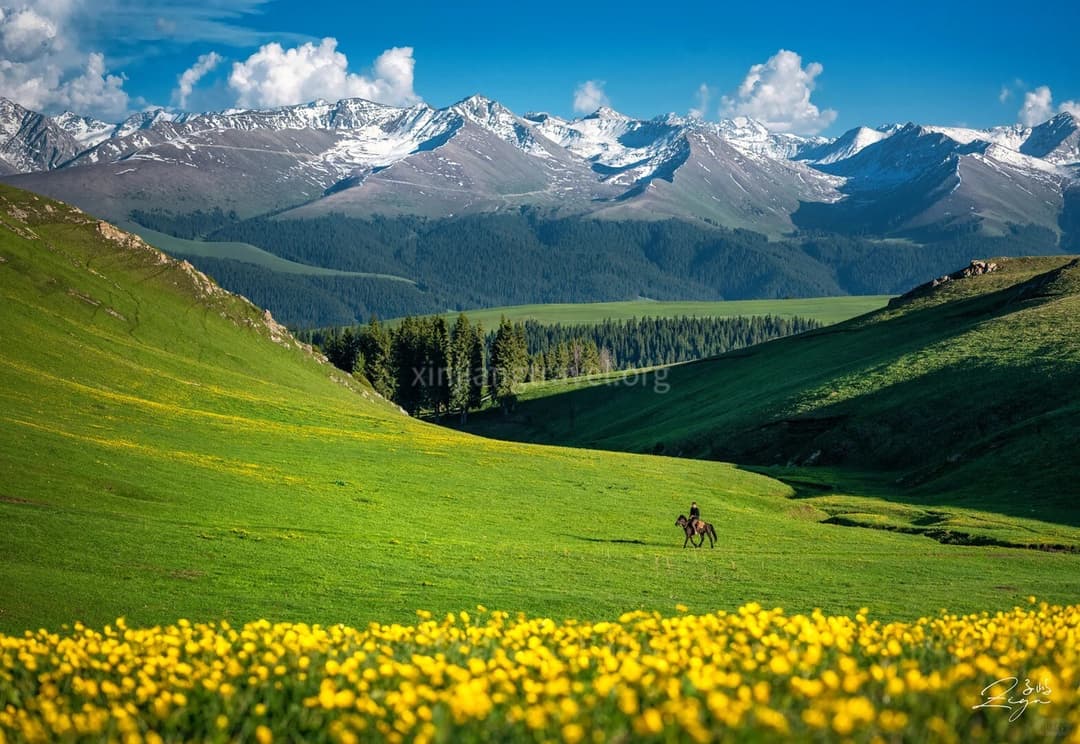
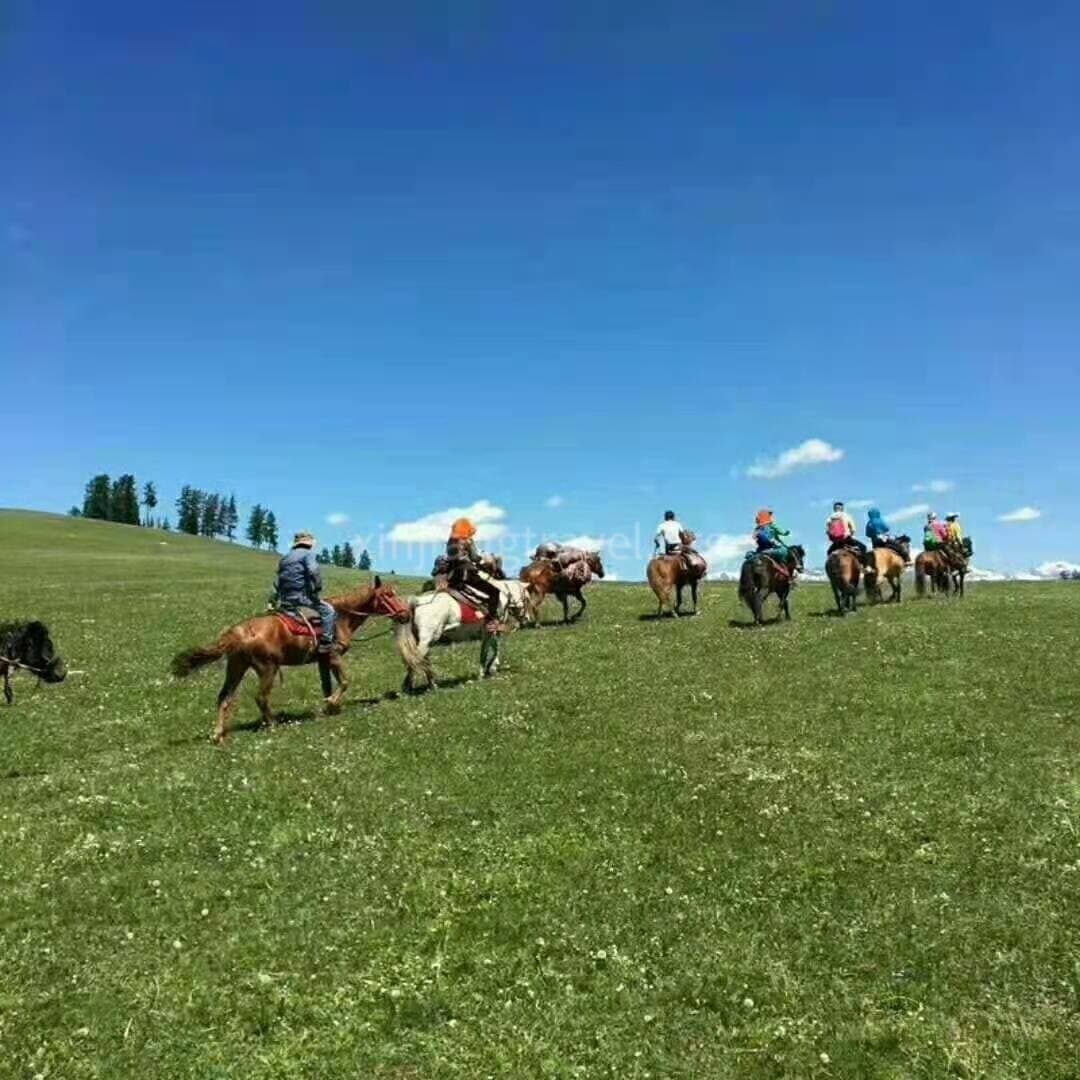
Karajun in July is where the nickname “Body Grassland” makes perfect sense. Rolling hills are sculpted by light into soft, flowing curves, and the grass is at its greenest and most vibrant. This is a three-dimensional landscape—forest, meadow, and canyon layered together. Horse trekking lets you go deeper, where Kazakh herders may welcome you into their yurts for freshly brewed milk tea. Lieyingtai offers a panoramic view: snow peaks in the distance, wildflowers below. July is peak wildflower season—buttercups, sage, and wild poppies carpet the ground. For hikers, the route from Karajun to Qiongkushitai is a classic, with changing scenery throughout. The sun is intense on the open grassland; strong sun protection is essential.
Qiaxi (Ili)
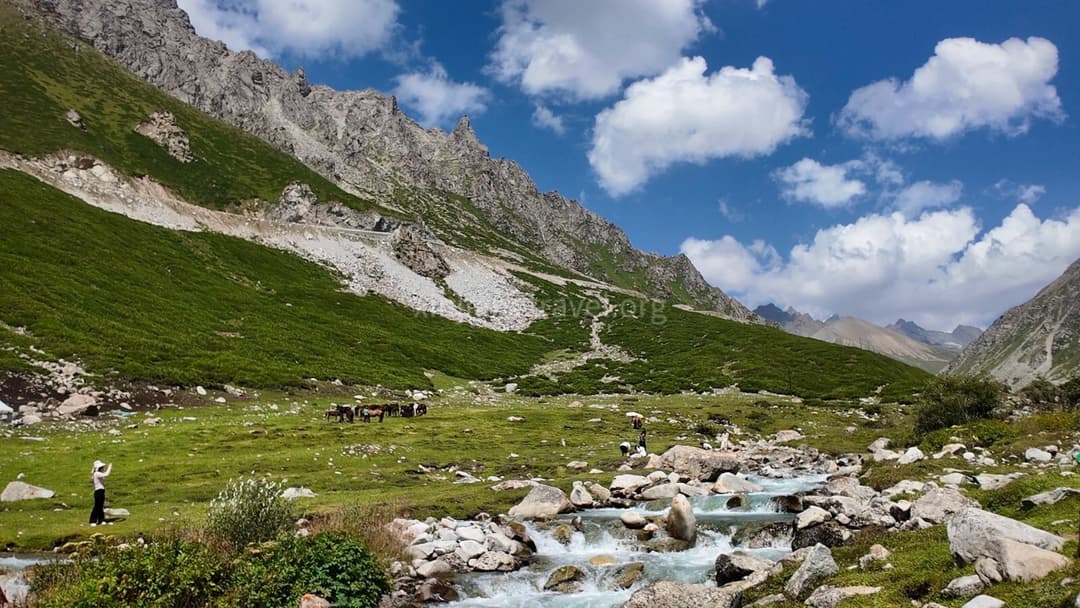
Qiaxi is a quieter corner of the Ili Valley, less visited than the famous grasslands but just as beautiful. The Qiaxi River runs through, lined with spruce forests and rolling meadows. July brings cool temperatures and lush greenery—a perfect summer escape. Walk along the river valley or take a horse ride up the hills for a view over the entire landscape. It is also a good spot for camping: find a flat area by the river and fall asleep to the sound of flowing water. The spruce forests are especially inviting, with dappled light and fresh air. Local herders are welcoming—if you meet them, you might hear a story or two. Qiaxi is ideal for travelers seeking quiet and a slower pace.
Duku Highway (Northern Section) (Ili)
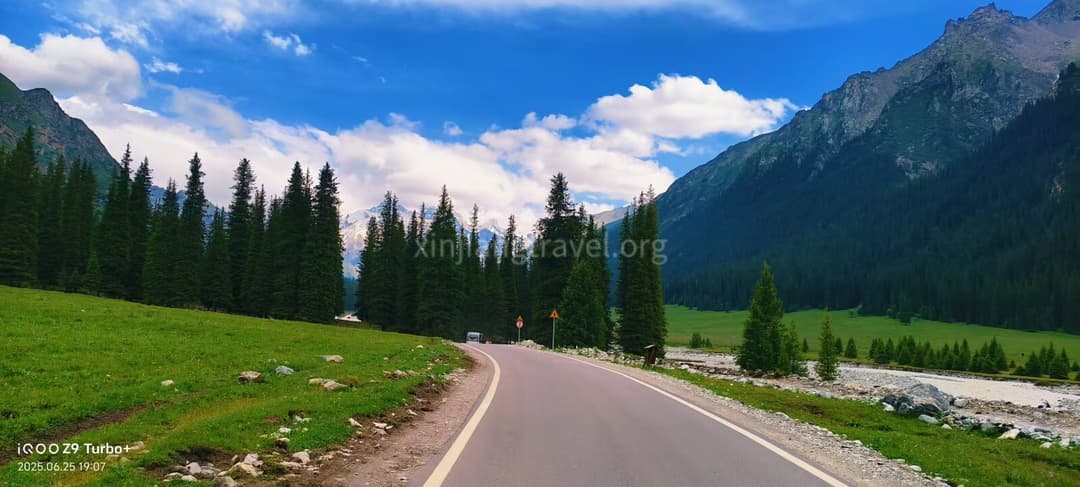
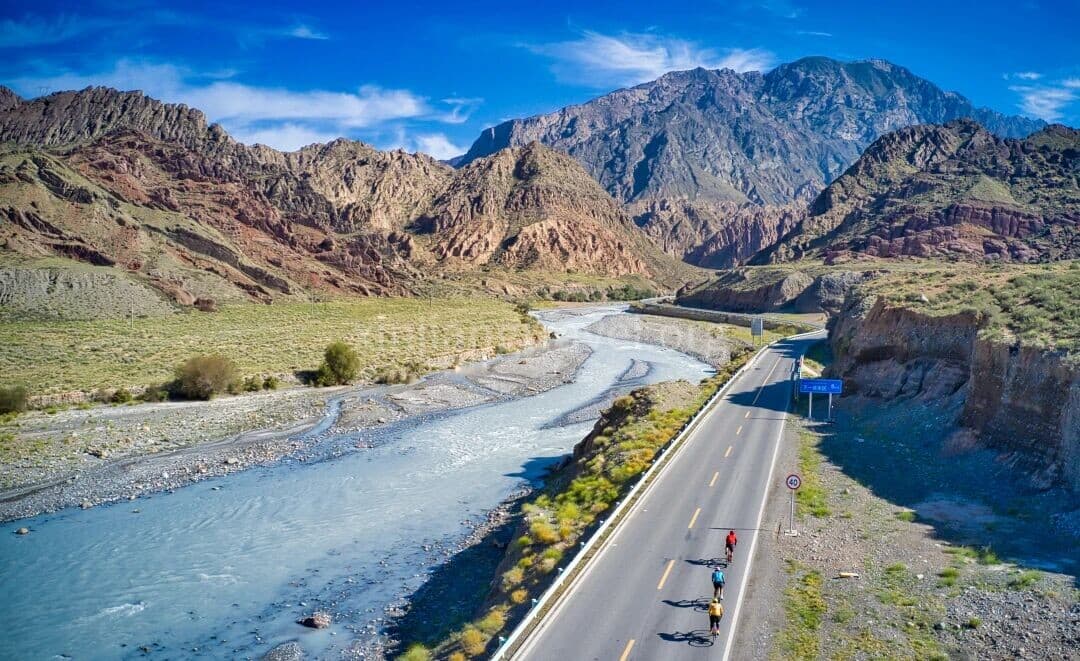
July is the best time to travel the Duku Highway, a 561-kilometer road that crosses the Tianshan Mountains and connects northern and southern Xinjiang. By July, snow has cleared, the road is in good condition, and service stops are fully open. In one day, you can experience four seasons: play with snow at Xilegendaban, enjoy wildflower meadows at Qiaoerma, and stop at the Big and Small Dragon Lakes. The highway's appeal lies in its variety—each section reveals a different landscape. Keep in mind that July is peak season; traffic is heavy. Avoid weekends if possible and allow extra time. Fill your gas tank before setting out, and carry snacks and water, as service stops are limited along the way.
Yizhao highway (Ili)
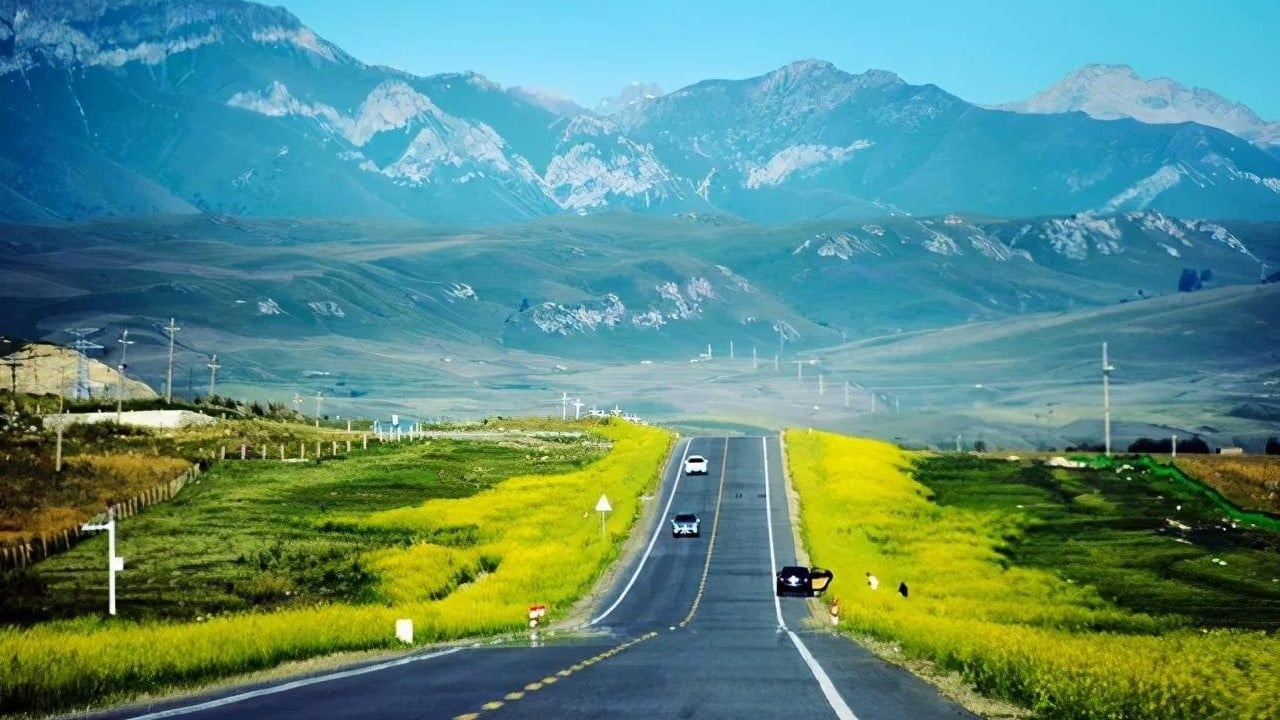
The Yizhao Highway is a scenic road connecting Yining and Zhaosu, about 180 kilometers long, known for its dramatic mountain scenery. In July, it serves as the gateway to Zhaosu's vast rapeseed flower fields—over a million acres of golden yellow contrasting with snow-capped peaks. The road winds through mountains, passing Baishi Peak and Yelang Valley, with steep cliffs on one side. It requires careful driving, but the views are well worth it. July is peak bloom for the rapeseed flowers, making this one of Xinjiang's most photogenic routes. The highway also provides access to Xiata and can be combined with Karajun and other Ili destinations. The road is fully open by July, but weather can change quickly; check road conditions before setting out.
Kanas (Altay)
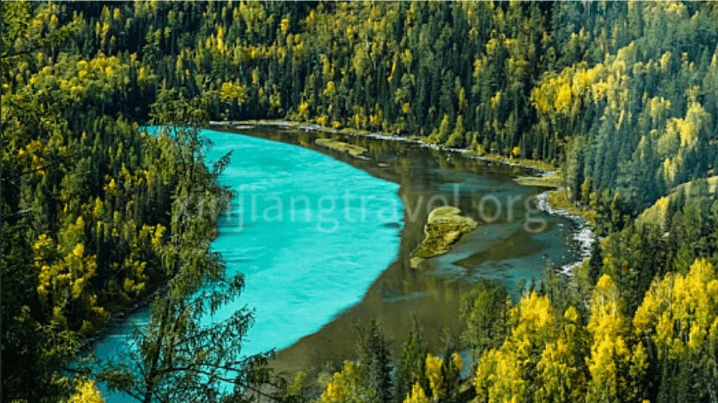
In July, Kanas is at its greenest. The lake takes on a deep turquoise hue, surrounded by forests and meadows in full summer foliage. The air feels fresh and clean, with daytime temperatures ranging from 15–25°C—ideal for hiking and photography. Walk the boardwalk along the lake to see how the water's color shifts with the light. Climb to Guanyu Pavilion for a panoramic view of the lake; on a clear day, you might even hear locals mention the legendary “lake monster.” Morning mist is one of Kanas's signature sights—often, a soft fog lingers over the water, creating an ethereal scene. To avoid crowds, stay overnight in one of the villages within the scenic area; early mornings and evenings are wonderfully quiet. July also brings wildflowers to the meadows.
Heavenly Lake (Tianchi) (Urumqi)
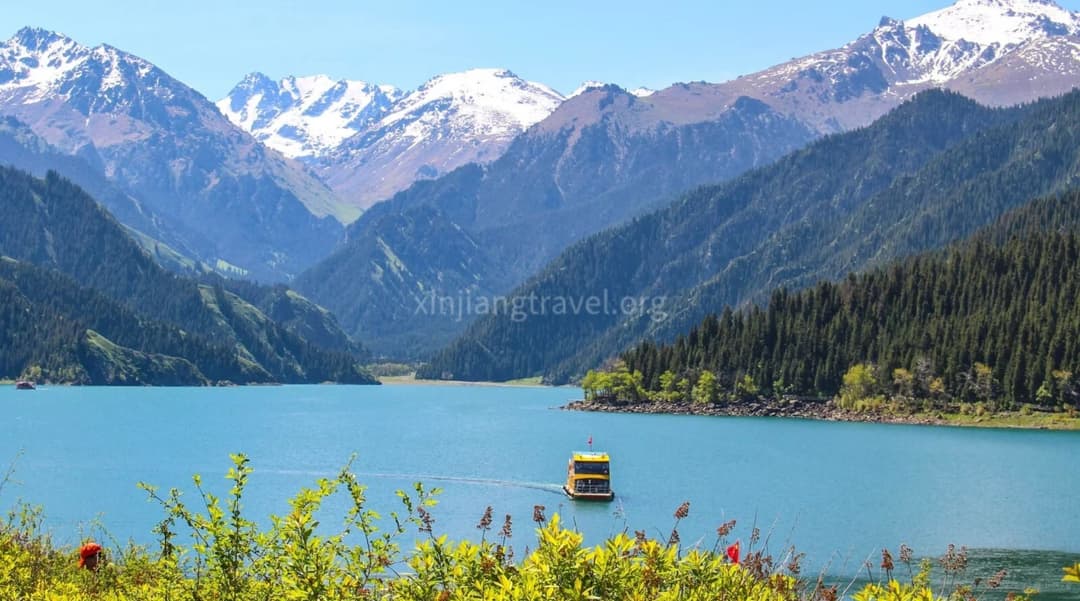
Heavenly Lake is the most popular summer escape near Urumqi. At nearly 2,000 meters above sea level, July temperatures average a pleasant 15–22°C. The lake is fed by glacial meltwater, its clear blue surface framed by spruce forests and backed by snow-capped Bogda Peak. Take a boat ride or walk the lakeshore trail to enjoy the peaceful forest and lake scenery. Early morning is the best time to visit—the water is often calm, reflecting the peaks and trees, and crowds are thinner. The smaller East and West Heavenly Lakes within the scenic area offer quieter corners. The altitude brings strong sun, and a light jacket is useful for breezy moments by the water.
Tianshan Pasture (Nanshan) (Urumqi)
The Tianshan Pasture, known locally as Nanshan, is Ürümqi residents' favorite weekend escape. In July, it is about 10°C cooler than the city, with green meadows, spruce forests, and clean air. Drive into the pasture, find a spot, and enjoy a picnic the local way—spread a blanket, brew tea, and relax. Horseback riding is also popular; a guide will lead you up gentle slopes for a view of the valley. Several scenic areas lie within Nanshan, including Baiyanggou and Juhuatai (Chrysanthemum Terrace), the latter dotted with wildflowers in July. For a deeper experience, stay overnight in a yurt—the night skies are remarkably clear.
Southern Xinjiang Recommendations: Embrace the Heat for Culture and Fruit
Kashgar Old Town
In July, Kashgar Old Town is at its most atmospheric in the evening, when the heat of the day begins to ease. The town is a maze of earthen alleyways, with traditional Uyghur homes and a history that spans centuries. Daylight lasts long into the evening—the sun sets around 10 p.m.—giving you plenty of time to explore. Late afternoon brings a soft golden light that warms the clay walls. As you wander, you will see children playing in the alleys and elders sitting outside their doors, the rhythms of daily life on full display. Handicraft workshops sell copperware, wood carvings, and pottery. For a quintessential Kashgar experience, find a century-old teahouse, take a seat on the upper terrace, and order tea with naan. The town can be hot during midday, so it is wise to rest indoors then.
Baisha Lake
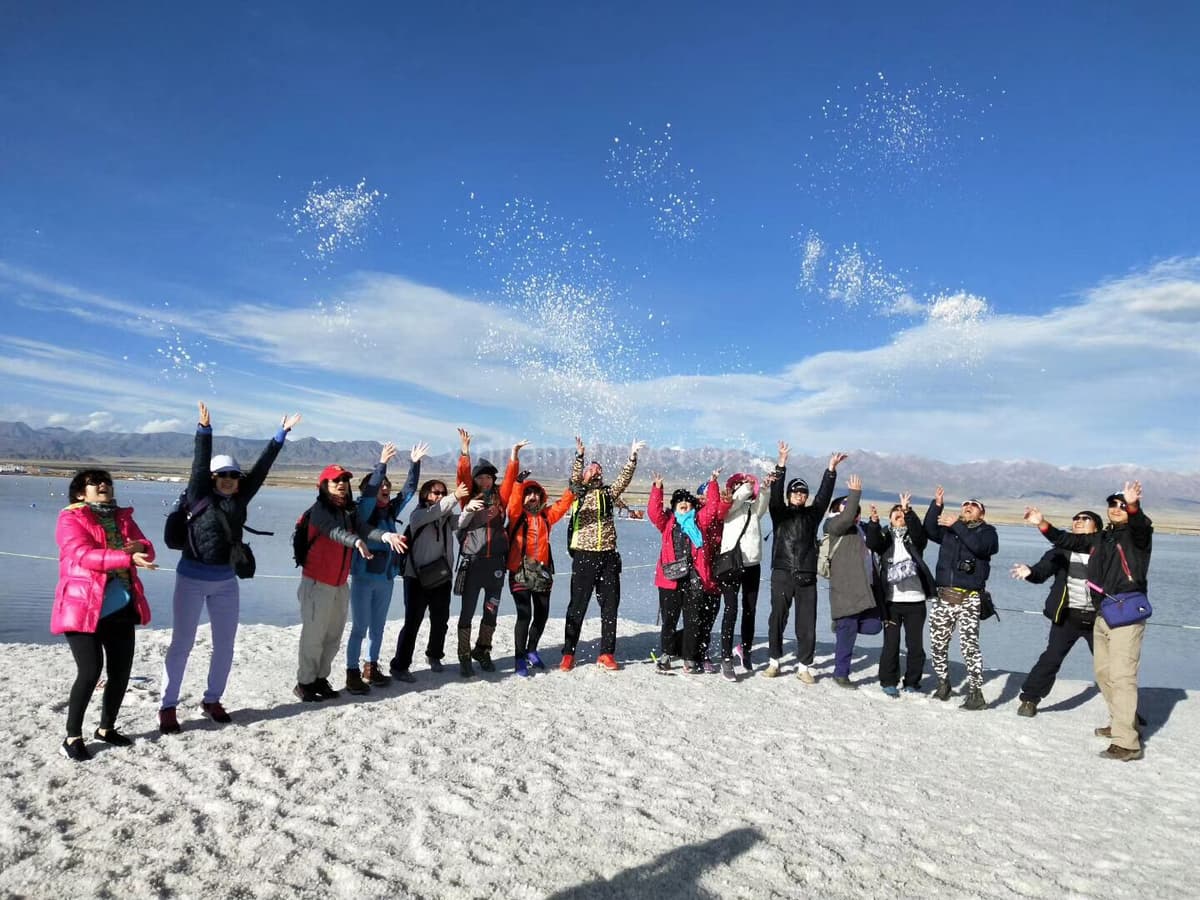
Baisha Lake, on the Pamir Plateau, is a must-see stop on the road to Taxkorgan. In July, the lake's water takes on a dreamy turquoise hue, set against striking white sand dunes that gleam in the sun. At about 3,300 meters above sea level, July temperatures range from 10–20°C, making it a cool, comfortable stop. When the water is calm, the dunes and sky reflect perfectly on the surface—a favorite subject for photographers. Morning light brings out the textures of the sand dunes most clearly. There is a viewing platform where you can park and take in the view. The wind can be strong here; a windproof jacket is useful even in July. The altitude calls for a slower pace. Baisha Lake is typically visited together with Karakul Lake and Muztagh Ata on the drive from Kashgar.
Turpan Grape Valley
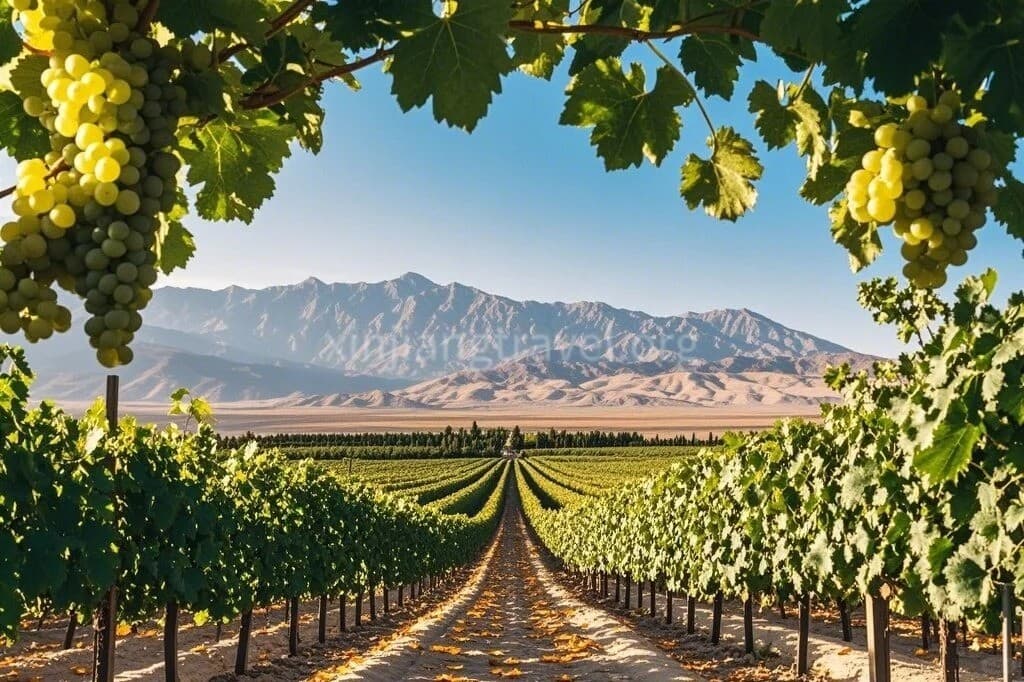
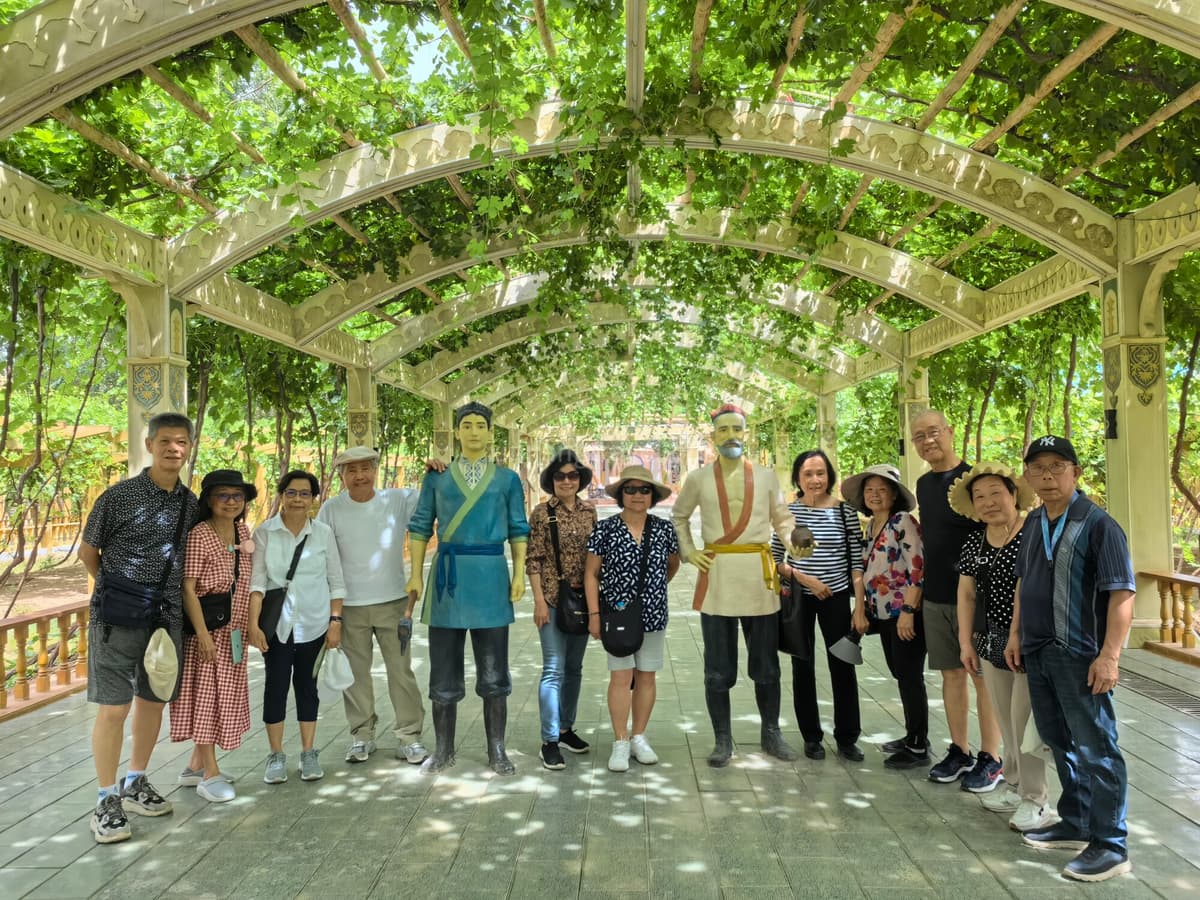
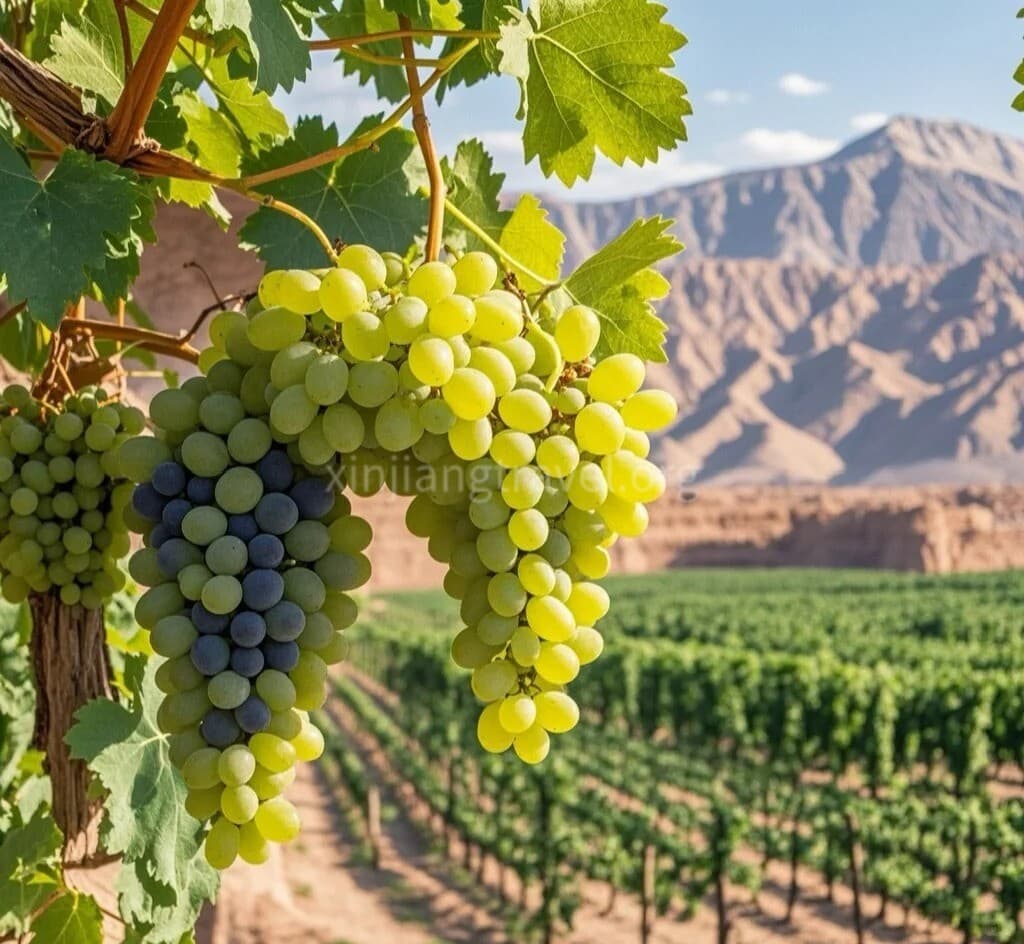
Grape Valley is the sweetest place in Turpan in July. The region's famous seedless white grapes reach peak ripeness, their translucent fruit bursting with sweetness. The valley is an 8-kilometer canyon lined with vineyards and drying houses, with Uyghur homes scattered throughout. Visit a local family, sit under a vine-covered trellis, and taste grapes fresh from the vine while enjoying the natural coolness provided by the ancient karez irrigation system. July is the busiest season here, but the dense shade keeps things comfortable. Morning is the best time to visit, when the light is good for photography and temperatures are milder. Mulberries and Hami melons are also in season. Grape Valley is more than an orchard—it is a glimpse into rural Uyghur life. Plan to spend at least half a day here.
Mazha Village
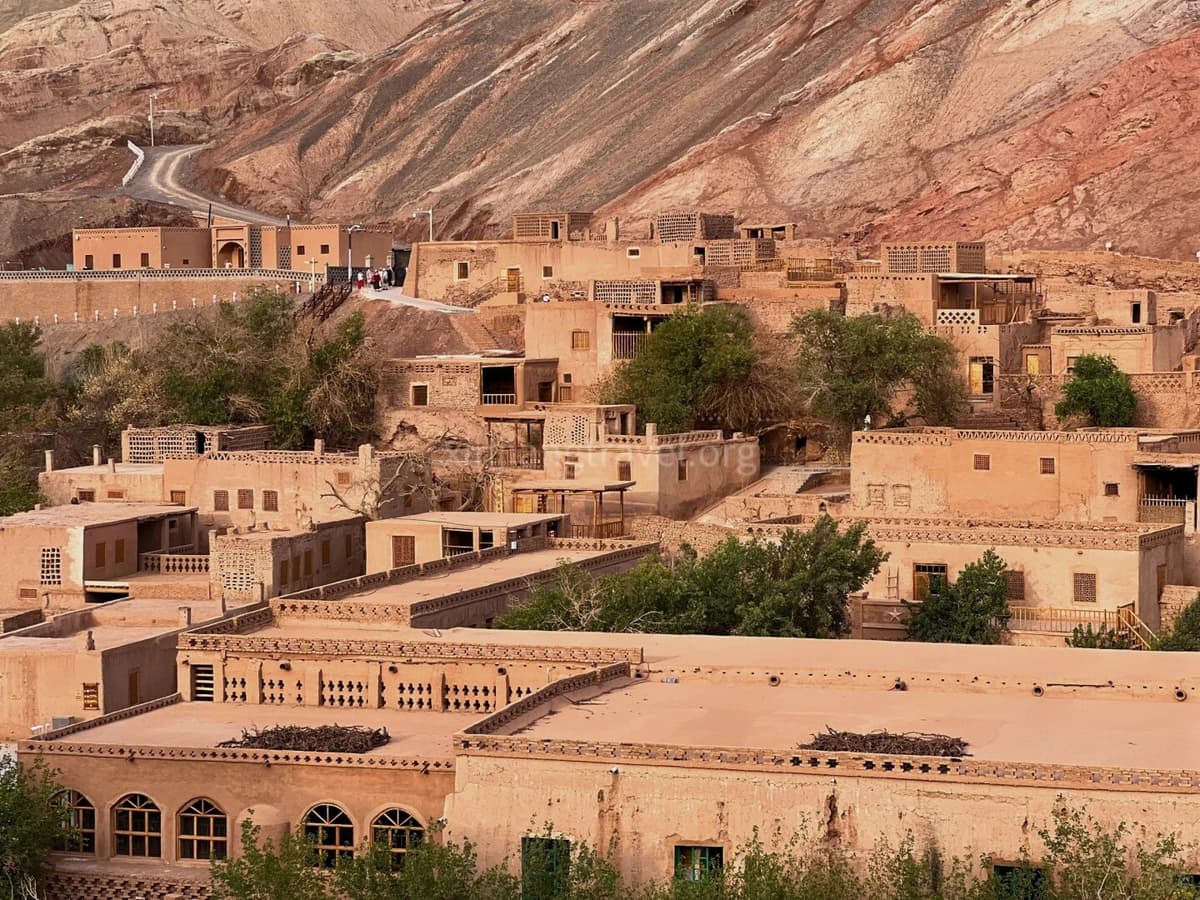
Mazha Village, at the foot of Turpan's Flaming Mountains, is one of the best-preserved ancient Uyghur villages in Xinjiang. In July, the village is quiet and intensely warm, its mud-brick houses layered against the hills. An old mosque and cemetery (mazha) stand as reminders of a history stretching back centuries. In July, grapevines cover rooftops and lanes, creating natural shade. Walking the narrow alleyways, you feel a sense of stillness—time seems to move slowly here. The village sees few tourists, so daily life continues undisturbed: elders sit outside, children run through the lanes. Mazha Village is ideal for travelers interested in culture and photography. Visit in the morning or late afternoon to avoid the midday heat. Bring water, as there are few shops, and respect local customs.
July in Xinjiang can be hot during the day but cool at night, with strong sunshine and occasional rain, especially in the north. For the best experience, it is important to pack the right clothing and gear.
Wear short-sleeve T-shirts for daytime and bring long-sleeve quick-dry shirts for better sun protection. A lightweight fleece or soft-shell jacket is useful for evenings and mountain areas. For bottoms, long pants such as jeans or outdoor pants are more practical than shorts because of the strong sun and insects in the grasslands. Always carry a windproof and waterproof jacket or a lightweight down jacket, particularly if you plan to visit Kanas, Bayanbulak, or the Pamir Plateau, where nights can drop below 10°C.
Choose comfortable hiking shoes or sturdy sneakers with good grip for trails and horseback riding. Sandals are fine for towns and night markets, but not for outdoor activities. Sun protection is very important — bring SPF 50+ sunscreen, a wide-brimmed hat, sunglasses, and a sun-protective face cover or mask, especially in the sandy southern areas.
The air in Xinjiang is dry, so pack moisturizing spray, lip balm, and body lotion. A multi-purpose backpack, power bank, and some cash are also useful, especially in more remote places. It is a good idea to bring basic medicines such as cold medicine, digestive aids (in case you are not used to the rich meat-based local food), and insect repellent for grassland areas.
With the right preparation, you will stay comfortable and enjoy your summer trip in Xinjiang without any trouble.
July is the busiest and hottest month in Xinjiang, but it also offers some of the best summer experiences. Daytime temperatures in the north, such as Urumqi and Ili, usually stay between 25°C and 32°C, while nights are cooler. In the south, especially Turpan, it can easily go above 35°C or even reach 40°C. The strong sunshine and big temperature swings between day and night are typical, with occasional rain in the northern mountains.
In northern Xinjiang, July is perfect for enjoying the cool grasslands and alpine lakes. Kanas Lake and Hemu Village look their best, with clear water, green forests, and snow-capped peaks in the distance. You can take boat rides on the lake, walk around the area, or stay in a wooden cabin and experience local Tuvan culture. Sayram Lake is another highlight — its deep blue water surrounded by green meadows and flowers makes it ideal for scenic drives, short hikes, or simply relaxing by the shore. Nalati Grassland and other Ili grasslands turn bright green, offering great opportunities for horseback riding and photography.
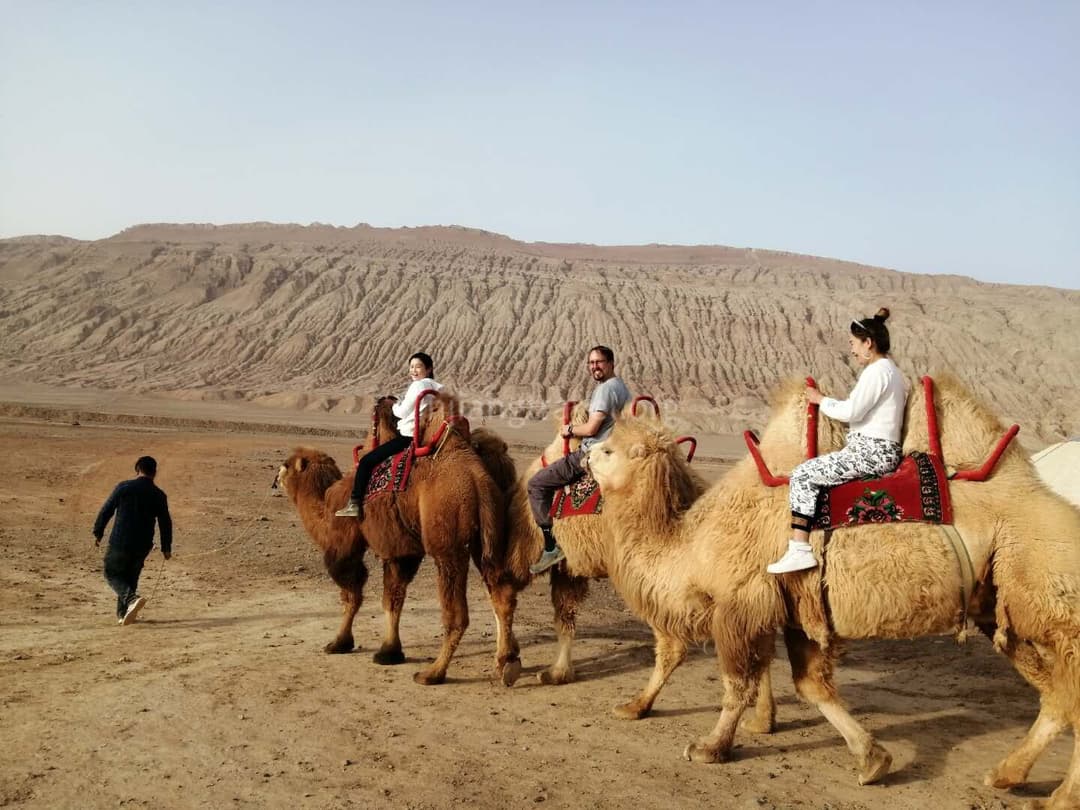
Southern Xinjiang gives you a completely different summer feel. Turpan is known as the “Land of Fire,” but it is also famous for its sweet grapes. The Turpan Grape Festival is usually held in August, but the grapes start ripening in July, and you can visit Grape Valley to taste fresh fruit and learn about the ancient Karez irrigation system. At the Flaming Mountain, the red sandstone gets so hot that locals demonstrate how to cook an egg in the sand — it usually takes about 15 to 20 minutes. Many visitors enjoy the fun and lively atmosphere here. You can taste fresh grapes straight from the vines and try local Uyghur dishes.
July is peak tourist season, so popular spots can get busy, but the long daylight hours give you more time to explore. Summer is when local fruits are at their sweetest, and night markets in places like Urumqi and Kashgar come alive with lamb kebabs, laghman noodles, and fresh melons.
To enjoy July comfortably, wear light clothes during the day, bring a jacket for cooler evenings in the mountains, and always carry sunscreen, a hat, and plenty of water. Pack layers and good walking shoes if you plan to hike or ride horses.
Whether you prefer the cool lakes and grasslands in the north or the hot, fruit-filled oases in the south, July lets you experience the full energy of Xinjiang summer.
July in Xinjiang brings long, sunny days and cool nights. This climate not only makes the landscapes vivid, but also brings out the best in the region's fruits and everyday dishes.
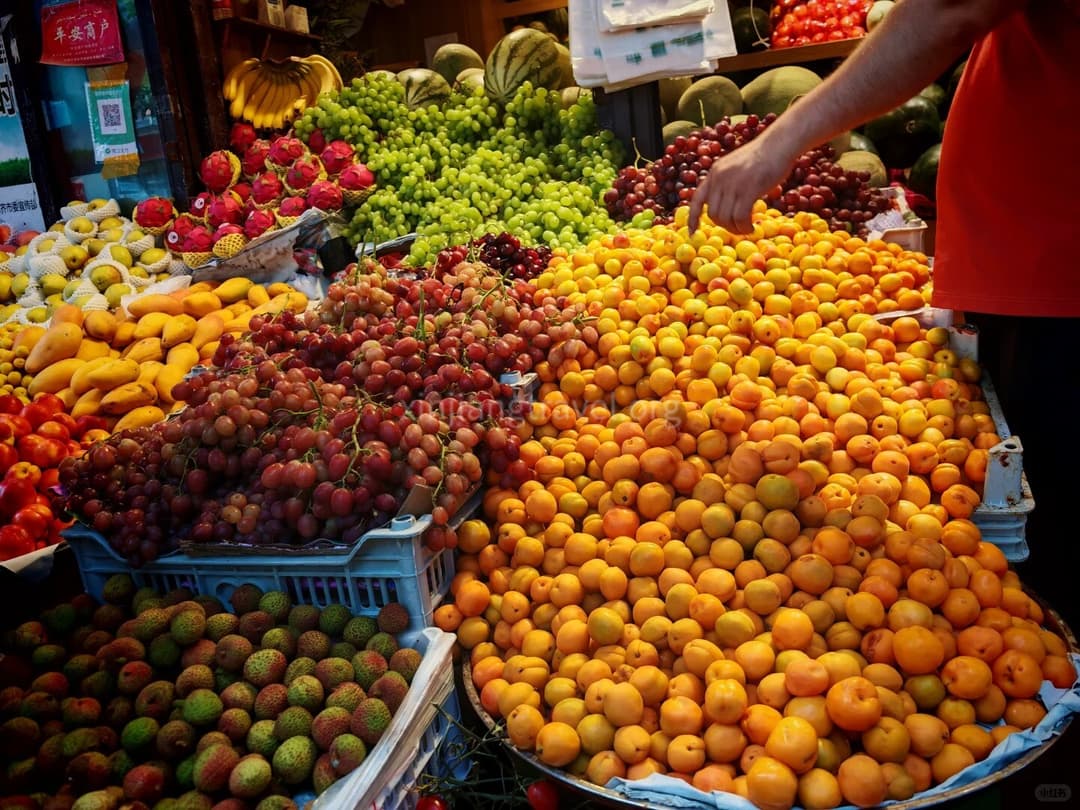
In northern Xinjiang, early watermelons and Hami melons appear at roadside stalls. A vendor may cut a slice for you to try—it is sweet and crisp. Peaches, especially the flat peaches from Shihezi, begin to ripen. Their flesh is soft and gently fragrant. If you drive along the Duku Highway or visit Sayram Lake, pick up a few local fruits and eat them sitting on the grass. It is a simple pleasure. On the northern grasslands, Kazakh herders serve pilaf (zhuafan) to guests. Rice is slowly cooked with mutton broth and carrots, turning out glossy but not greasy. A bowl of yogurt on the side makes for a solid, satisfying meal.
In southern Xinjiang, July is the season for small apricots called small white apricots. Those from Kuqa and Baicheng are small, naturally sweet, and hardly sour. Grapes from Turpan arrive in large quantities in early August, but by late July, you can already taste early seedless white grapes—clean, sweet, and refreshing. Night markets in southern Xinjiang are lively on July evenings. In Kashgar's old town, the smell of baked samsas (roasted stuffed buns) drifts through the alleys. Fresh from the oven, the samsa has a crispy crust and a filling of lamb and onion—not too juicy, but very savory. You may also see a chef pulling noodles by hand for laghman (hand-pulled noodles). The noodles are chewy and springy, served with a sauce of tomatoes, peppers, and lamb. Simple, but deeply satisfying.
Whether in the north or the south, yogurt and watermelon appear on almost every July table. After eating grilled lamb kebabs, locals often reach for a bowl of yogurt or a few slices of watermelon to balance the richness.
If you visit Xinjiang in July, you do not need to look for elaborate banquets. A roadside melon, a plate of pilaf at a bazaar, or a couple of baked samsas in an evening alley—these are the true flavors of this land.
FAQ – Xinjiang Weather in July
Q: What is the best month to visit Xinjiang?
A: Xinjiang's best travel period spans from late May to early October. The ideal time depends on your preference: June offers blooming grasslands and fewer crowds; July and August are perfect for a green, fruity summer escape, though it's the peak tourist season; and September to October boasts pleasant weather and stunning autumn scenery. If you aim to avoid crowds and high prices, late spring (May) and early autumn (September) are the best choices
Q: Is it a good time to visit China in July?
A: July is the peak summer season in China, characterized by high temperatures and significant rainfall in many regions. While eastern and southern China can be hot and humid, destinations like Xinjiang, Inner Mongolia, Qinghai, and the high-altitude areas of Tibet and Yunnan offer much cooler and more pleasant weather, making them ideal for summer travel. If you plan to visit eastern or southern cities, be prepared for hot and humid conditions and frequent rain.
Q: What is the hottest month in Urumqi?
A: July is the hottest month in Urumqi. According to the Southern Airlines website, the average temperature in July is 26°C, while the average temperature in the coldest month, January, is -15°C. Other sources indicate an average temperature of around 25.7°C for July and August, with average highs reaching about 30.1°C
Q: How hot is Xinjiang in June?
A: Xinjiang's climate in June varies greatly by region. The summer average (June-August) is around 26.5°C, but Northern Xinjiang (e.g., Ili) is cooler, with daytime highs between 15-30°C, and nights dropping to 10-15°C. Southern Xinjiang (e.g., Turpan) is much hotter, with daytime highs between 30-40°C, and nights between 15-22°C. The air is very dry, and temperatures can fluctuate significantly.
Q: Does it rain a lot in China in July?
A: Yes, July is part of the rainy season for much of China, especially in the eastern and southern regions. July is typically one of the wettest months of the year. The North China Plain and the Yellow River region also see a marked increase in rainfall during this month. However, rainfall in Xinjiang remains relatively scarce
Urumqi - Burqin - Kanas - Hemu - Karamay - Yining - Naraty - Bayinbuluk - Kuqa - Kolar - Turpan - Heavenly Lake
12 Days North Xinjiang Travel with Kuqa via Duku Highway will take you to visit the Great Grassland, the maginificent scenery in the middle of Tianshan Mountain. Experience Xinjiang Folklore of Kuqa and Fireland of Turpan
Urumqi - Kuitun - Yining - Gongliu - Naraty - Kuqa - Alar - Makit - Kashgar - Taxkorgan
Yili Grassland and South Xinjiang Adventure to Kuqa & Kashgar, Stroll around the lakes and mountains in west Xinjiang and then drive accross Duku Highway to run into southern Xinjiang. Taste the flavor of the unique culture and customs of Kashgar. Then visit the magnificent Pamir Plateau along the Karakoram Highway!
Urumqi - Sayram Lake - Zhaosu - Xiata - Tekes - Kanas - Nalati - Bayinbuluk - Kuqa - Korla - Urumqi
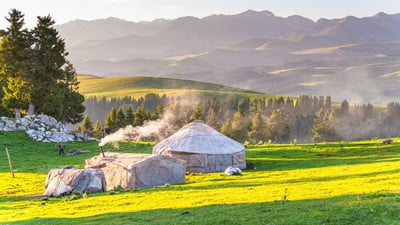
14-day Prairie Culture Tour takes you on a stroll through charming Nalati, Karajun and Bayinbuluk grasslands with a vast sea of flowers, flocks of cattle, sheep, horses, and Kazakh yurts. Experience unique folk cultural activities here and have an intimate dialogue with nature.
Urumqi - Heavenly Lake - Fuhai - Hemu - Kanas - Burqin - Kuitun - Yining - Tekes - Nalati - Bayinbuluk - Korla - Urumqi
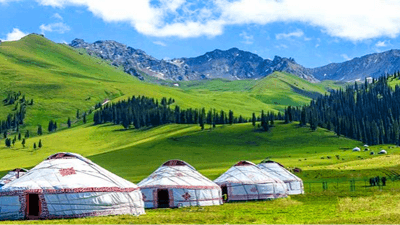
13 Days Wonderful Tour covers all the essential sights in northern Xinjiang. The heavenly wonderland Kanas, tranquil village in Hemu, boundless green NalKanasati Grassland, crystal-like Sayram Lake, large-scale cultural scenic spot Kazanqi Folk Village, etc.
Xinjiang Weather in July– Quick OverviewWhere to Go in Xinjiang in July