20 years of pioneer in xinjiang tourism for overseas travelers
Born Here, Know Best, Your Journey's Blessed
No Shopping. No Detour, 99% Excellent Review

contact UsOn Wechat
What is Xinjiang Like in November?
November in Xinjiang is not one single season. Northern Xinjiang has already stepped into early winter; Southern Xinjiang, on the other hand, still holds on to autumn with plenty of warm afternoon sun.
November in Xinjiang doesn't mean the same weather everywhere. Northern Xinjiang, around Altay and Urumqi, has already entered early winter. In Urumqi, for example, the average high in November 2025 was around 4°C, the average low dropped to -3°C, and the coldest days reached -7°C. Snow begins to settle, especially from mid-November onward. Yet because Xinjiang has very dry air and strong sunshine, a sunny 5°C afternoon can actually feel much milder than you would expect.
Southern Xinjiang tells a different story. In Kashgar, the November 2025 average high was a comfortable 13°C, with daytime peaks touching 20°C. You can stroll through Kashgar's old city at noon wearing a light down jacket or even just a fleece and windbreaker. Nights do get cold, though, often dipping below freezing, so layering is your best friend.
What this means for your trip: pack for two seasons. A warm, windproof outer layer is essential in both the north and the south. In the north, add a thick mid-layer; in the south, a sweater and a shell jacket will serve you well most days.
Content›Xinjiang Weather in November — Quick Overview? |
Xinjiang Weather in November — Quick Overview
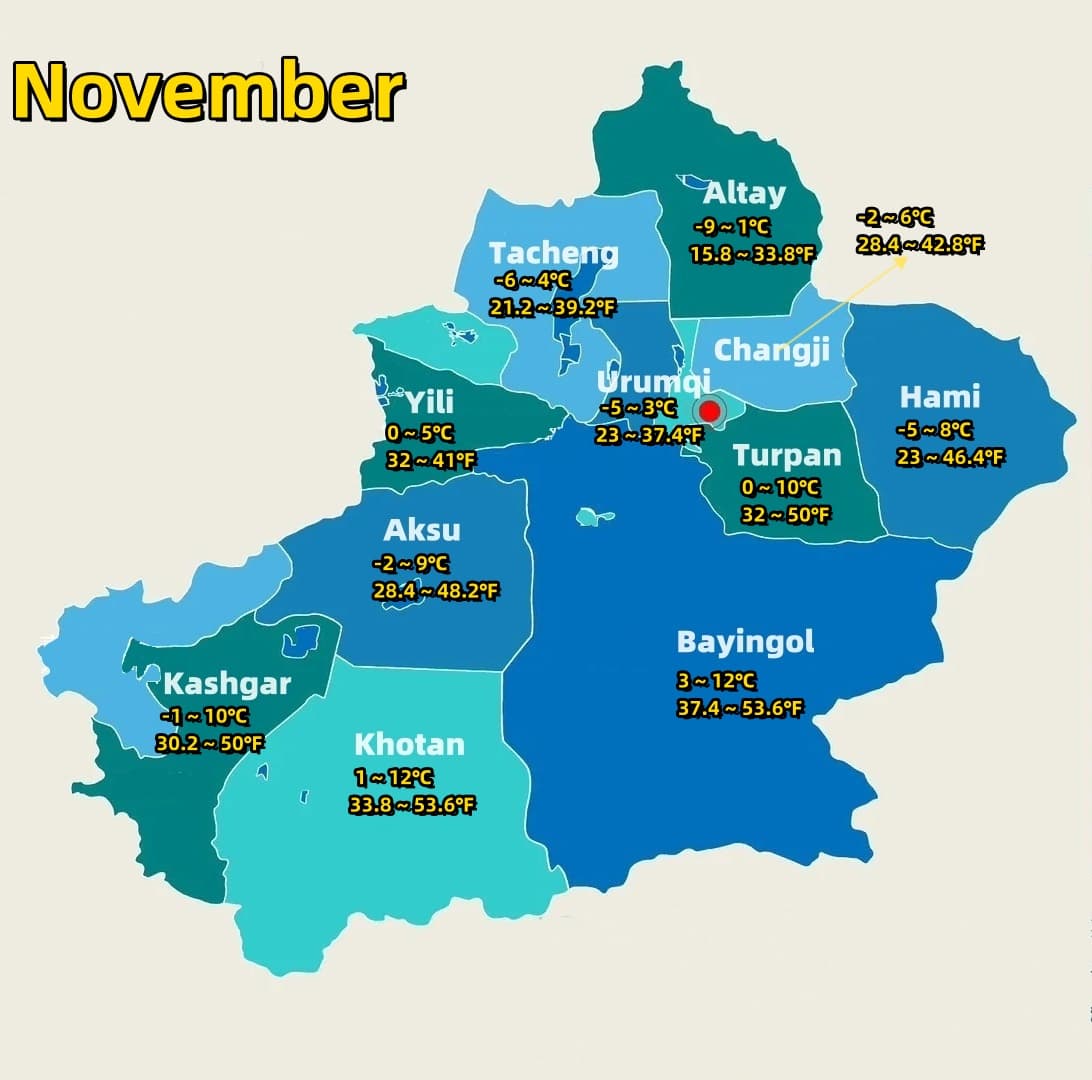
Weather Condition in Xinjiang
Where to Go in November — Places That Truly Make Sense
Northern Xinjiang — First Snow Meets Golden Forests
Urumqi and Nearby Areas: Your Starting Point
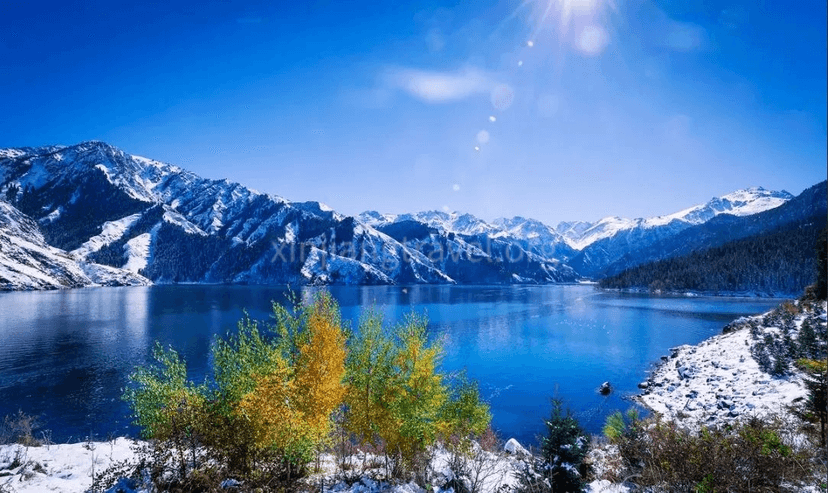
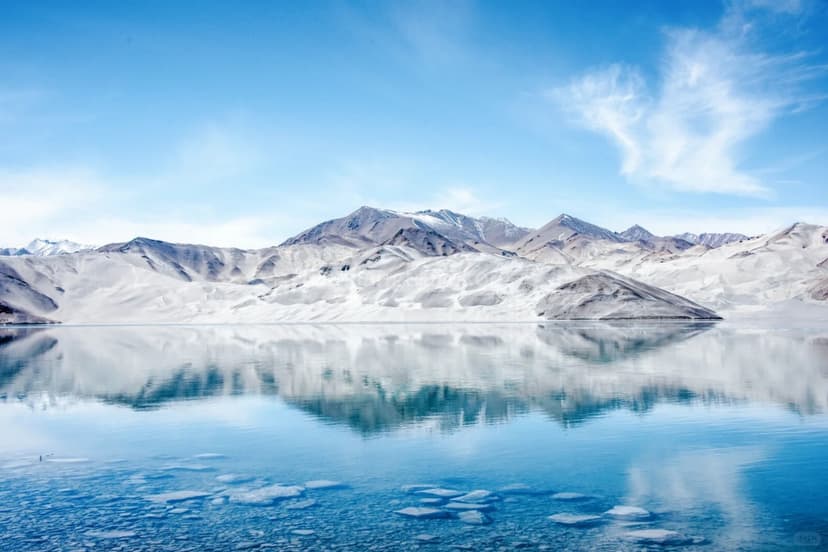
You'll probably fly into Urumqi first, and in November, it serves as a comfortable base while you adjust to the chill. The city itself has a mix of modern facilities and easy access to nature. Daytime temperatures often sit around 2-5°C, but the real draw is heading south to Tianshan Tianchi (Heavenly Lake). There, the first light snow dusts the pine forests, and the lake surface may start freezing at the edges, reflecting Bogda Peak beautifully under clear skies.
You can follow our agency for a half-day visit. Walk along the lakeside paths (they're usually cleared), breathe the fresh mountain air, and feel the quiet that comes when most summer tourists have left. Back in the city, spend time at the Xinjiang Regional Museum if the weather turns too cold—it offers excellent exhibits on local history and ethnic cultures without needing to brave the outdoors for long.
This combination lets you ease into your trip: warm up with good local lamb dishes or hot pot at night, then venture out during the warmer daylight hours. Many travelers find Urumqi practical because hotels are well-heated and transport options remain reliable.
Kanas & Hemu: Late-Autumn Colors Brushed with Snow
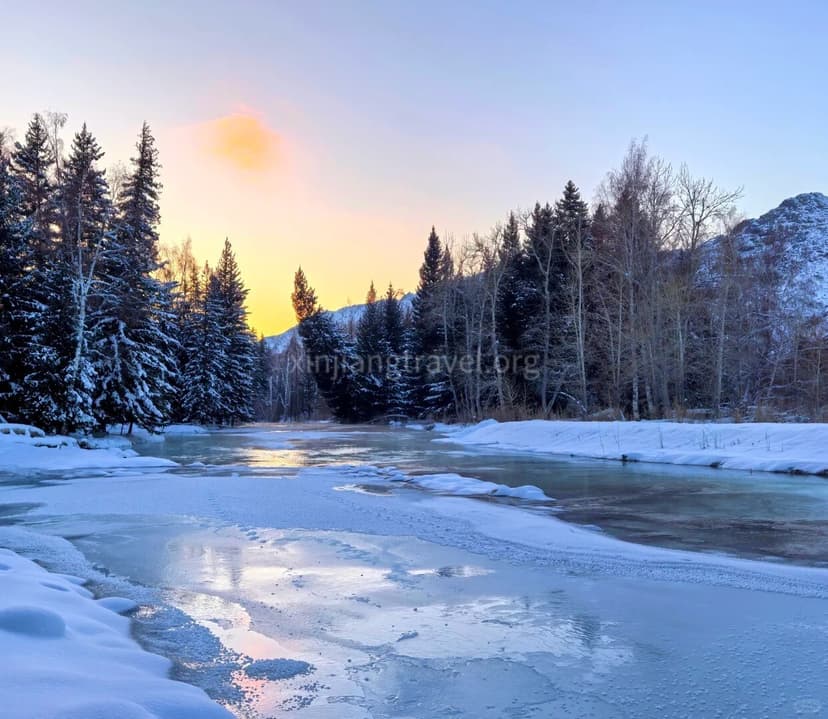
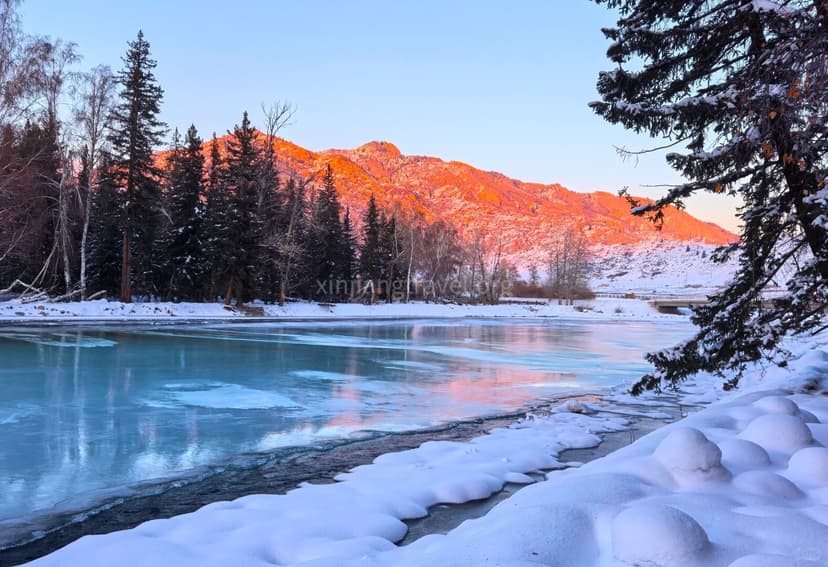
By early to mid-November, Kanas and Hemu sit right at the transition from late autumn to early winter. The larch and birch trees still carry their golden and russet leaves, but frost and light snow have already dusted the forest floor and rooftops. This is a brief, extraordinary window: you get the last warmth of autumn color combined with the first quiet beauty of winter white. It lasts maybe two or three weeks, usually ending by late November when heavy snow fully takes over.
The light in the morning is something special. You'll want to be at Hemu's viewing platform before sunrise. Just stand there, breathe in the cold air, and watch the morning mist rise slowly through the wooden houses. Smoke starts drifting from chimneys as villagers light their morning fires. Below, the whole village is tucked into a valley surrounded by birch forests and distant snow peaks. The snow cover in mid-November is typically 10–20 cm, enough to create that storybook winter look but not so deep that walking around becomes difficult.
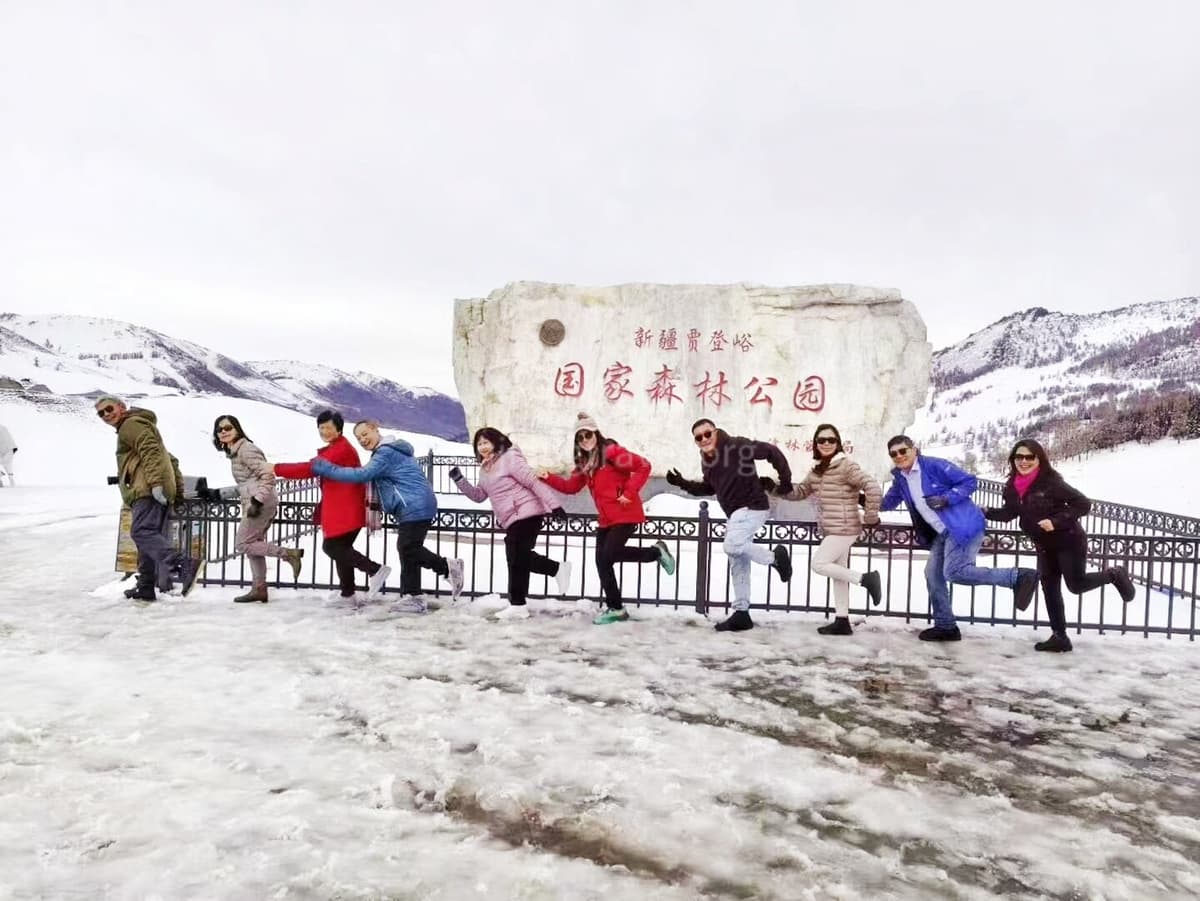
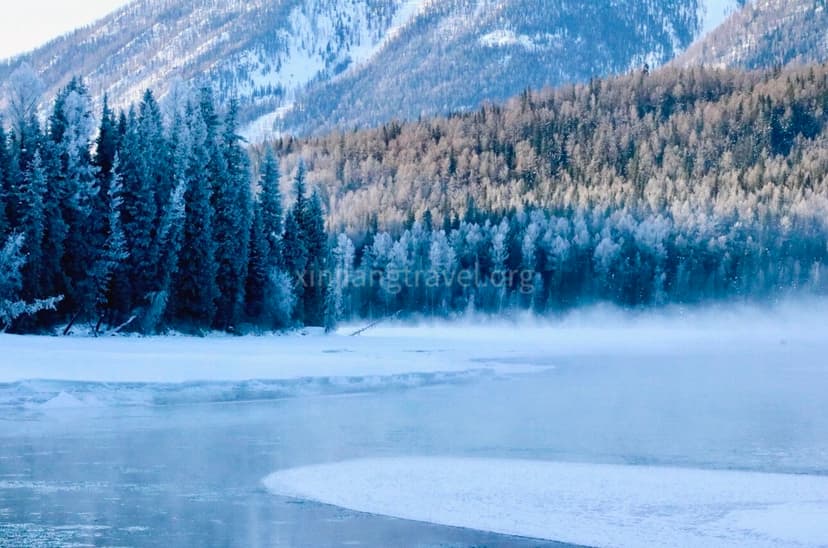
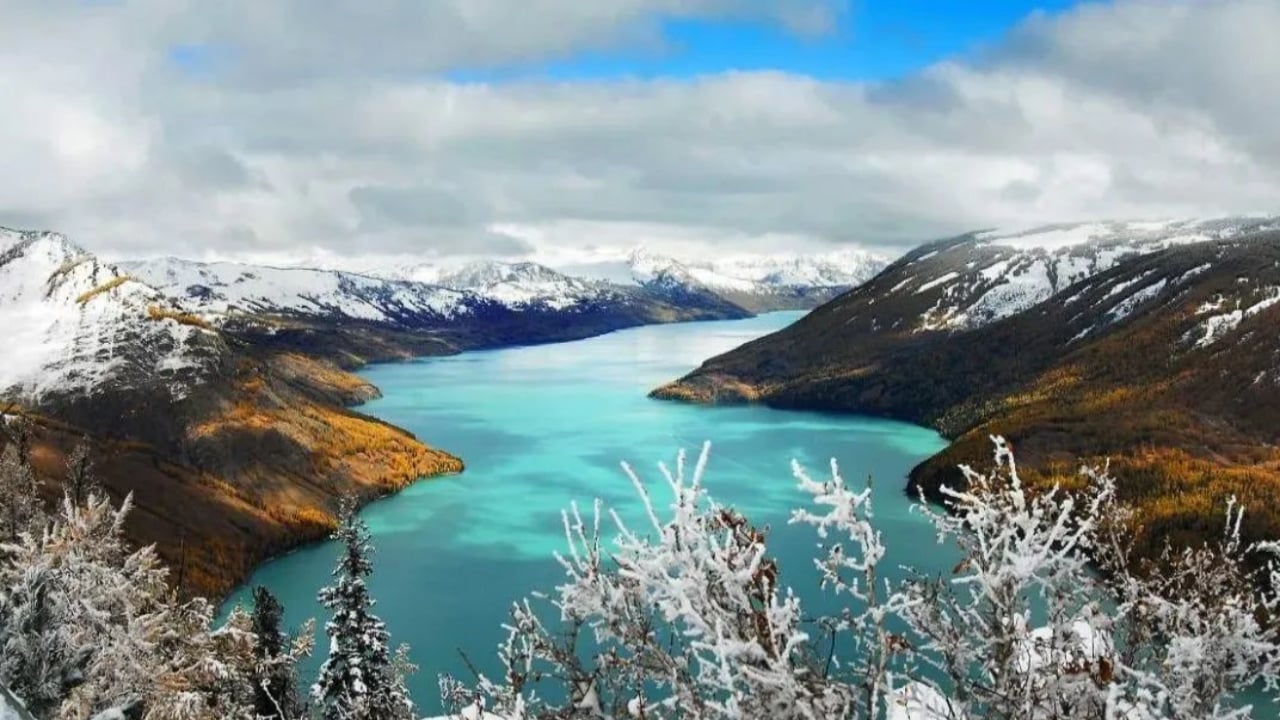
In Kanas, the lake surface hasn't frozen yet. The famous Three Bays — Fairy Bay, Moon Bay, and Dragon Bay — look different now. Morning fog drifts across the water, and the reflections of snow-dusted pines on the turquoise surface are something even professional photographers chase. Boardwalks are still open in most years by early November, but always check locally as snow can close some sections.
Keep in mind that accommodation choices narrow after mid-November. Some guesthouses close for the season. The ones that stay open often heat their rooms with wood-burning stoves. It's rustic, but sitting around the stove with a bowl of hot milk tea after a day outside is exactly the kind of slow, warm experience that makes traveling in Xinjiang in November feel so intimate.
Altay Ski Resorts: The Season Starts Early
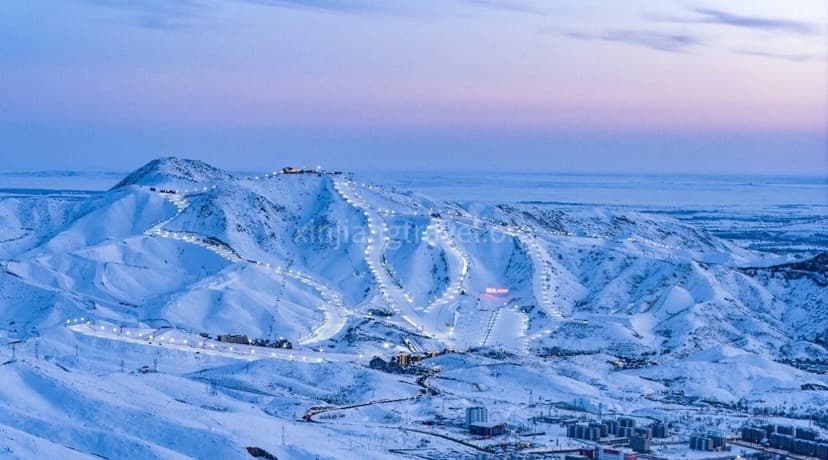
November is when Altay's ski season kicks into gear. The four major ski resorts in the region — Jiangjunshan (General Mountain), Koktokay, Jikepulin, and Qinggeli Langshan — all opened their 2025–2026 season by mid-November. Jikepulin was the earliest, opening on November 10. Jiangjunshan and Qinggeli Langshan followed on November 18. By November 21, Jiangjunshan even launched its night skiing sessions, with illuminated runs open until late evening.
What you'll appreciate about Jiangjunshan: it's an urban ski resort, literally inside Altay city. You can leave your hotel, ride a short shuttle, and be on the slopes within 20 minutes. This season it operates 61 runs, from wide beginner slopes to a full terrain park with jumps and rails. If you've never tried night skiing, this is a good place to start — the view of city lights below and stars above, while gliding down a groomed run, is genuinely unique.
Crowds are low in November. You won't be fighting for space on the lifts. The snowfall isn't at its deepest yet compared to December or January, but the snow guns have already done their work, and the early-season snow quality tends to be light and dry. Prices for accommodation and lift tickets are noticeably lower than in the peak winter months.
Even if skiing isn't your main plan, taking the gondola up Jiangjunshan just for the sunset view over Altay city is worth it. The observation deck near the top station gives you a panorama of the entire valley, snow-covered and glowing in pink and orange as the sun goes down.
Ili and Sayram Lake: Northern Xinjiang Highlands
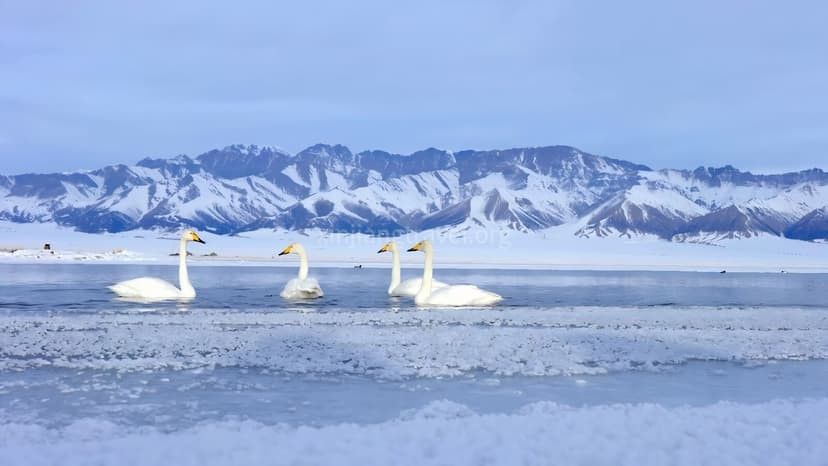
For open landscapes and a sense of vastness, you might include the Ili Valley and Sayram Lake. November brings a quiet transition here: grasslands turn golden-brown, and the lake often mirrors the surrounding mountains with a thin layer of ice forming near the shores on colder mornings. Daytime temperatures around Ili can range from -2°C to 8°C, feeling manageable with proper clothing.
Drive or join a small tour along the scenic roads—you'll pass Kazakh villages where life slows down for winter. Stop at viewpoints to take in the lake's changing colors and perhaps chat with locals about their seasonal routines. The area feels expansive and serene, perfect if you enjoy photography or simply soaking in nature without crowds. Accommodations in Yining or nearby offer good heating, and restaurants serve fresh yogurt, horse milk tea, and grilled meats that warm you from the inside. Compared to peak summer, you get more space to breathe and fewer traffic jams on the mountain roads. It's a great middle ground between urban Urumqi and the more remote northernmost spots.
Southern Xinjiang — Sunshine, Ancient Cities, and Poplar Gold
Kashgar Old City: Bazaars, Tea, and Labyrinth Alleys
Kashgar in November has a pace and comfort that summer simply cannot offer. Daytime temperatures hover between 10°C and 18°C, no blistering heat, no freezing cold. You can walk for hours through the old city without feeling drained, which is exactly what you want because Kashgar rewards slow, aimless wandering.
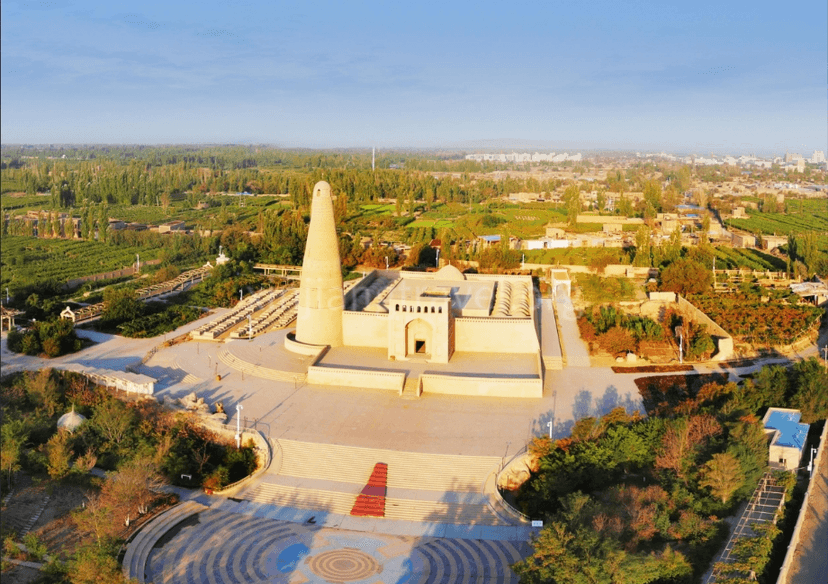
Start your morning at the old teahouse near the Id Kah Mosque. Order a pot of sweet black tea with cardamom and a piece of naan. The tea costs a few yuan. Look around — local elders are doing the same, some chatting, some sitting in silence. This is not a "cultural show" put on for tourists. It's simply Tuesday morning in Kashgar.
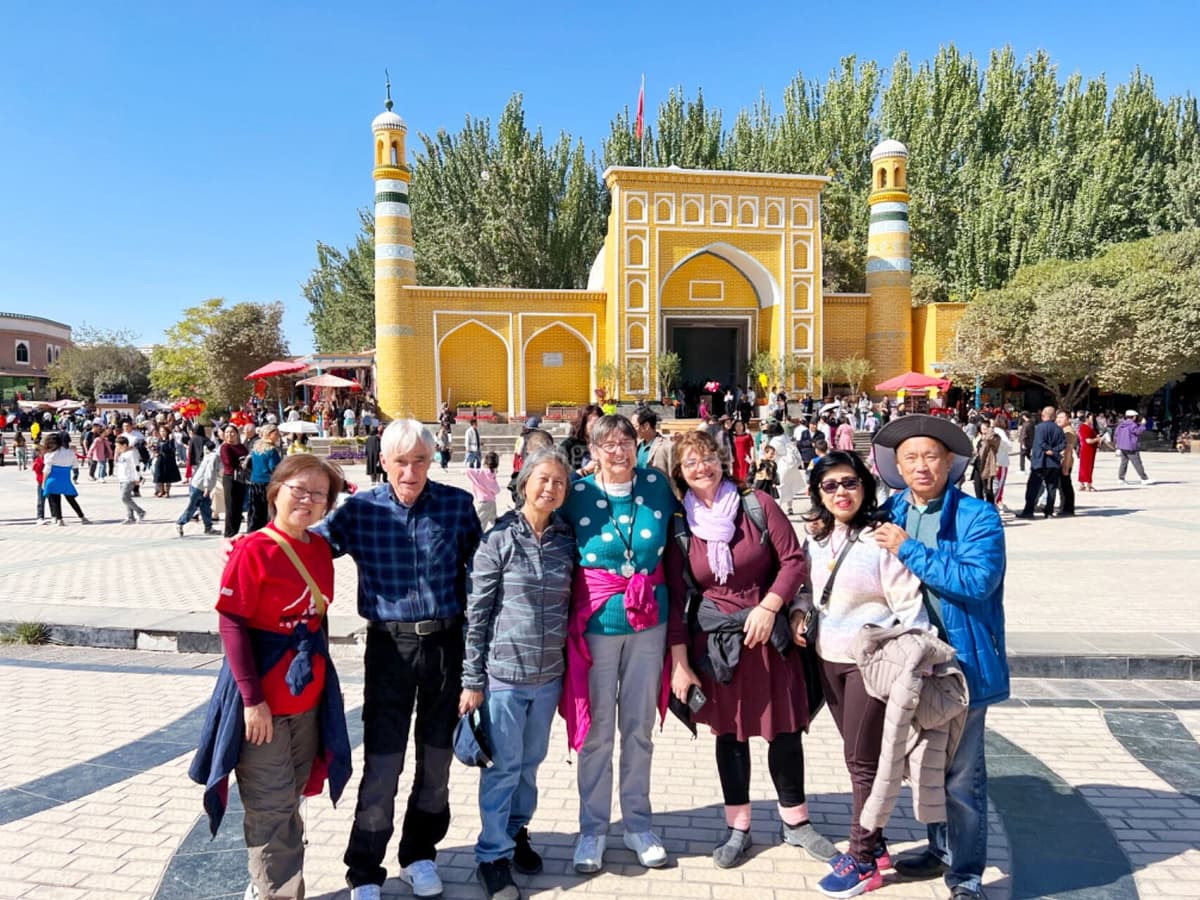
When you step back into the winding alleys, you'll pass craftsmen hammering copper plates, bakers pulling fresh naan out of clay ovens, and shopkeepers arranging bolts of brightly colored silk. November's soft, angled sunlight makes the ochre walls glow and casts long, cinematic shadows in the narrow lanes. Photographers love this month for a reason: the light is gentler, and the sky is often a deep, cloudless blue.
In the evening, the night market near the old city comes alive with smoke rising from grill stalls. Lamb skewers, hand-pulled noodles, steamed lamb dumplings, and freshly baked meat pies — the variety is overwhelming in the best way. Follow the smoke. If a stall is crowded with locals, join the queue. That's where the best food is.
Luntai Poplar Euphratica Forest: The Last Two Weeks of Gold
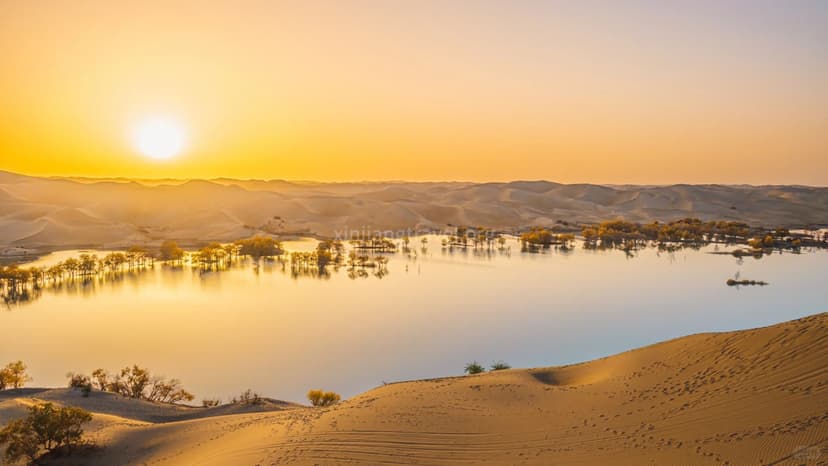
If there's one reason to squeeze Southern Xinjiang into a November itinerary, it's the Euphrates poplar forests. Luntai County, sitting along the Tarim River, is home to the world's largest contiguous natural poplar forest. By early November, the trees have turned a brilliant, saturated gold — the entire river valley glows with it. This golden period typically peaks from late October through mid-November. By the third week of November, the leaves start to thin, but honestly, the carpet of gold on the ground has its own melancholic beauty.
Walk or drive the forest road that cuts through the park. Some trees are over a thousand years old, their twisted, weathered trunks standing in stark contrast to the delicate yellow leaves above. Climb the wooden observation tower in the center of the park — from the top, you'll see an ocean of gold stretching to the horizon, with the Tarim River winding through it. Late afternoon is the best time. The low sun backlights the leaves and makes the whole canopy look almost translucent.
You'll need most of a day for this. The drive from Korla to Luntai takes about two to three hours. Bring water and snacks, because options inside the park are limited. The 2025 poplar festival in Luntai ran through November 16, with cultural performances and local food stalls set up near the entrance, but the forest itself remains open to visitors even after the festival gates close.
Layering Is Essential (Not Just Thick Clothing)
A typical setup for Xinjiang winter travel in November includes three layers:
Base layer (thermal underwear)
Mid layer (fleece or light down)
Outer layer (windproof or down jacket)
In northern Xinjiang, especially around Kanas Lake, a proper down jacket is necessary. Temperatures can drop well below freezing, especially in the morning and evening. In southern areas like Kashgar Old City, you can get by with lighter insulation during the day, but nights are still cold.
Don't Underestimate Dry Cold
One common misconception in searches like "Xinjiang weather November how cold" is that dry regions feel mild. In reality, places like Turpan or Kashgar can feel colder than expected because of the wind and low humidity. Lip balm, moisturizer, and even eye drops become surprisingly important.
Small Items Make a Big Difference
Gloves, a hat, and sunglasses are not optional—especially in northern Xinjiang, where snow reflection can be strong. Good shoes with grip are also essential if you're walking on icy paths.
Day-Night Temperature Gap
As mentioned earlier, the temperature difference can reach 10–15°C within a single day. That's why travelers searching "Xinjiang November travel tips clothing" often emphasize flexibility—you'll be adjusting layers throughout the day rather than wearing the same outfit.
In practical terms, packing for Xinjiang in November is less about extremes and more about adaptability. If you get the layering right, the cold becomes manageable—and doesn't limit where you can go.
Entry & Travel Requirements (Simple, but Don't Ignore)
For most international travelers planning Xinjiang travel in November, you'll need a valid Chinese visa before arrival. There's no separate "Xinjiang visa," but passport checks are more frequent compared to other regions in China. Hotels will register your stay automatically, but it's still a good habit to keep your passport with you when moving between cities like Urumqi and Kashgar.
Another detail: some remote areas (especially near borders like the Pamir region) may have additional checks. They're routine, but they take time—so don't overpack your daily schedule.
Safety Reality (What It Feels Like on the Ground)
On the ground, the situation is straightforward: major cities such as Urumqi and Kashgar Old City are generally stable and well-managed. You'll notice visible security presence (checkpoints, ID scans), which can feel unfamiliar at first, but most travelers adjust quickly.
For practical purposes, solo travel, photography, and moving between cities are all manageable—as long as you follow local regulations and remain patient during checks.
Transport Strategy (Flights Matter More in November)
If you're planning "how to get around Xinjiang in November", the key advice is simple: rely more on flights than roads. Distances in Xinjiang are huge, and winter conditions can affect driving times—especially in northern areas.
Flights between Urumqi, Altay, and Kashgar are frequent and save significant time. High-speed trains operate in some corridors, but they don't cover all major tourist routes. For shorter distances, hiring a local driver is often more practical than self-driving in November.
In short, Xinjiang travel tips for November come down to preparation: have your documents ready, allow buffer time, and prioritize reliable transport. The logistics aren't complicated—but they do require a bit more awareness than in peak season.
Final Thoughts – Who November Is Really For
I think that November is not for everyone—and that's exactly why some people end up liking it more. This is not the best time for first impressions. If your idea of Xinjiang comes from photos—green grasslands, golden forests, lively routes—November won't match that. Many classic landscapes are already past their peak. That's why travelers looking for "best time to visit Xinjiang for the first time" often choose summer or early autumn instead.
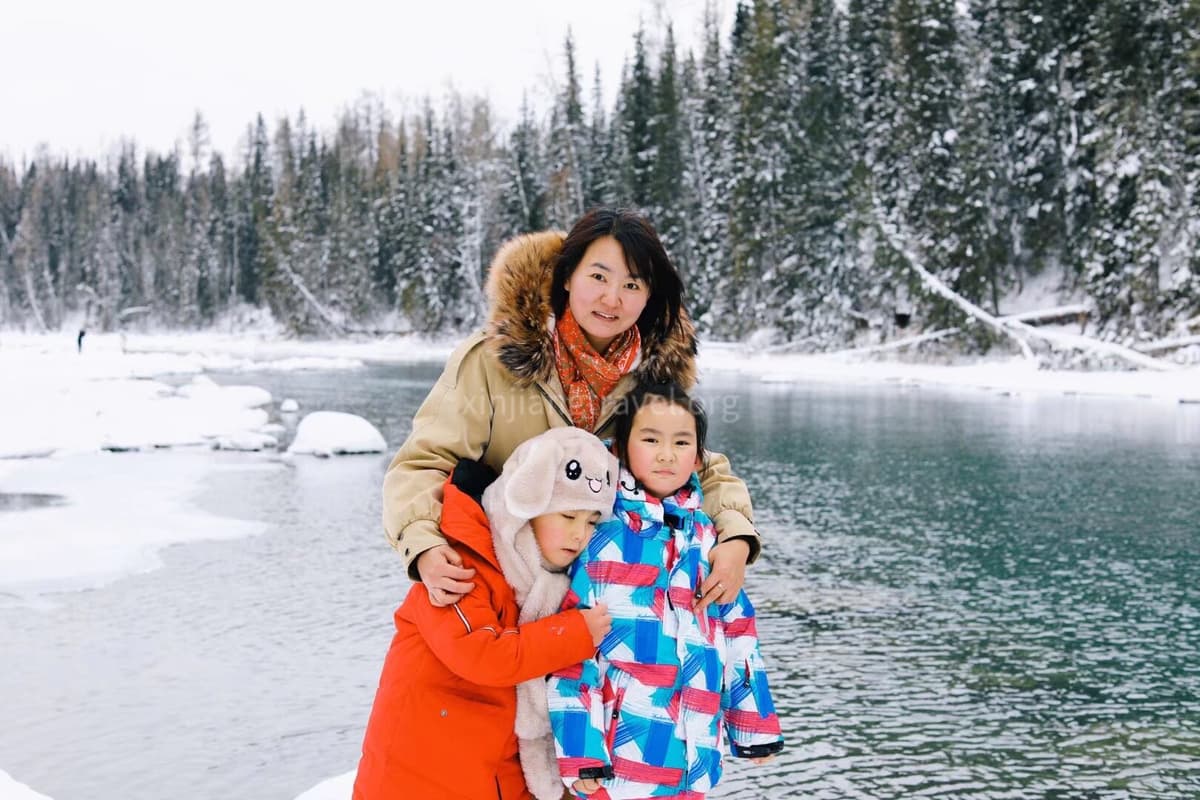
But if you're okay with fewer "perfect views" and more real moments, November starts to make sense. You'll notice small things more—quiet streets in Kashgar Old City, early snow settling over Hemu Village, long drives where you barely see another car.
There's also a practical side: fewer tourists, easier bookings, and often lower costs. You won't need to compete for space, whether it's flights, hotels, or viewpoints.
So, is Xinjiang worth visiting in November?
Yes—if you're not chasing the "best season," but a quieter version of the place.

Altay - Keketuohai - Burqin - Kanas - Hemu
Book a 10-day winter skiing tour to Kanas, Hemu, Altay, Xinjiang, China. Spend 10 days in northern Xinjiang, visit the well-known Kanas Nature Reserve and Hemu village. Try the newly-built 4300-square-meter ski equipment hall in Keketuohai. It's a wonderful tour to Altay Prefecture.
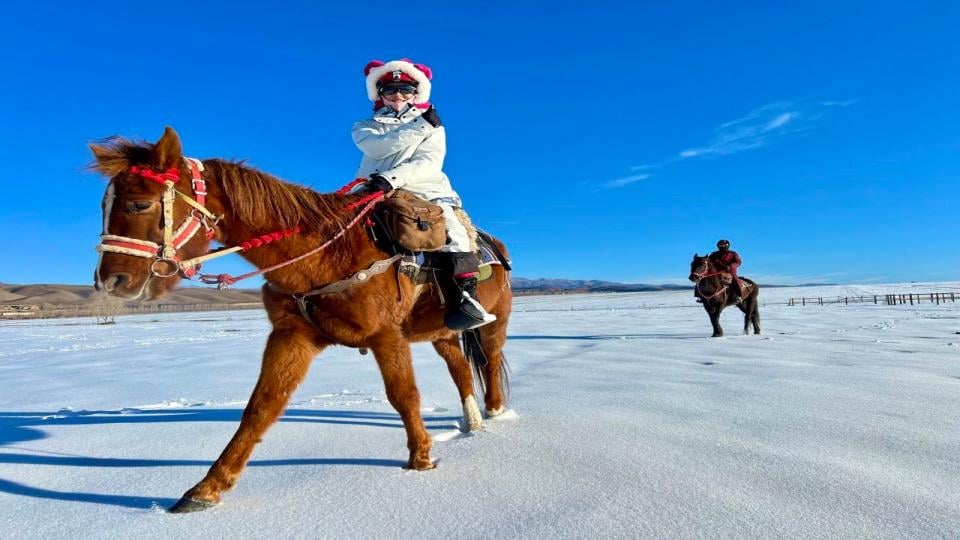
Yili-Zhaosu
Embark on a 6-day magical Zhaosu snow horseback riding tour, where snow-draped grasslands, enchanted pine forests, and the majestic Tianshan Grand Canyon await. Gallop across pristine landscapes, savor unique experiences like cozy herder visits. This tour blends thrilling exploration with serene winter beauty.
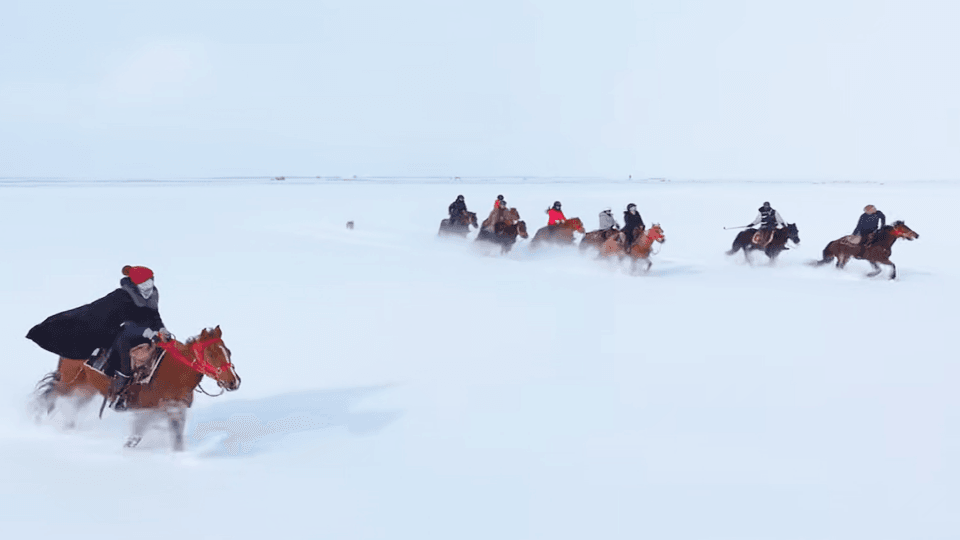
Altay-Kekesu
Embark on a 6-day Altay snow horseback riding tour through Altay's charming landscapes, where Kazakh culture and rides collide. Gallop alongside thousands of horses, master snow polo against mountain backdrops, and live like a nomad. This tour blends excitement, serenity, and unforgettable cultural immersion.