20 years of pioneer in xinjiang tourism for overseas travelers
Born Here, Know Best, Your Journey's Blessed
No Shopping. No Detour, 99% Excellent Review

contact UsOn Wechat
April is when Xinjiang starts to wake up, and you can feel it right away.
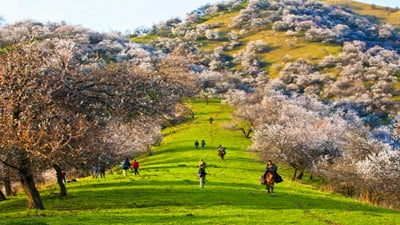
In the north, the mountains still hold some snow, but down in the valleys it's already changing. The rivers are fuller, the grass is coming out, and the first flowers begin to show—especially apricot blossoms around Ili. If you come at the right time, you'll see whole hillsides covered in bloom.
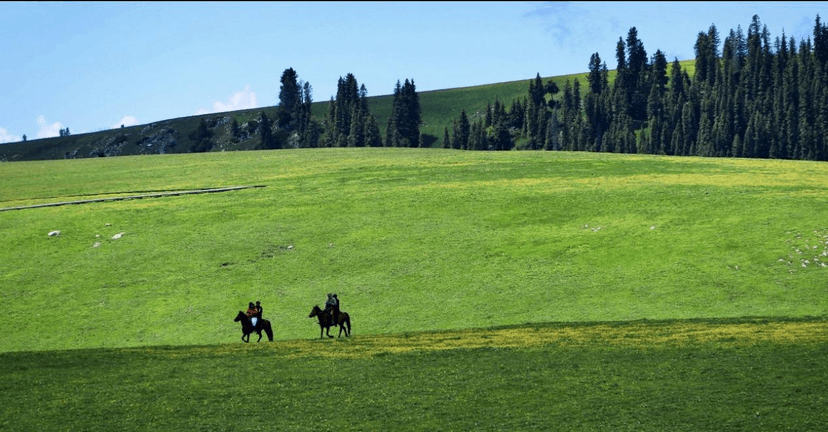
This is a good month to be outdoors. You can hike without dealing with summer crowds, and the weather is comfortable as long as you bring a warm jacket for the mornings and evenings. Around Yili and some Kazakh areas, locals also start taking horses out again, so it's a nice time to try a short horseback ride across open grassland.
In the south, places like Kashgar are already quite mild. Days are warm, skies are clear, and it's easy to walk around the old town or head out toward the Pamir Plateau without worrying about extreme weather.
For travel, April is pretty practical. There aren't many tourists yet, roads are open, and you can move between places without rushing. If you like flowers, light hiking, or just being outside without too many people around, this is one of the better times to come.
Content›Xinjiang Weather in April– Quick Overview ›Best Places to Visit in Xinjiang in April ›Best Spring Experiences in April |
 Xinjiang Weather in April– Quick Overview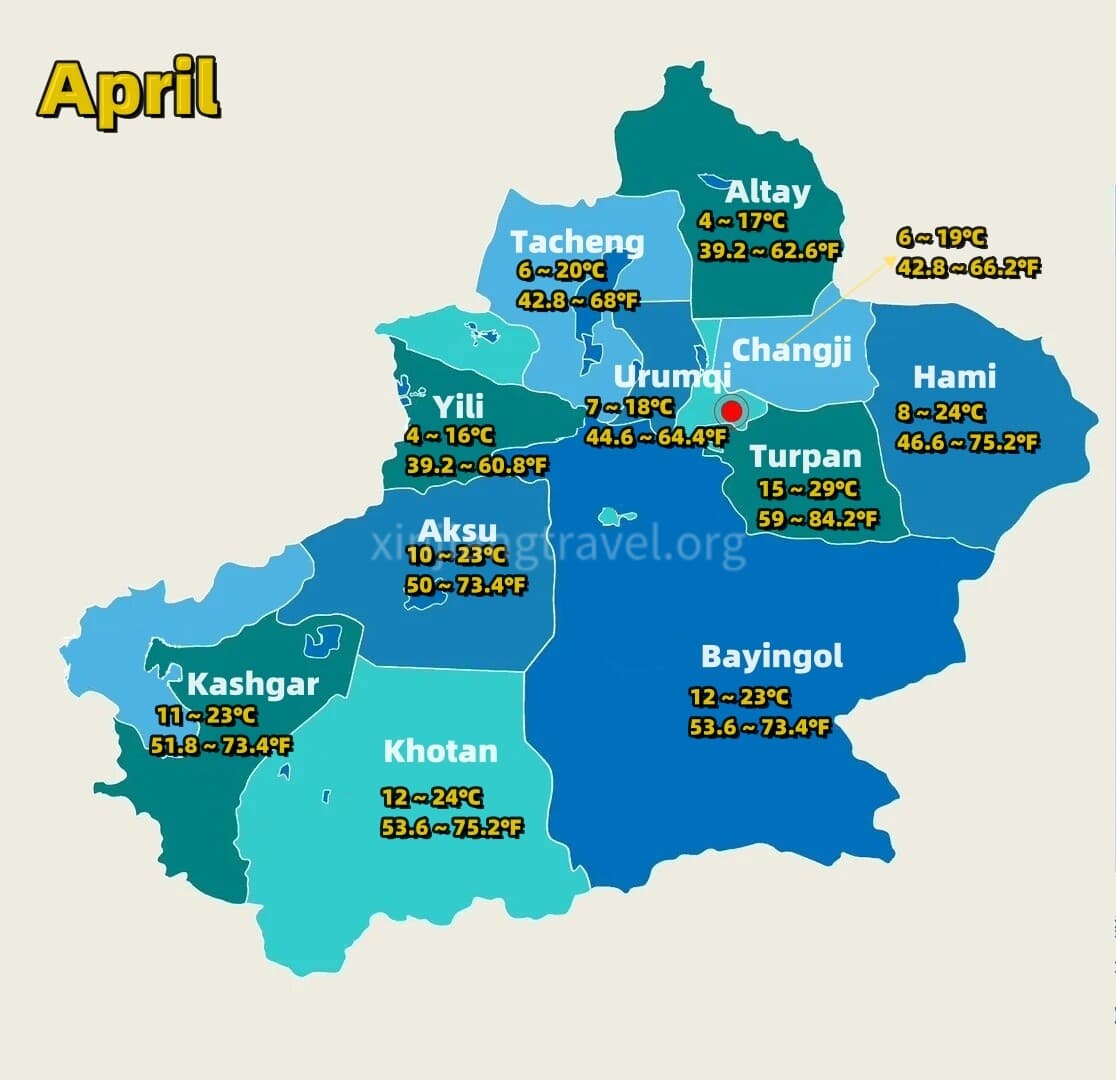
 Best Places to Visit in Xinjiang in April
 April in Xinjiang is featured by "green grass in the north and blooming flowers in the south". In the north, the grasslands begin to turn green bit by bit. It's still early in the season, but you can already see fresh grass coming through. In the south, it feels more like proper spring—trees are in bloom, and you'll see apricot blossoms, pear blossoms, and other flowers across towns and countryside.
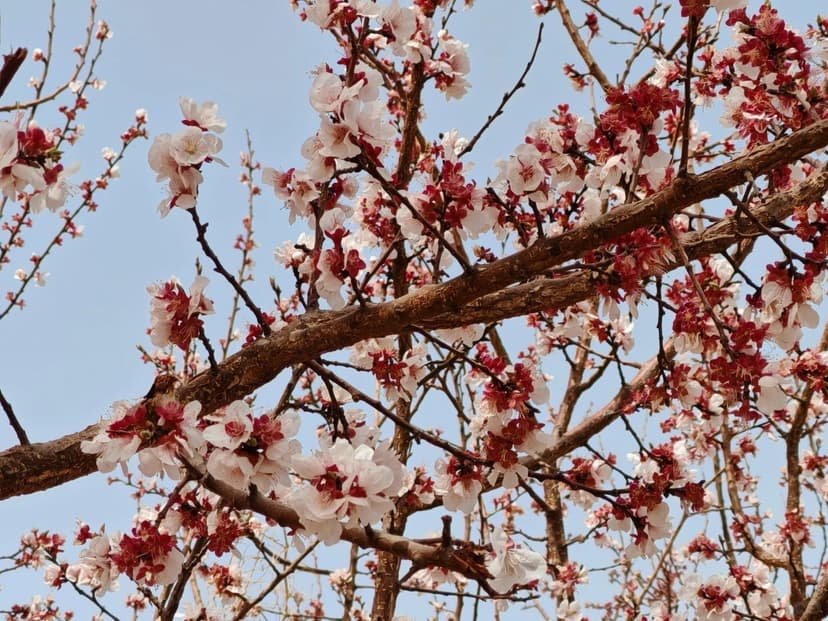
If you're coming for flowers, April is a good time. You can head to Ili for apricot blossoms, Tuergen Valley for a quieter view of wild blooms, or even around Kashgar, where fruit trees start flowering earlier. Scenic spots like Ili Apricot Valley, Tuergen Apricot Valley, Kashgar countryside, and parts of the Tianshan foothills are all good options to see spring flowers in Xinjiang.
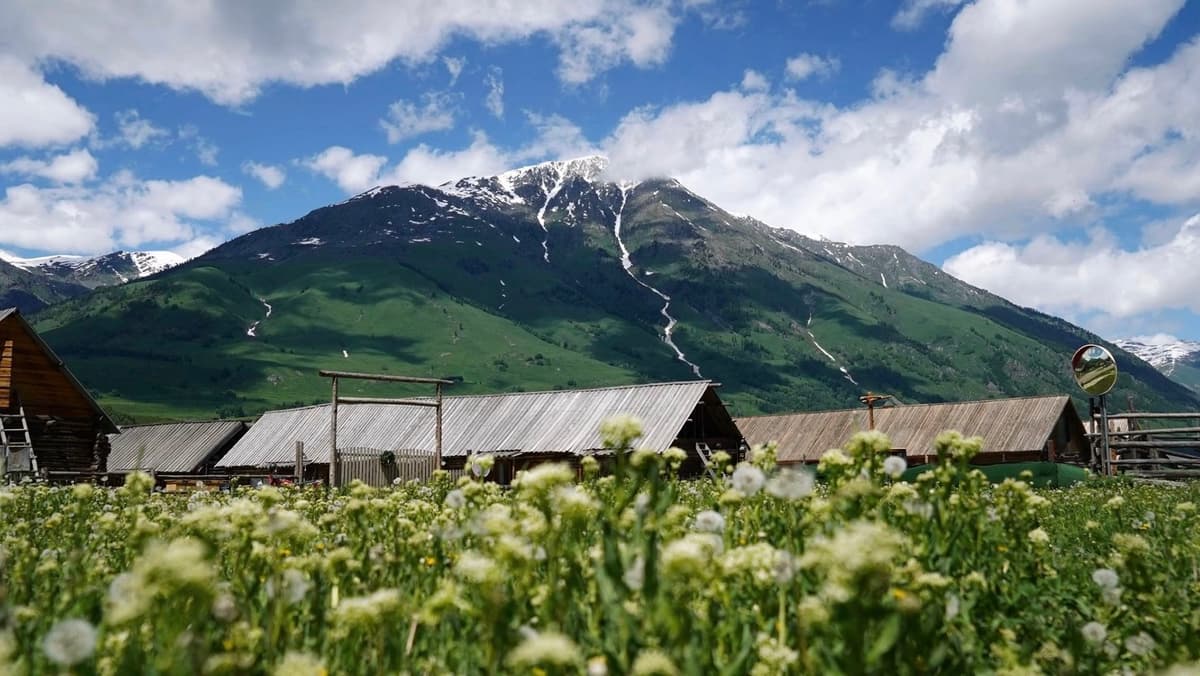
April is the spring recovery period in Altay, with the snow melting completely, the grasslands by the river turning green, and the air fresh. It is the best time for gentle hiking and ecological viewing, with few tourists and quiet scenery.
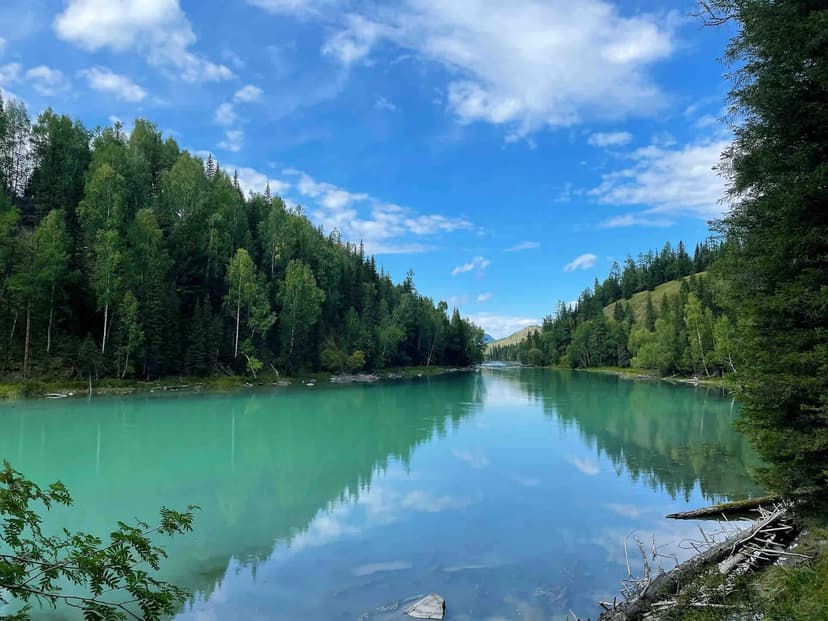
Kanas Lake
The lake is still partly frozen in early April. By mid-month, ice begins to crack and melt. The surrounding forest is bare but snow-dusted. Fairy Bay, Moon Bay, and Wolong Bay have open water by late April. Quiet—no summer crowds.
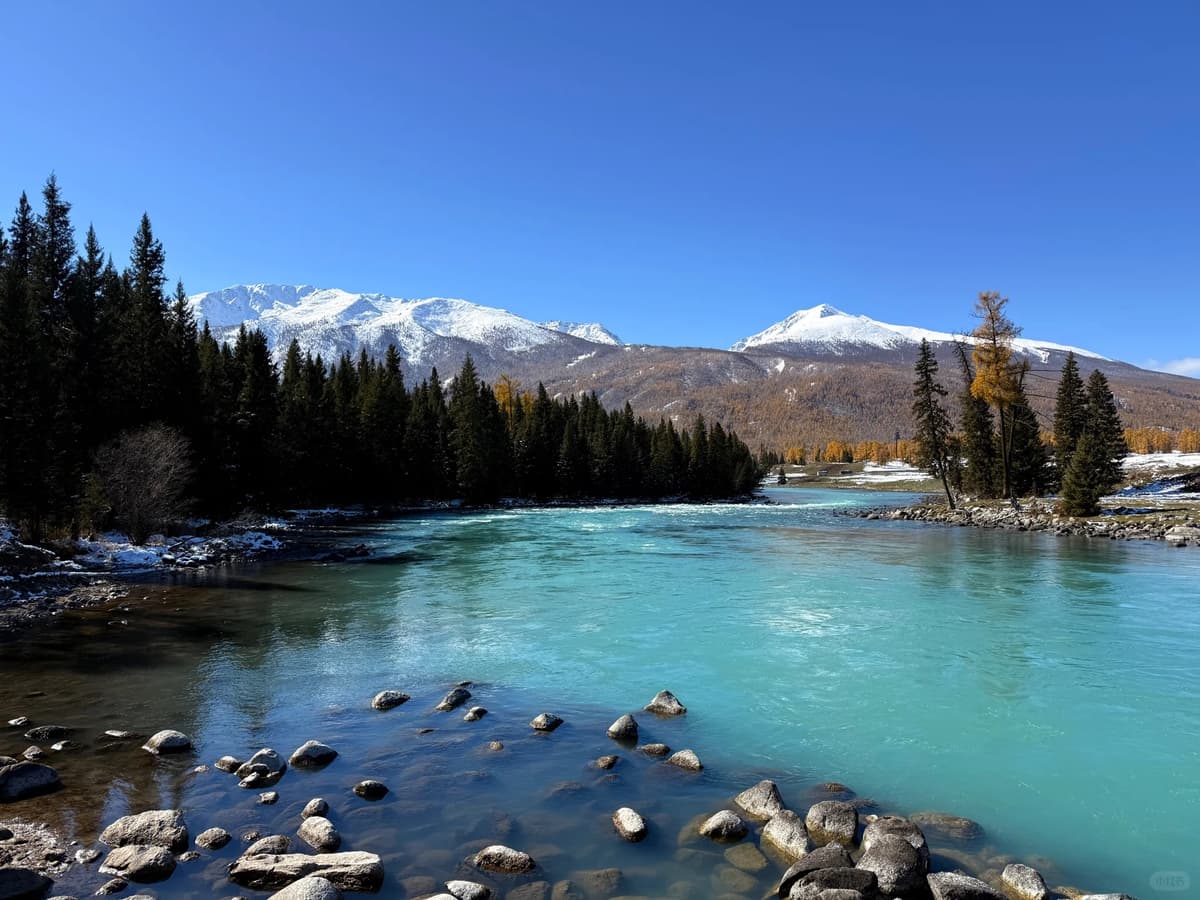
Hemu Village
Snow retreats from the rooftops. The village looks less like a snow globe and more like a settlement coming back to life. Horses are out in the fields. By late April, the first green appears on south-facing slopes. Good for photography before the green fully arrives—contrast of white snow and brown earth.
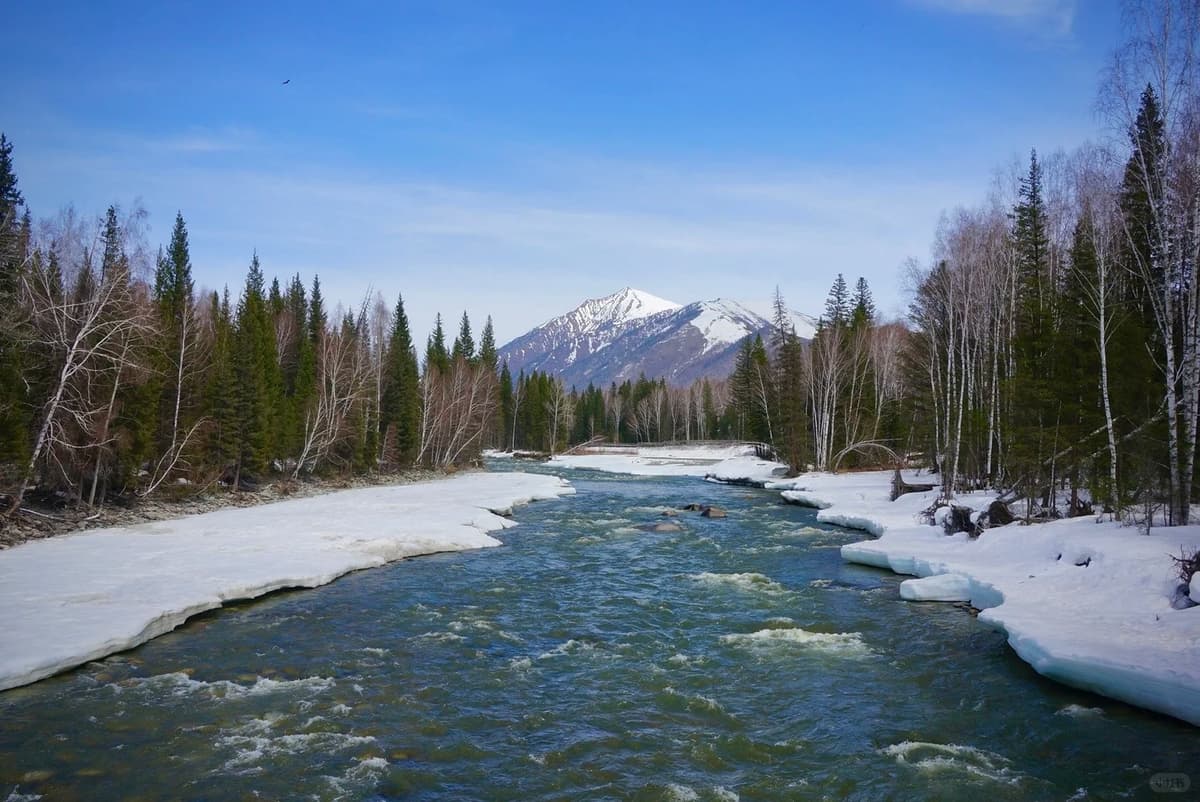
Keketuohai Scenic Area
The Irtysh Grand Canyon thaws completely; the stream flows; the mountain flowers bloom on the valley slope; and the No. 3 Mine Pit has a unique industrial cultural landscape; the air is fresh, with high negative ion content. The scenic spot has light hiking routes, and it is suitable for family travel.
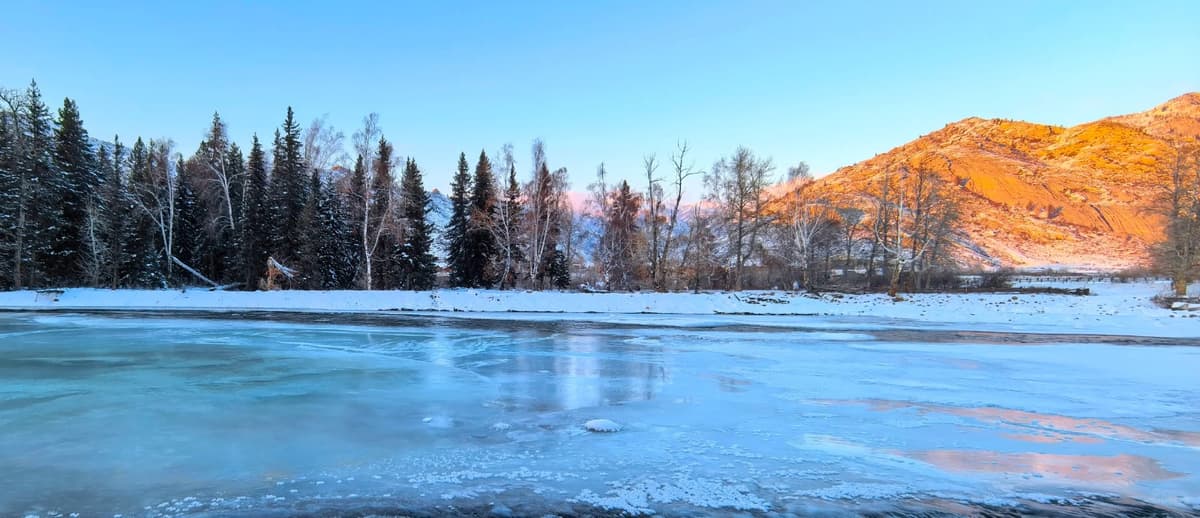
 Practical advice:
Mountain roads can still be icy in early April. Check conditions before driving.
Bring warm clothing—evenings are cold.
Accommodations start reopening after the winter closure. Book ahead if you're going in early April.
Ili is the core area of spring grassland appreciation in Xinjiang in April, with the temperature rising the fastest, the grasslands turning green on a large scale, the apricot blossoms in the valley fading, and the apple blossoms and pear blossoms blooming one after another, with rich and layered spring scenery
Turgen Apricot Valley
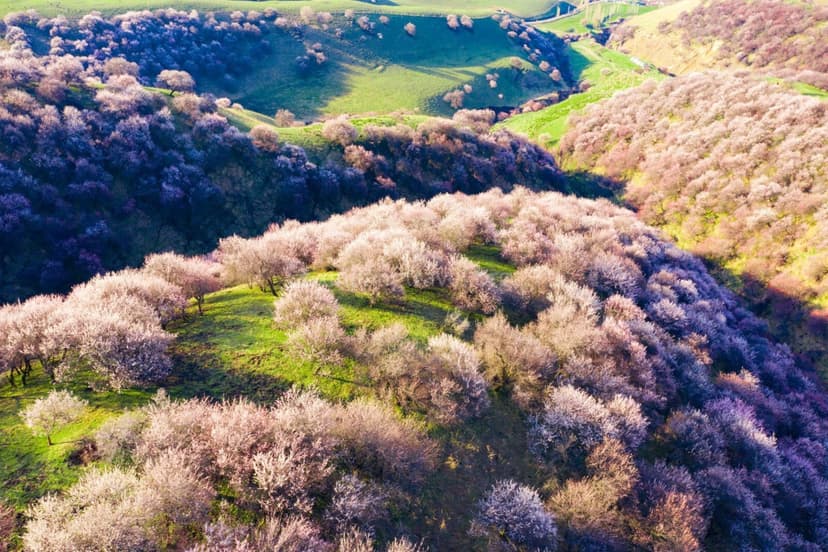
This is the largest remaining wild apricot forest from medieval times. The trees grow on hillsides, some centuries old. In early to mid-April, the valley turns pink and white. Blossoms cover the slopes, with snow-capped mountains in the background.
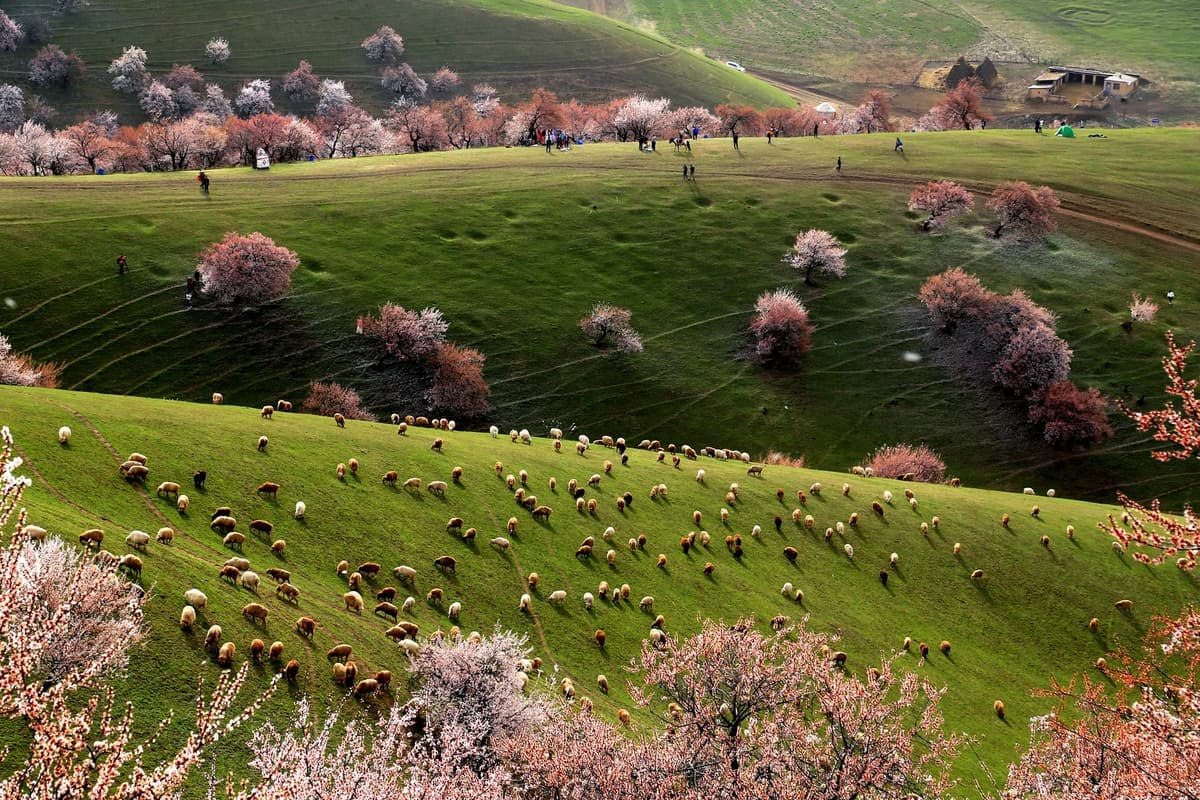
Karakul Grassland
The grassland recovers slowly, the spring scenery is quiet and fresh, the wild flowers bloom on the grassland in late April, and the canyon has a grand landscape; few tourists and a high viewing experience. It's suitable for photographers, and the aerial grassland viewing platform is the best shooting spot; you can also live in the grassland yurt to experience the Kazakh folk customs.
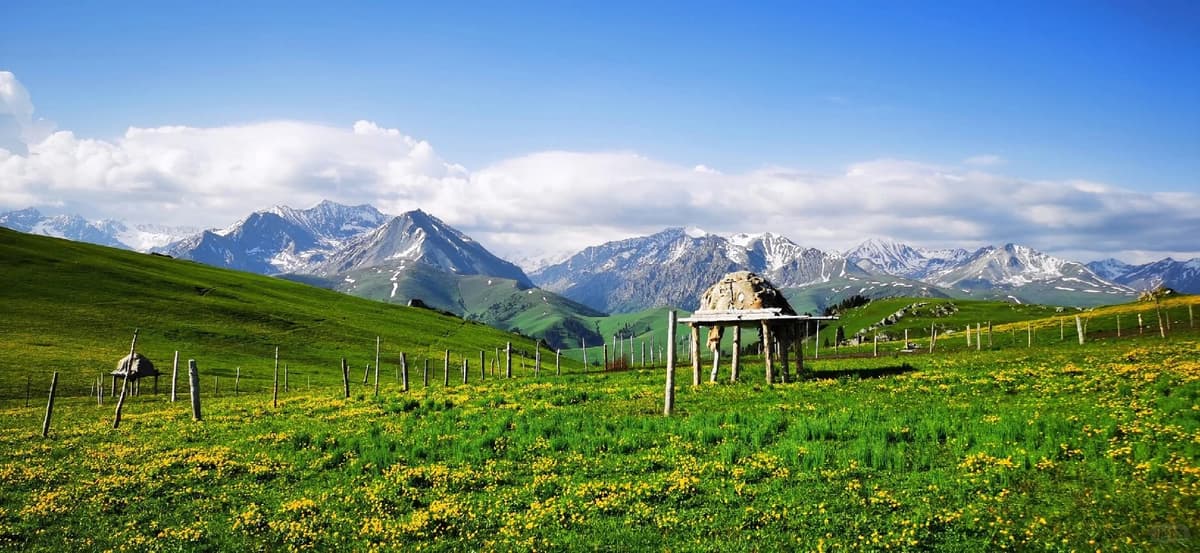
Naraty Grassland
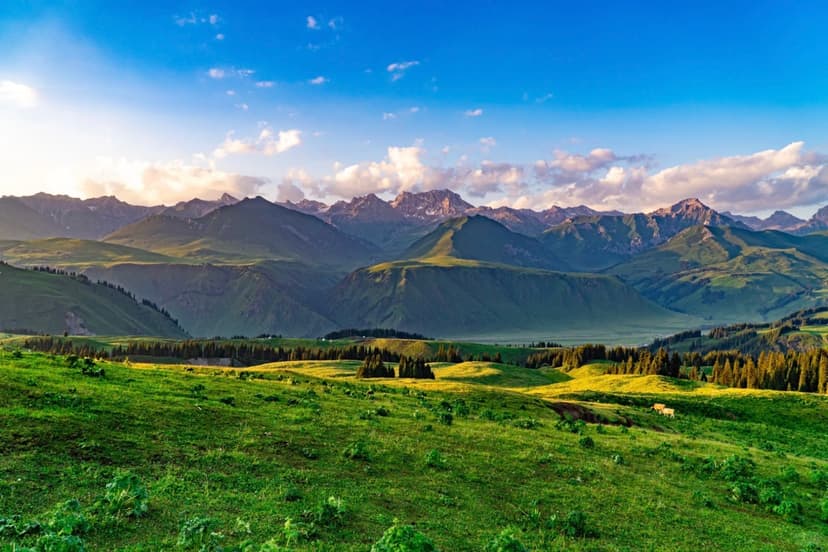
The grassland turns green on a large scale in early April, known as the "first green grassland in Xinjiang"; the snow on the distant Tianshan Mountains has not melted completely, forming a unique landscape of "green grass with white snow".
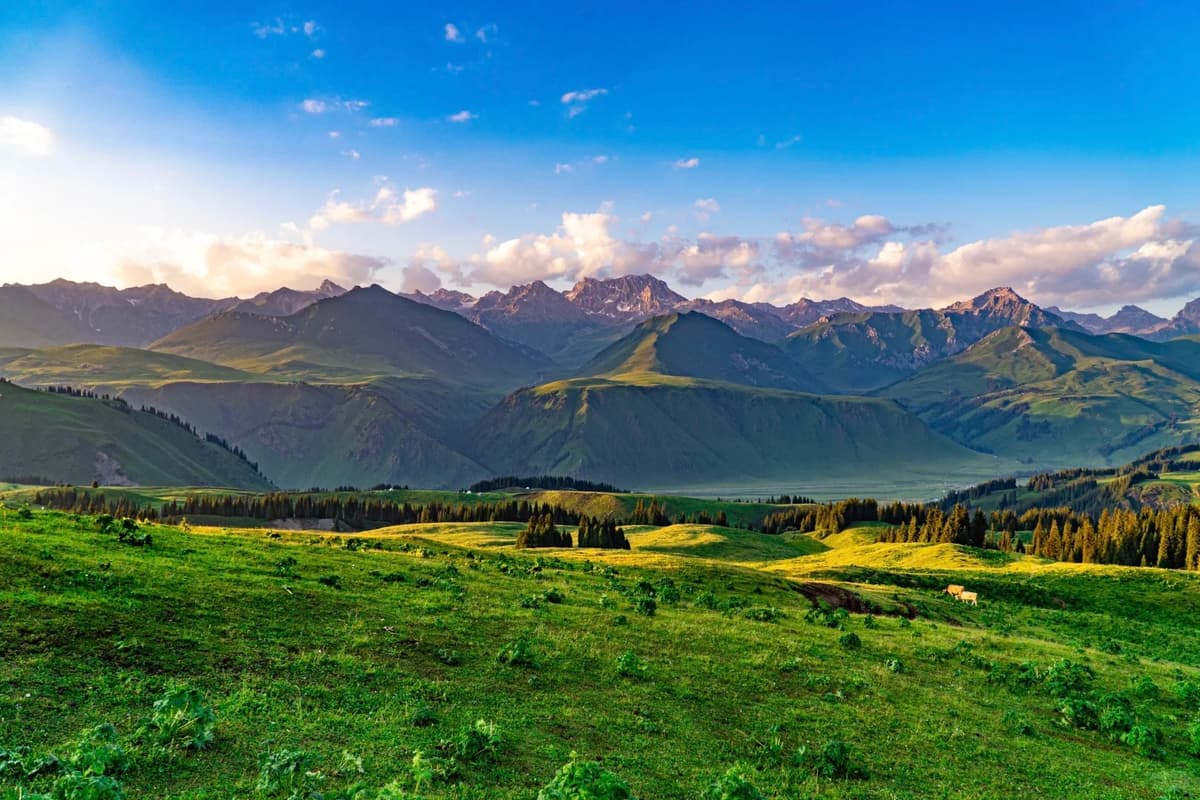
Qiongkushitai Village
Hidden in the Tianshan Mountains, this is a pristine Kazakh nomadic village. The wooden houses grow grass on the roofs, blending perfectly with nature. The rolling hills behind the village are called the "curvy human body grasslands" due to their smooth, flowing lines. It is a paradise for shooting the interplay of light and shadow on the grassland.
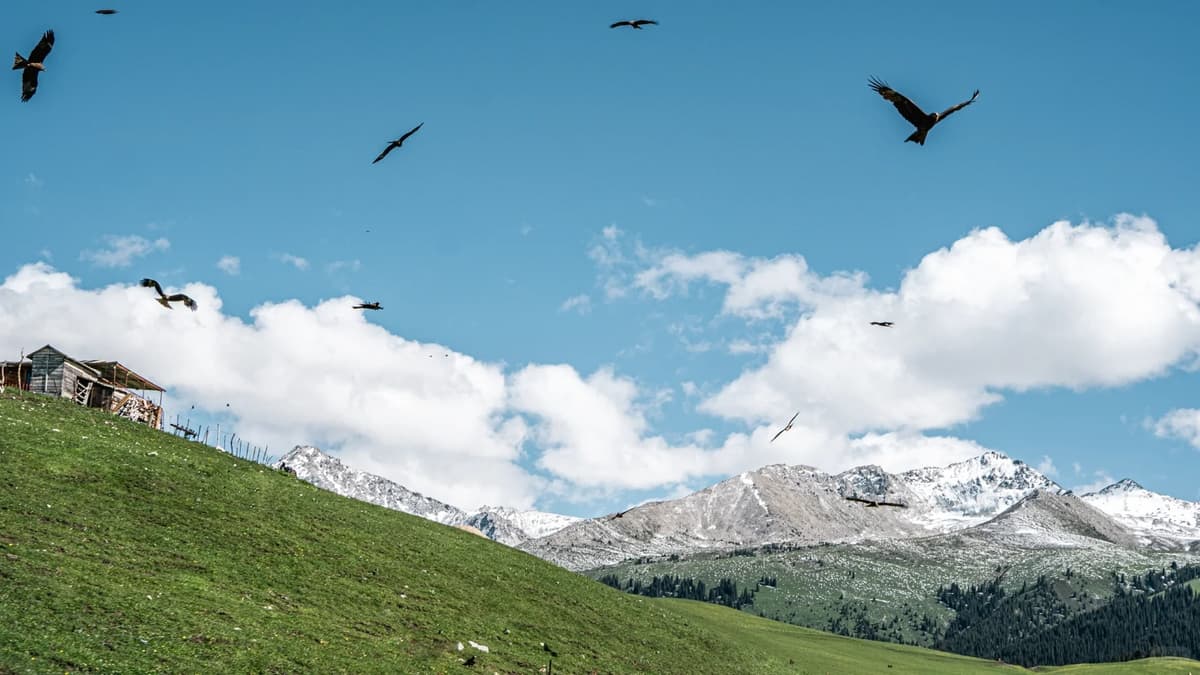
Sayram Lake
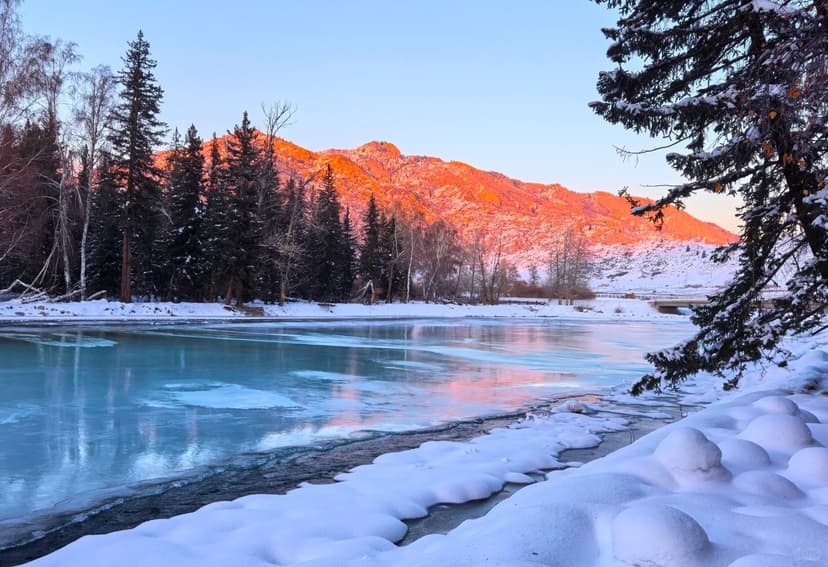
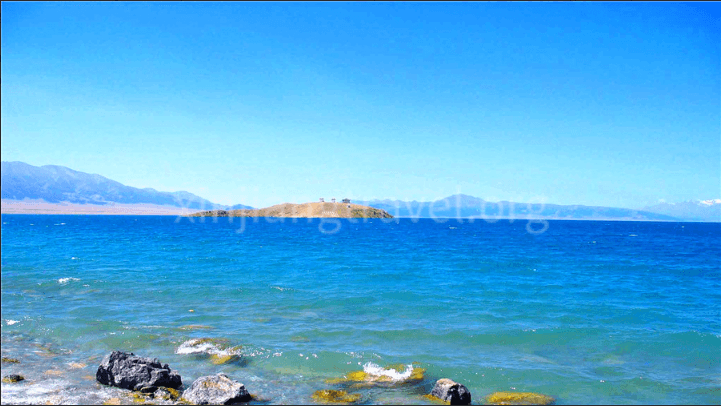
Sayram Lake in April hosts the "last feast of blue ice". The lake is half-frozen, half-thawed, with blue ice interwoven with lake water. Ice pushes create a roaring collision of ice blocks, and snow-capped mountains around the lake reflect on the water. Sunset bathes the ice in golden light, making it a perfect spot for minimalist landscape photography with very few tourists.
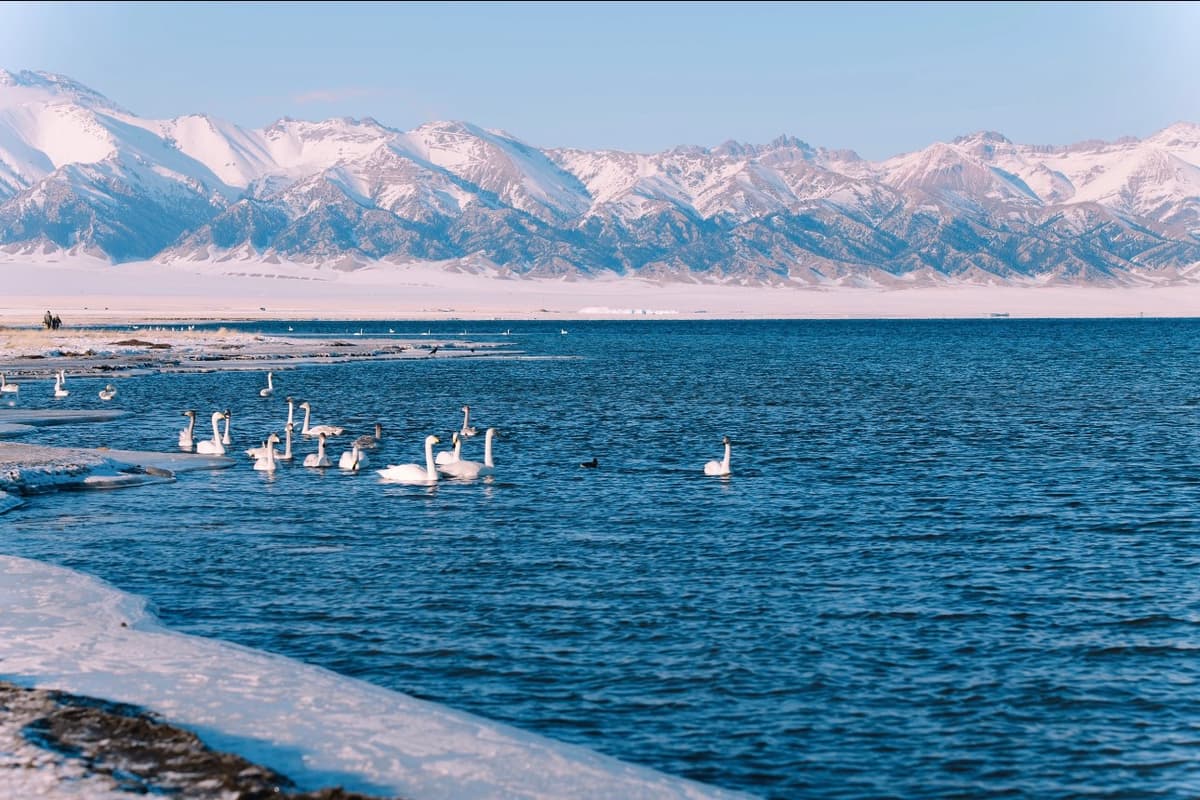
Practical advice:Apricot blossoms last about 10–12 days. Timing varies by elevation—lower valleys bloom first. Check local updates.
Sayram Lake: If you want to go to Sayram Lake, the ice conditions change daily in late April. You should ask locals before walking on ice.
The lakeshore is windy. Bring a windproof jacket.
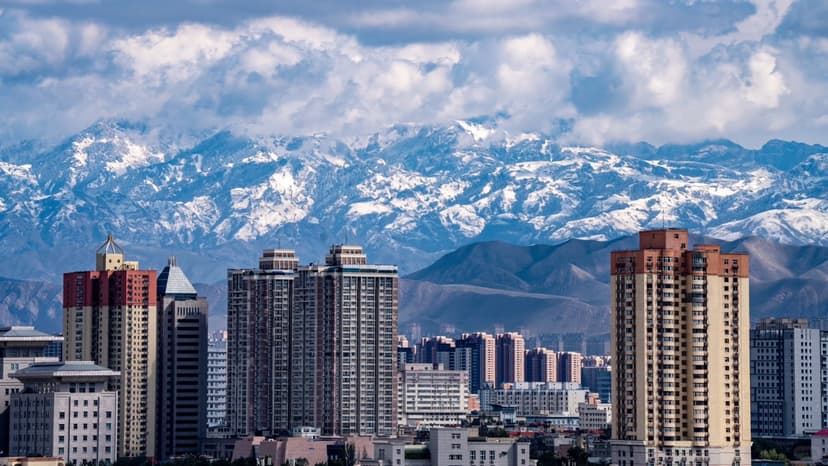
Urumqi in April is a city emerging from winter. Streets are clear. Parks are green. Daytime is comfortable for walking.
Heavenly Lake (Tianchi):
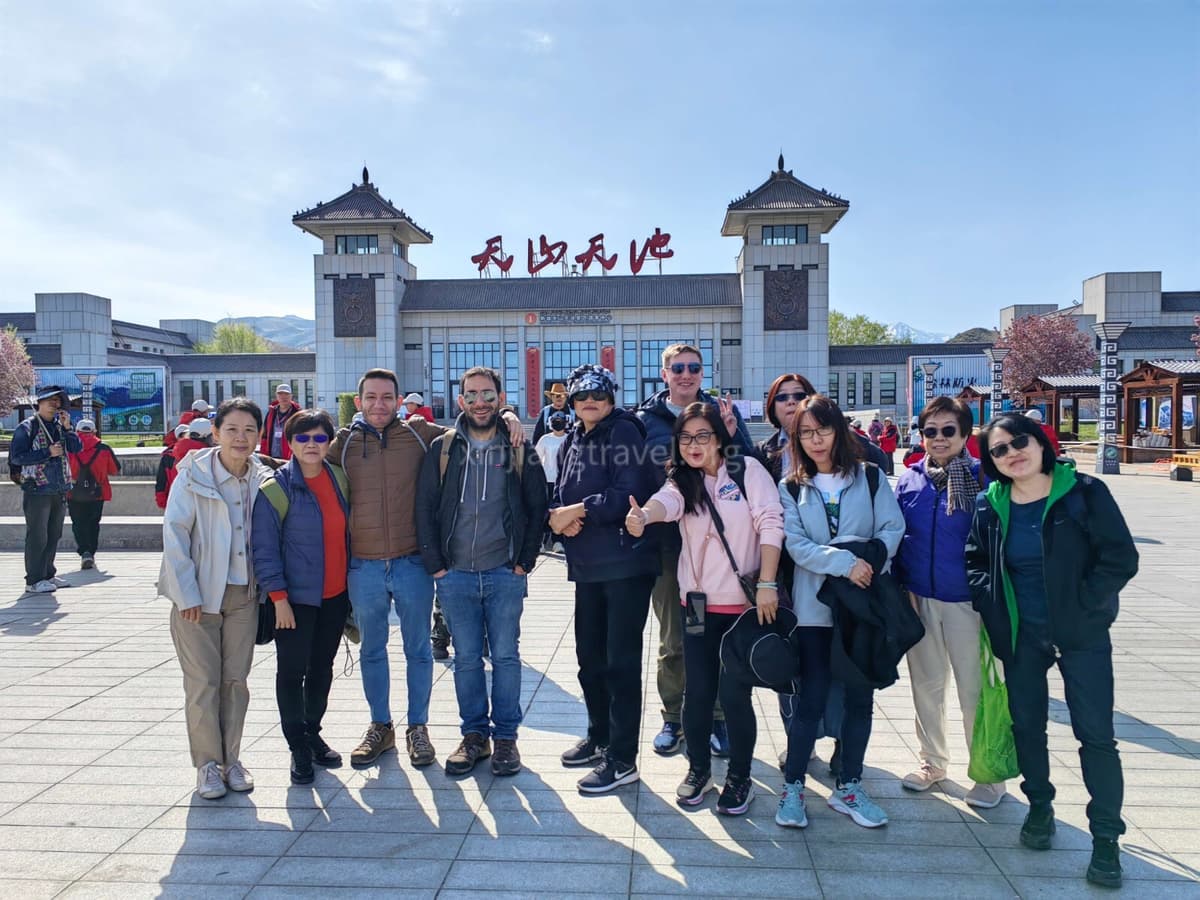
The lake is still partially frozen in early April. By late April, most of the ice is gone. Bogda Peak (5,445 meters) is still snow-covered, reflected in the clear water. Locals call this "half snow, half spring." Walkways are clear. The whole tour takes about 4 hours; you can take a cruise ship on the lake to view the scenery; the cable car to the mountain top is open, with a broader view.
International Grand Bazaar:
Still the main market. Busy but not packed. Indoor stalls are warm. Good for buying dried fruit, nuts, and souvenirs. Lamb skewers and pilaf are available fresh.

Nanshan Pasture
The closest grassland scenic spot to Urumqi, the grass turns green in early April, the mountain flowers bloom one after another, and there are flocks of sheep and horses on the grassland. You can drive for about 1 hour from the urban area, and it is suitable for a one-day trip; you can experience grassland camping and barbecue (comply with the fire prevention regulations).
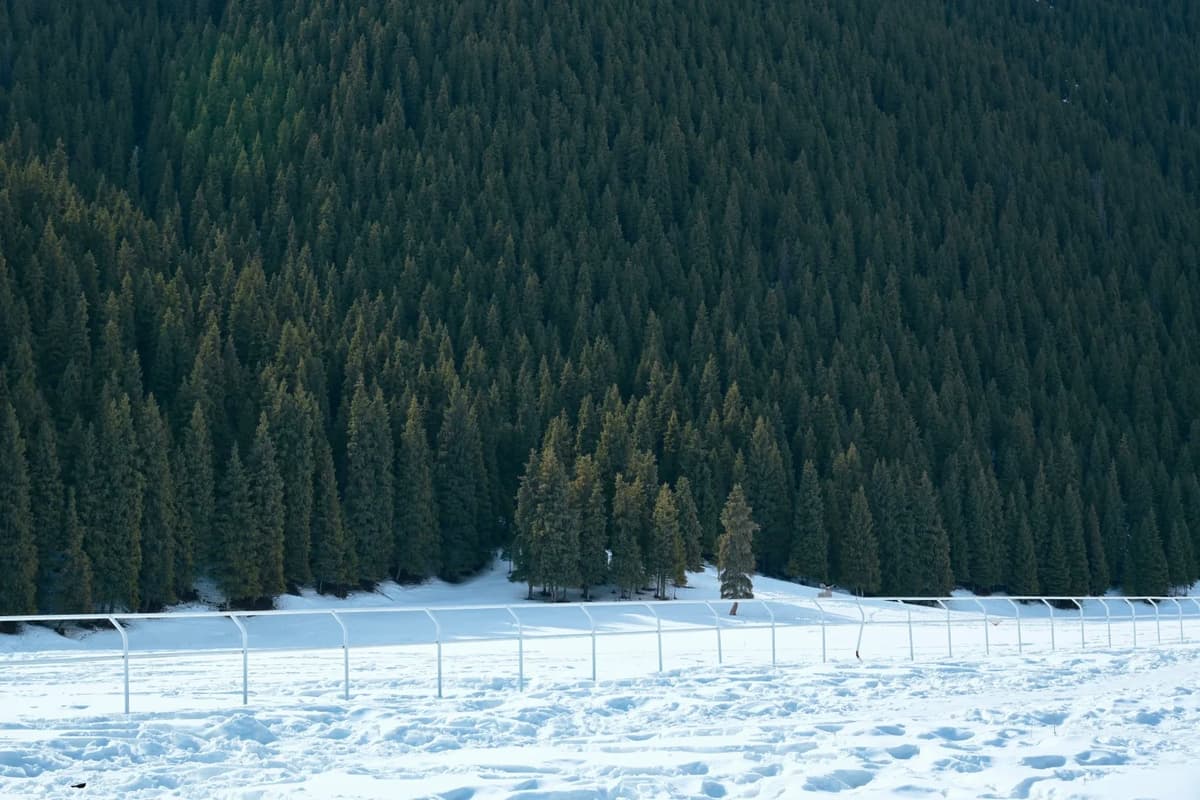
April is a warm spring in Kashgar, with no wind and mild temperatures in the middle and late April, the pear blossoms and rose flowers in the ancient city are in full bloom, and the ethnic customs are strong. It is the best time for cultural exploration and slow travel in the ancient city.
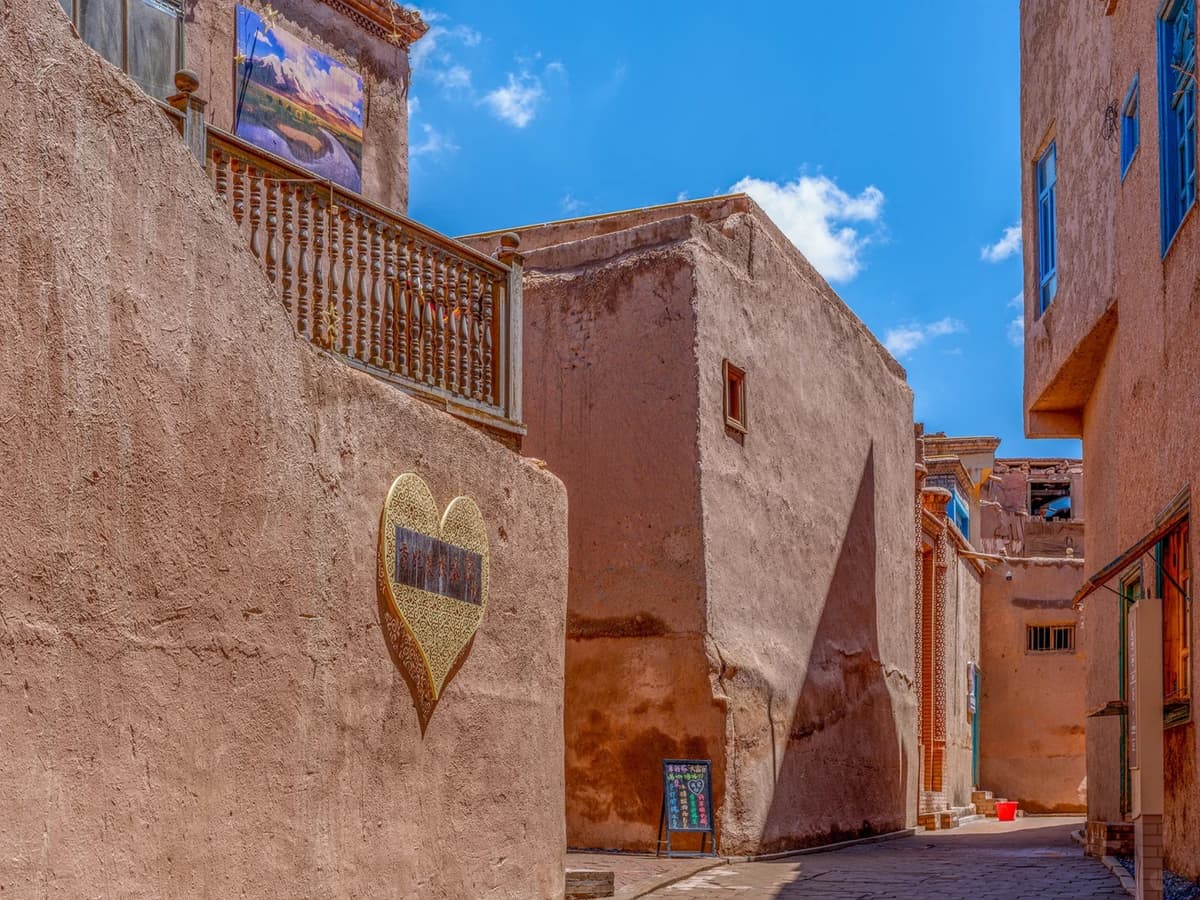
Kashgar Old Town
The maze of alleys, mud-brick walls, carved wooden doors. In April, the weather is perfect for walking. Children play in the lanes. Craftsmen work in open shops. The century-old teahouses are busy.
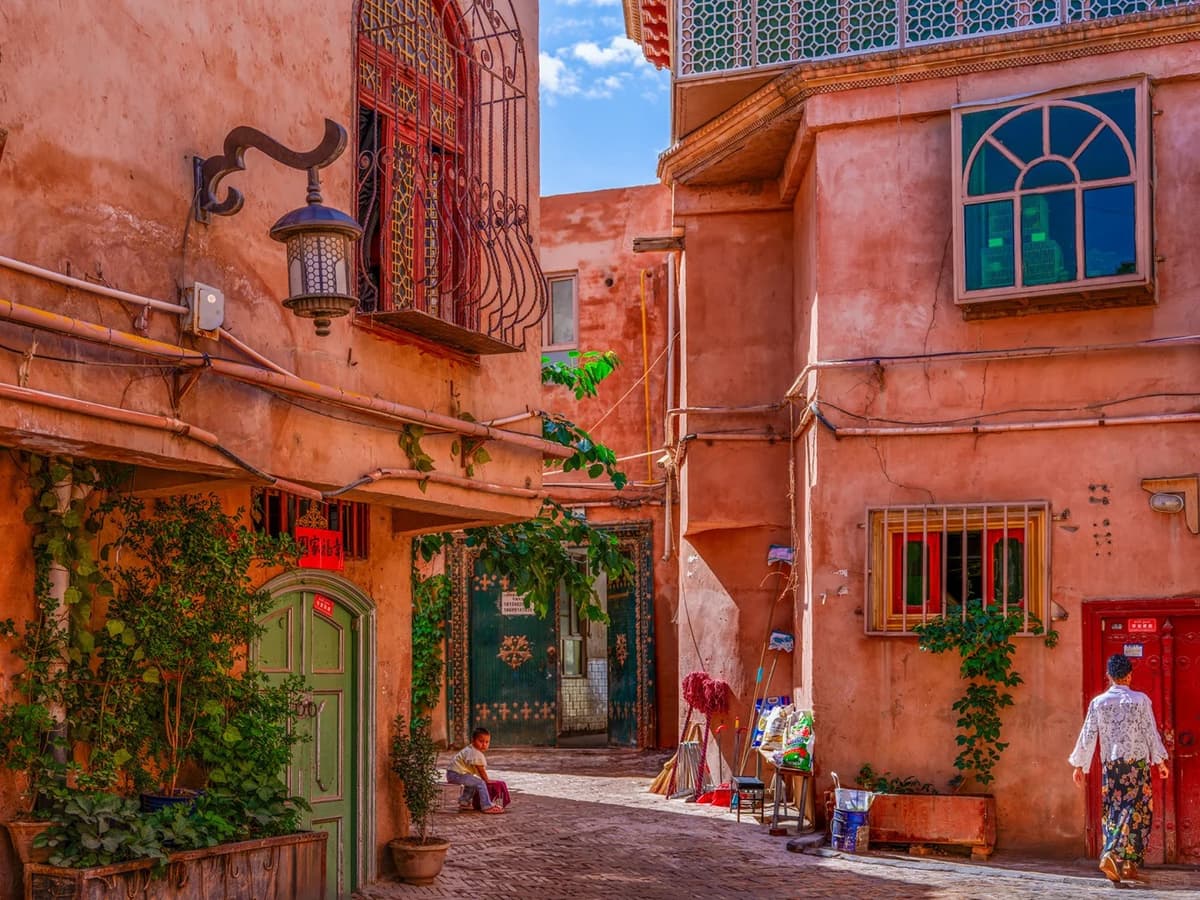
Gaotai Residence
The traditional Uyghur building complex, with a history of hundreds of years, the spring flowers climb on the earthen walls, the architectural style is unique, and it is a living museum of Uyghur architecture.
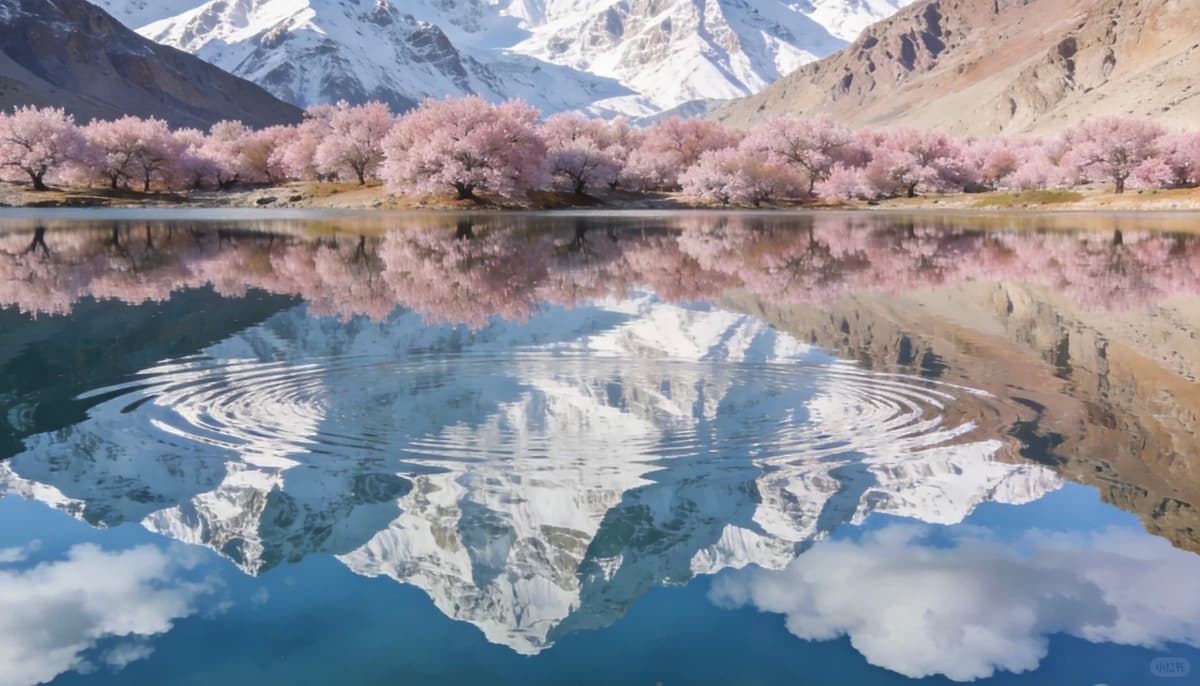
Pamir Plateau -- Taxkorgan Apricot
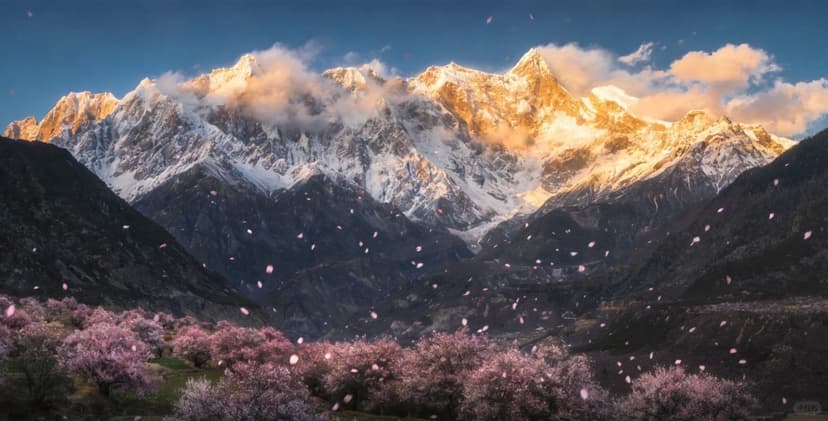
This is the other apricot blossom destination in April. Unlike Ili's valley blossoms, here the trees grow in high-altitude valleys (around 3,000 meters). In early to mid-April, apricot blossoms appear among traditional Tajik stone houses. Snow-capped peaks in the background.
Practical advice:You need a border permit for Taxkorgan and the Pamir Plateau. Apply in Kashgar (takes a few hours).
High altitude (3,000–3,600 meters). Acclimatize in Kashgar for a day before going up.
The Sunday Livestock Market is still running—go early (8 a.m.) to see trading.
April is the ideal time for Turpan. Summer heat hasn't arrived yet. Daytime temperatures are warm enough for short sleeves but not oppressive. Good for ruins, desert, and apricot blossoms.
Toksun Apricot Forest
Called "the first spring in Xinjiang." Apricot blossoms peak in late March to early April—earlier than Ili. The forest covers thousands of acres. In peak bloom, the valley turns pink and white. Some years, they run hot air balloon rides over the blossoms. Night tours with lights are available.
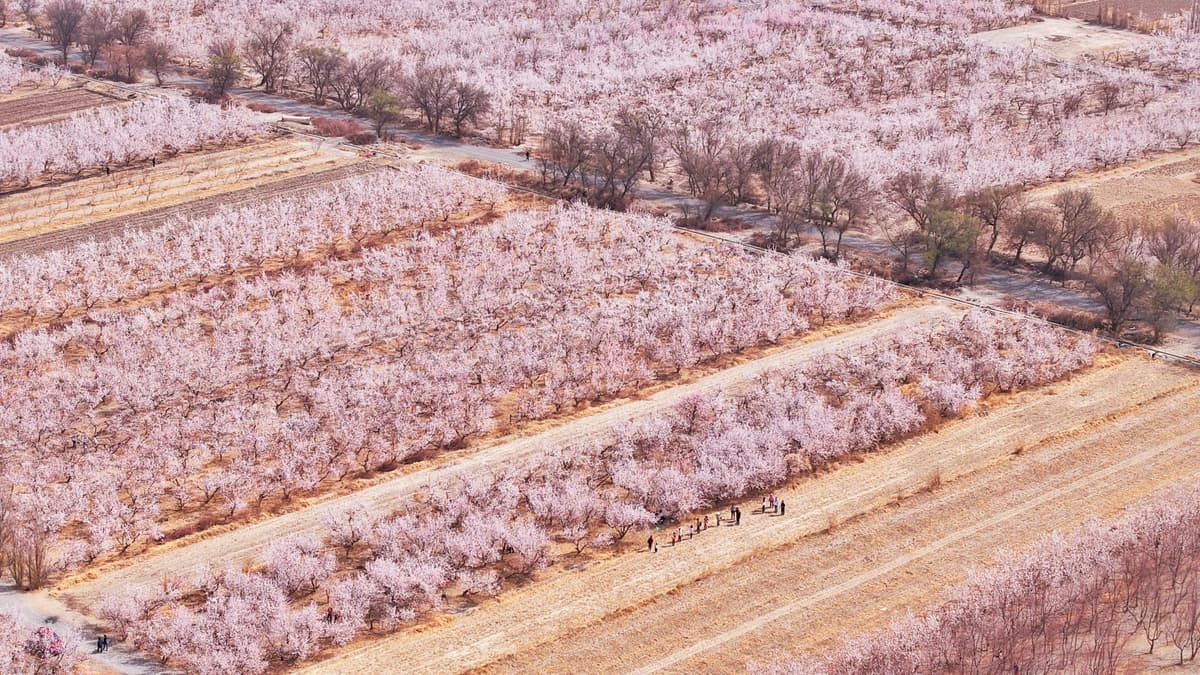
Flaming Mountain
The red sandstone ridges are striking against the blue sky. In April, you can walk around without roasting. Good for photos. The nearby Karez Irrigation Museum shows how ancient underground channels bring water to the desert.
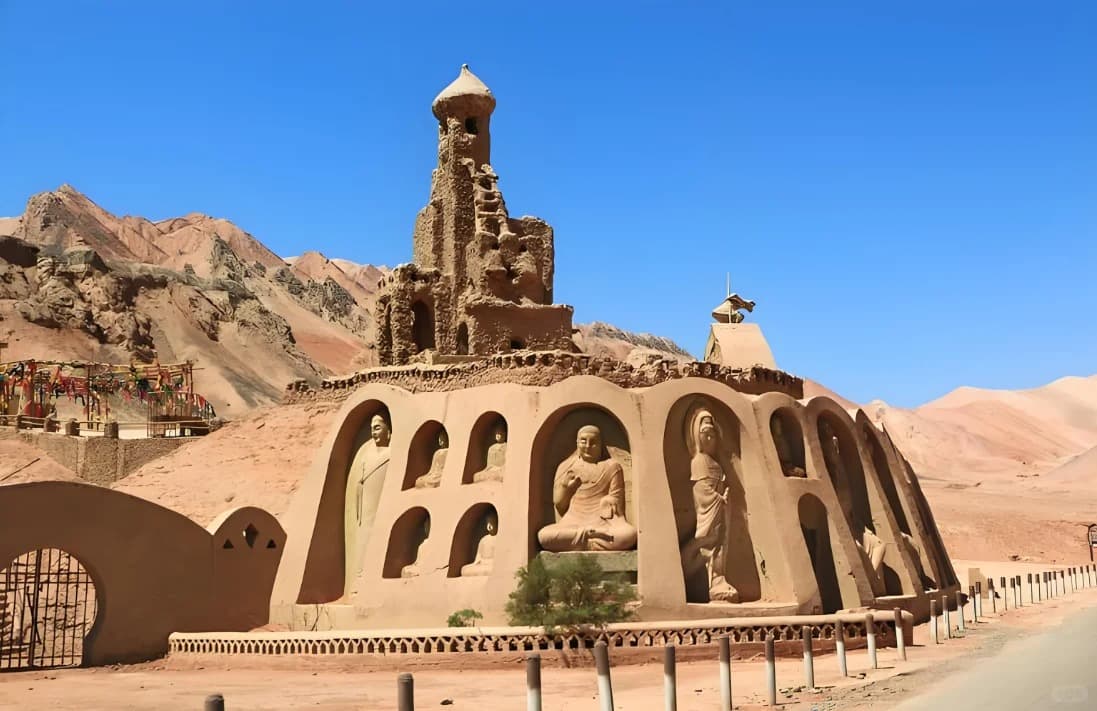
Jiaohe Ruins
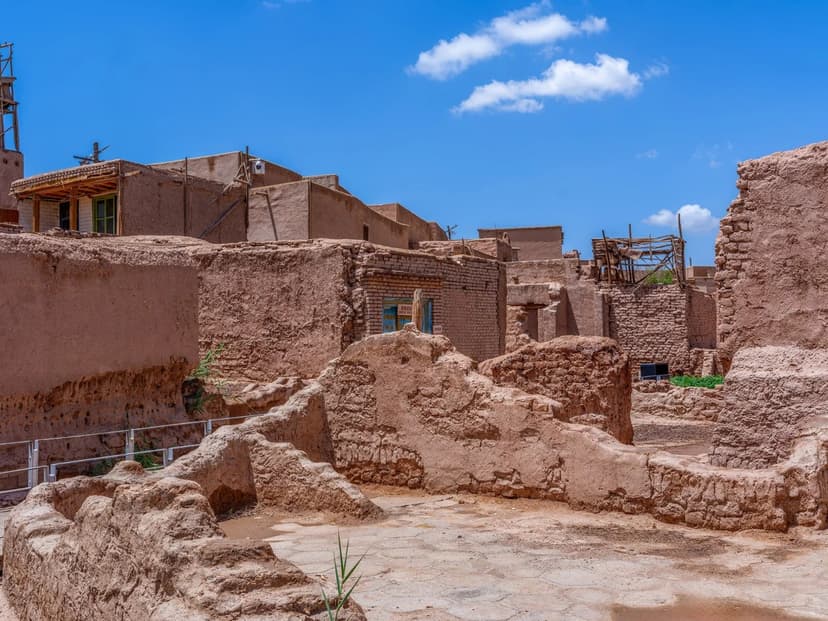
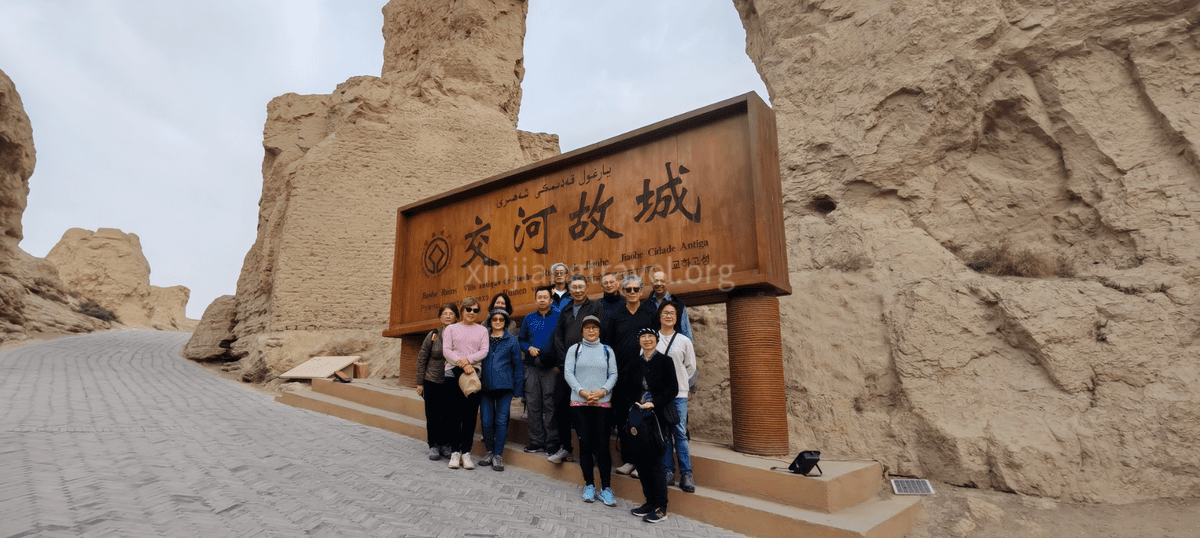
One of the best-preserved Silk Road cities. Built on a 30-meter-high mesa. Streets, courtyards, and temple foundations are still visible. April weather is perfect for walking the site. Soft morning and evening light for photos. No crowds.
Kumtag Desert
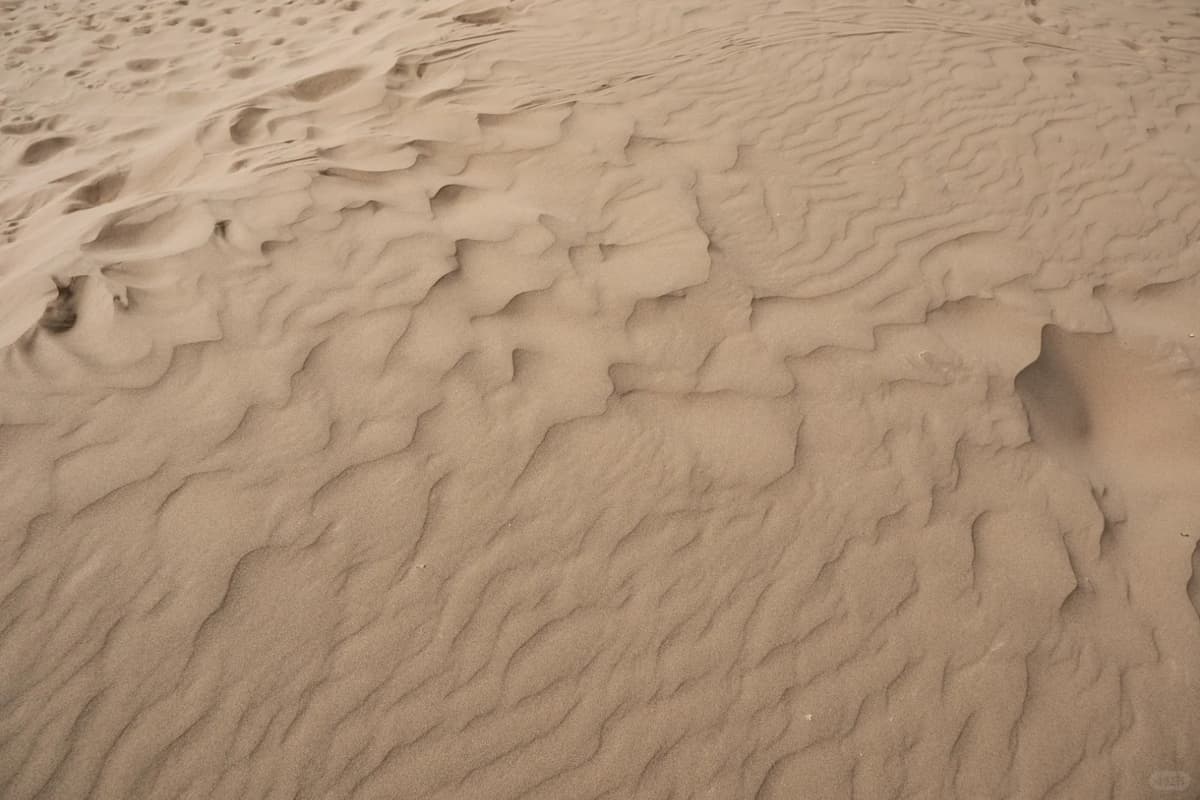
A desert next to the city. Dunes in April may still have patches of snow—locals call it "sand and snow together." Camel rides and buggies are available. Good for a half-day trip.
 Seasonal fruit
In there, you can taste the earliest Fireland watermelon in Xinjiang, available in early April.
First Honeydew Melon (Yangjiao Melon) ripens in early April; it has a strong aroma, crisp flesh, and high sugar content.
The Bull Horn Melon is the Turpan specialty, curved like a bull horn, and available in April.
 Best Spring Experiences in April
April is one of the most pleasant months to visit Xinjiang. The weather is comfortable for outdoor activities, with daytime temperatures usually between 10°C and 20°C in most areas. In the north, it can still feel cool in the mornings, while the south is warmer and sunnier. This is when the landscape turns green and flowers start to bloom.
The highlight of April is the apricot blossom season. In the Ili River Valley, especially around Turgen (also called Nalati Apricot Blossom Valley) in Xinyuan County, wild apricot trees cover the hills in pink and white. The bloom usually lasts about 7 to 10 days in early to mid-April. You can walk through the valleys, take photos with the blossoms against snow-capped mountains, and see local Kazakh horses grazing nearby. Many visitors say this is one of the most beautiful spring scenes in Xinjiang.
Further west on the Pamir Plateau near Tashkurgan, ancient apricot trees bloom a bit earlier, from late March to early April. The pink flowers against the high, snowy mountains and traditional Tajik villages create a very special view. This short blooming window draws photographers and travelers who want a quieter experience.
As April continues, the grasslands begin to turn green. Nalati Grassland and areas around Sayram Lake start showing fresh green hues, making them nice for light hiking and scenic drives. In southern Xinjiang, cities like Kashgar and Turpan have warm, sunny days that are perfect for exploring old towns and alleyways before the summer heat arrives.
Xinjiang Weather in April is quite changeable, so dress in layers. A light jacket, comfortable walking shoes, a sun hat, and sunscreen are recommended. The air is still dry, so bring lip balm and moisturizer.
April offers a good balance — fewer crowds than summer, pleasant temperatures, and the chance to see the famous apricot blossoms and early spring scenery. Whether you enjoy nature photography, short hikes, or relaxed cultural walks, spring in Xinjiang feels fresh and welcoming.
Many travelers choose April to combine flower viewing in Ili or the Pamir with visits to Kashgar's historic sites. It is a great time to experience the region's natural beauty without the busy summer season.
April in Xinjiang has the most changeable weather, so you need versatile clothing. The best way is to dress in layers — you can easily add or remove them as the temperature changes during the day.
Start with a base layer. In the north, wear a long-sleeve shirt or light thermal top. In the south, a short-sleeve shirt is often enough during the day.
Add a mid-layer such as a thin cardigan, light fleece jacket, or short sweater. This is useful for cooler mornings and evenings, and easy to carry when you don't need it.
For the outer layer, bring a windproof jacket. It is especially helpful in the north and in desert areas. A light down vest can be useful if you plan to visit the mountains.
For bottoms, choose casual pants, straight-leg jeans, or thin hiking pants. These work well everywhere in Xinjiang. Loose styles are more comfortable.
For footwear, breathable non-slip casual shoes or low-top hiking shoes are the best choice. They are suitable for both grassland trails and city streets.
Don't forget accessories: a sun hat, sunglasses, and high-SPF sunscreen. The sun in April can be stronger than it feels. Also, bring lip balm and moisturizer because the air is still quite dry.
With this simple layering system, you will stay comfortable while exploring Xinjiang in April, whether you are walking on green grasslands or visiting old towns.
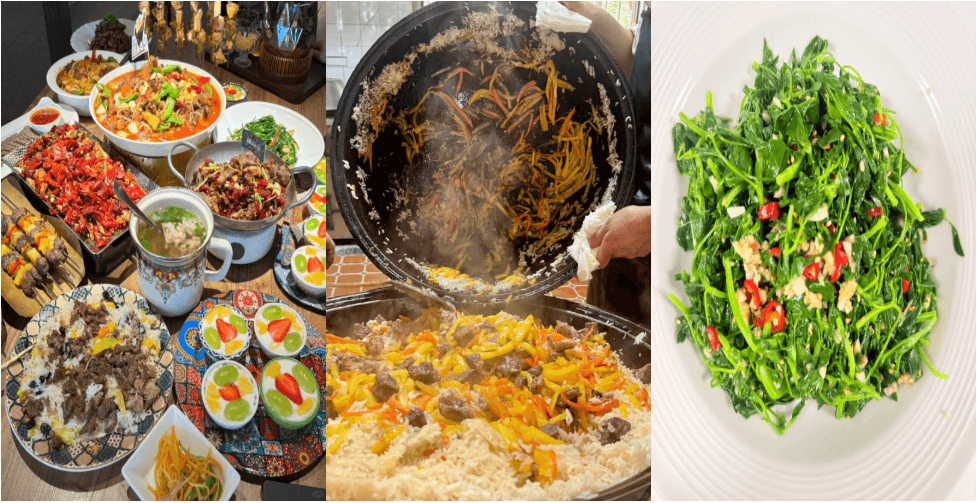
Lamb skewers are a must-juicy, smoky, and rich in cumin flavor.
Pilaf, a traditional rice dish with lamb, carrots, and spices, is comforting and flavorful.
Spring wild greens are fresh and only available for a short time—Alfalfa (cold salad /dumplings).
The first crop of wild onions in April is the most tender, crisp, refreshing, spicy, and sweet. Scrambled eggs with wild onions or cold wild onions are the "fresh" highlight of Xinjiang's spring table.
Cold-water fish from Sayram Lake, with the fattest meat in April. Steamed or braised, it's tender and boneless
Elm seeds are tender in April. Steamed elm seed rice with chili oil and garlic is sweet and spicy; elm seed buns are a delicious spring coarse-grain with a soft texture.
Southern Xinjiang is warm but not dry in April. Jar Meat is stewed lamb with carrots, fresh soup, and tender meat; Naan Pit Meat is crispy outside and tender inside, eaten with naan, it's delicious.
Yes. April is the golden time for Xinjiang travel, with mild temperatures, fresh air, blooming flowers and green grass, moderate tourist flow, and low travel costs. It is suitable for flower viewing, grassland exploration, cultural experience, and other types of travel.
It varies. North: 5°C to 18°C (41°F–64°F). South: 11°C to 28°C (52°F–82°F). Turpan is the warmest; Altay is the coolest. Night can still be cold, especially in mountain areas.
Is Xinjiang crowded in April?
No. Summer crowds haven't arrived. Attractions are busy enough to feel lively but not packed.
Can I see apricot blossoms in April?
Yes. Toksun blooms in late March to early April. Ili and Pamir bloom in early to mid-April. Timing varies by elevation.
Do I need to prepare high-altitude supplies for traveling to the Pamir Plateau in April?
The Pamir Plateau has an average altitude of more than 3000 meters. It is recommended to prepare simple high-altitude supplies such as glucose, anti-altitude sickness medicine, and warm water; avoid strenuous exercise when just arriving at the plateau to adapt to the altitude slowly.
Ready to see Xinjiang in April? Whether you want to walk through apricot blossoms, watch ice break up on a mountain lake, or explore 2,000-year-old ruins in perfect weather—this is the month to go. Contact us. Tell us what you want to see. We'll build the trip around you.
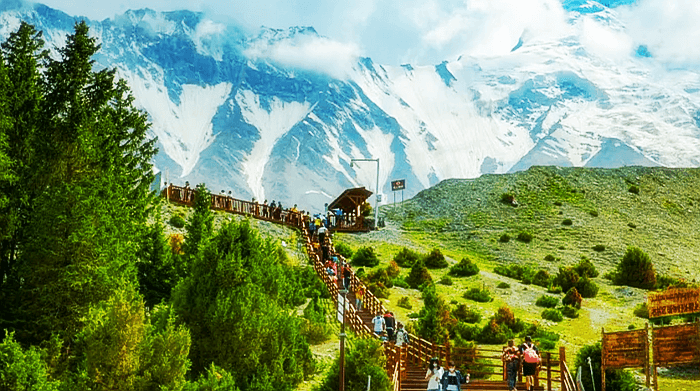
Kashgar-Muji Township-Taxkorgan-Datong-Kashgar
Welcome to join our South Xinjiang Group Tour, learn about ethnic culture in Kashgar Old Town; experience the changes of history on Panlong Ancient Road; and enjoy the beautiful sea of flowers in Apricot Flowers Village.
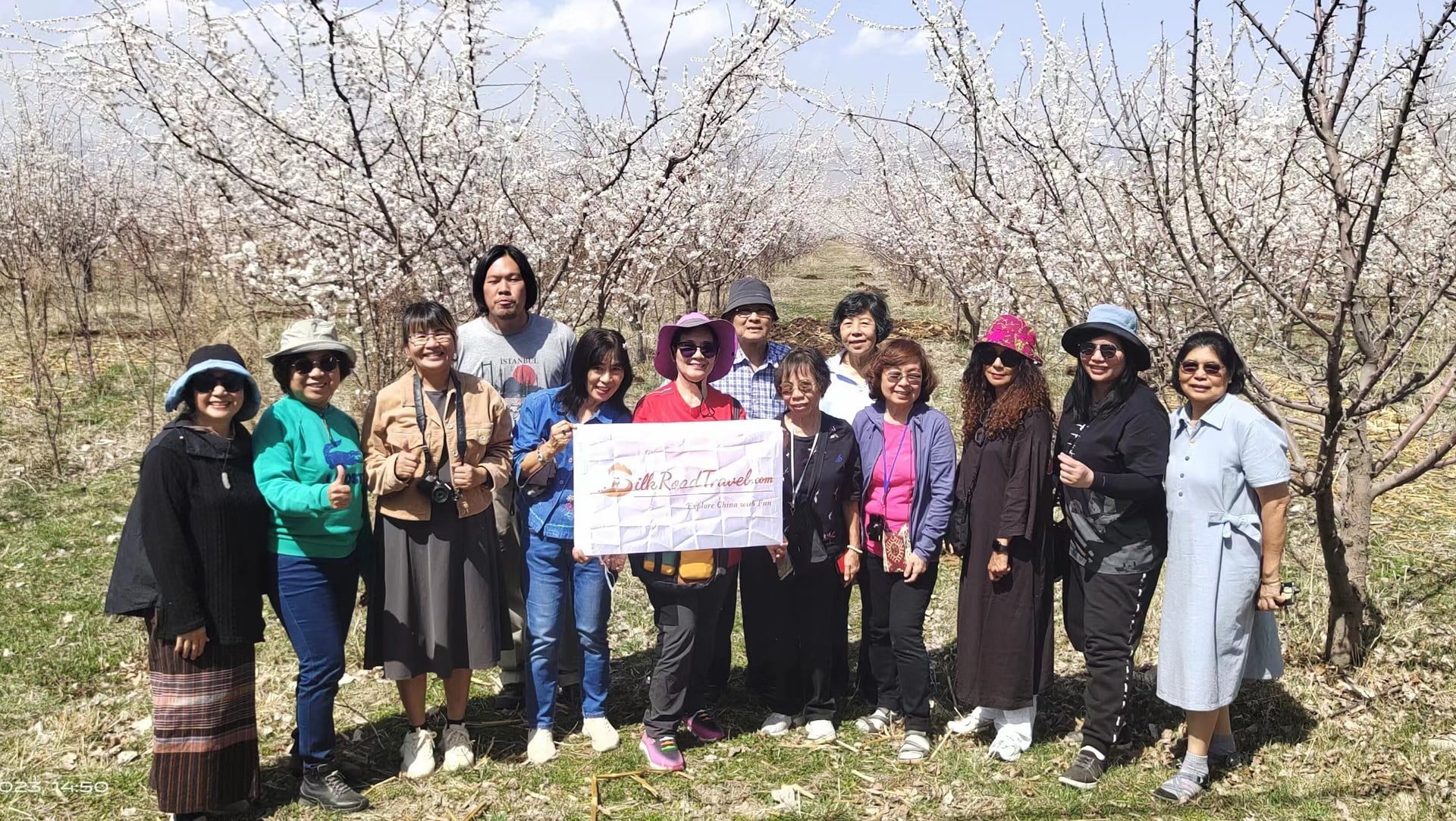
Yining - Xinyuan - Naraty Gongliu - Daxigou Valley - Qingshuihe - Kuitun - Urumqi
Join in our Xinjiang apricot blossom in Spring. In Yili, go to Tuergen village and Daxigou valley, immerse yourself in the ocean of apricot flowers. Then go to Yining city to experience the exotic Liuxing Street. Visiting Naraty and Kalajun grassland is also enjoyable in spring!
Urumqi - Kuitun - Yining - Xinyuan - Nalati
Start the trip from Urumqi to soak into its vitality and busyness; be amazed at the picturesque Heavenly Lake, Sayram Lake and the famous Guozigou Bridge; experience the folk-style elegance and immersed in the vast grassland and flower sea in Nalati and Xinyuan.
Xinjiang Weather in April– Quick Overview Best Places to Visit in Xinjiang in April Practical advice:Practical advice:Practical advice:Seasonal fruitBest Spring Experiences in April