20 years of pioneer in xinjiang tourism for overseas travelers
Born Here, Know Best, Your Journey's Blessed
No Shopping. No Detour, 99% Excellent Review

contact UsOn Wechat
South Xinjiang: Where the Silk Road Still Whispers
Southern Xinjiang, the vast region south of the Tianshan Mountains, covers an area larger than most European countries. It stretches from the Pamir Plateau in the west to the edge of Gansu in the east, encompassing the Taklamakan Desert—a sea of sand the size of Germany—and a string of legendary oasis towns: Kashgar, Aksu, Kuqa, Hotan, and Shache. This is a land of dramatic contrasts, where 7,500-meter snow peaks give way to arid basins, and poplar forests blaze gold against endless dunes.
For over two thousand years, this was the great crossroads of the Silk Road. Caravans laden with silk, spices, and jade passed through these cities, leaving behind a rich cultural and architectural legacy that you can still walk through today. You’ll encounter Uyghur, Kyrgyz, Tajik, and Han communities, each with their own distinct languages, music, and cuisines. In recent years, improved infrastructure—high-speed trains, modern highways, and multilingual signage—has made this once-remote frontier more accessible than ever. In the first ten months of 2025 alone, Xinjiang welcomed over 2.1 million overseas visitors.
What makes this journey unlike any other isn‘t just the scenery or the history—it’s the way they come together. It‘s watching dawn break over a glacial lake on the Pamirs, getting lost in the twilight alleys of a living Silk Road city, or sharing tea with a herder whose way of life has changed little in centuries. As one traveler put it, “I expected complications, but found convenience.” Come with an open mind, and Southern Xinjiang will reward you with experiences that resist easy comparison and linger long after you’ve returned home.
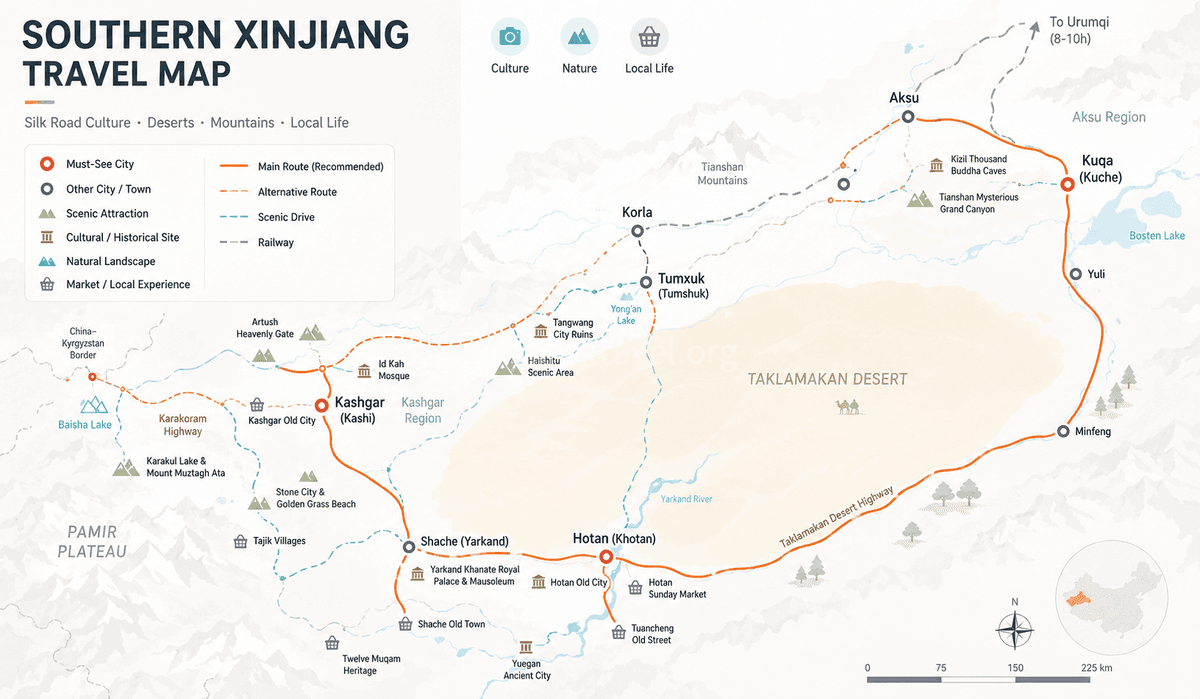
Kashgar Region – The Soul of Southern Xinjiang
Kashgar Old Town: A Living Museum of the Silk Road
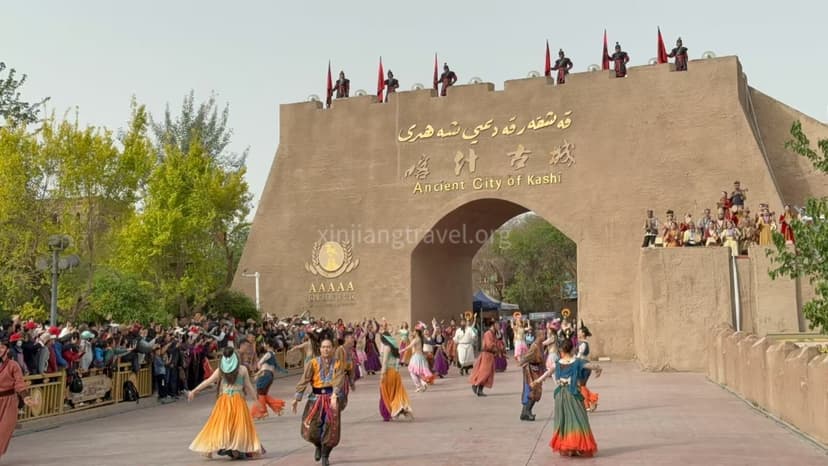
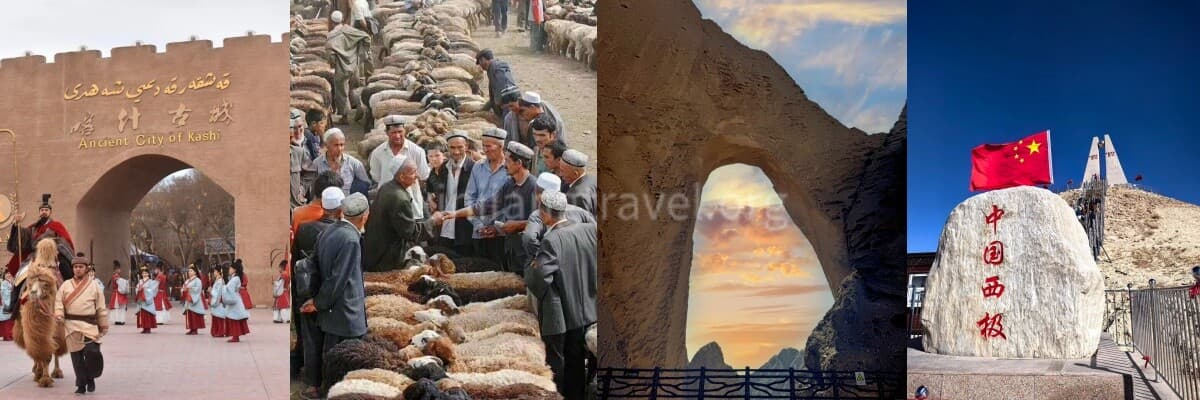
You wander the narrow lanes of Kashgar Old Town and feel centuries of trade and tradition alive beneath your feet. Restored mud-brick houses line the alleys, where artisans still carve wooden doors, hammer copper pots, and weave colorful carpets exactly as their ancestors did. You pause at the Id Kah Mosque as the call to prayer echoes, then explore hidden courtyards filled with the scent of fresh naan and spices. This is not a static museum—you join daily life, sipping tea with locals who share stories of the Silk Road. At dusk, the city glows golden, and you understand why Kashgar remains the beating heart of South Xinjiang. A visit here connects you directly to the region's living heritage.
The Sunday Livestock Market: A Tradition Older Than Memory
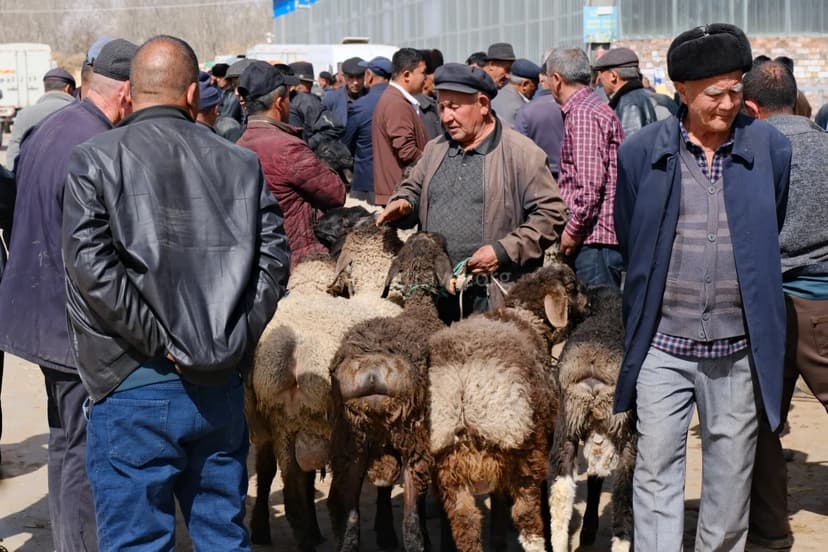
You arrive early on Sunday and join thousands at Kashgar's livestock market, where the air fills with the sounds of bargaining, bleating sheep, and neighing horses. Farmers from surrounding villages bring camels, donkeys, and goats, trading as they have for over a thousand years. You walk among the pens, watching deals sealed with a handshake and a cup of tea, while vendors sell everything from handmade saddles to bright textiles. This is raw, authentic South Xinjiang—far from polished tourist spots. You feel the pulse of rural life and the enduring Silk Road spirit of exchange. By afternoon, deals are done, and you leave with a deeper appreciation for the rhythms that have shaped this land.
Artush Heavenly Gate: The World's Tallest Natural Arch
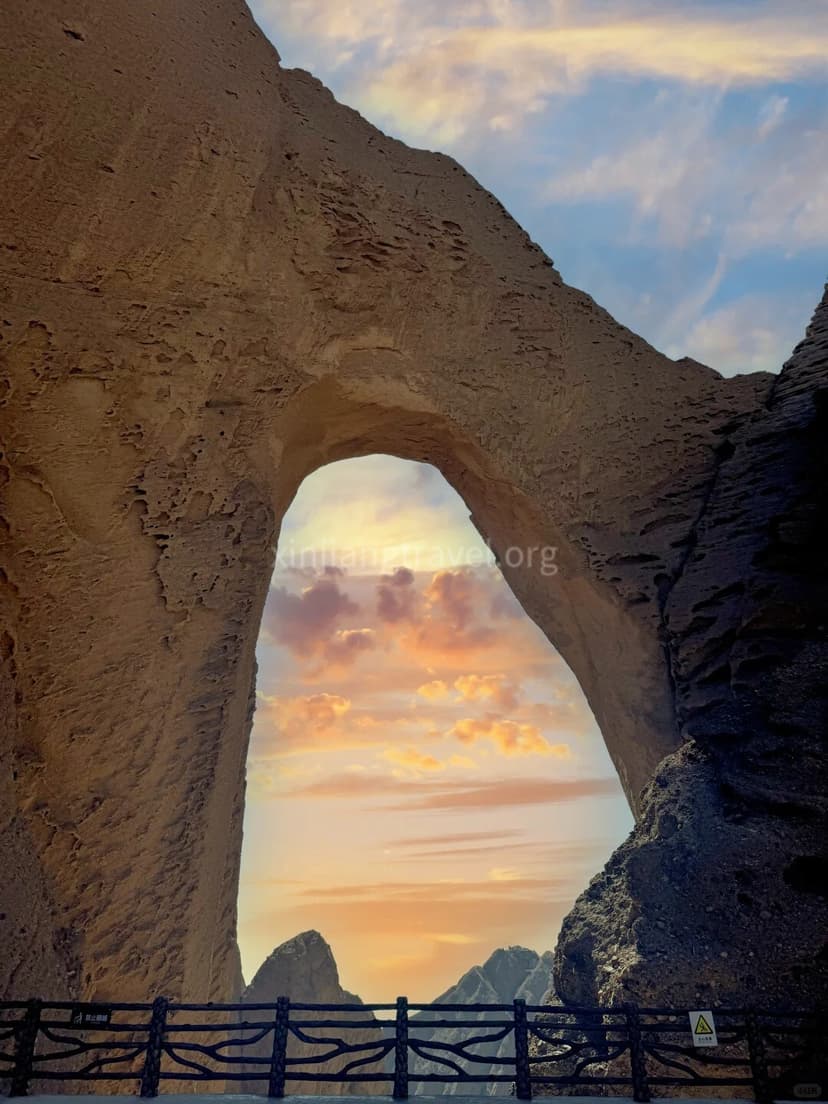
You drive west from Kashgar and hike the final stretch to stand beneath Artush Heavenly Gate—Shipton's Arch—the world's tallest natural arch. Rising over 300 meters in a remote canyon, this massive conglomerate formation frames the sky like a gateway to another world. You climb wooden stairs through dramatic rock landscapes, feeling the scale of nature at high altitude. Locals have known it for centuries; you now share their wonder. On clear days, the view stretches across the Pamir foothills. It is a place that humbles you and reminds you why South Xinjiang's landscapes continue to surprise even the most seasoned traveler.
China's Westernmost Point: Where the Sun Sets Last
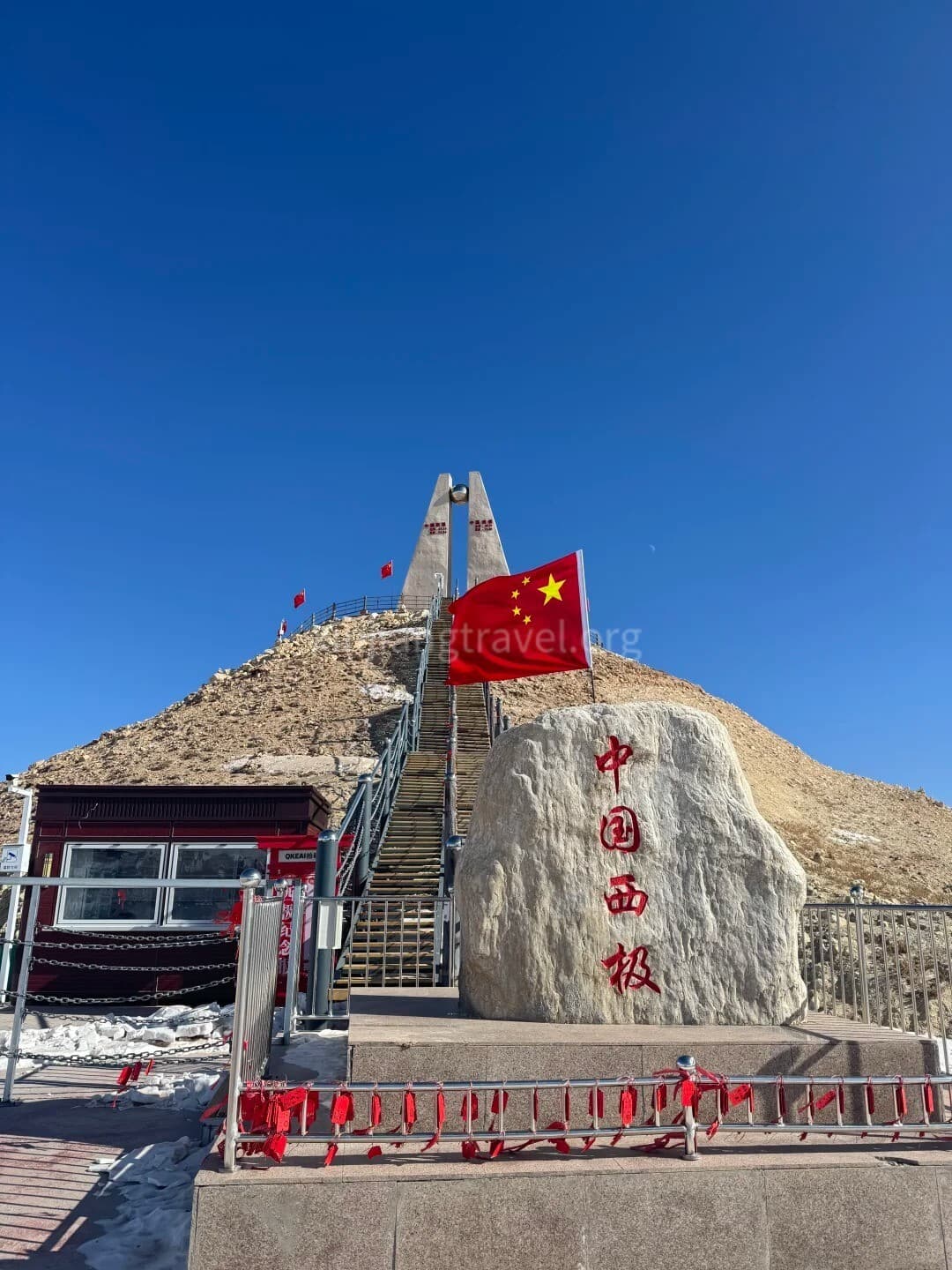
China's Westernmost Point, located in Wuqia County approximately two hours from Kashgar, marks the farthest western reach of Chinese territory. A simple monument stands at the site, with the national flag flying against a backdrop of barren mountains. The location offers sweeping views of the surrounding terrain and the road leading toward the Kyrgyz border. The site itself is modest, but the sense of standing at the geographic extreme of a vast nation carries a quiet significance. Sunset here is a memorable experience — the last rays of the sun touch Chinese soil at this point before any other location in the country.
The Pamir Plateau – China's Roof of the World
The Karakoram Highway: One of the World's Great Drives
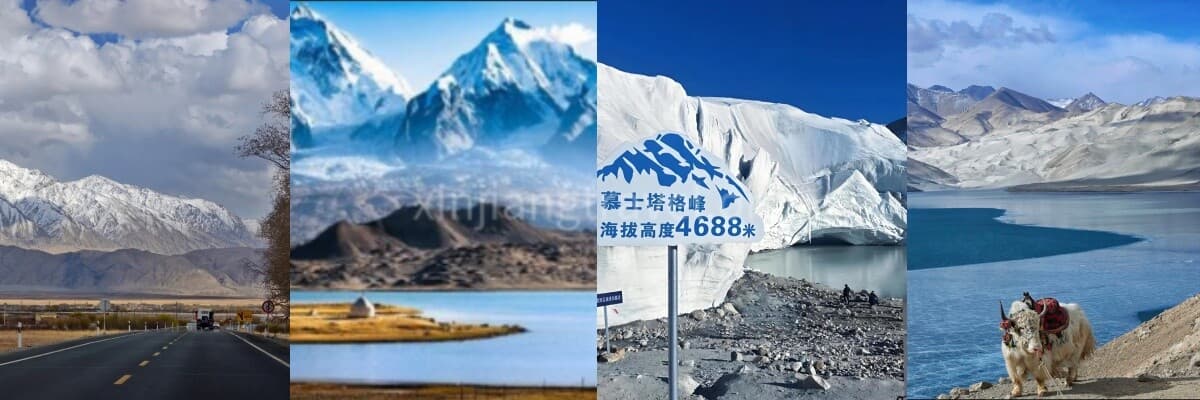
You follow the Karakoram Highway out of Kashgar and into the Pamirs, one of the world's most spectacular drives. The road climbs steadily past glacier-fed rivers and jagged peaks, with Tajik villages dotting the valleys. You stop at viewpoints where the highway snakes below snow-capped summits, feeling the thin air and immense scale. Built through some of the planet's harshest terrain, it connects cultures and continents just as the old Silk Road did. Whether you drive yourself or take a shared ride, the journey itself becomes the highlight—raw, adventurous, and deeply rewarding.
Karakul Lake and Mount Muztagh Ata: The Mirror of the Pamirs
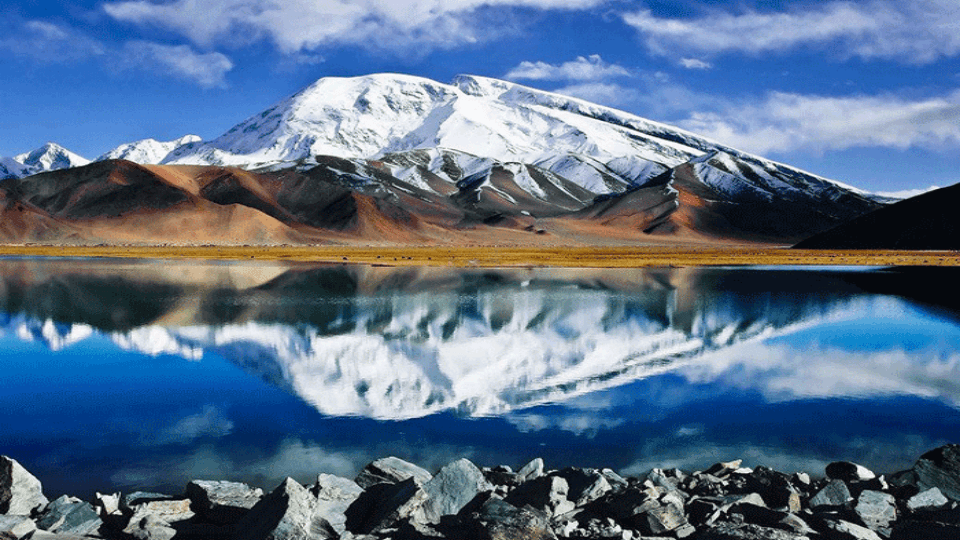
Karakul Lake sits at 3,600 meters directly beneath Mount Muztagh Ata, a 7,546-meter peak whose name means “Father of Ice Glaciers.” On clear days, the lake‘s surface shifts through shades of indigo, turquoise, and teal, reflecting the surrounding peaks with remarkable clarity. The calmest conditions for viewing the reflection occur in early morning, before the wind disturbs the water. Kyrgyz herders inhabit the surrounding grasslands during warmer months, and some families offer simple accommodation and meals. Altitude sickness is a genuine concern at this elevation; visitors should avoid strenuous activity and stay hydrated.
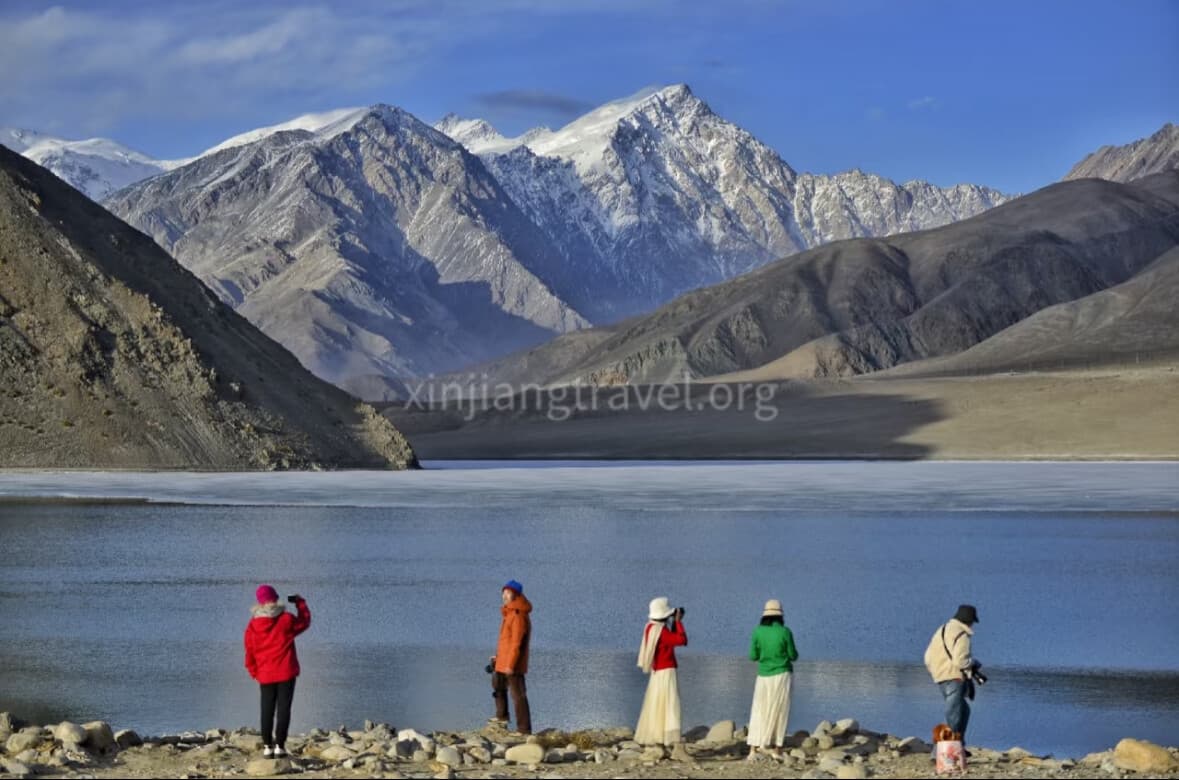
Baisha Lake: Where Desert Meets the Highlands
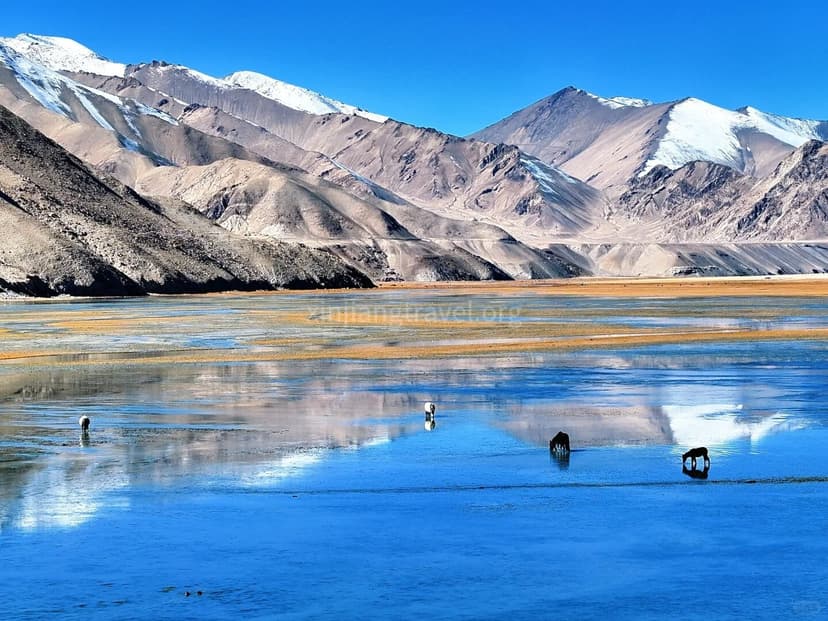
Baisha Lake lies along the Karakoram Highway, roughly two hours from Kashgar. Unlike Karakul's deep alpine setting, Baisha Lake presents shallow turquoise waters bordered by pale sandbars and stark white dunes. The contrast between the desert-like shore and distant snow-capped peaks creates an otherworldly scene. The lake‘s color varies with weather — vivid blue-green under full sun, gray-silver under cloud cover. Wind is constant, and calm, mirror-like conditions are rare. When they do occur, however, the reflections are striking. Visiting early morning or late afternoon offers a quieter experience.
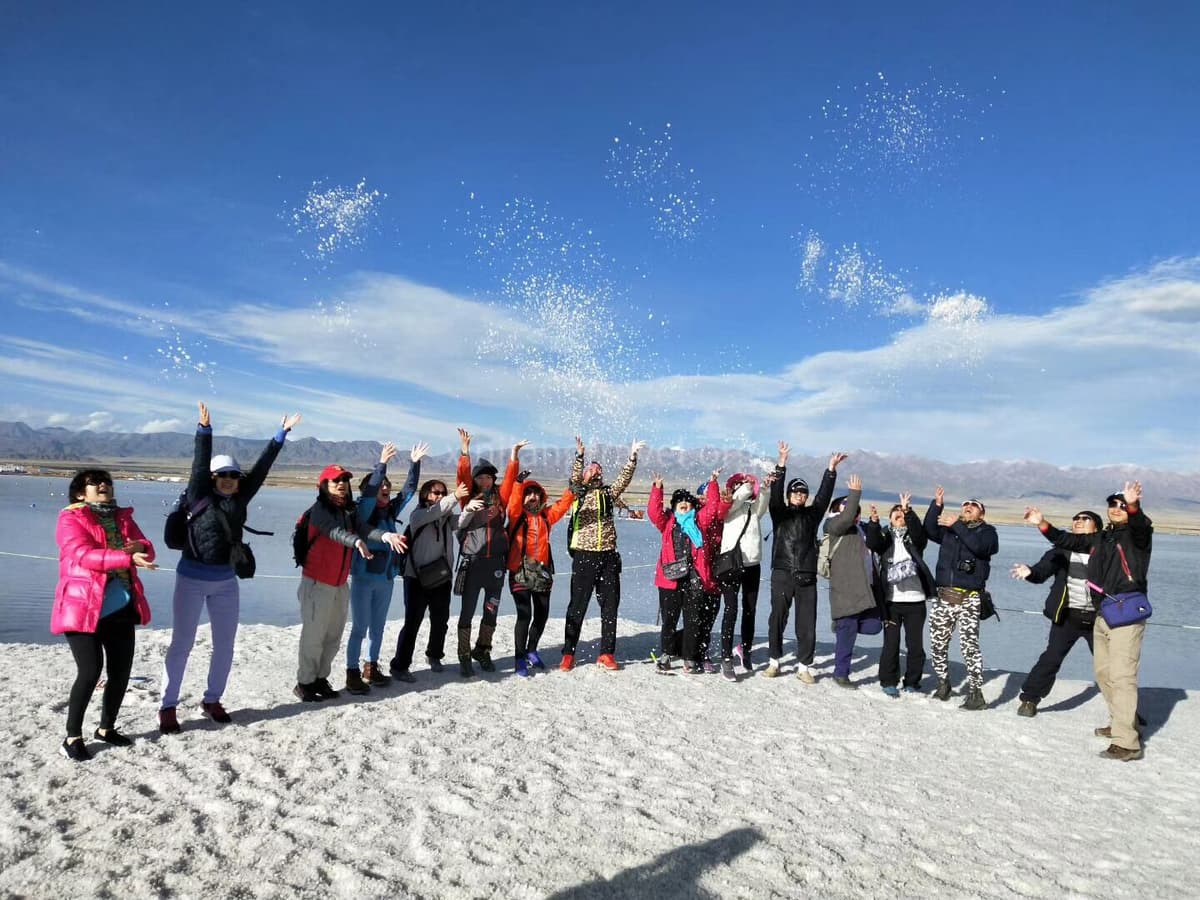
Bandir Blue Lake: The Plateau's Hidden Sapphire
Bandir Blue Lake, a reservoir on the Tashkurgan River, is a lesser-known gem along the route toward the Kunjirap Pass. Glacial meltwater rich in minerals feeds the lake, and under intense high-altitude sun, the water takes on hues from deep navy to brilliant turquoise. Color saturation peaks between late morning and early afternoon, when sunlight clears surrounding ridges. The best vantage points are from pull-offs along the mountain road above, where the deep blue contrasts with ochre and gray foothills. Facilities are minimal — no restaurants or shops. The remote location means fewer crowds, rewarding those who seek a quieter experience.
Panlong Ancient Road: 600 Turns to a Better Life
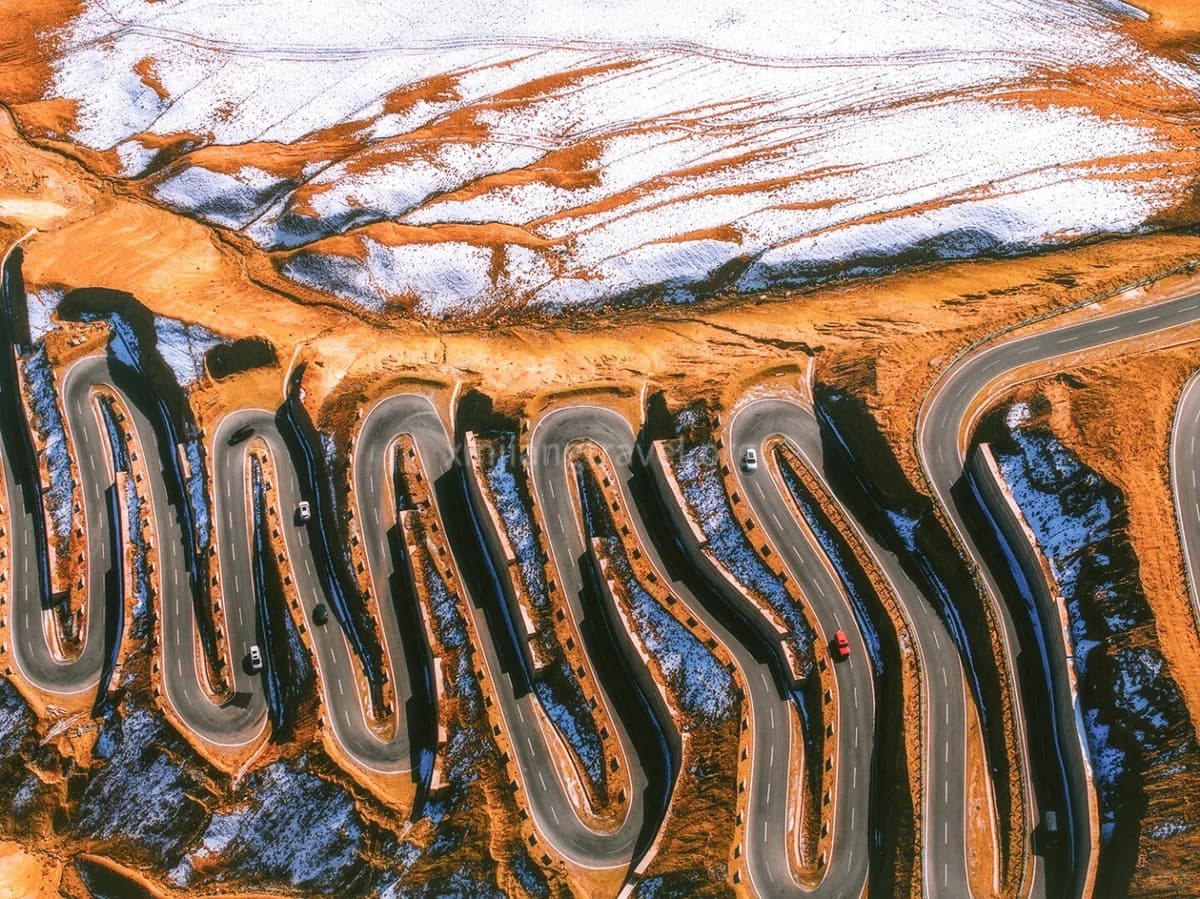
The Panlong Ancient Road, near the Tajik village of Waqia, climbs a barren mountainside in a dizzying sequence of over 600 hairpin turns before cresting a pass and descending toward Tashkurgan Valley. Its construction, built to connect remote villages to the main highway, opened previously isolated communities to trade, healthcare, and education. A signboard at the trailhead reads: “Today you've passed all the wrong turns; from now on, life is all smooth roads.” The best viewpoints are from upper pull-offs, where the full sweep of switchbacks is visible.
Stone City and Golden Grass Beach: Ruins with a View
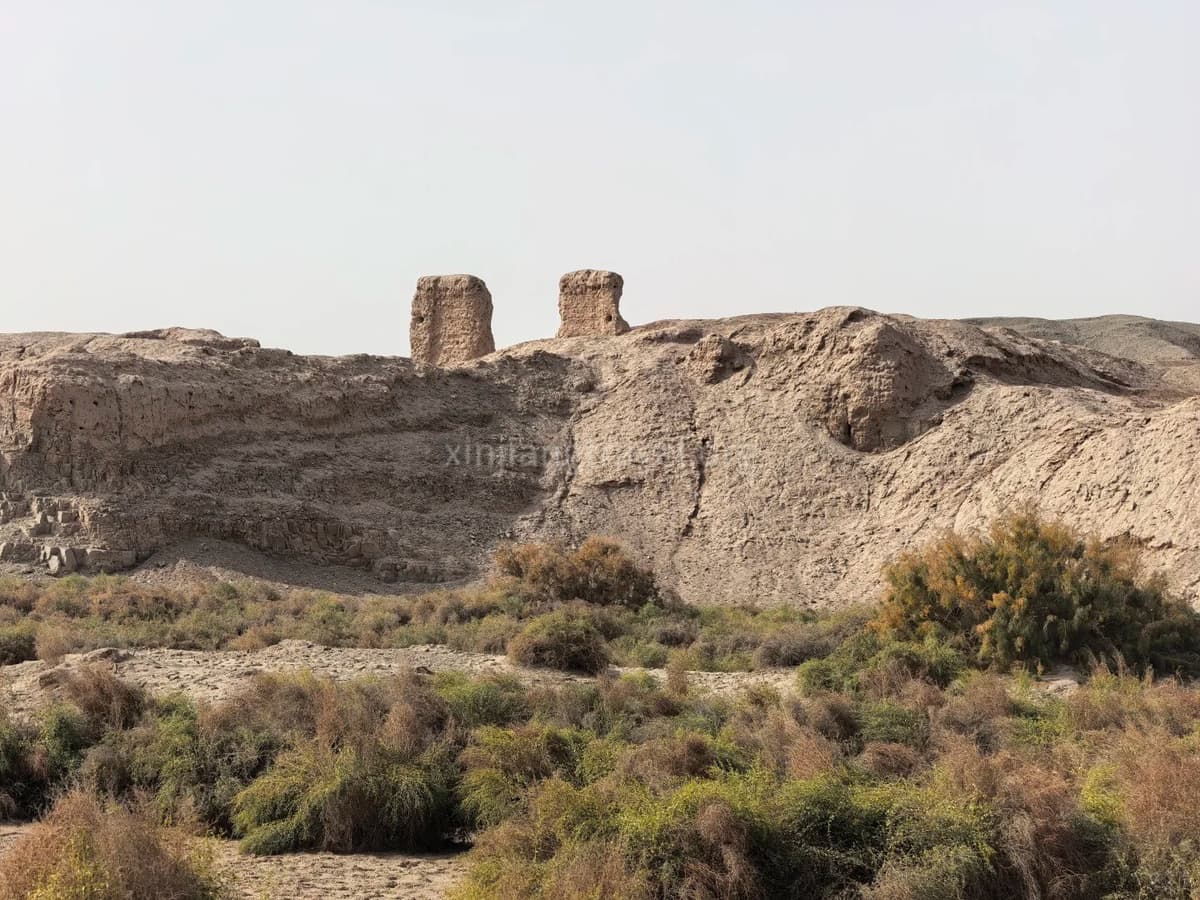
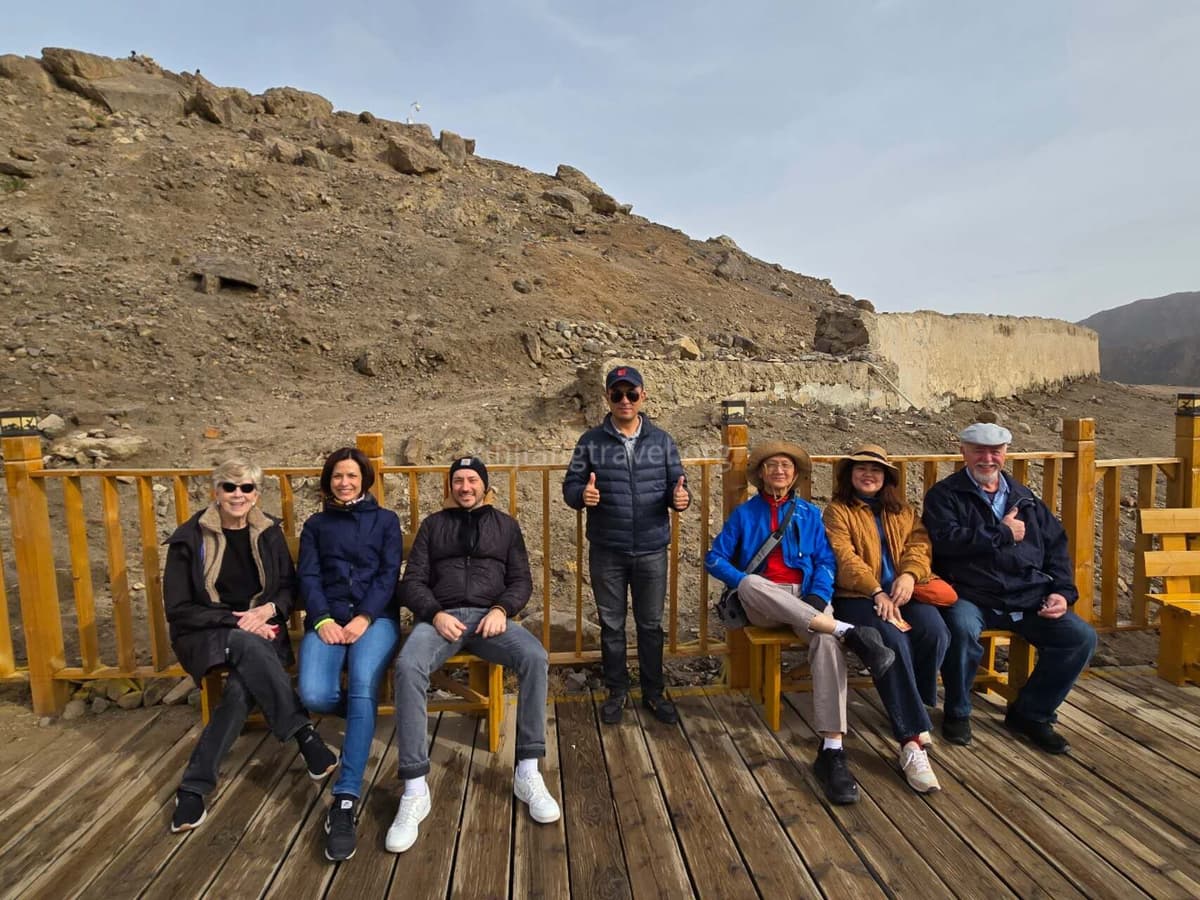
Just outside Tashkurgan town lie the ruins of Stone City, a fortress whose origins date back over 2,000 years to the Han Dynasty. Its weathered earthen walls once guarded a key junction on the southern Silk Road. Below, Golden Grass Beach stretches across the valley floor — a wetland area where Tajik herders graze yaks and sheep. In autumn, the grasses turn gold, giving the area its name. A combined ticket provides access to a boardwalk through the wetlands and viewing platforms. Early morning offers the best light, with the rising sun illuminating the fortress ruins and casting long shadows across the grasslands.
Tajik Villages and Spring Apricot Blossoms (Seasonal)
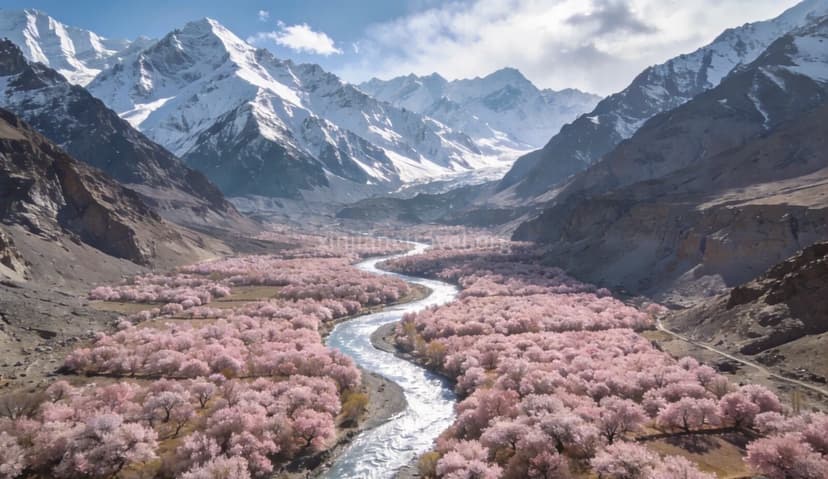
From late March to early April, valleys around Tashkurgan burst into bloom as thousands of apricot trees flower. Villages such as Datong and Kukexiluke are the primary viewing locations. The pale pink blossoms create a soft contrast against the harsh, snow-streaked slopes of the Kunlun Mountains. The apricot trees are productive orchards, not ornamental plantings, and the bloom marks the start of the agricultural year. Visiting these villages requires patience and cultural awareness. Traveling with a guide who can introduce the purpose of a visit makes a significant difference. The bloom window is narrow — typically two to three weeks — and varies each year.
Aksu Region – Where the Tianshan Mountains Embrace the Tarim Basin
Wensu Grand Canyon: The “King of Canyons”
Located in Aksu Prefecture, Wensu Grand Canyon covers roughly 200 square kilometers and is regarded as one of China‘s most spectacular red-bed canyon systems. The site encompasses Danxia landforms, Yardang features, and rare salt-dome structures within a compact area. A shuttle bus transports visitors to the trailhead, from which a roughly 5-kilometer hiking route leads through the most dramatic sections. Unlike narrow slot canyons, Wensu's interior opens into broad amphitheaters, where the red rock formations rise like ancient fortresses and mythical beasts. The site is less visited than Kuqa Grand Canyon, allowing for unhurried exploration. Midday light enhances the saturation of the red stone, making the landscape feel almost Martian.
Kizil Thousand-Buddha Caves: Buddhism's Gateway to China
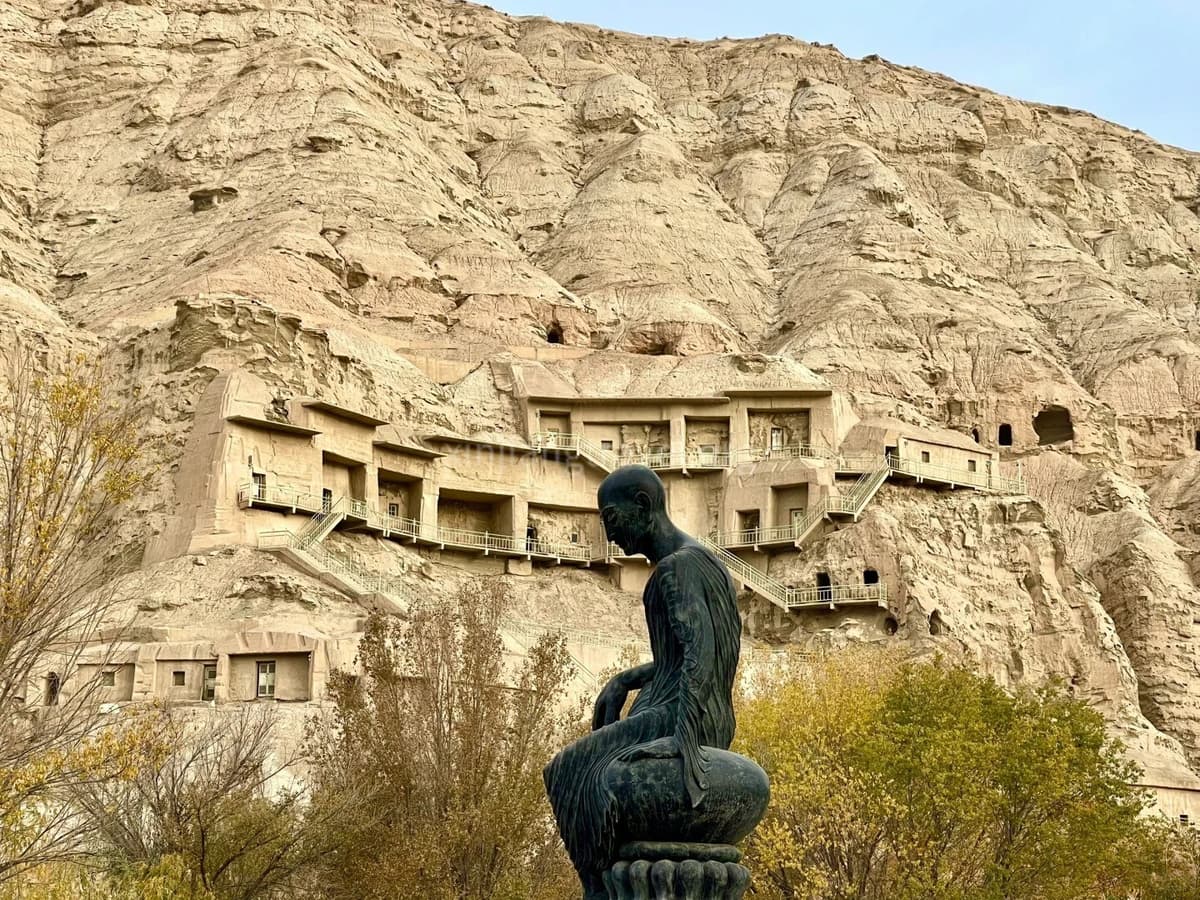
The Kizil Thousand-Buddha Caves, located near Kuqa but administered within the Aksu region, represent one of the most significant Buddhist archaeological sites along the Silk Road. Carved into cliffs overlooking the Muzat River, the caves were excavated beginning in the 3rd century CE — predating the Mogao Caves at Dunhuang by more than a century. Murals cover approximately 10,000 square meters in a distinctive “Qiuci painting” style, depicting scenes from the Buddha's life and daily life along the Silk Road. Pigments — lapis lazuli blue, malachite green — remain vivid in many chambers. Of 349 surviving caves, a portion are open to visitors under supervision. Flash photography is prohibited to protect the fragile pigments.
Aksu Museum and Duolang River Scenic Belt: The City‘s Heart
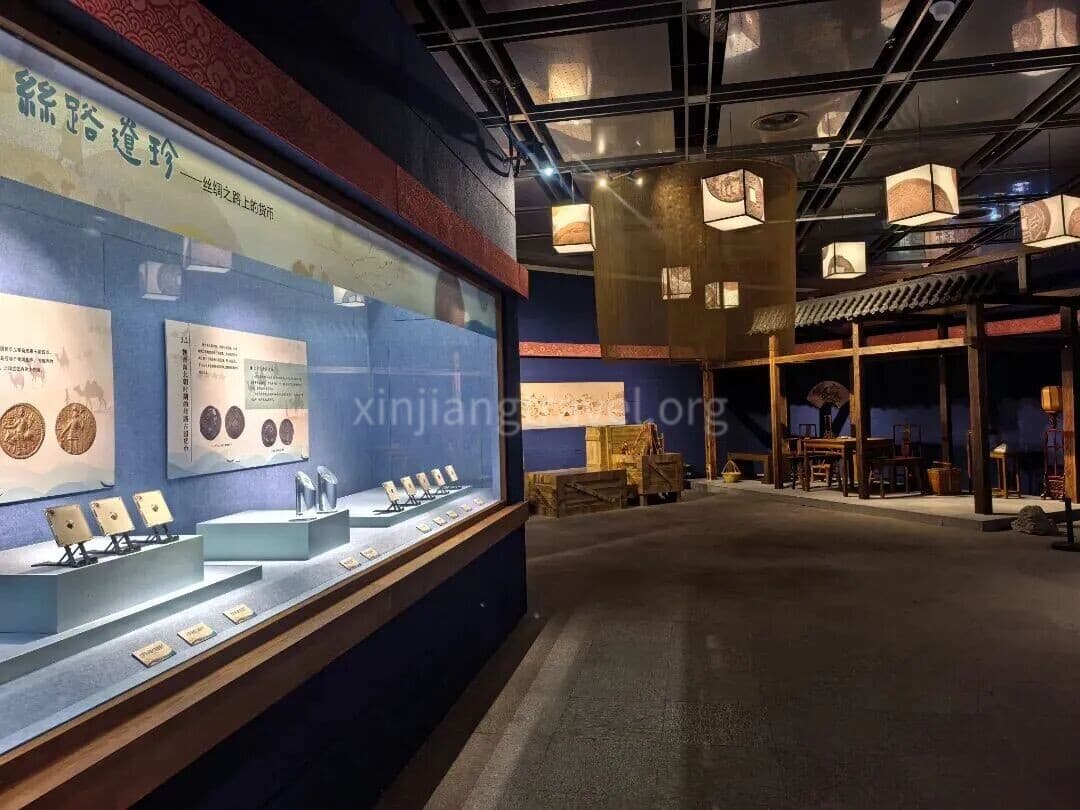
Aksu Museum (officially the Aksu Prefectural Museum) provides essential context for understanding the region's long history as a crossroads of civilizations. Exhibits trace the area‘s development from the ancient Qiuci Kingdom through the Silk Road era to the present day, with notable collections of Buddhist artifacts, historical documents, and ethnographic materials. Nearby, the Duolang River Scenic Belt offers a peaceful urban retreat. The river, which flows through the heart of Aksu city, is flanked by tree-lined promenades, flower gardens, and a series of architecturally distinctive bridges. In the evening, the bridges and riverbanks are illuminated, creating a pleasant atmosphere for a stroll after a day of exploring the region's more rugged attractions.
Kuqa Region – Caves, Canyons, and Buddhist Heritage
Tianshan Mysterious Grand Canyon: A Slot Canyon of Red Stone
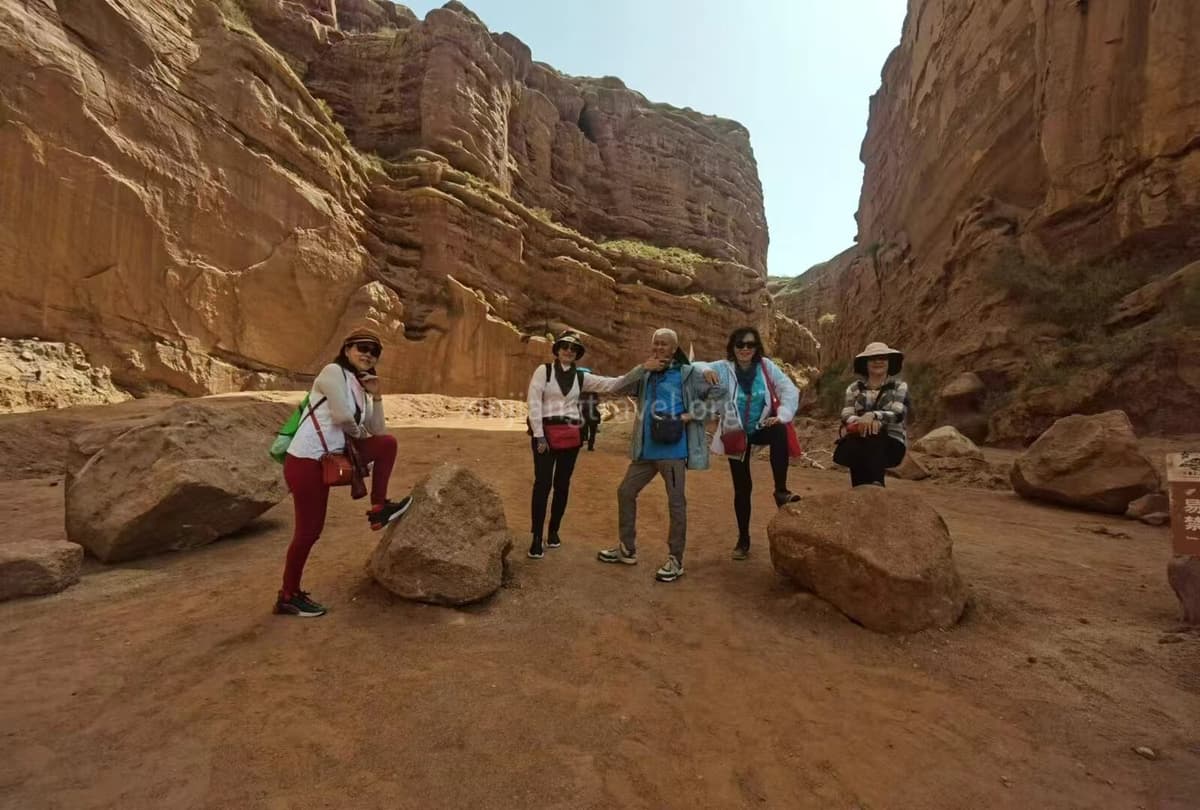
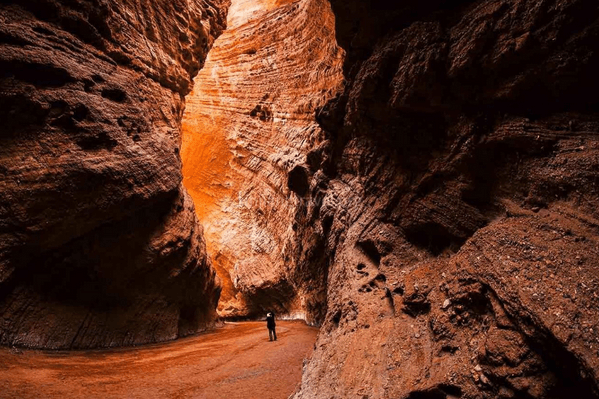
The Tianshan Mysterious Grand Canyon, located in Kuqa County, is a narrow slot canyon carved through vibrant red sandstone. The canyon stretches 5.5 kilometers, with walls that soar overhead and, at narrowest points, press close enough to touch. The Uyghur name “Kizilya” means “red cliffs,” and color is the defining feature. At midday, sunlight penetrates the opening and sets the rock walls glowing in shades of vermilion and rust. The walk is mostly flat but requires navigating uneven ground and occasional shallow water crossings. The full round trip takes two to three hours. The canyon‘s scale is best captured with a wide-angle lens.
Kuqa Old Town: Where the Qiuci Kingdom Once Stood
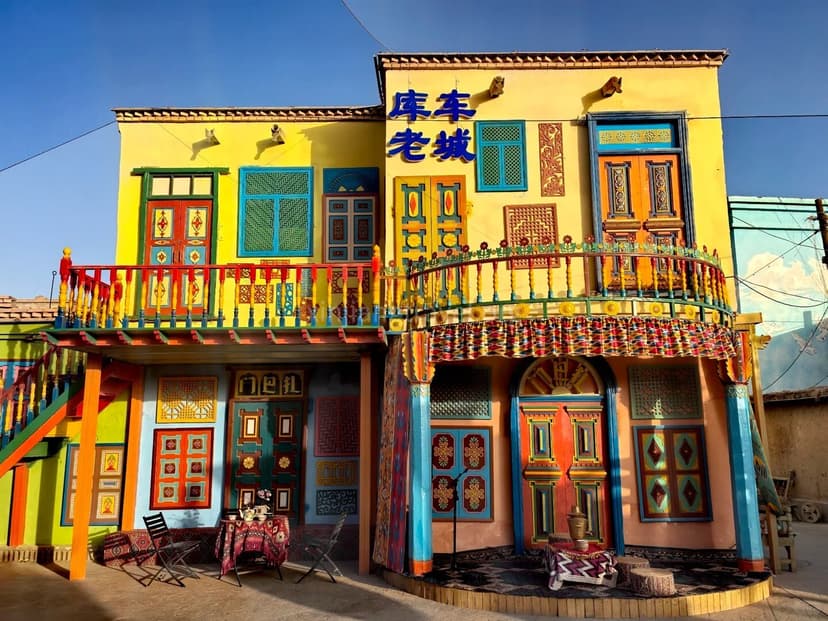
Kuqa‘s old town offers a quieter, less curated alternative to Kashgar. The city was once the capital of the ancient Qiuci Kingdom, a prosperous Buddhist state on the northern Silk Road. Today, the backstreets contain traditional Uyghur courtyard homes, small mosques, and the Kuqa Grand Mosque, one of the largest in Xinjiang. Sections of the old city walls still stand, their earthen ramparts slowly eroding back into the landscape from which they were built. Kuqa's bazaar is less frequented by international tourists than Kashgar‘s, and interactions here often feel more spontaneous and genuine. The town is known for its large, thin naan baked in tandoor ovens, and for its dried apricots and melons.
Kuqa Royal Palace: A Window into the Last Feudal Era
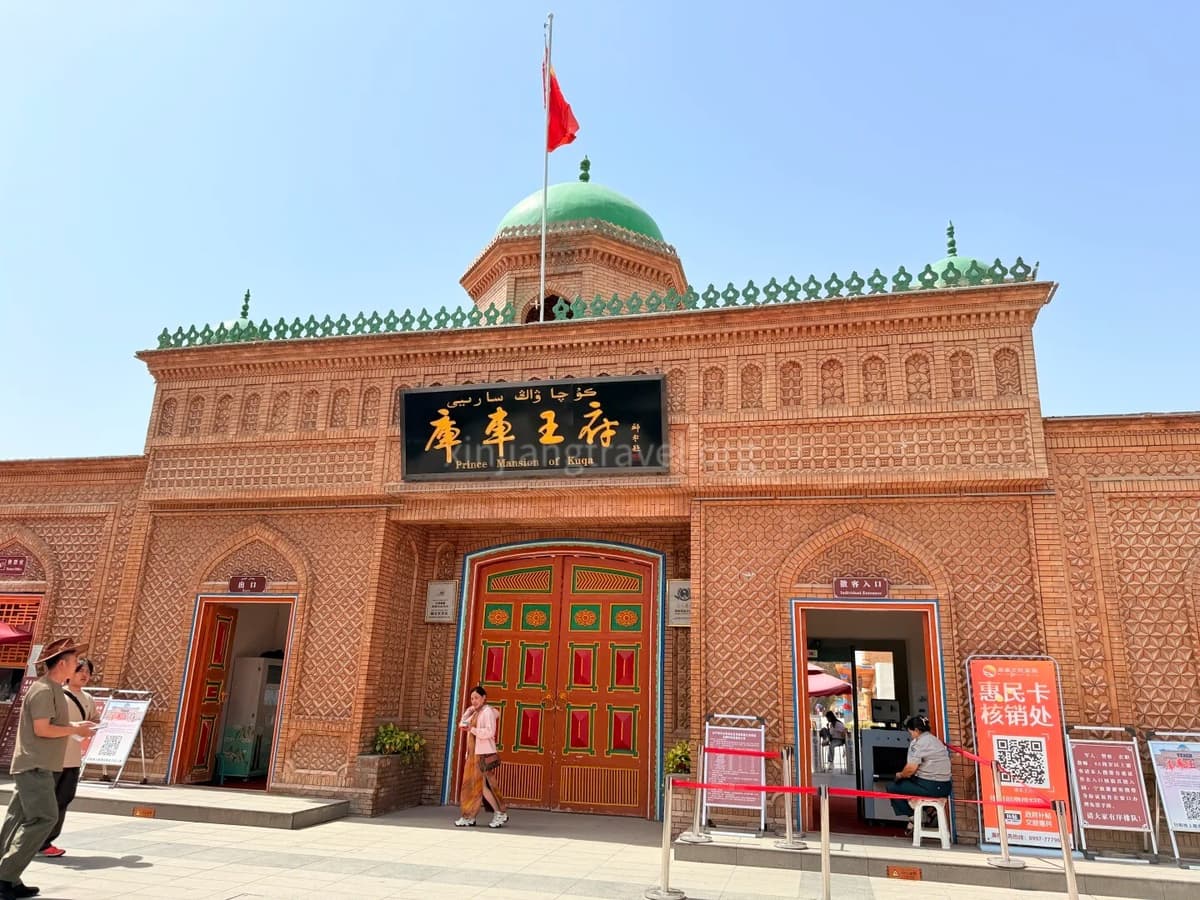
Kuqa Royal Palace is a reconstruction of the residence of the last Kuqa king, a local ruler who governed under the Qing Dynasty. The complex blends Central Plains Chinese and Uyghur architectural styles, offering visitors a tangible sense of how local aristocracy lived during the late imperial period. Inside, exhibits display traditional costumes, household items, and documents that illuminate the history of the Kuqa region under Qing rule. The palace grounds also contain a small garden and a mosque used by the royal family. The site provides valuable historical context for understanding the political and social structure of Southern Xinjiang before the modern era.
Subashi Buddhist Temple Ruins: Echoes of a Lost Faith
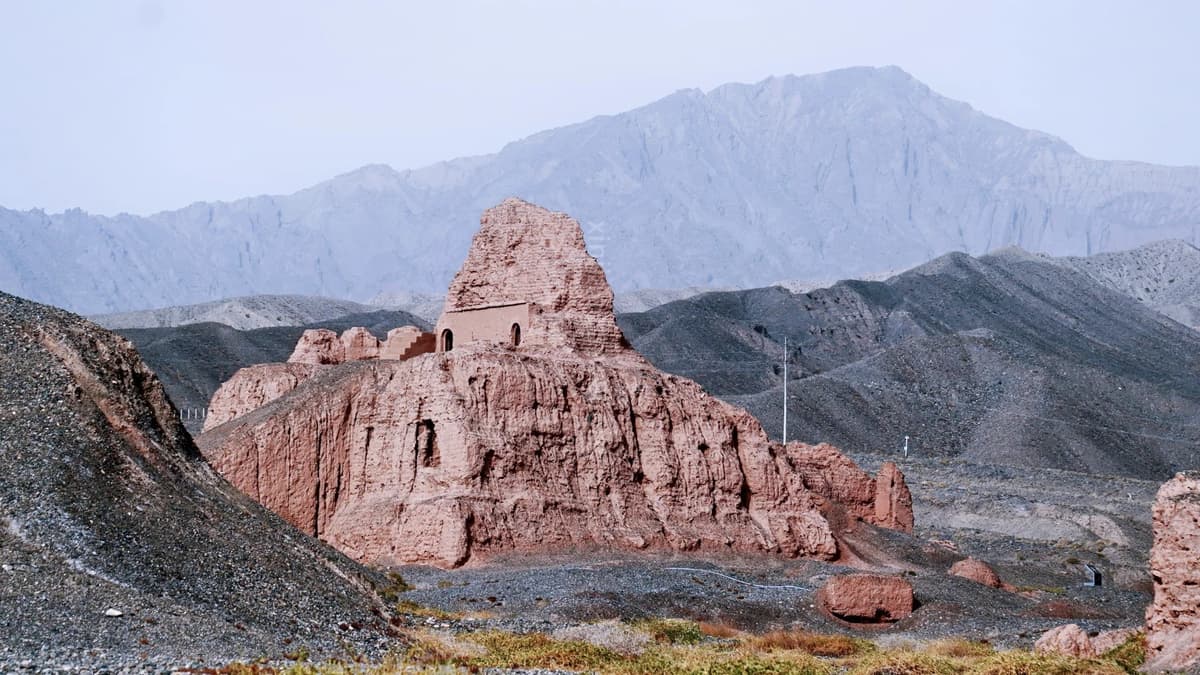
Subashi Buddhist Temple Ruins, located on the outskirts of Kuqa, are the remains of a major Buddhist monastic complex that flourished between the 3rd and 10th centuries CE. The site is divided into eastern and western sections by the Kuqa River, with the western complex believed to have been the main temple area and the eastern section housing monk dormitories and stupas. The most striking structure is a large stupa whose weathered dome still rises prominently above the desert plain. Subashi was described in the writings of the Tang Dynasty monk Xuanzang, who passed through the region on his journey to India. Today, the ruins stand as a silent testament to the Buddhist civilization that once dominated the northern Silk Road before the arrival of Islam.
Hotan Region – The Jade Capital on the Edge of the Taklamakan
Hotan Sunday Market: The Region's Largest Traditional Bazaar
Hotan's Sunday Market is larger in physical size and variety than Kashgar‘s more famous bazaar, yet receives far fewer international visitors. The market serves residents — Uyghur, Tajik, Uzbek, Kyrgyz, and Han — rather than tourists. Sections are dedicated to livestock, produce, textiles, household goods, and jade. The jade section operates as a frenetic auction, with buyers examining raw stones under bright lights, negotiating prices, and occasionally cutting stones open on the spot to reveal their interior quality. The atmosphere is raw and uncurated. Visitors should exercise caution when handling jade items and be prepared for intense bargaining. The market is at its most vibrant between 10:00 a.m. and 1:00 p.m.
Yulong Kashi River: Walking in the Footsteps of Jade Hunters
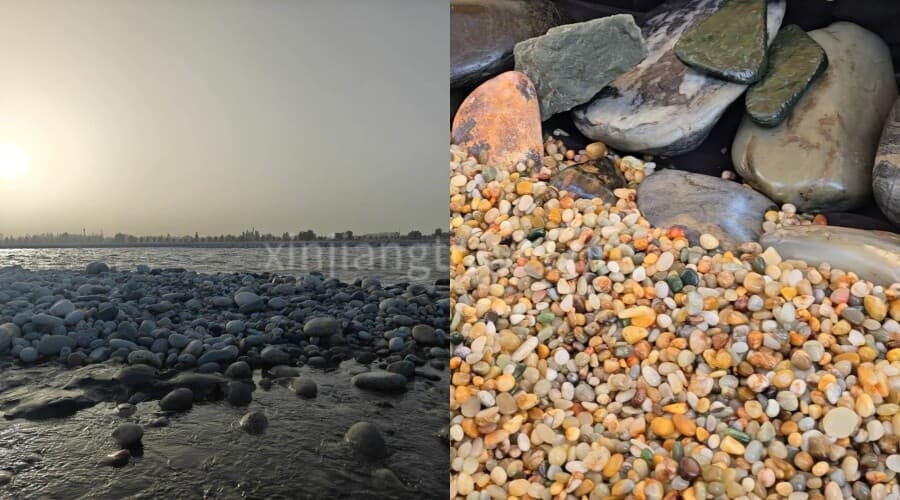
Yulong Kashi River, whose name means “Jade River,” flows from the Kunlun Mountains northward through Hotan before disappearing into the Taklamakan Desert. For millennia, this river has been the primary source of the nephrite jade that Chinese emperors prized above gold. Even today, residents and hopeful treasure-seekers can be seen wading through the shallow waters, searching for jade pebbles washed down from the mountains. Visitors are welcome to join this timeless ritual — simply remove your shoes, roll up your trousers, and step into the cool, clear water. Finding a genuine jade stone requires patience and luck, but the experience of standing in a river that has shaped the destiny of an entire region is its own reward. A pair of water-friendly sandals and sunglasses is recommended.
Tuancheng Old Street: A Maze of Golden Architecture
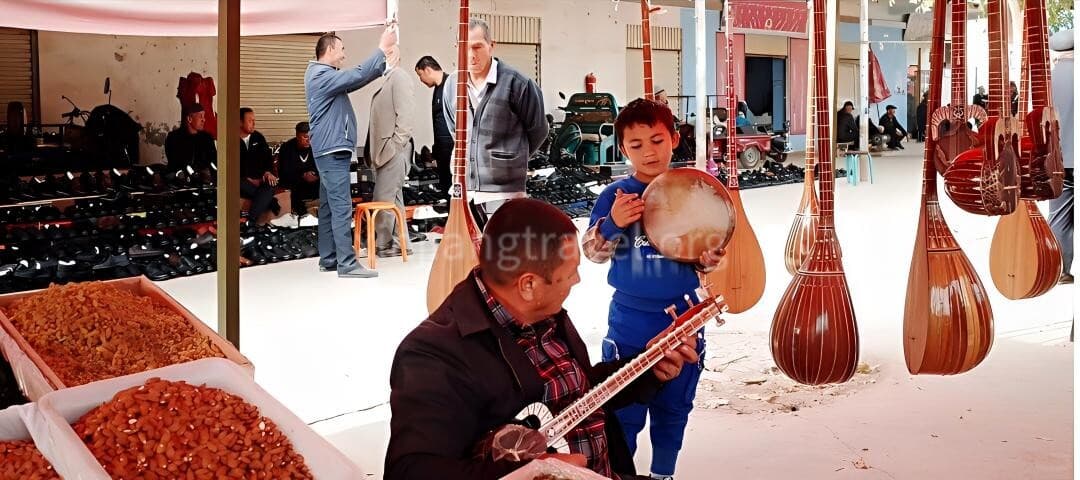
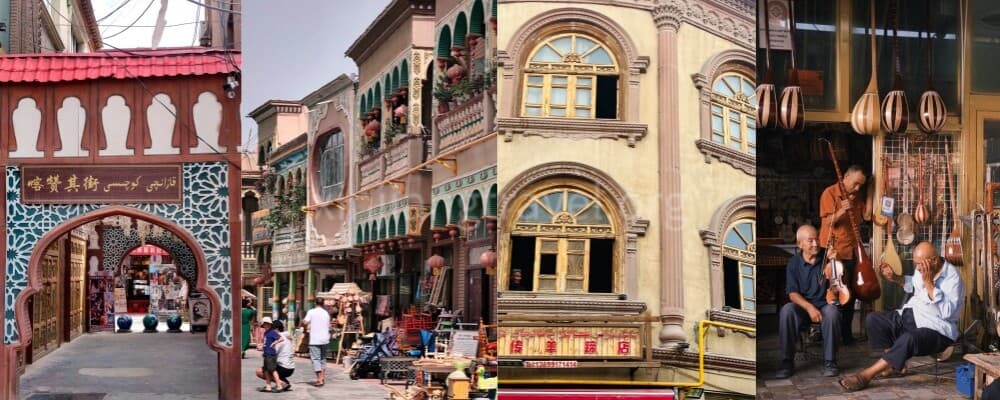
Tuancheng (also spelled Tuanjie) Old Street is one of Southern Xinjiang‘s best-preserved traditional Uyghur residential neighborhoods. The area's distinctive “Ayiwang” style architecture features intricately patterned brick walls, carved wooden doors, and shaded courtyards centered around a raised skylight. During the day, sunlight filters through grape trellises, casting dappled shadows on the earthen walls. At night, warm lights illuminate the narrow lanes, transforming the neighborhood into a golden maze. Small workshops and shops line the streets, selling handmade carpets, traditional musical instruments, and local snacks. The area remains a living community rather than a tourist attraction, and visitors should be mindful of residents‘ privacy when exploring. Entry is free.
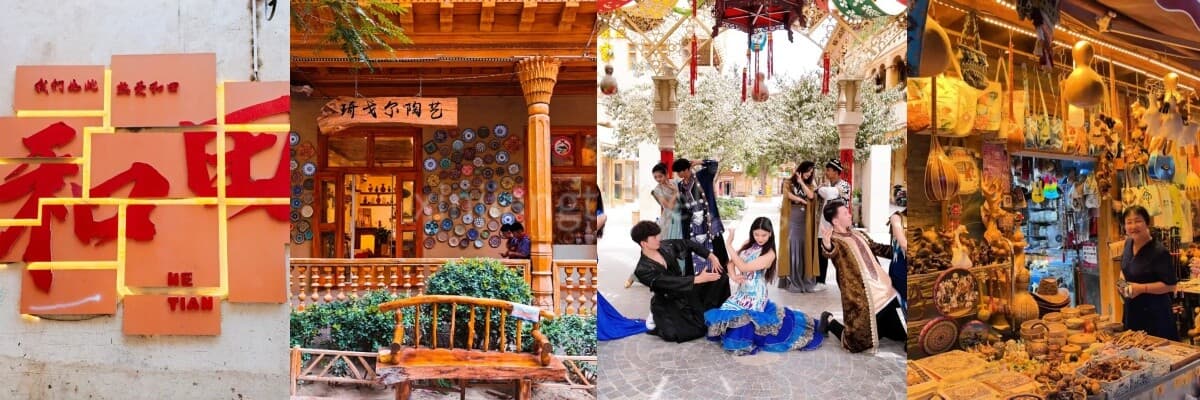
Yuegan Ancient City: A Reimagined Buddhist Kingdom
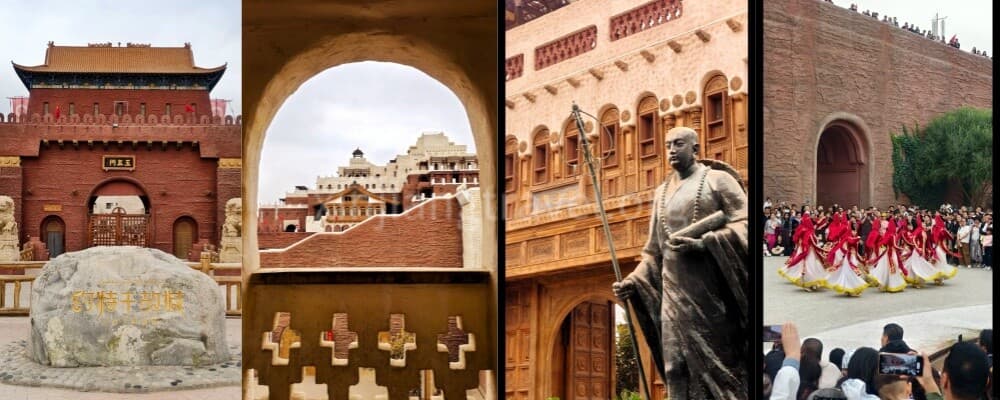
Yuegan Ancient City (also known as Yotkan) is a large-scale cultural theme park built between 2020 and 2023 at a cost of approximately 500 million RMB, designed to evoke the ancient Kingdom of Khotan (Yutian). This prosperous Buddhist state flourished along the southern Silk Road. The walled complex features reconstructed Tang Dynasty-style architecture, including city gates, watchtowers, and market streets. During the day, visitors can explore the grounds and visit small museums displaying replicas of Khotanese artifacts. The main attraction, however, is the evening immersive performance Wanfang Yueyou You Yutian, which uses light, sound, and live actors to bring the story of the ancient kingdom to life. The night show begins at 8:00 p.m., and advance ticket purchase is recommended during peak seasons.
Shache Region – The Cradle of the Twelve Muqam
Yarkand Khanate Royal Palace and Royal Mausoleum: The Last Echoes of a Desert Empire
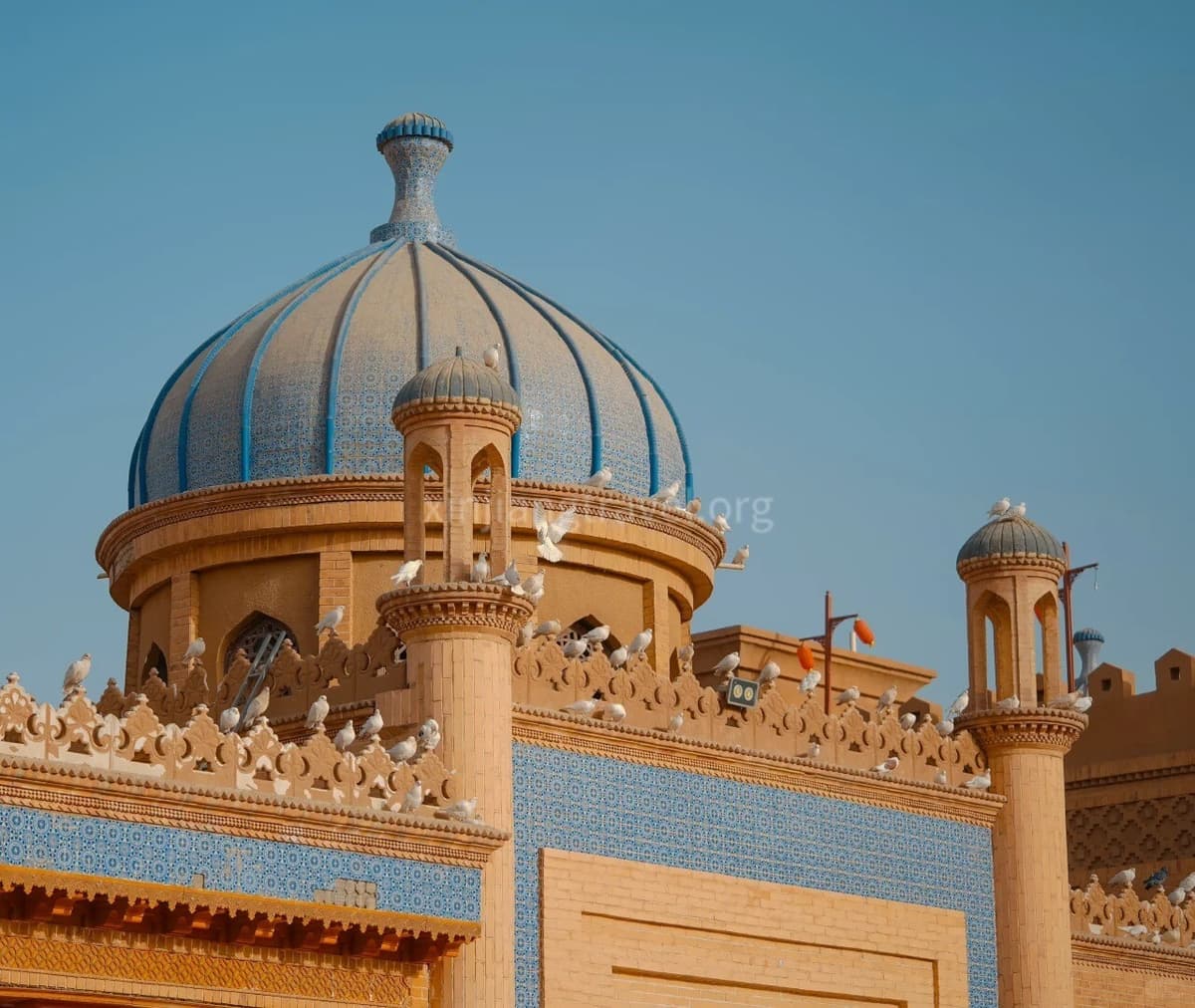
Shache (historically known as Yarkand) was the capital of the Yarkand Khanate, a powerful Uyghur state that ruled much of the Tarim Basin during the 16th and 17th centuries. The Yarkand Khanate Royal Palace, a reconstruction of the original 16th-century complex, features golden domes, intricate tile work, and spacious courtyards that evoke the grandeur of this desert empire. The site currently operates under the dual name “Shache Intangible Cultural Heritage Expo Park.” Adjacent to the palace lies the Royal Mausoleum, which houses the tombs of Yarkand Khanate rulers and, most notably, the mausoleum of Amannisa Khan, the 16th-century queen and musician credited with collecting and systematizing the Twelve Muqam — the monumental musical tradition recognized by UNESCO as an Intangible Cultural Heritage of Humanity. The palace and mausoleum together offer a profound window into a pivotal chapter of Southern Xinjiang‘s history.
Shache Old Town: A Quieter, More Authentic Kashgar
Shache Old Town offers an experience that many travelers find more genuine than the extensively renovated lanes of Kashgar. Here, the maze of earthen alleyways remains largely untouched by tourism development. Residents go about their daily routines, baking nang in clay ovens, hammering copper vessels, and weaving at wooden looms. The old town's architecture preserves the original fabric of Yarkand's historic core, with crumbling adobe walls and weathered wooden doors bearing the marks of centuries. A respectful greeting in Uyghur (Yakhshimusiz) or Mandarin, combined with a smile, opens doors to a genuine human connection.
Yarkand River Wetland Park: The Desert‘s Green Lung
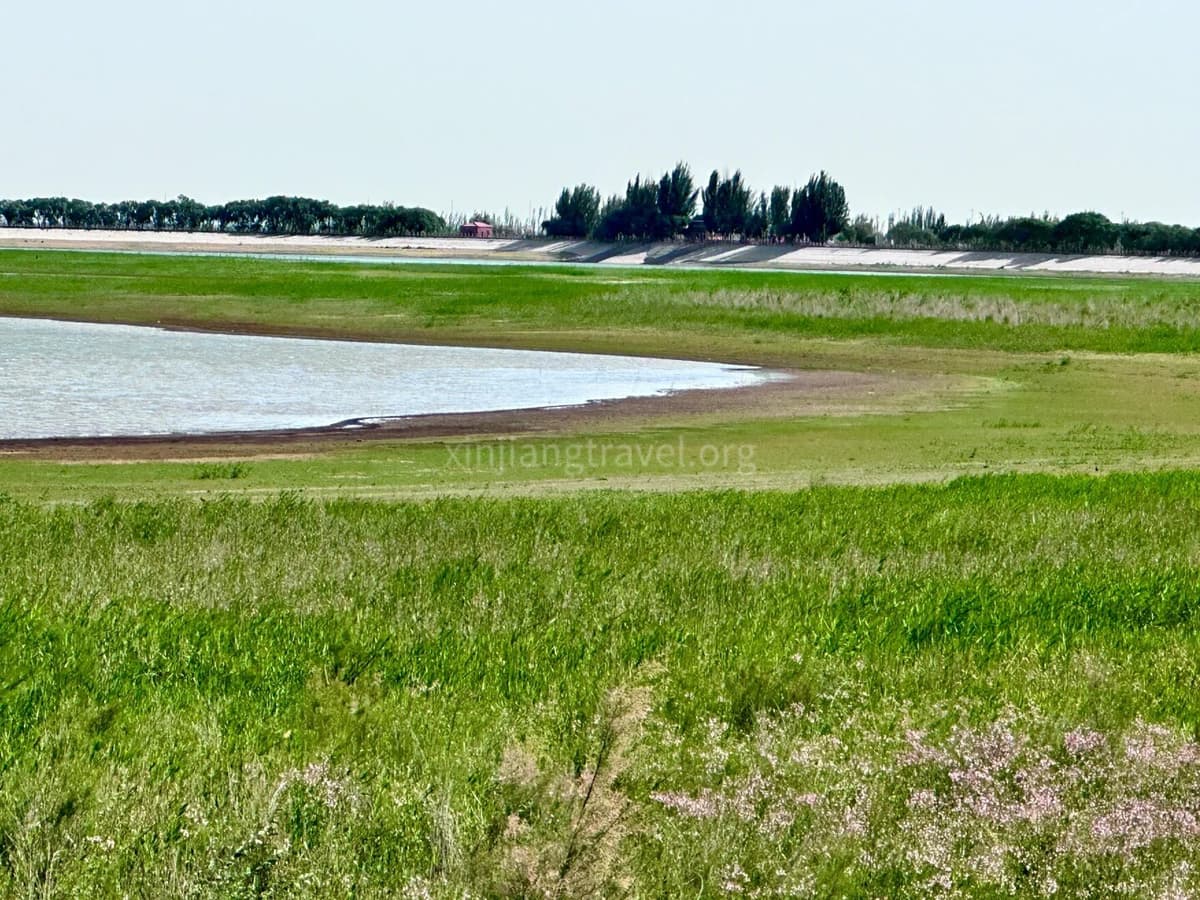
The Yarkand River Wetland Park stretches along the river that has sustained life in this arid region for millennia. The park offers a striking contrast to the surrounding desert: lush reed beds, still pools of water, and groves of poplar trees create a green corridor that attracts migratory birds and provides a cool retreat for residents. Boardwalks allow visitors to explore the wetlands without disturbing the delicate ecosystem. In spring and summer, egrets and wild ducks can be spotted among the reeds. The park is especially refreshing after a day spent exploring the dusty lanes of the old town or the arid expanses of the desert fringe. The best time to visit is in the morning or late afternoon, when the light is soft and temperatures are more comfortable.
The Twelve Muqam: Listening to the Soul of the Uyghur People
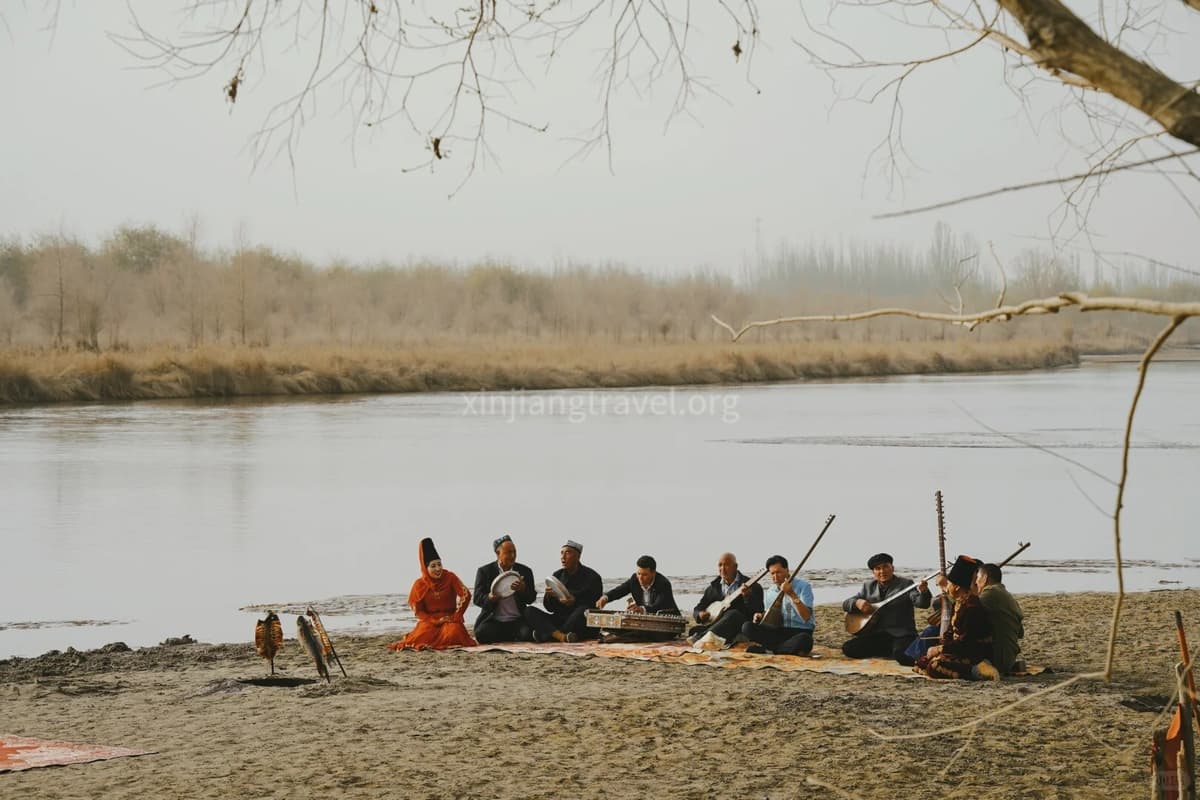
No visit to Shache is complete without engaging with the Twelve Muqam, the musical masterpiece that originated in this very city. The Muqam is a vast suite of instrumental music, song, and poetry that can take over 20 hours to perform in its entirety. Amannisa Khan, the 16th-century queen of the Yarkand Khanate, is revered for her role in collecting and systematizing this tradition, which had previously been transmitted orally across generations. Today, visitors to Shache can attend live performances of excerpts from the Muqam at the Intangible Cultural Heritage Expo Park (within the Royal Palace complex) or at dedicated cultural venues in the city. The music — characterized by long, mournful melodic lines played on traditional instruments like the rawap and dutar, punctuated by passionate vocal improvisations — offers an immediate, visceral connection to the cultural soul of Southern Xinjiang.
The Taklamakan Desert – China's Sea of Sand
The Desert Highway: Crossing the World's Second-Largest Shifting Desert
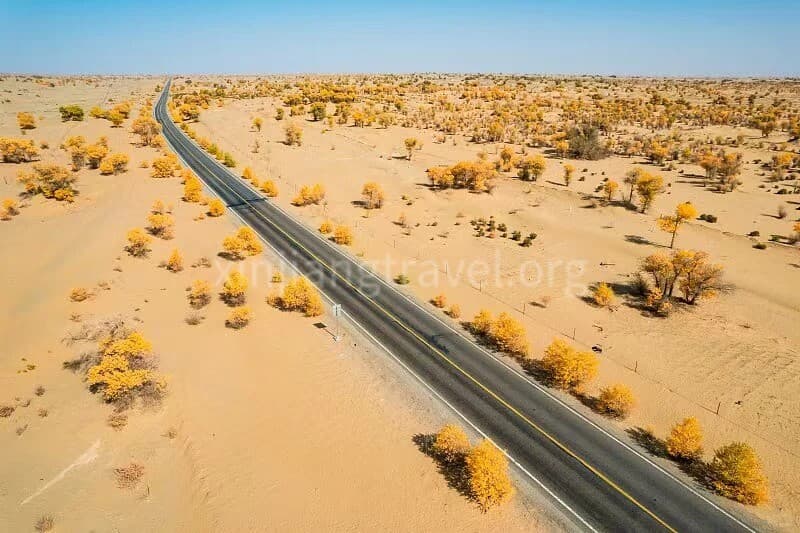
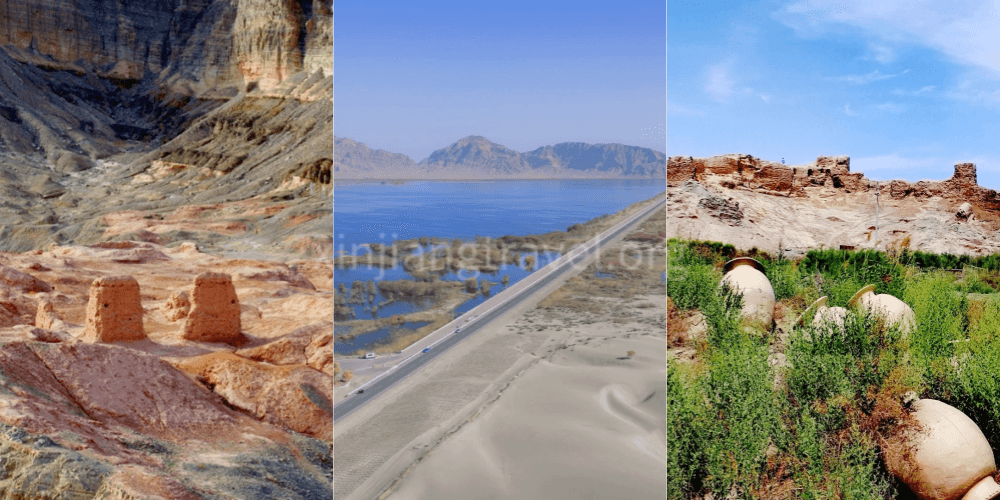
The Taklamakan Desert occupies the heart of the Tarim Basin, covering 330,000 square kilometers — the world‘s second-largest shifting sand desert. Its Uyghur name is often translated as “the place of no return.” Today, paved highways cross this sea of sand. The Tarim Desert Highway runs over 500 kilometers from Luntai in the north to Minfeng in the south. Driving this road is an experience in scale: dunes rise on both sides, some reaching over 300 meters, stretching to the horizon with almost no features other than sand and sky. Travelers should carry ample water, food, and fuel; services are sparse, and sandstorms can arise suddenly.
Lop Nur Village: Life at the Desert's Edge
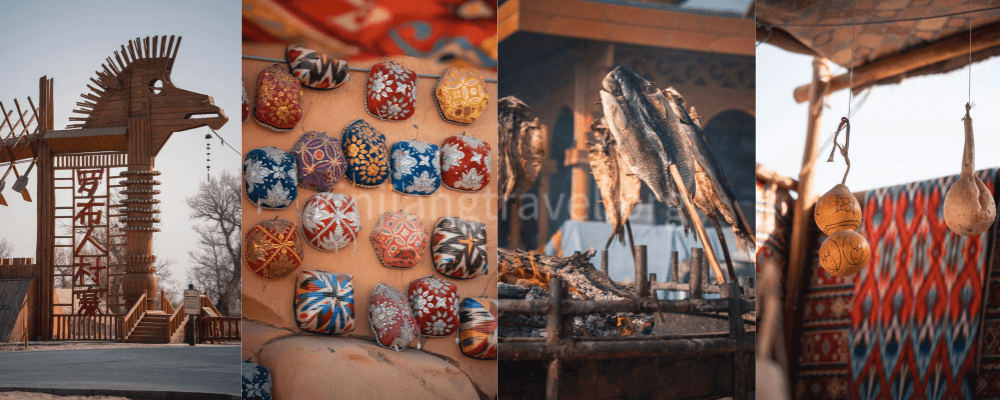
Lop Nur Village, in Yuli County near the confluence of the Tarim River and the desert's edge, offers a window into a unique way of life. The village is home to a community of Lop people, traditionally reliant on fishing and hunting rather than agriculture. Their diet historically centered on fish from the Tarim River, and their dwellings were simple reed huts. Today, the village operates as a cultural tourism site. Visitors can observe traditional fishing techniques, see reed boat construction, and sample grilled fish prepared over open fires. The location — where river, desert, and poplar forest meet — creates a setting unlike any other in Southern Xinjiang.
Populus Euphratica Forests (Seasonal): Autumn's Golden Spectacle
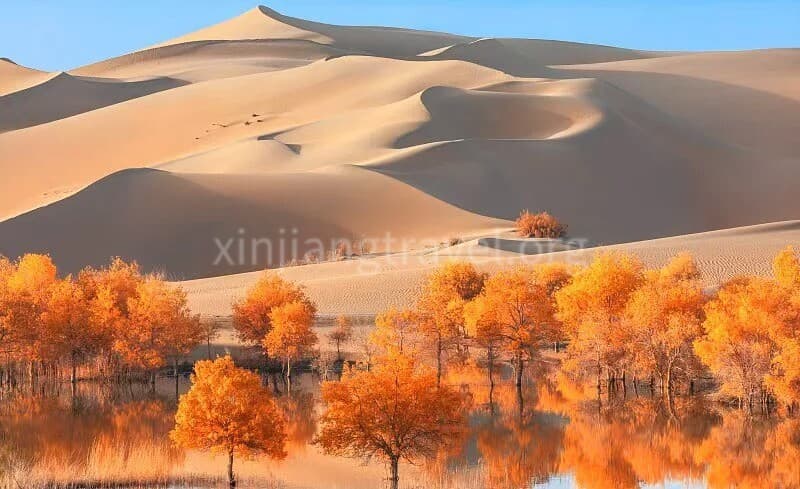
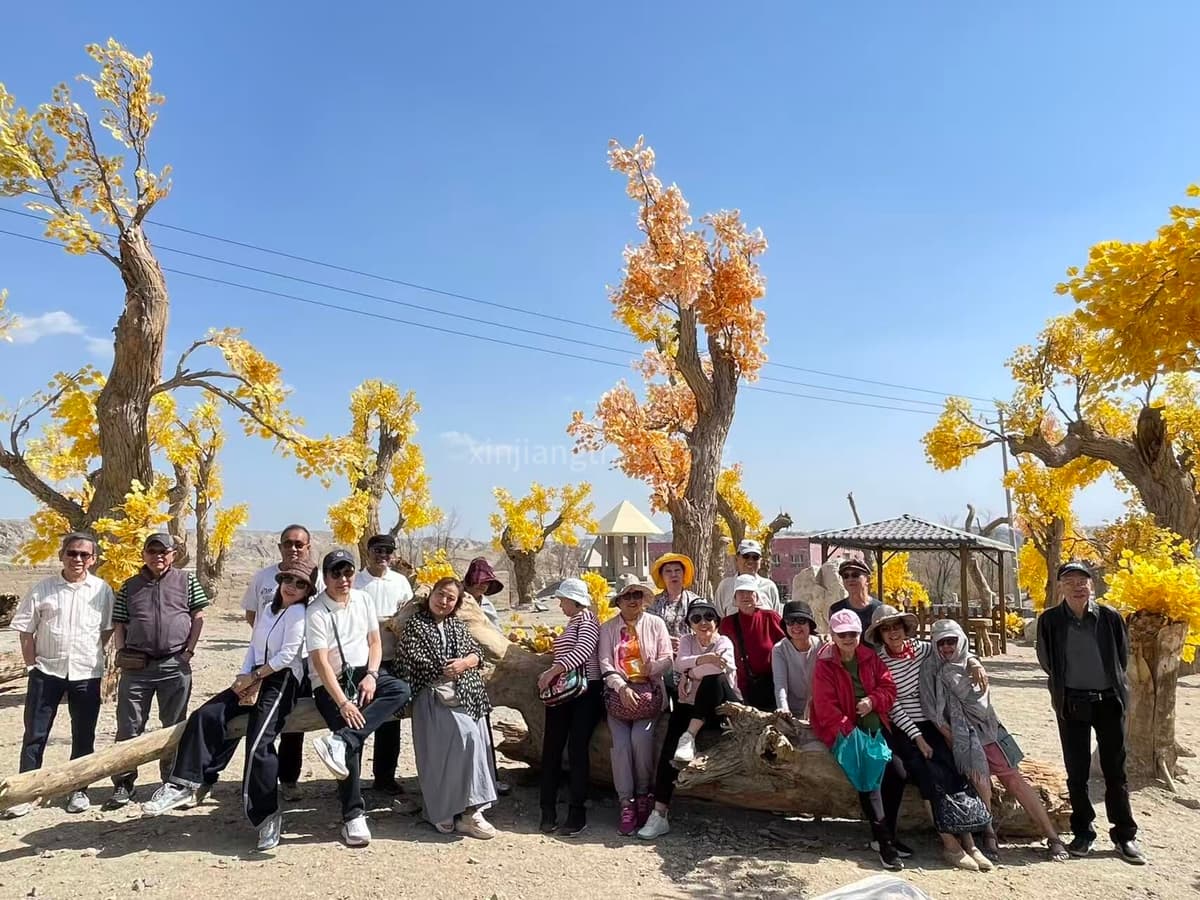
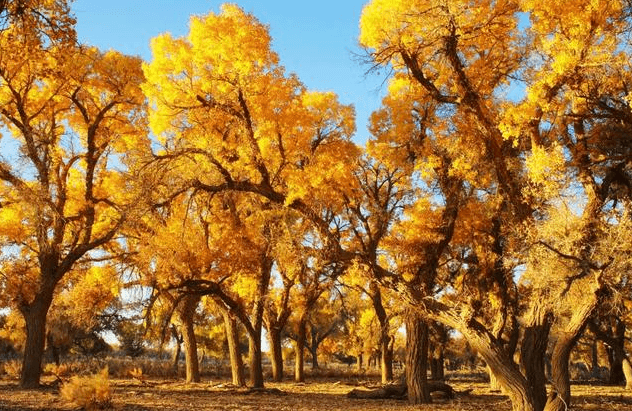
The Tarim Basin is home to the world's largest contiguous expanse of Populus euphratica, a desert-adapted poplar species. Individual trees may live over a thousand years, their gnarled trunks and twisting branches giving them a sculptural appearance. Each October, for two to three weeks, the leaves turn from dusty green to brilliant gold. Entire forests ignite in yellow and amber, set against the gray desert floor and deep blue autumn sky. Key viewing areas include the Tarim River Forest Park near Luntai and sections along the desert highway. The bloom window is narrow and varies each year slightly depending on autumn temperatures.
Tumxuk – The Desert Oasis Where Silk Road History Meets Wetland Serenity
Tumxuk (Tumushuke), a city administered by the Third Division of the Xinjiang Production and Construction Corps, occupies a strategic position on the northern edge of the Tarim Basin. Located roughly halfway between Kashgar and Aksu, the city has quietly emerged in recent years as a compelling stop along the Silk Road circuit. In 2025, the long-awaited opening of the Tangwang City ruins elevated Tumxuk‘s profile significantly, drawing travelers interested in both archaeological heritage and the region's distinctive blend of desert and wetland ecosystems. What distinguishes Tumxuk is the proximity of its attractions — visitors can explore a Silk Road fortress, observe migratory birds on a sapphire lake, and try traditional pottery, all within a compact radius.
Tangwang City Ruins: The Reawakened Guardian of the Northern Silk Road
Tangwang City, located roughly 10 kilometers north of Tumxuk‘s urban center, officially opened to the public in May 2025 after extensive archaeological work. The site covers over one million square meters and is believed to consist of four concentric layers of fortifications. During its heyday, Tangwang City served as a crucial military garrison and trading post along the northern route of the Silk Road. Archaeological excavations have yielded more than 700 artifacts, including Tang Dynasty beacon tower remnants and ancient coins. Visitors approach the ruins via a boardwalk that offers elevated views of the weathered earthen walls and surrounding desert plain. Sunset provides the most favorable viewing conditions when low-angle rays cast long shadows across the rammed-earth fortifications.
Yong'an Lake: Where Sand Dunes Embrace Sapphire Waters
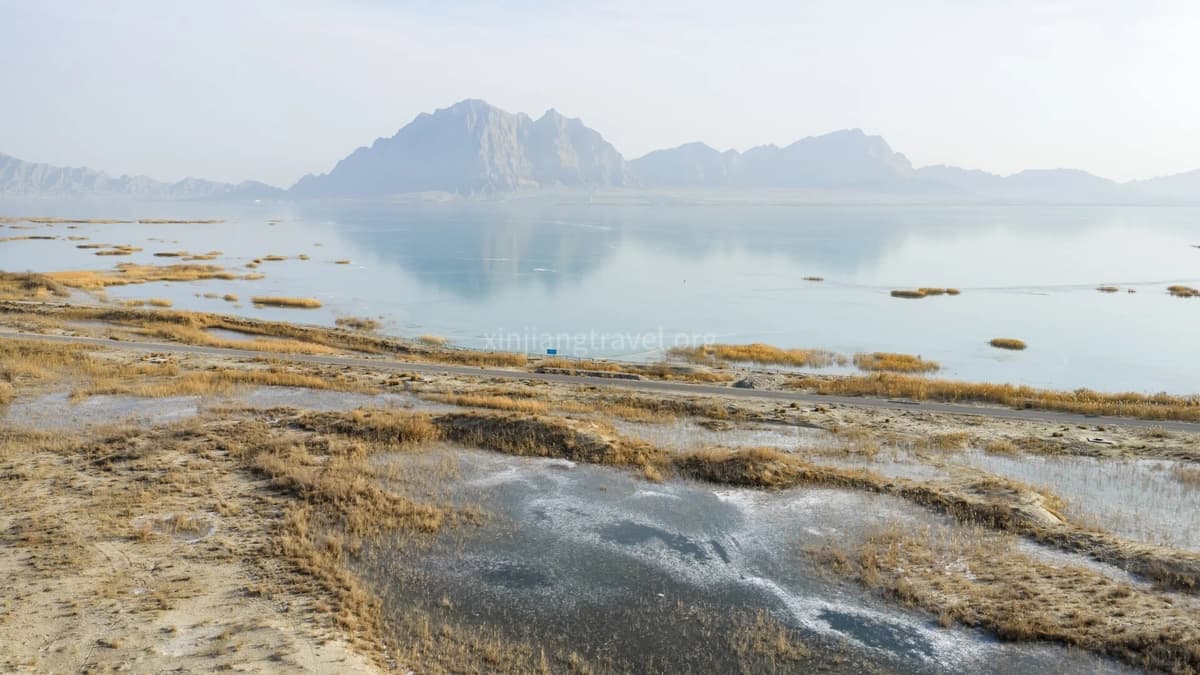
Yong'an Lake is an ecological tourism area built around a reservoir in the lower reaches of the Yarkand River system, roughly 15 kilometers from Tumxuk‘s city center. The landscape defies expectations: a vast expanse of blue water framed by golden dunes, poplar forests, and wetland marshes. A designated scenic road winds through the dunes, offering pull-offs where visitors can appreciate the contrast between turquoise water and sunlit sand. During migration seasons, the lake hosts thousands of waterbirds, including egrets and black-headed gulls. In winter, the site transforms into a desert ski destination with a 300-meter slope. Morning visits offer the calmest water surface for appreciating the reflections.
Tumxuk Pottery Art Museum: Hands-On Heritage of the Tarim Basin
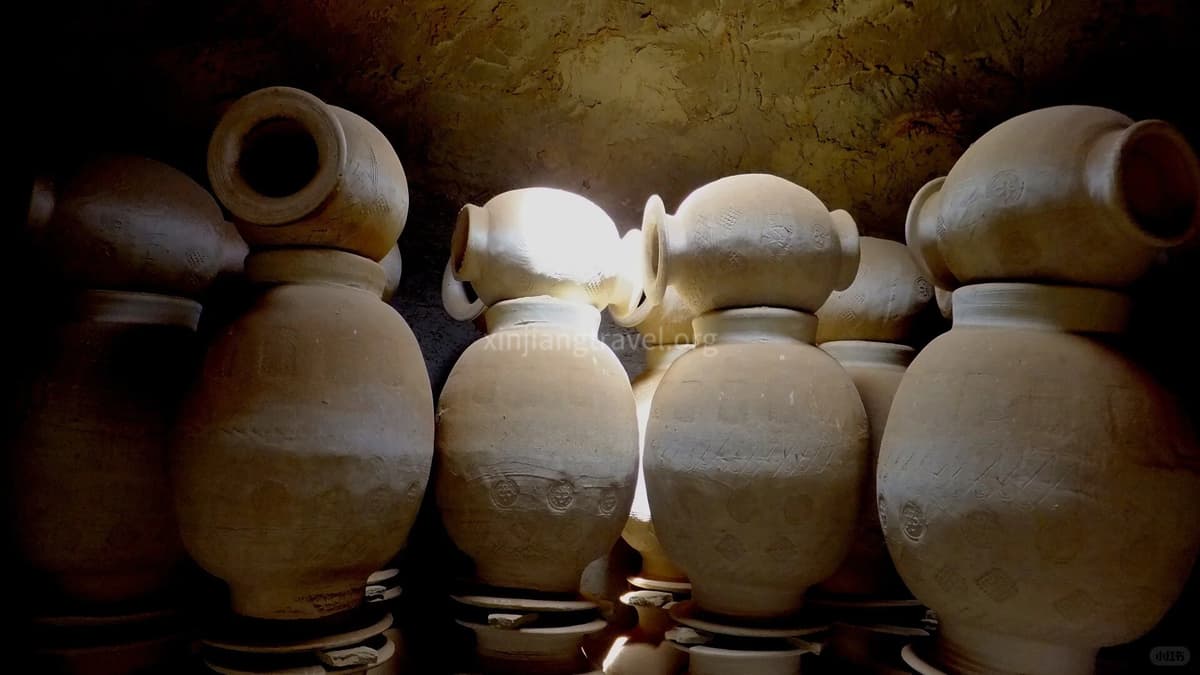
The Tumxuk Pottery Art Museum is dedicated to preserving the traditional mold-made pottery technique of the Uyghur people — an art form recognized as National Intangible Cultural Heritage. The museum complex covers approximately 3,900 square meters and is divided into exhibition, workshop, and traditional firing areas. The building's earthen-toned exterior walls blend unobtrusively into the surrounding landscape. Inside, visitors can trace the history of pottery-making in the Tarim Basin through exhibits of tools and finished vessels. The workshop area offers a rare opportunity to sit at a wheel and shape clay under the guidance of local artisans.
Practical Considerations for Travel in South Xinjiang
Timing: The most favorable periods for photography are April–May and late September–October. April brings apricot blossoms and moderate temperatures. October delivers the golden poplar forests and clear, crisp light. Summer (June–August) brings extreme heat in the lowlands and crowded conditions at popular sites. Winter (November–March) offers solitude and snow-covered landscapes, but some high-altitude passes may close, and temperatures in the mountains drop well below freezing.
Permits: Travel to Tashkurgan and areas bordering Tajikistan, Afghanistan, and Pakistan requires a Border Entry Permit. The permit can be obtained at the Public Security Bureau in Kashgar with a valid passport or Chinese ID card. Processing is straightforward and typically completed within the same day.
Transportation: Kashgar International Airport receives flights from major Chinese cities. Kashgar is also accessible by train from Urumqi (12–15 hours). Distances between attractions are substantial (200–400 km daily). Hiring a private vehicle with a local driver provides flexibility for stops. Self-driving requires comfort with Chinese traffic regulations and road conditions.
What to Pack: Layer clothing for temperature swings of 20°C or more. A warm down jacket is essential even in summer for Pamir evenings. Sturdy, closed-toe shoes for canyon hiking. High-SPF sunscreen, sunglasses, a wide-brimmed hat, and lip balm. Dust protection: scarf or face covering. Spare batteries and memory cards are essential, as services in remote areas are limited.
Altitude and Health: The Pamir Plateau exceeds 3,000 meters, with some viewpoints above 4,000 meters. Symptoms of altitude sickness — headache, fatigue, shortness of breath — are common. Ascend gradually, stay hydrated, and avoid strenuous activity on the first day. Sun protection is critical year-round: high-SPF sunscreen, sunglasses, a wide-brimmed hat, and lip balm.
Cultural diversity: Dress modestly, especially at mosques and in rural villages. Always seek permission before photographing people — a smile and greeting demonstrate respect. Some individuals, particularly women and elderly people, may prefer not to be photographed. Respect these boundaries. When visiting homes, a small gift such as fruit or tea is appreciated but not required. Remove shoes before entering carpeted areas.
Urumqi - Turpan-Korler- Kuqa- Aksu- Kashgar-Taxkorgan-Kashgar
Embark on a South Xinjiang adventure, exploring the legendary Silk Road towns of Kashgar and Kuche. Experience the stunning landscapes of the Pamir Plateau, where nature and history blend into an unforgettable journey.
Kashgar - Taxkorgan - Aksu - Kuqa - Korla
Welcome to join our South Xinjiang Tour, Oytagh Glacier Park which is the summer resort for the locals, Panlong Road where you can enjoy the splendid Kunlun Mountain, and Grand Bazaar for a taste of the strong exotic flavor.
Hotan-Kashgar-Kuqa-Turpan-Urumqi
Uncover South Xinjiang’s gems on 8 days epic road trip! From Kashgar’s bustling markets to Karakul Lake’s mirror-like waters, traverse the Taklamakan Desert’s edge and marvel at amazing White Sand Lake. Experience Silk Road caravanserais and Tashkurgan’s Tajik culture. Reserve your ultimate Pamirs adventure now!
Kashgar - Taxkorgan - Yarkent - Hotan - Minfeng - Kuqa - Turpan - Fukang - Urumqi
This 13 days south xinjiang tour is for you to have a very in-depth experience of southern Xinjiang. To know its custom, ethnic culture and history. The nature landscapes are also amazing. Drive across the famous Taklamakan Desert Highway and lost youself in the breathtaking scenery of golden populu forests...