20 years of pioneer in xinjiang tourism for overseas travelers
Born Here, Know Best, Your Journey's Blessed
No Shopping. No Detour, 99% Excellent Review

contact UsOn Wechat
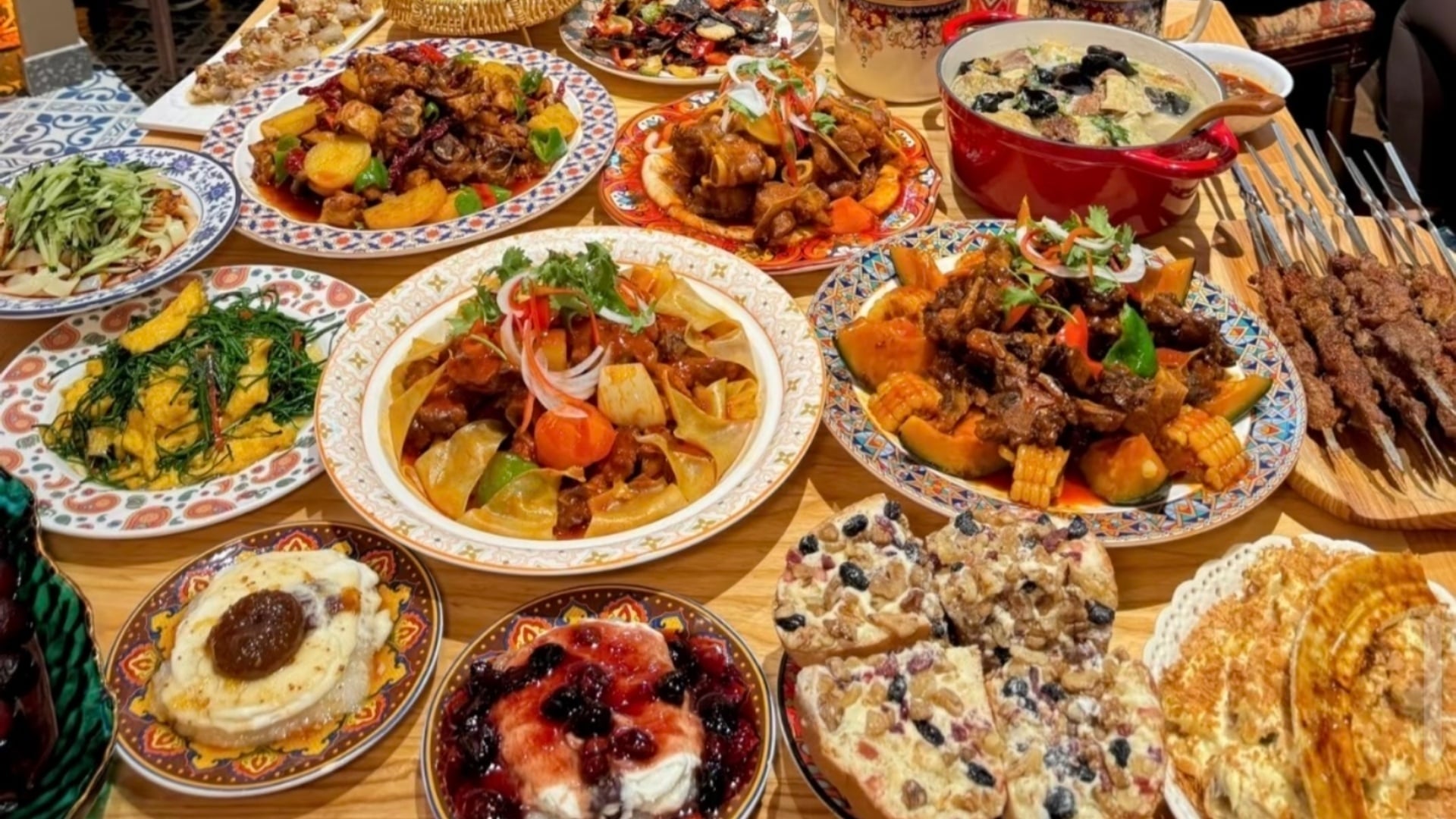
Have you ever tasted a meal that felt like a thousand years of history on your tongue?
Imagine this: You're sitting on a woven carpet under the shade of a grapevine in an old Kashgar courtyard. An Uyghur elder places before you a freshly baked naan—still warm from the tandoor, its surface patterned with ancient symbols. Beside it, a skewer of lamb grilled over charcoal, seasoned with nothing but salt, cumin, and chili.
This is not just food. This is the Uyghur way of life.
Main course
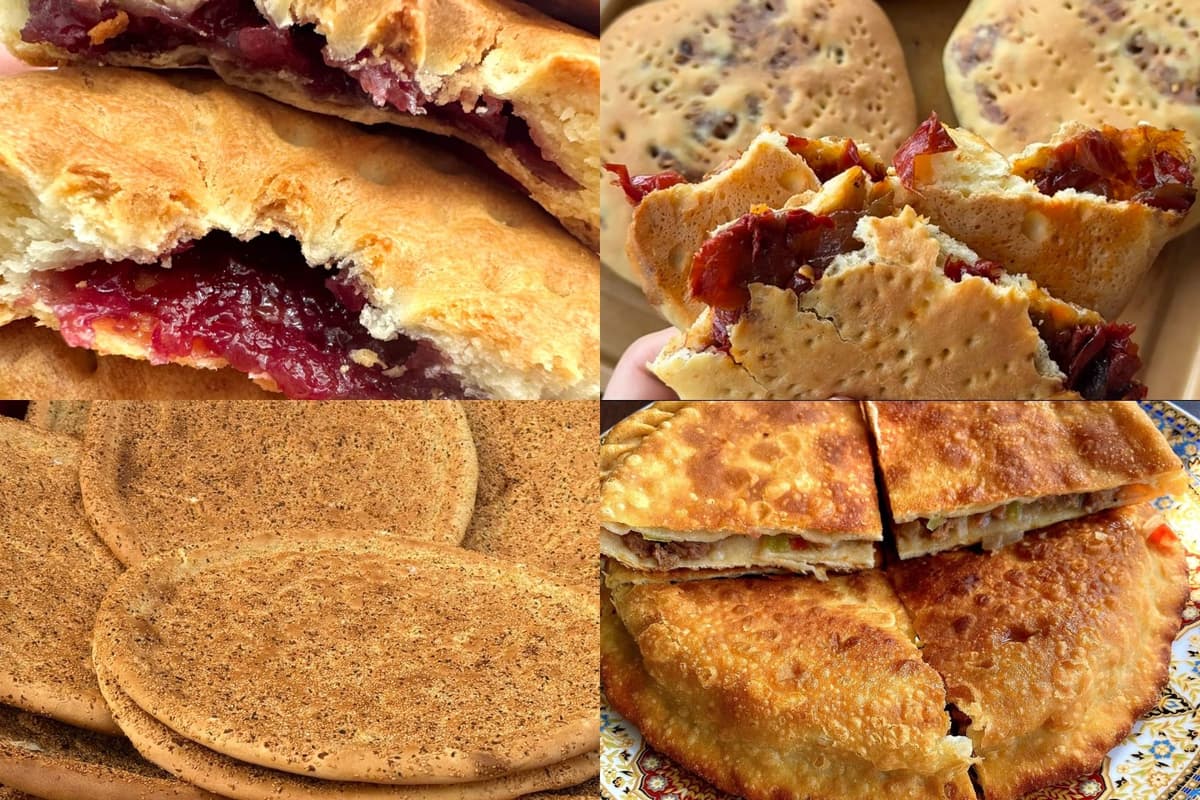
Naan
In the lives of Uyghur people, naan holds a place far beyond that of mere food. At weddings, the bride and groom share a piece of Naan dipped in salted water, a symbol of sharing hardships and joys together. When someone sets out on a journey, a mother will tuck a piece of Naan into their bag, wishing them a safe trip. In Xinjiang, there are many kinds of Naan: Naan with dried chili, sesame Naan, rose jam Naan, meat Naan, onion Naan...
Xinjiang barbecue
In Xinjiang, grilled lamb is never thought of as “a skewer,” but rather “a handful.”
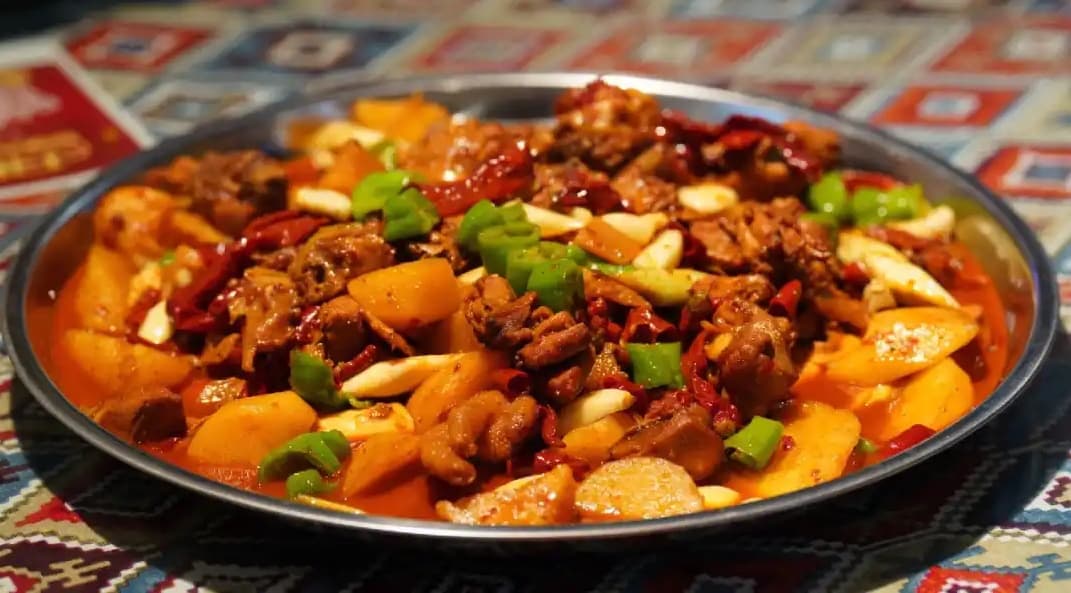
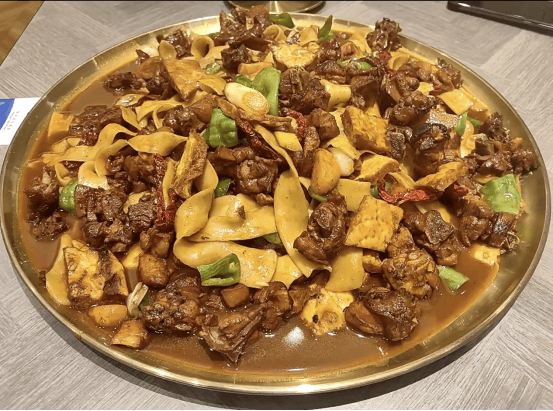
Big Plate Chicken
Xinjiang's most famous iconic national dish. A whole tender chicken is cut into pieces, braised over high heat with potato chunks, green and red peppers, chilies and spices. Wide belt-shaped noodles or sheet jelly are added at the end to soak up the sauce. The chicken is well-flavored and tender, the potatoes soft and sweet. The soup is spicy, aromatic and brightly colored. One plate is enough for several people to share. It combines the flavors of Xinjiang and Sichuan cuisines, making it the top choice for visitors to try Xinjiang's spicy taste for the first time.
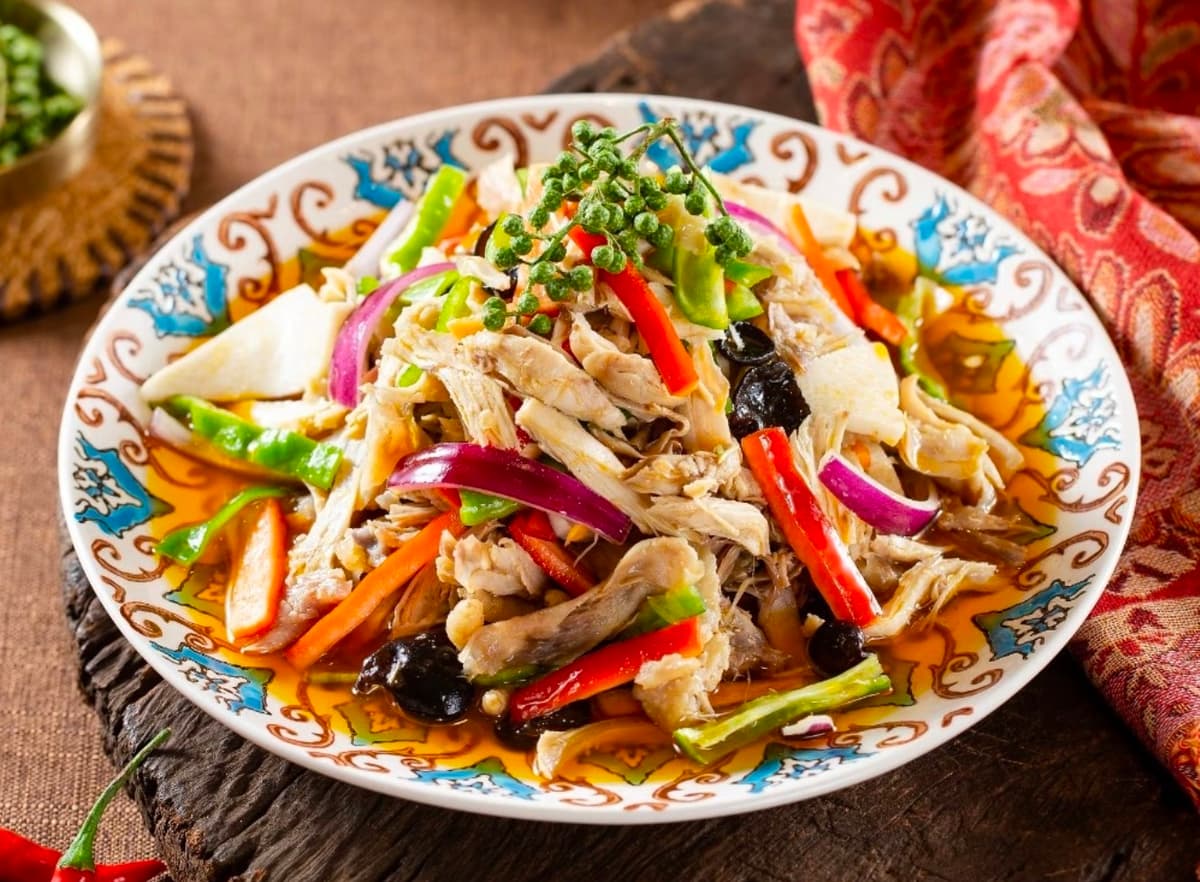
Spicy Pepper Chicken
A variation similar to Big Plate Chicken, but with a stronger numbing-spicy flavor. The chicken is torn into strips or chunks and tossed with chili, Sichuan peppercorns and other spices. It tastes smooth, tender, full of flavor with a spicy-numbing kick. Originating from Sichuan and Chongqing, it has adopted Xinjiang’s bold style. It is a popular appetizer or side dish recommended by many locals.
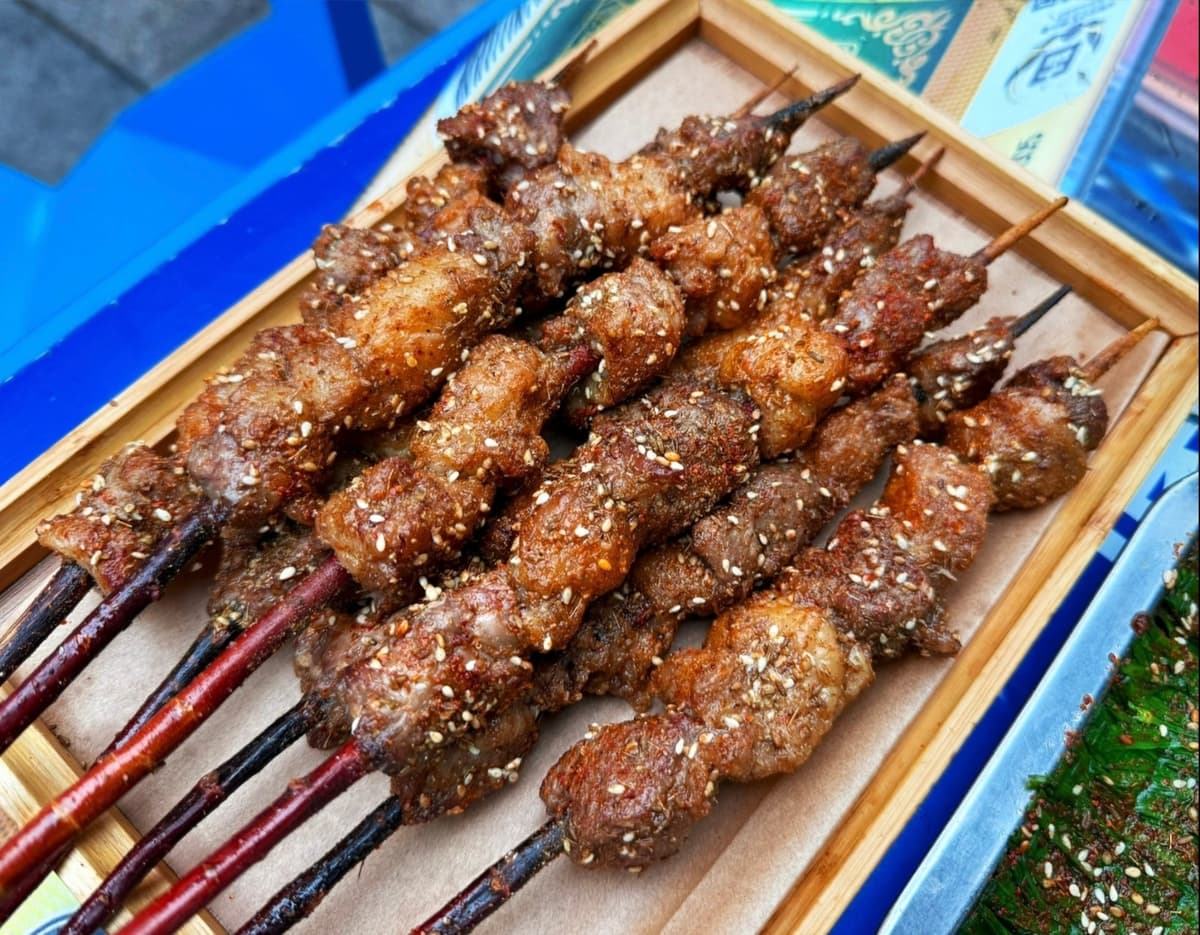
Barbecue with red willow branches skewers
Lamb skewered on poplar branches. This is an age-old practice from the edge of the Taklamakan Desert. Fresh poplar branches are stripped of their bark, leaving the moist wood beneath, and large chunks of lamb are threaded onto them. As the meat grills over charcoal, the sap from the poplar seeps into the lamb, lending it a clean, grassy fragrance that cuts through the fat.
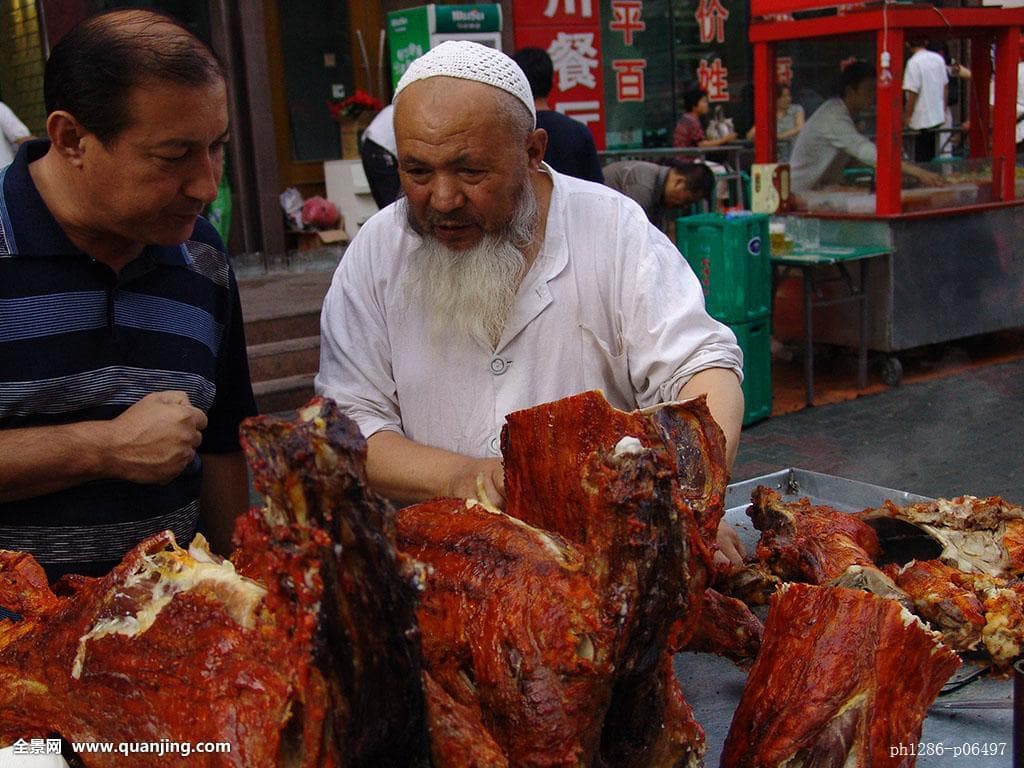
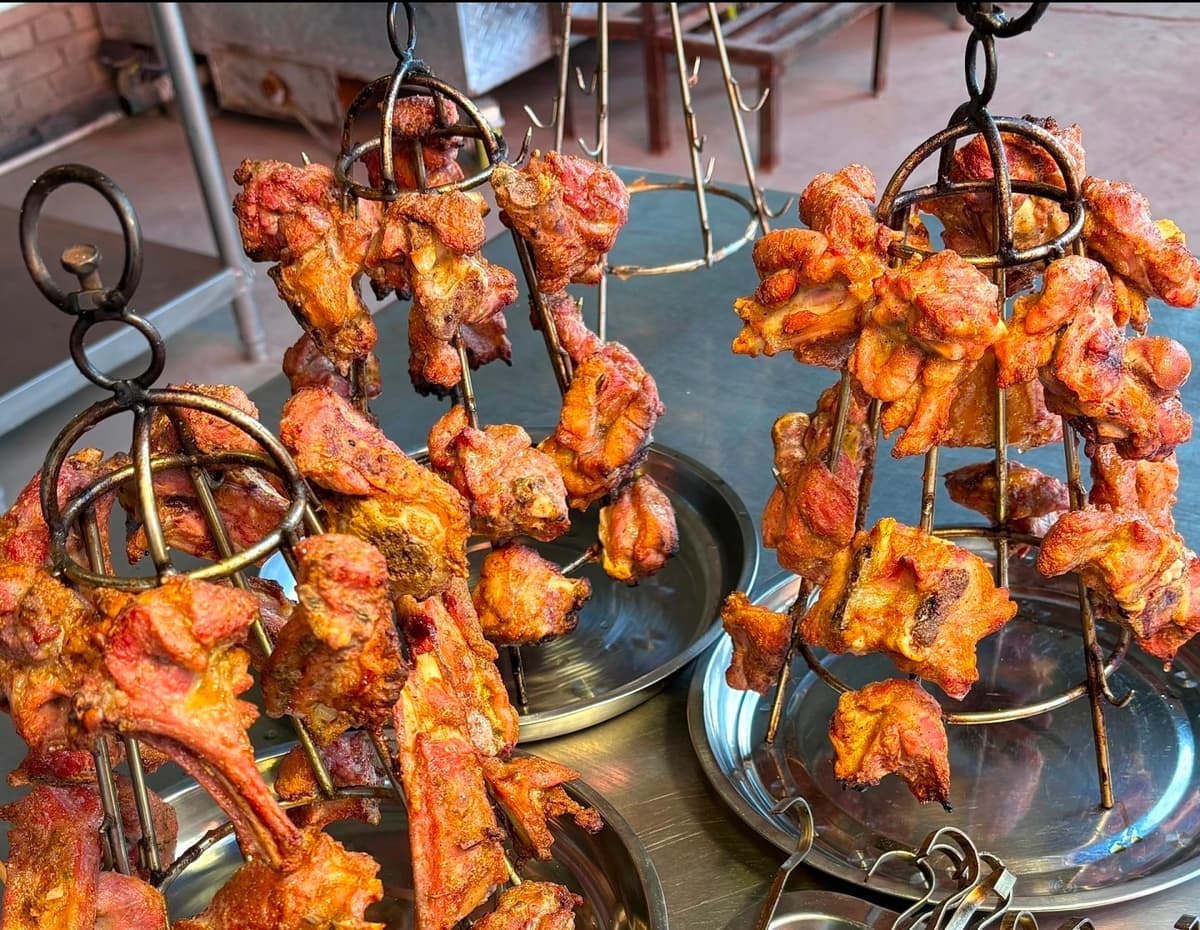
Meat roasted on skewer
Lamb chops hung on iron racks and roasted in a tandoor. When brought to the table, the aroma hits you all at once, and you eat it by tearing the meat off with your hands.
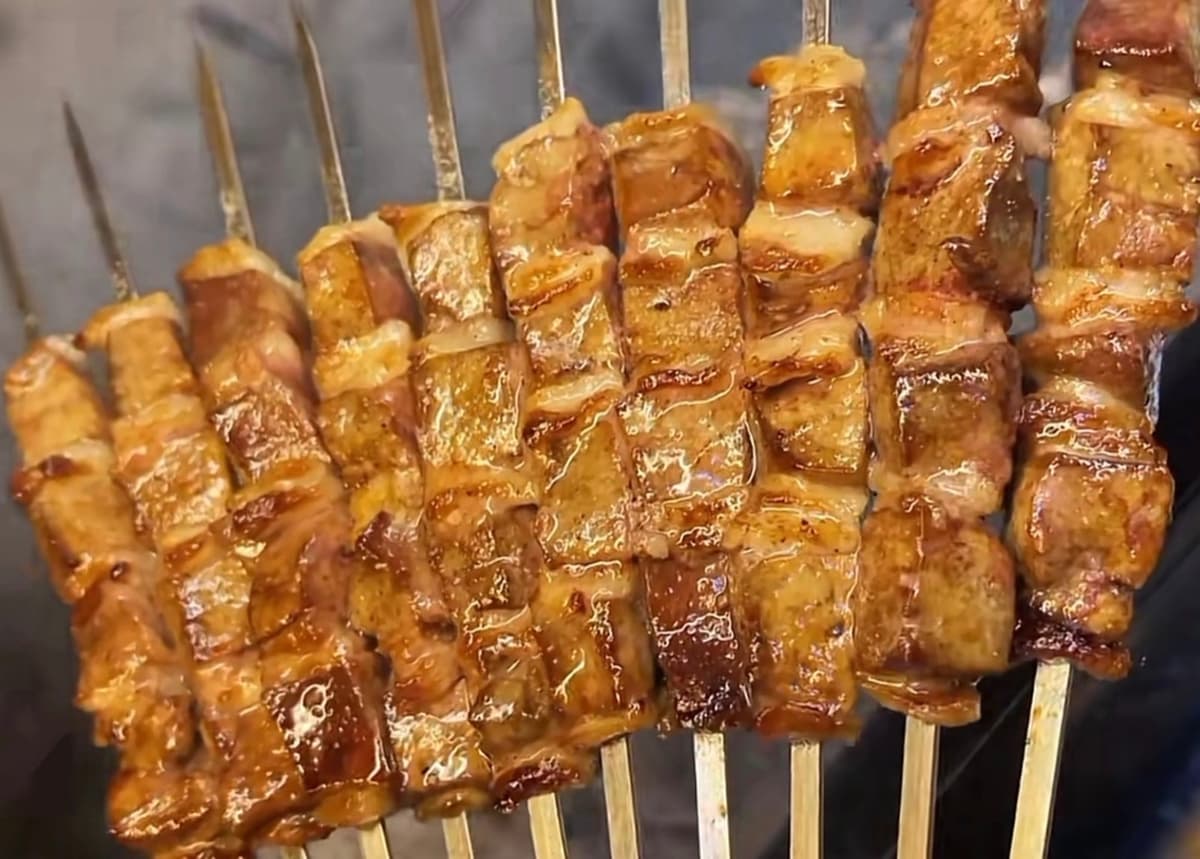
You bao gan
A piece of lamb liver wrapped in tail fat. As the fat melts over the fire, it coats the liver. What is usually a dry, dense texture becomes tender and smooth.
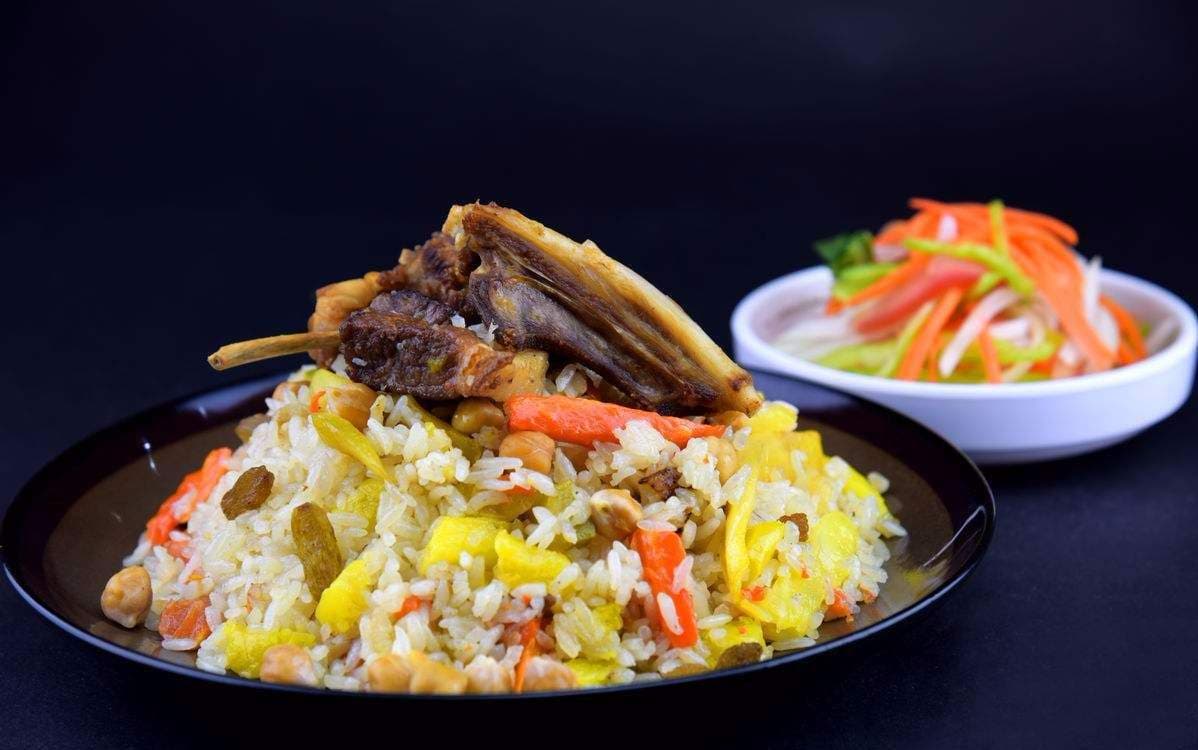
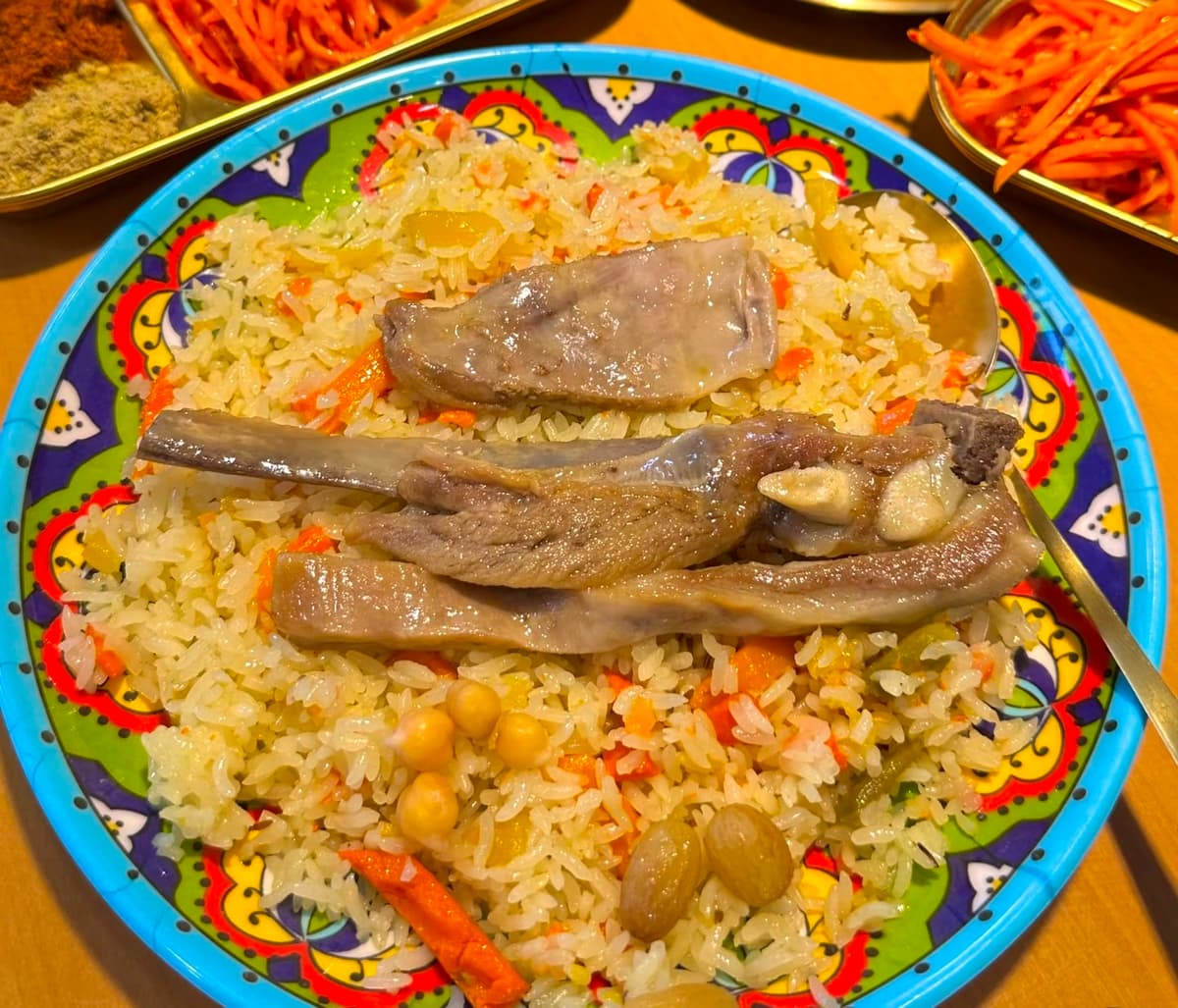
Polo (or lamb pilaf)
Polo, or lamb pilaf, is the highest form of hospitality among the Uyghur people. Every Uyghur has their own “secret recipe” for polo. Authentic Xinjiang polo uses yellow carrots rather than orange ones, because yellow carrots are sweeter, softer, and give the rice a natural golden color. The lamb should be bone-in leg or chops, with a good mix of fat and lean. The rice is soaked in advance to fully absorb water. Searing the meat, stirring frying vegetables, adding water, and letting the rice steam—each step is carefully timed. In Kashgar, a handful of raisins or dried apricots is added to the polo, letting sweet and salty flavors come together on the palate.
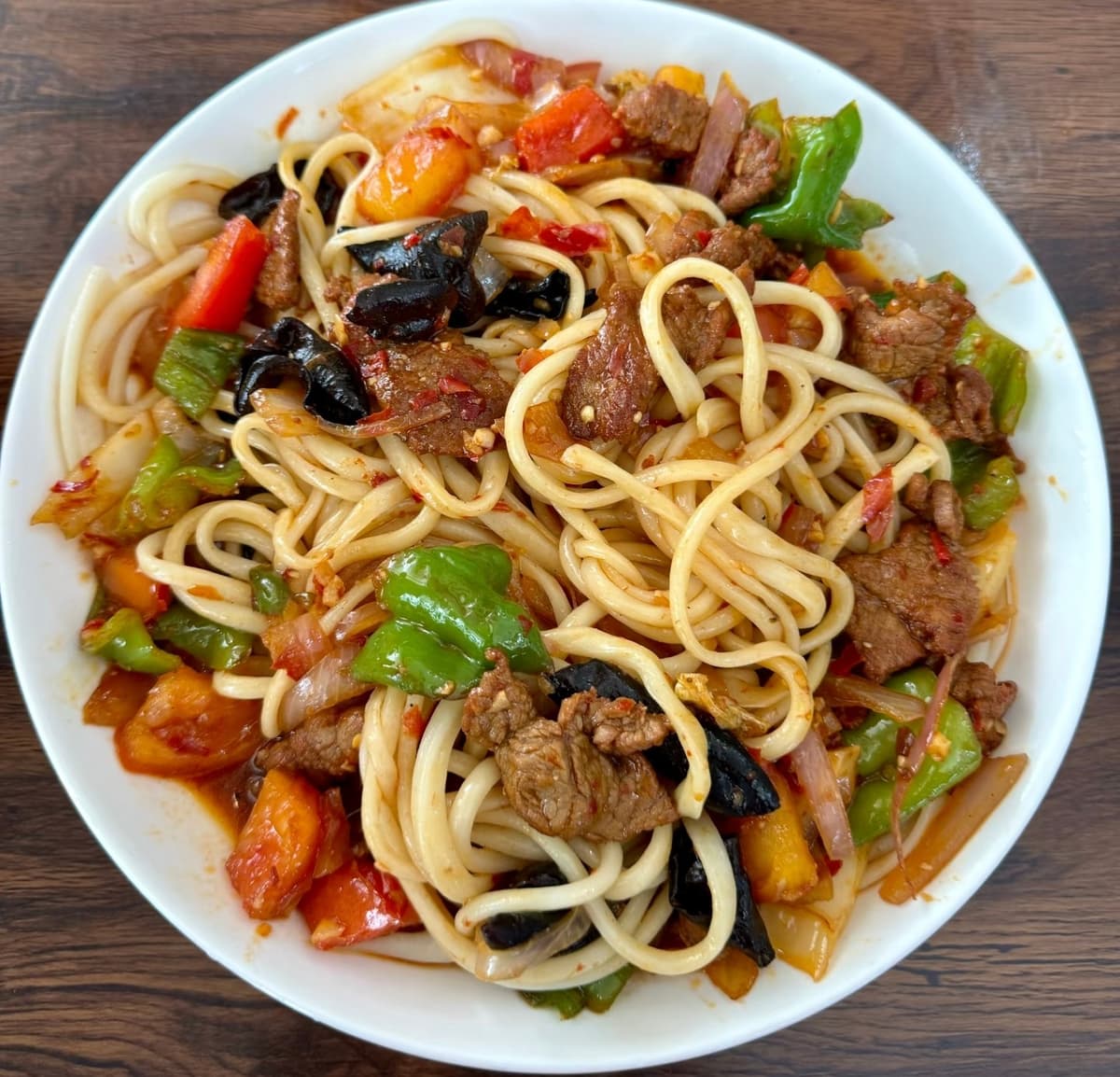
Lagman (or hand-pulled noodles)
Lagman or hand-pulled noodles. These noodles, made by hand, are so firm and chewy you could describe them as “bouncing off the teeth”. They are served with a stir-fry of tomatoes, green peppers, lamb, and onions, and each strand of noodle is coated in the sauce. There is a rule when eating lagman: extra noodles are free, but you must never leave any behind.
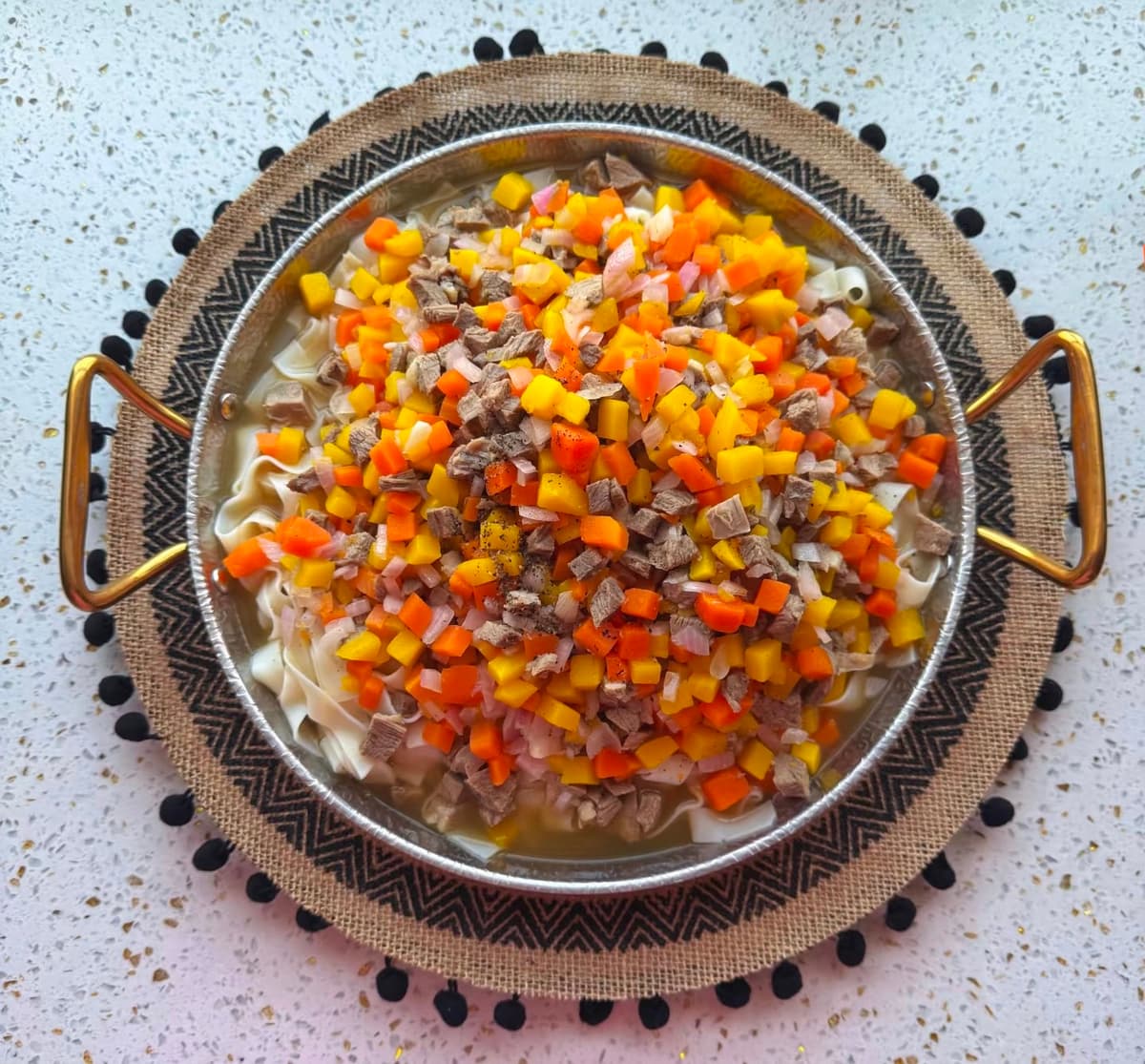
Narin
Narin is a traditional dish from the Xinjiang region. Broad, hand-rolled noodles form the base, topped with large chunks of horse meat or lamb, then drenched in hot broth and scattered with slivers of onion and cilantro. To eat it, you tear the meat into smaller pieces and mix everything together with the noodles. A bowl of narin warms you all over, making even the coldest winter feel like nothing to fear.
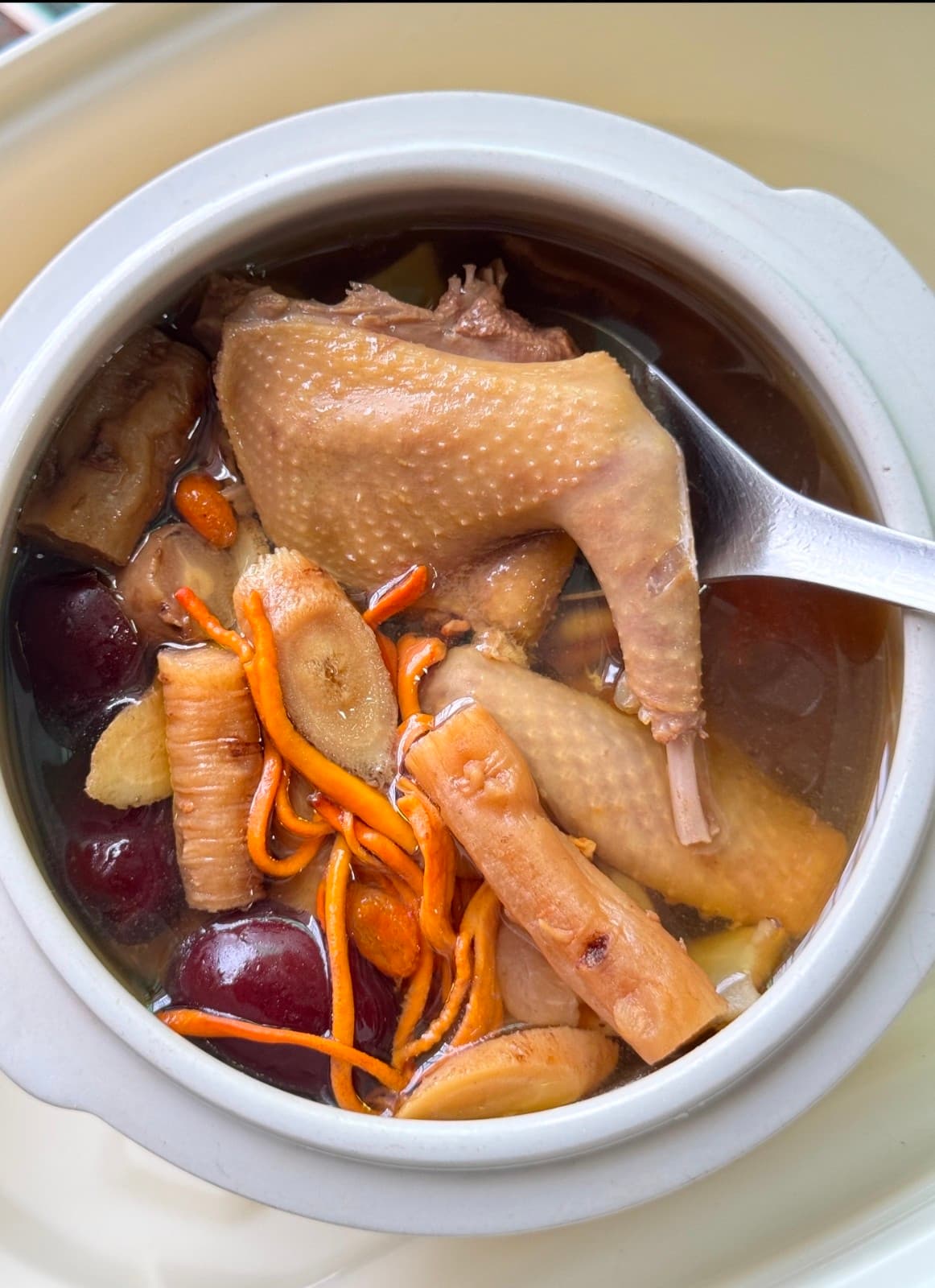
Pigeon soup
In Kashgar, if you haven't had a bowl of pigeon soup, you might as well not have come. The people of Kashgar love pigeons and know them well. The pigeon soup shops in the old city often have only a few tables, yet they have been run for generations. Locals believe pigeon soup "replenishes one's qi"—one bowl down, and you feel full of energy.
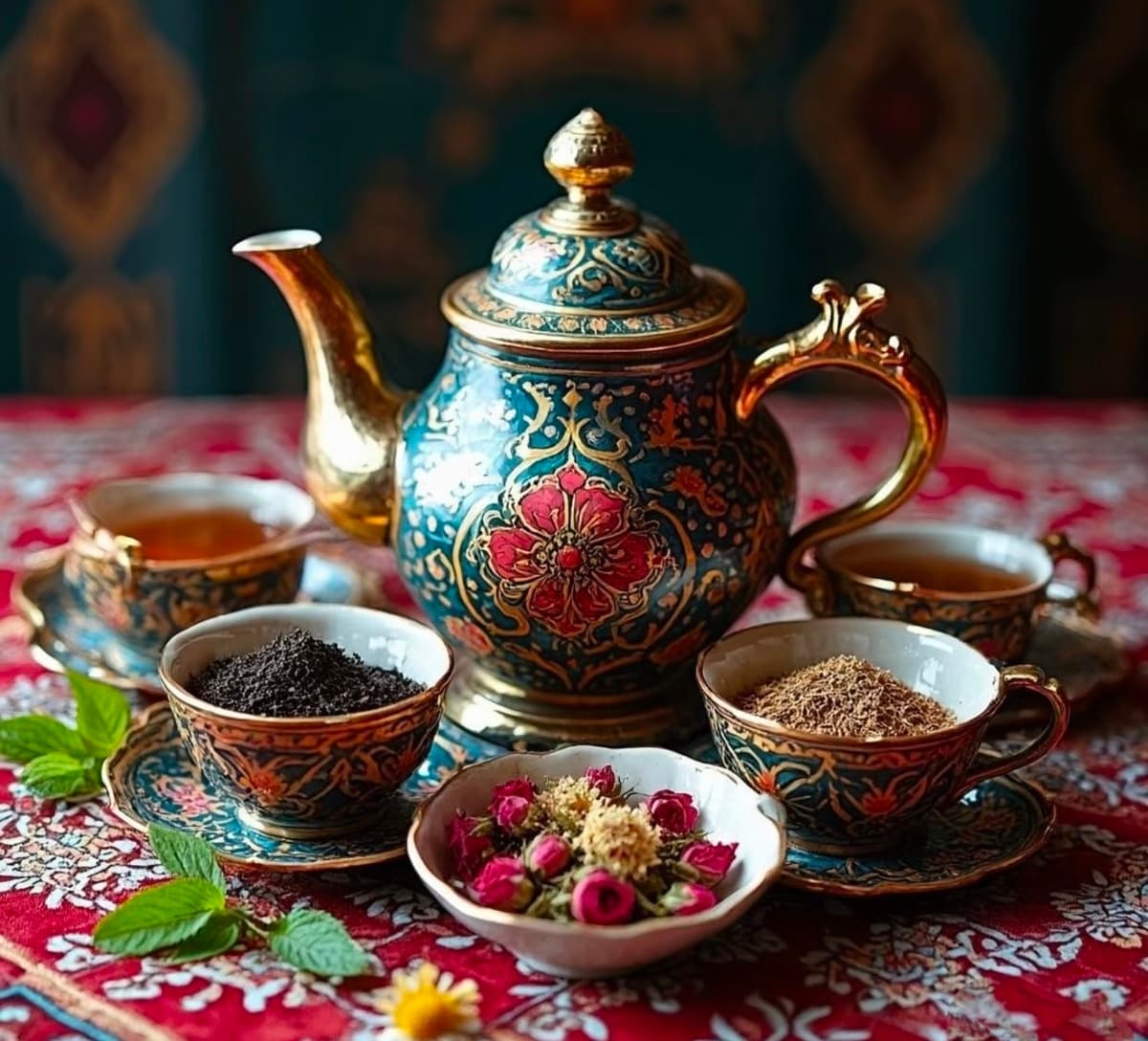
Uyghur spiced tea (chay)
Uyghur spiced tea, or chay. This is not your usual black tea or green tea. The pot holds a blend of tea leaves mixed with over a dozen spices—saffron, cardamom, cloves, cinnamon, ginger, rose, and others. Every household has its own recipe, just as every family’s polo tastes different.
Welcome to Xinjiang
Uyghur food is never just a meal. It's a celebration of life, a way to connect, and a warm welcome from the heart of the oasis. When you travel with us, every dish becomes a memory, and every local you meet feels like a friend. Come join us for an adventure where every bite tells a story and every day brings delicious surprises. Welcome to the world of Uyghur food—your unforgettable journey starts right here.
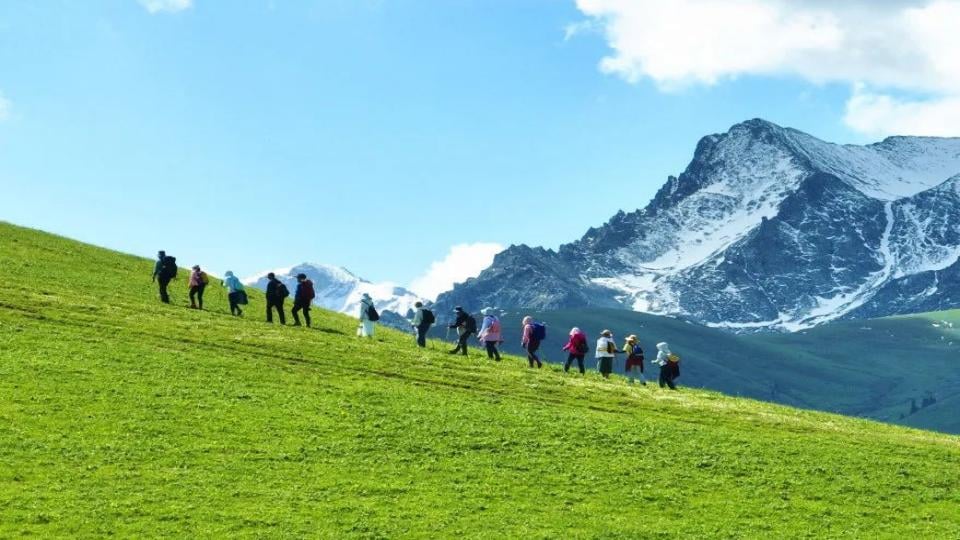
Yili-Kalajun
Discover the stunning beauty of Kalajun Grassland and Sayram Lake on a trekking adventure. Explore Xinjiang's forests, flower fields, and snow-capped peaks, with comfortable mobile camps ensuring a seamless journey. This trip offers an unforgettable experience in nature's paradise.