20 years of pioneer in xinjiang tourism for overseas travelers
Born Here, Know Best, Your Journey's Blessed
No Shopping. No Detour, 99% Excellent Review

contact UsOn Wechat
Why Xinjiang Appeals to Malaysian Travelers
For Malaysian travelers, Xinjiang offers a type of landscape and cultural experience that is fundamentally different from Southeast Asia. Malaysia is defined by tropical rainforests, coastal environments, and humid weather year-round. Xinjiang, by contrast, is vast, dry, and continental in climate, with dramatic seasonal variations. This contrast alone is a strong motivation for travel.
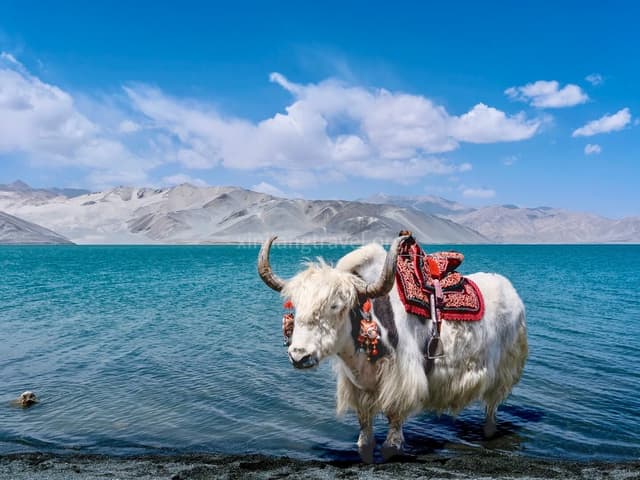
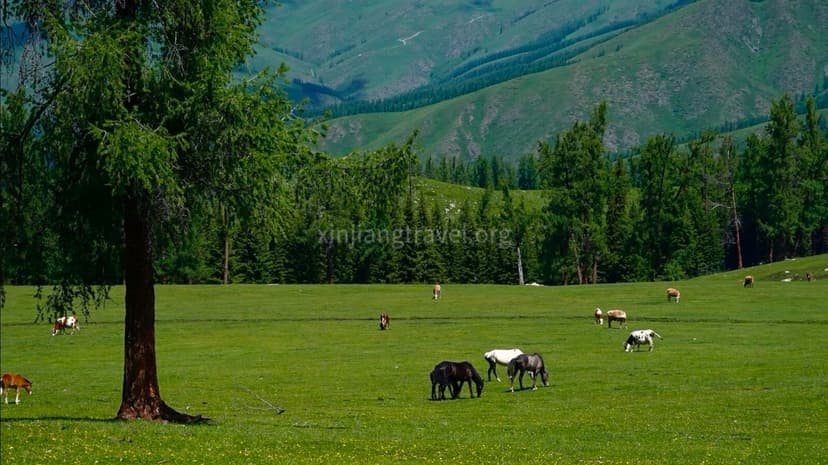
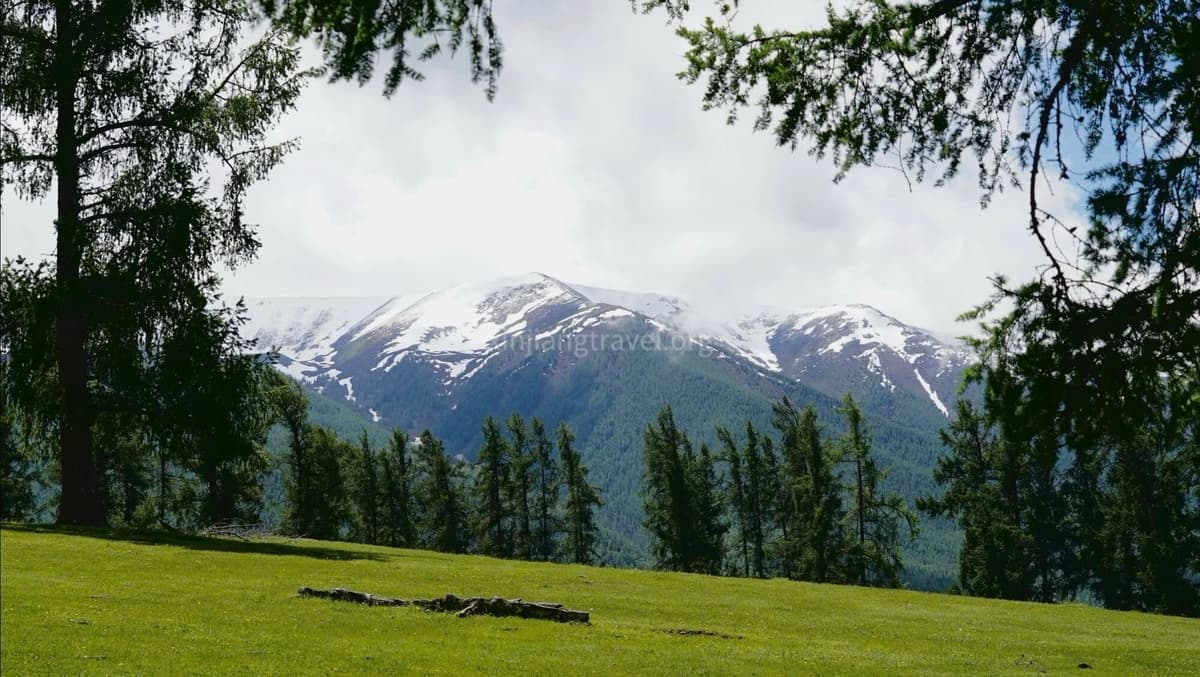
From a geographic perspective, Xinjiang provides access to landscapes that Malaysians rarely encounter in their own country: snow-covered mountains such as the Tianshan range, alpine lakes like Sayram Lake, desert environments including the Taklamakan Desert, and expansive grasslands in Ili. These are not just scenic differences; they represent entirely different ecological systems, which many Malaysian travelers find educational and refreshing.
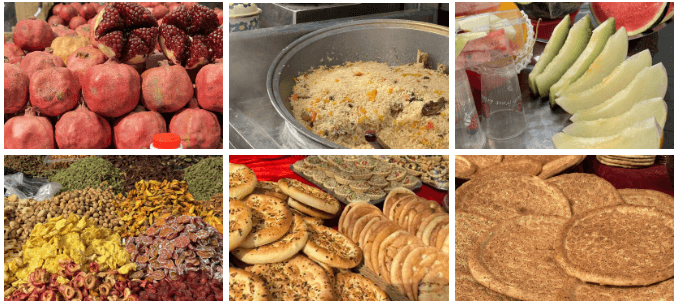
Food is another major draw. Malaysian cuisine is diverse and heavily influenced by Malay, Chinese, and Indian traditions. Xinjiang cuisine, while also influenced by Islamic dietary practices, introduces new flavors—particularly through its emphasis on lamb, hand-pulled noodles, naan bread, and cumin-based seasoning. For Muslim Malaysians, Xinjiang is especially attractive because halal food is widely available, reducing one of the most common concerns when traveling abroad.
Culturally, Xinjiang sits at the crossroads of Central Asia and China. Travelers from Malaysia often find the blend of Uyghur, Kazakh, and Han Chinese cultures both accessible and unfamiliar. The Islamic heritage in parts of Xinjiang creates a sense of familiarity, while the Silk Road history adds depth and context to the journey.
In practical terms, Xinjiang also appeals to Malaysian travelers seeking destinations that are less crowded than major Chinese cities like Beijing or Shanghai. While tourism infrastructure is improving, Xinjiang still offers a sense of exploration and authenticity that is increasingly difficult to find in more commercialized destinations.
Xinjiang Tour Package for Malaysians
13 Days North Xinjiang Panoramic Tour to Kanas and YiliUrumqi - Fuyun - Burqin - Kanas - Karamay - Sarym Lake - Naraty pastureland - Bayinbuluk - Korler - Turpan - Heavenly Lake (2026)520+ booked From US$ 2790 |
12 Days Southern Xinjiang & Taklamakan Desert highway adventureUrumqi - Turpan - Korler - Kuqa - Hotan - Yarkent - Kashgar (2026)500+ booked From US$ 2370 |
16 Days Aerjinshan Discovery AdventureUrumqi-Turpan-Korler-Ruoqiang-Kechik Lake (2026)490+ booked From US$ 4280 |
How to Get to Xinjiang from Malaysia
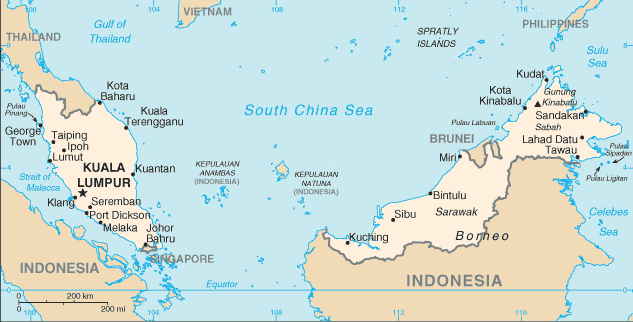
For Malaysian travelers planning a trip to Xinjiang, several flight options are available depending on your departure city. From Kuala Lumpur International Airport (KUL), Batik Air Malaysia operates a direct charter flight to Urumqi Diwopu International Airport (URC) on a seasonal basis, with current schedules indicating weekly service resuming from August 28, 2026. The direct flight takes approximately seven hours and forty minutes. For most travelers, however, a one-stop connection via major Chinese hub cities is the more common and flexible choice. The most frequently used transit points are Guangzhou Baiyun International Airport (CAN) and Chengdu Tianfu International Airport (TFU), both offering multiple daily flights to Ürümqi. A typical itinerary via Guangzhou takes between 11 and 15 hours of total travel time, including layovers. Flights via Chengdu are similarly efficient and also provide convenient onward connections to Kashgar (KHG) in southern Xinjiang for those wishing to begin their journey there. Additional transit options from Kuala Lumpur include Shanghai Pudong (PVG), Changsha Huanghua (CSX), and Kunming Changshui (KMG), with total journey times ranging from approximately eleven and a half to thirteen and a half hours.
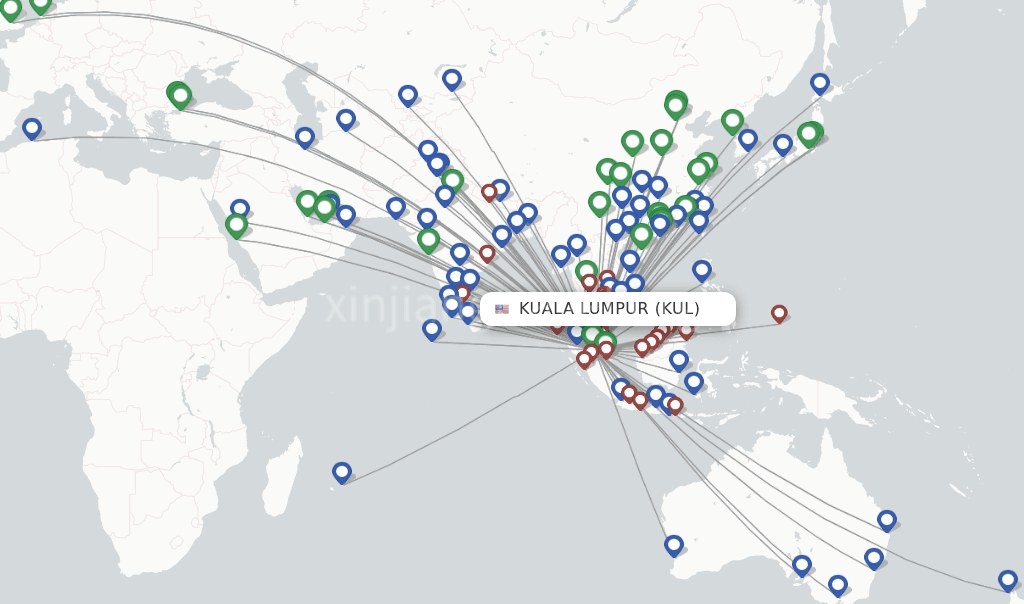
Travelers departing from Penang International Airport (PEN) or Kota Kinabalu International Airport (BKI) will find no direct services to Xinjiang. All routes require at least one stop, typically transiting through Hong Kong International Airport (HKG) or Guangzhou. Carriers such as Cathay Pacific and China Eastern serve these routes, though total travel time can extend from fourteen hours to over twenty-three hours, depending on layover duration. For those departing from Senai International Airport (JHB) in Johor Bahru, options are more limited, often requiring two stops and resulting in total travel times exceeding thirty hours, which is generally less practical for a Xinjiang itinerary.
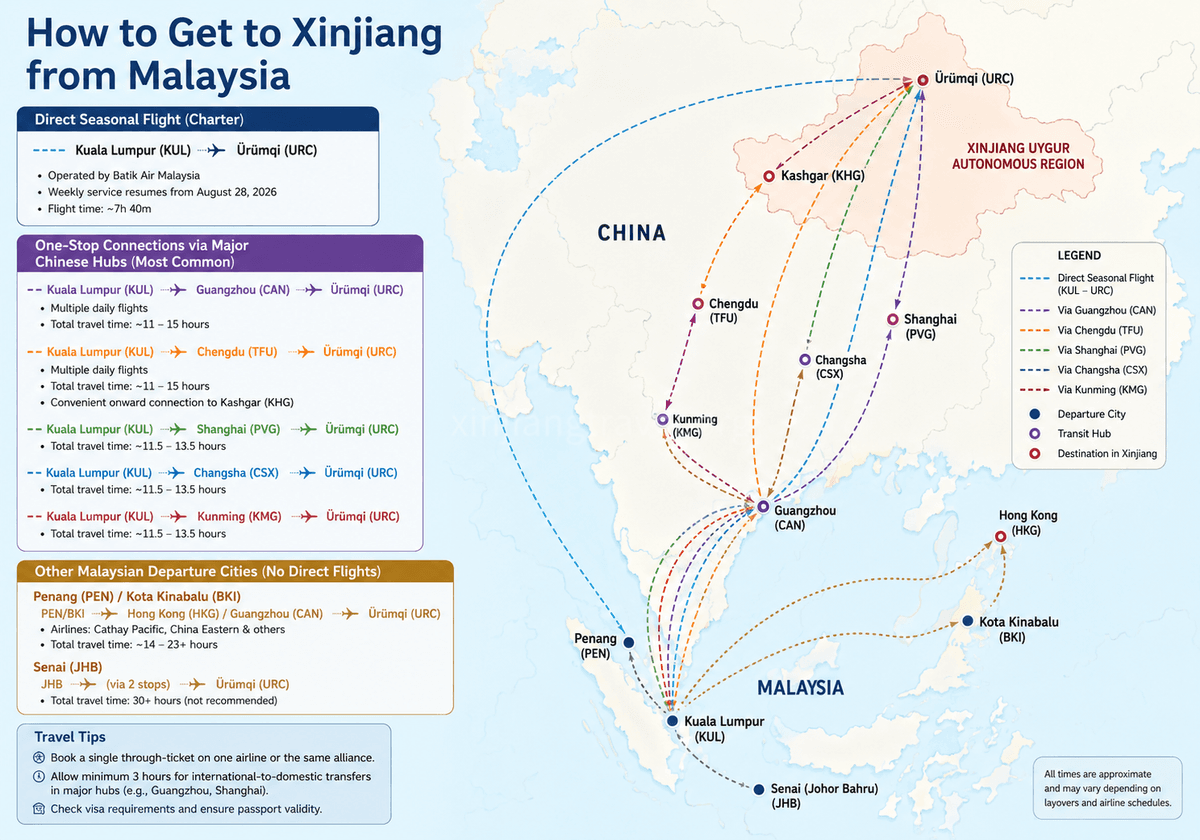
When booking flights, it is strongly recommended to purchase a single through-ticket for the entire journey, preferably on one airline or within the same alliance. This ensures that in the event of a delay or missed connection, the airline will rebook you on the next available flight without additional charges. Additionally, passengers should allow a minimum of three hours for international-to-domestic transfers at large Chinese hubs like Guangzhou or Shanghai, as clearing immigration, collecting baggage, and re-checking for the domestic leg can be time-consuming. With careful planning, the journey from Malaysia to Xinjiang is straightforward and well-connected.
Entry Policy: Visa-free entry to China
Malaysia and China maintain close and friendly bilateral relations, which are clearly demonstrated through their mutual visa exemption agreement. Effective since July 2025, ordinary passport holders from Malaysia may enter China visa-free for tourism, business, family visits, or exchanges. Each stay is limited to 30 days, with a total cumulative stay not exceeding 90 days within any 180 days.
This policy eliminates the need for prior visa applications, embassy visits, or additional documentation, allowing greater flexibility for spontaneous or planned trips to Xinjiang. Immigration formalities upon arrival at the first entry point in China, such as Urumqi or a transit city, remain straightforward and efficient, usually involving passport verification and fingerprint recording. The process typically takes no more than one to two hours under normal conditions.
It is advisable to verify the latest requirements before departure and to ensure your passport remains valid for at least six months after your planned return date. This visa-free arrangement reflects the positive attitude both countries extend to each other's citizens and makes travel to Urumqi and beyond more accessible than ever for Malaysian passport holders.
What Makes Xinjiang Worth Visiting?
Xinjiang offers Malaysian travelers an experience that feels worlds apart from the tropical humidity and lush greenery of Southeast Asia. Its vast, arid landscapes, dramatic seasonal changes, and unique cultural blend provide a refreshing contrast and a genuine sense of discovery.
Climate — Cool, Dry, and a Welcome Change
Malaysia's tropical humidity is something many travelers are happy to escape. Xinjiang offers exactly that — a dry continental climate with low humidity and cool evenings, even in summer.
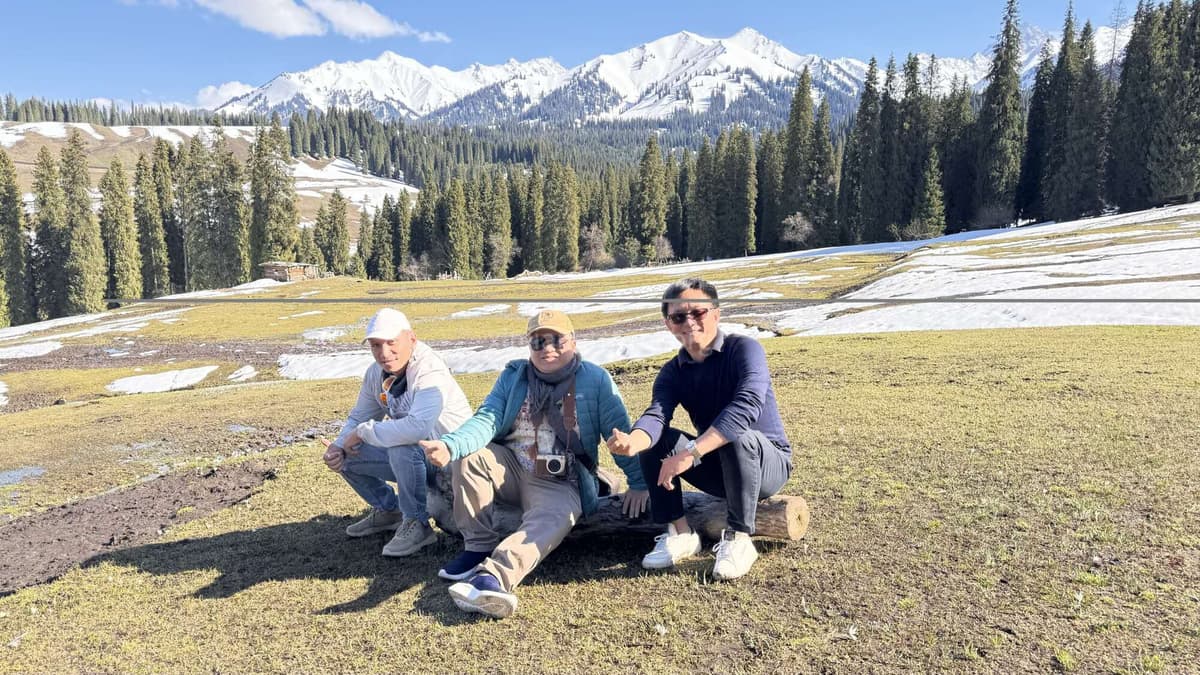
Summer temperatures in northern Xinjiang typically range from 20℃ to 30℃, with evenings dropping to around 15℃. Humidity is consistently low, usually between 20% and 30%. This means you will not experience the sticky heat familiar in Southeast Asia. However, the dry air can be intense. Bring lip balm and moisturiser, and drink more water than you think you need.
The temperature difference between day and night is significant — often 10℃ to 15℃. A light jacket or sweater belongs in your day bag even in July or August.
Food — Halal Is Everywhere
For Malaysian Muslim travelers, this is one of Xinjiang's most practical advantages. In tourist areas, cities, and even many remote scenic spots, halal restaurants are the default, not a special find.
What you will eat:
Polo — rice cooked with lamb or beef, carrots, and cumin. Very similar to Central Asian plov.
Laghman — hand-pulled noodles served with stir-fried meat and vegetables.
Samsa — baked pastry filled with minced lamb and onion.
Lamb Kebabs — grilled lamb skewers seasoned simply with cumin and salt.
Most restaurants serving these dishes are run by Uyghur or Hui proprietors and adhere to halal standards.
Cultural and Scenic Diversity — Silk Road Heritage Meets Dramatic Nature
Xinjiang spans roughly one-sixth of China and is divided by the Tianshan Mountains. The north features alpine lakes, lush grasslands, and forests, while the south showcases living Silk Road history, ancient bazaars, mosques, and vast deserts. This mix of Islamic heritage (familiar to many Malaysians) and Central Asian/Chinese influences creates both comfort and fascination. Tourism here feels more authentic and less crowded than in Beijing or Shanghai.
When to Go
The most comfortable months for Malaysian travelers are April through October.
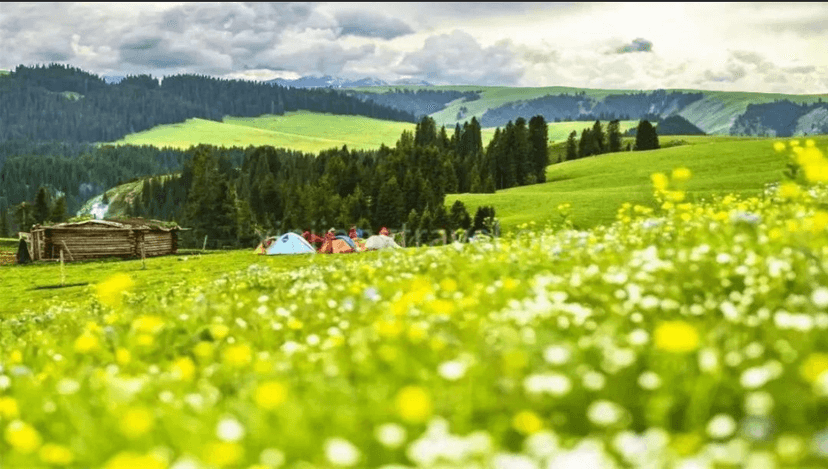
April to May: Spring arrives in Xinjiang. Apricot blossoms peak in the Ili Valley and around the Pamir Plateau, coloring the valleys pink and white. Northern Xinjiang grasslands begin turning green, and Sayram Lake starts to thaw — its blue water contrasting with lingering snow on distant peaks. Kanas Lake is accessible and less crowded than in summer.
June to August: Best for northern Xinjiang — grasslands are green, flowers are blooming, and temperatures are mild. This is also peak season, so book accommodation early. Hotel prices can rise by around 30% compared to shoulder months.
September to October: Best for autumn foliage — the forests around Kanas turn gold and red, and the poplar trees in southern Xinjiang reach their peak color. Cooler weather and fewer crowds make this an excellent choice for photographers.
Winter (November to March) brings cold temperatures, often below freezing in northern areas. However, Xinjiang in winter offers something entirely different: reliable snow cover, quiet landscapes, and world-class ski resorts such as Jiangjunshan and Keketuohai. For travelers who enjoy snow scenery or skiing, winter is not a compromise — it is its own distinct season worth experiencing.
In short, Xinjiang has something to offer in every season. When you go depends on what you want to see.
The Most Popular Places Worth Visiting for Malaysian Travelers in Xinjiang
These destinations are selected for their accessibility, variety, and suitability for first-time visitors from Malaysia (mild adaptation, good halal options, and a mix of nature and culture).
Ili Valley – The Most Comfortable Introduction to Xinjiang
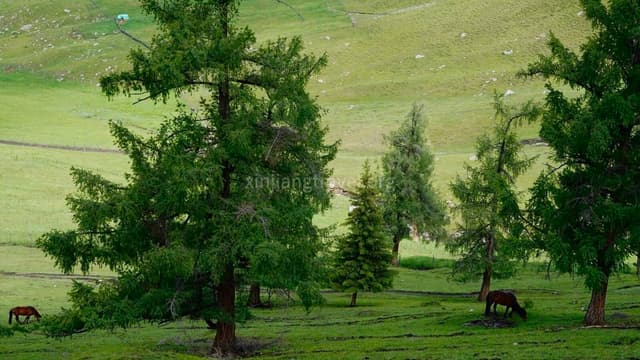
Ili Valley is often the best starting point for Malaysian travelers due to its mild climate and diverse scenery. Compared to desert regions, Ili feels more comfortable and visually "green," which makes adaptation easier for visitors from tropical environments.
Key highlights include Nalati Grassland for its open landscapes, Sayram Lake for its striking blue color, and the lavender fields near Yining in early summer. These locations offer strong visual appeal and photography value.
From a practical standpoint, Ili is also travel-friendly. Distances are manageable, the pace is relaxed, and halal food is widely available, making it particularly suitable for first-time visitors.
Kashgar – Cultural and Islamic Heritage
Kashgar offers a deeper cultural experience, especially for Muslim travelers. The Old Town reflects traditional Uyghur life, while the Id Kah Mosque provides a familiar religious context.
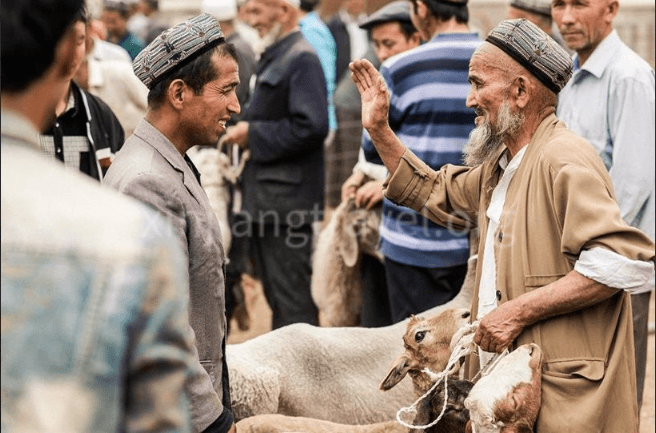
The Sunday Bazaar stands out as a functional local market rather than a tourist site, offering insight into daily life and trade traditions.
Travel here requires more planning due to distance and climate, but it is essential for those seeking cultural depth beyond scenery.
Urumqi – Gateway and Convenience
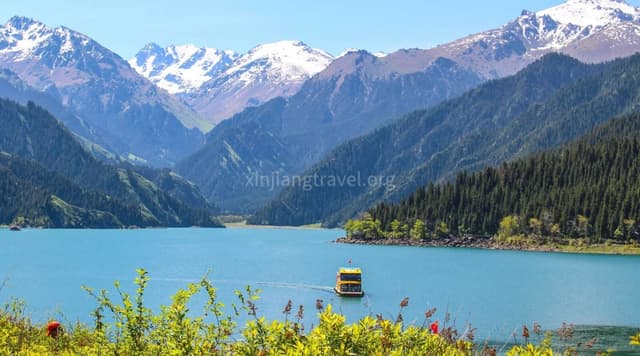
Urumqi is the main entry point and offers a balance of convenience and short excursions. Heavenly Lake (Tianchi) is a nearby highlight, providing an accessible alpine landscape.
The International Grand Bazaar offers a quick overview of local food and culture in one location. While more commercial, it is efficient for short stays.
With the best infrastructure in Xinjiang, Urumqi is ideal as a starting or ending point.
Turpan – Desert and Silk Road Contrast
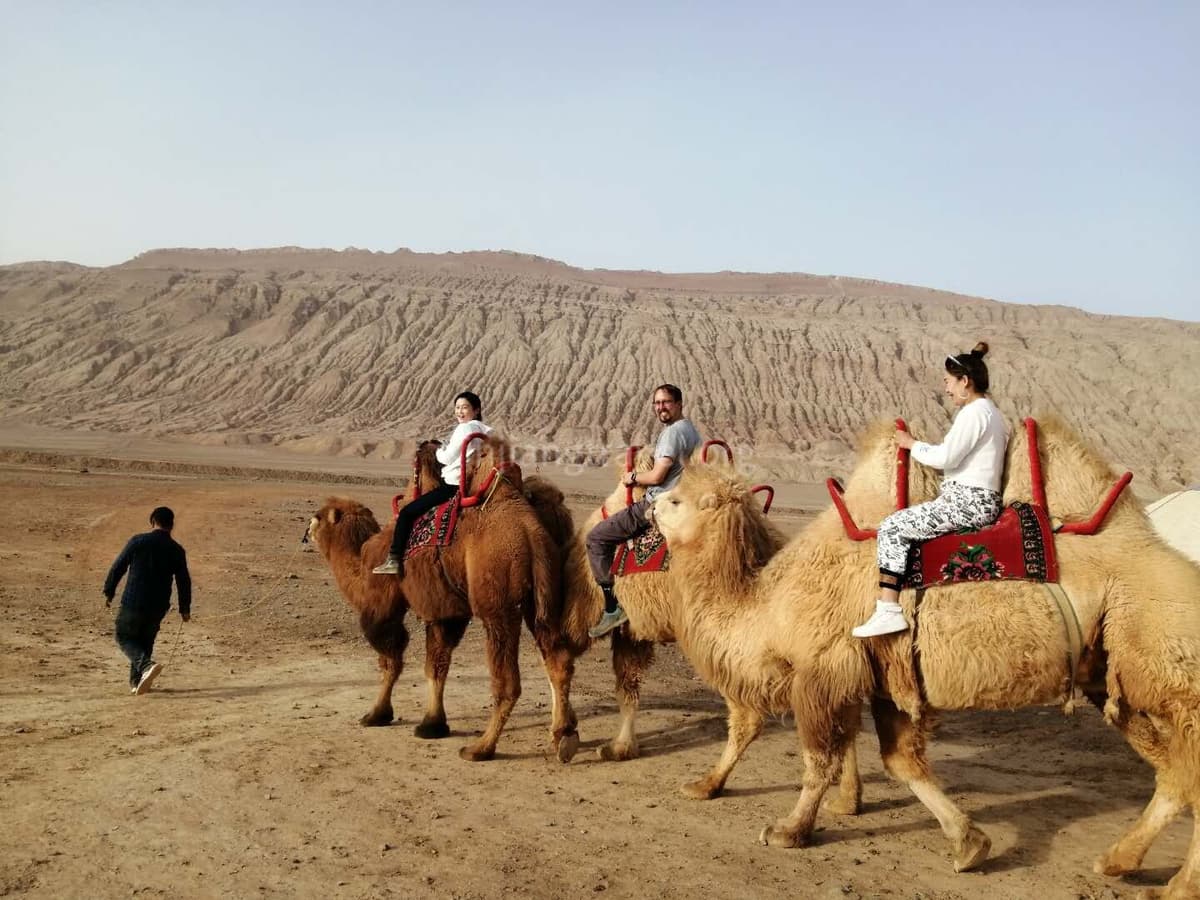
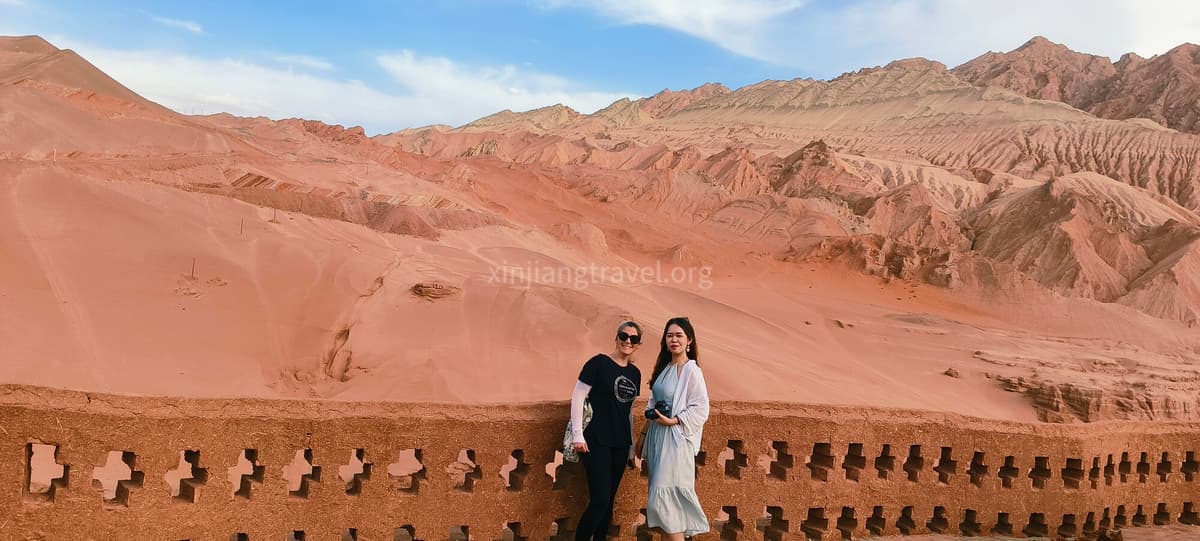
Turpan introduces desert landscapes and Silk Road history. The Flaming Mountains are visually distinctive but extremely hot in summer.
Grape Valley and the Karez irrigation system highlight how life adapts to arid conditions.
For Malaysian travelers, Turpan is less about comfort and more about experiencing environmental contrast.
Xinjiang is a destination that stays with you long after you have returned to Kuala Lumpur's humid heat. It is the feeling of standing at the edge of Kanas Lake as morning mist rises off the water, of wandering through Kashgar's maze-like old town, of tasting a sun-warmed grape fresh from a Turpan vine, and understanding why this land has been prized for millennia. With the visa-free policy making entry easier than ever and new flight routes reducing travel time, there has never been a better moment for Malaysian travelers to discover this corner of the world. With the current visa-free policy, dependable transport choices, and suitable preparations, Xinjiang is more reachable than before. Safe travels—your exploration of this distinctive part of the world is about to begin.

Kashgar - Taxkorgan - Urumqi - Turpan - Fuhai - Hemu - Kanas - Urho - Jinghe - Yining - Tekes - Naraty
Experience all the essential sights in Xinjiang. No matter what you want from a trip in Xinjiang, you can find it here! From plateau to grassland, oasis to desert, mountains to lakes, villages to relics.

Kashgar-Karakul Lake-Kashgar-Urumqi-Turpan-Urumqi
7 Days Tour Package to Xinjiang bring you to visit the Sunday Bazaar which is still alive now. overnight in the yurt of local Kazakhs in Heavenly lake which located in the deep of Tianshan Mountain. visit the UNESCO of Jiaohe Ruins. enjoy the hospitalily of local Uighur family. you can not miss

Urumqi - Turpan - Korler - Kuqa - Hotan - Yarkent - Kashgar
Southern Xinjiang and Taklamkan Desert highway Adventure starts from Urumqi, drive through the Taklamakan Desert to Kashgar which is the west most city of China. We will also visit Turpan, Korler, Kuqa and Hotan. Travel with locals enjoy excellent service.