20 years of pioneer in xinjiang tourism for overseas travelers
Born Here, Know Best, Your Journey's Blessed
No Shopping. No Detour, 99% Excellent Review

contact UsOn Wechat
Welcome to the Homeland of Tianmas
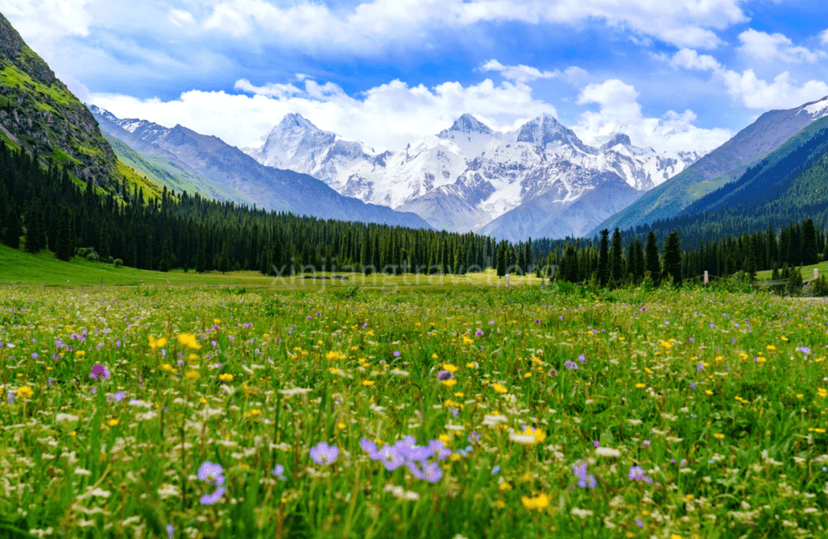
In July, the snow-capped Tianshan peaks glitter, and the grassland stretches like an endless green carpet. Golden rapeseed flowers and purple Zizania blossoms bloom side by side. The air smells of grass and wildflowers. In the distance, hundreds of horses thunder across the plain — that is how the Tianma Festival begins.
Zhaosu lies at the western tip of the Ili River Valley, at an elevation of about 2,100 meters. It's cool that summer is a pleasant surprise. Many first-time visitors say: "The sky here is impossibly blue." The festival usually runs from mid-July to late July for about a week. (The Tianma Festival opened on July 16th in 2023, on July 20th in 2024, on July 19th in 2025, and is expected to be held around mid-July in 2026.) It is far more than a horse race — it is a grand celebration of grassland culture. Kazakh, Mongolian, and Uyghur herders put on their finest costumes and bring their families. Children chase each other on the grass, elders play the dombra, and young people warm up for horse races and Buzkashi.
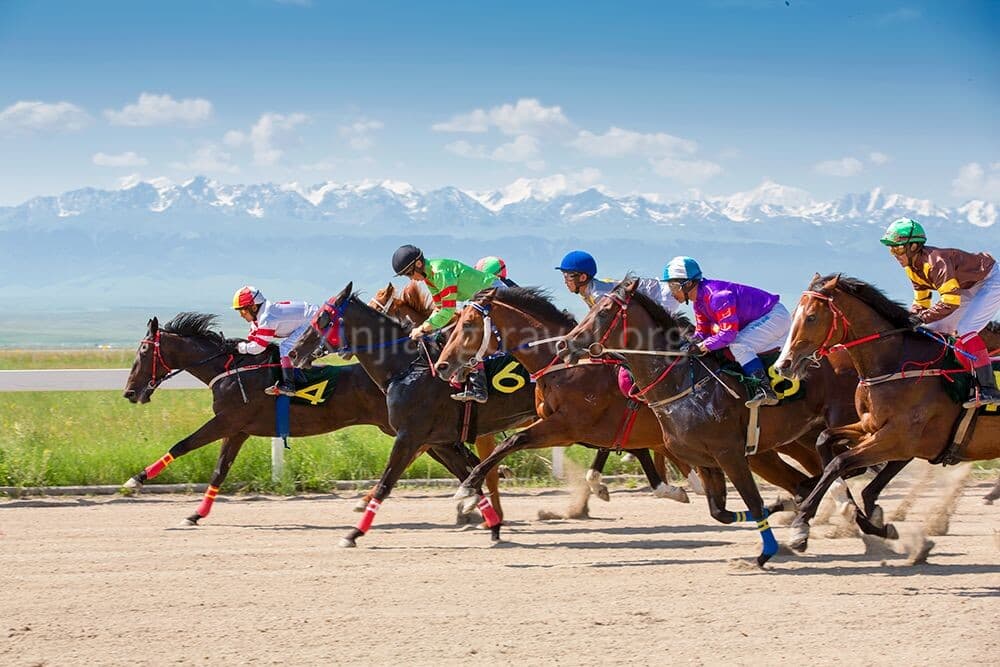
If this is your first time at such a festival, you will be struck by the unreserved warmth. Strangers wave and smile, offering a bowl of warm kumis. Even without a shared language, goodwill and smiles need no translation. There is no city formality here — only the freedom and joy of the vast, open land.
Echoes of History: From Han Dynasty Tianmas to Today's Festival
Horse breeding in Zhaosu goes back more than two thousand years. During the Western Han Dynasty, this land was the core pasture of the Wusun Kingdom. The Wusun people were skilled horse breeders. Historical records say: "The Wusun Kingdom had many horses; a wealthy family could own four or five thousand." Around 115 BCE, the King of Wusun presented fine horses to the Han court. Emperor Wu of Han named them "Tianmas" and composed a poem. Ever since, "Tianma" has been a lasting name for Zhaosu's finest steeds — the very horses celebrated at the Zhaosu Tianma Festival.
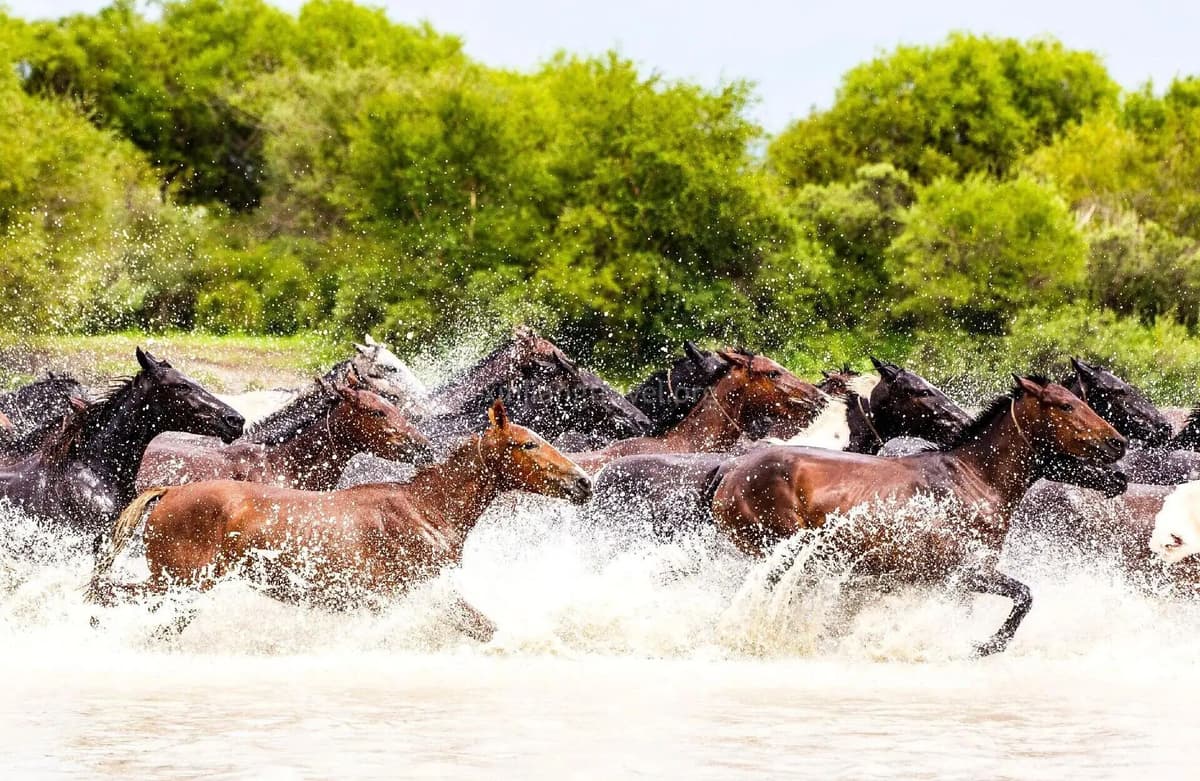
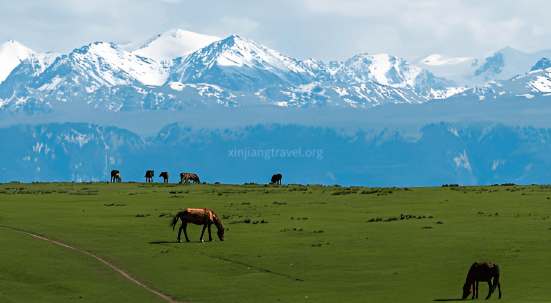
These Tianmas are the ancestors of today's Ili horses. Ili horses are tall, long-legged, broad-chested, and have exceptional endurance. They were important partners on the Silk Road. Walking across the Zhaosu grasslands, you may see herds of Ili horses running free. Their smooth muscles and confident strides show why the emperor wrote poetry about them.
The modern Zhaosu Tianma Festival began in 1992, when local herders organized a spontaneous horse race. People rode horses or drove tractors to the grassland, sat on the ground, drank, and sang. That was the first Zhaosu Horse Racing Festival. In 2013, it was upgraded to the Ili Tianma International Tourism Festival. By 2025, it had been held for 33 consecutive years and had won a national award. From a simple grassland race to an international tourism festival, it preserves traditions like horse racing, Buzkashi, girl chasing, and Aken ballad singing, while adding modern travel services. Attending the festival feels like a journey across two thousand years of grassland culture.
Festival Highlights: A Feast for Eyes and Soul
Ask festival-goers what they remember most, and most will say: "A Thousand Horses Galloping (wanmabenteng) and 'Tianmas Bathing in the River (tianmayuhe)." These two spectacles are the heart of the Zhaosu Tianma Festival.
"A Thousand Horses Galloping" takes place during the opening ceremony. Hundreds of Ili horses charge from deep within the grassland. You first hear a low rumble in the distance — like thunder rolling across the earth. Then a dark mass of horses appears on the horizon, drawing closer. Hooves pound the ground, dust fills the air, and the very air trembles. As the herd thunders past, you feel the ground shake. Many visitors hold their breath — that raw power is something no video can convey.
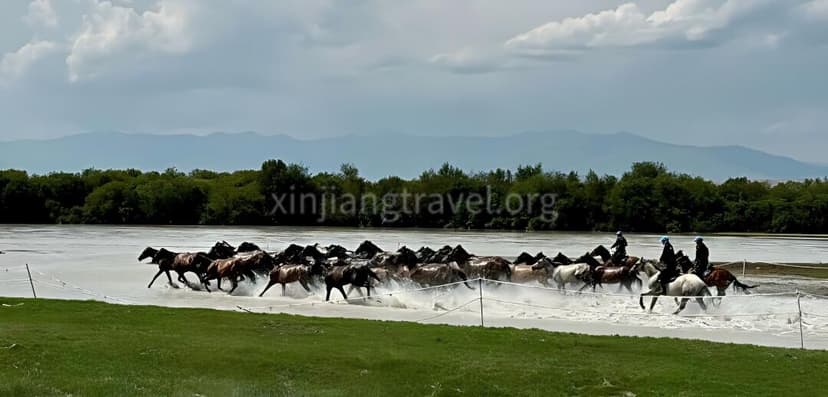
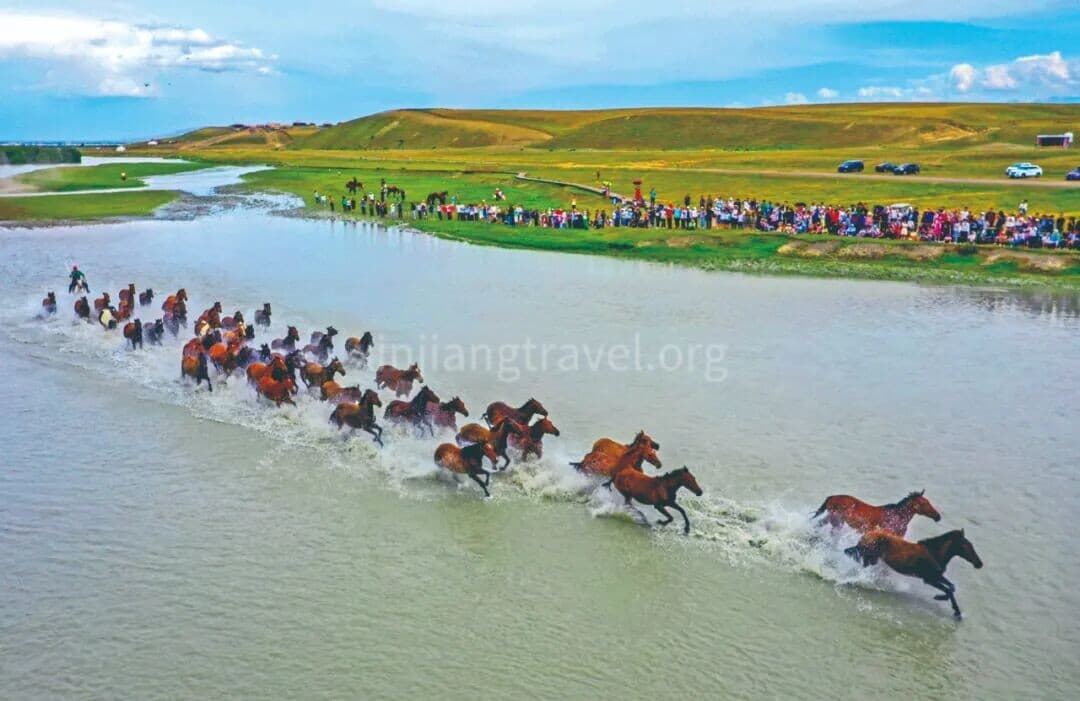
"Tianmas Bathing in the River" is a different spectacle. Herders drive the horses to the Tekes River. At a sharp crack of the whip, hundreds of horses plunge into the water. Hooves shatter the river into millions of glittering droplets that sparkle in the sun. The horses push forward through waist-deep water; the entire river seems to boil. The best time to watch is early morning or late evening, when the light is soft.
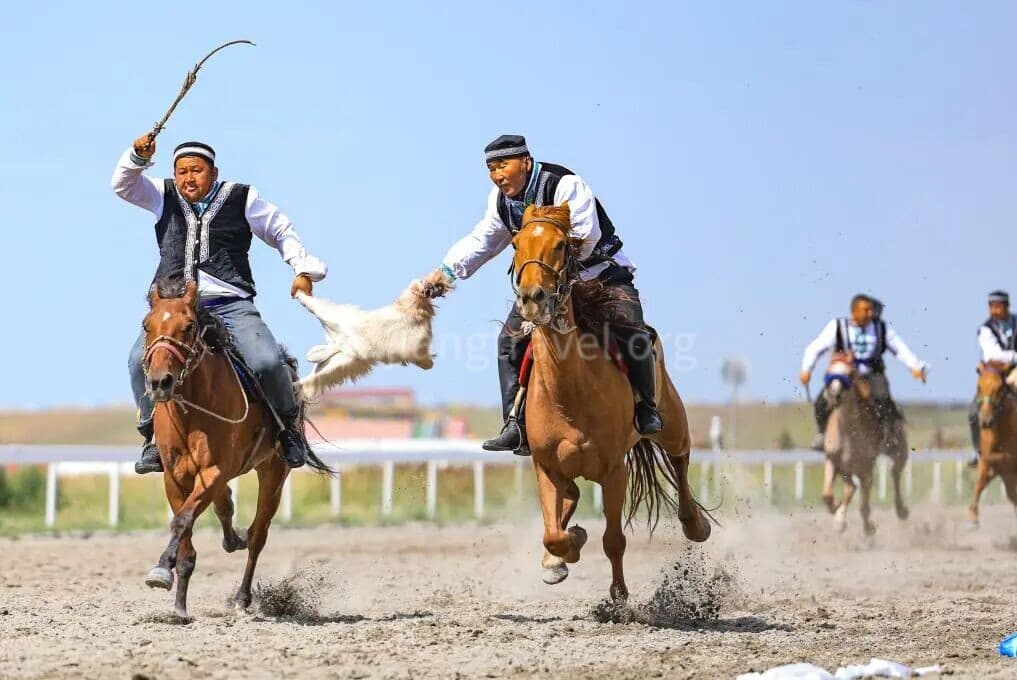
There are also many other activities at the Tianma Festival: sprint races, endurance races, and horseback riding. Among the folk games, "girl chasing" is romantic and humorous — a young woman chases a man with a whip on the return ride. Buzkashi (goat grabbing) is intense: two teams fight for a goat carcass on horseback, testing courage and teamwork. At the bonfire party, strangers hold hands and dance in a circle, laughter and songs rising toward the stars.
The Year-Round Charms of the Tianma Festival: A Four-Season Cultural and Tourism Feast
Today, Zhaosu's Tianma Festival has evolved into a comprehensive cultural and tourism complex suitable for all four seasons. Events begin in spring, peak in summer, continue through late autumn, and extend the horse spirit into the winter ice-snow season. In spring, ride freely through vast seas of wild mountain flowers as the grasslands awaken; the blooming meadows brim with vitality, offering a perfect time to feel the newborn energy of "Tianmas" in mild weather ideal for photography and leisurely rides.
Summer is the golden peak of the Tianma Festival, with the grand opening ceremony typically held in mid-July (July 19 in 2025). It features spectacular river-bathing horse performances (herds swimming in rivers), international horse races, equestrian shows, and vibrant Kazakh folk celebrations. Endless golden rapeseed fields glow beneath snow-capped peaks, creating an unforgettable spectacle of thousands of horses thundering across the plains – the most exciting and energetic time on the grassland.
In autumn, the grasslands transform into a tapestry of golden hues and crimson foliage. Events such as the grassland camping festival and Aken folk singing gatherings bring pastoral joy. Ride through the colorful landscapes while immersing yourself in the harvest-season life of herders – crisp, pleasant weather makes it perfect for in-depth cultural experiences.
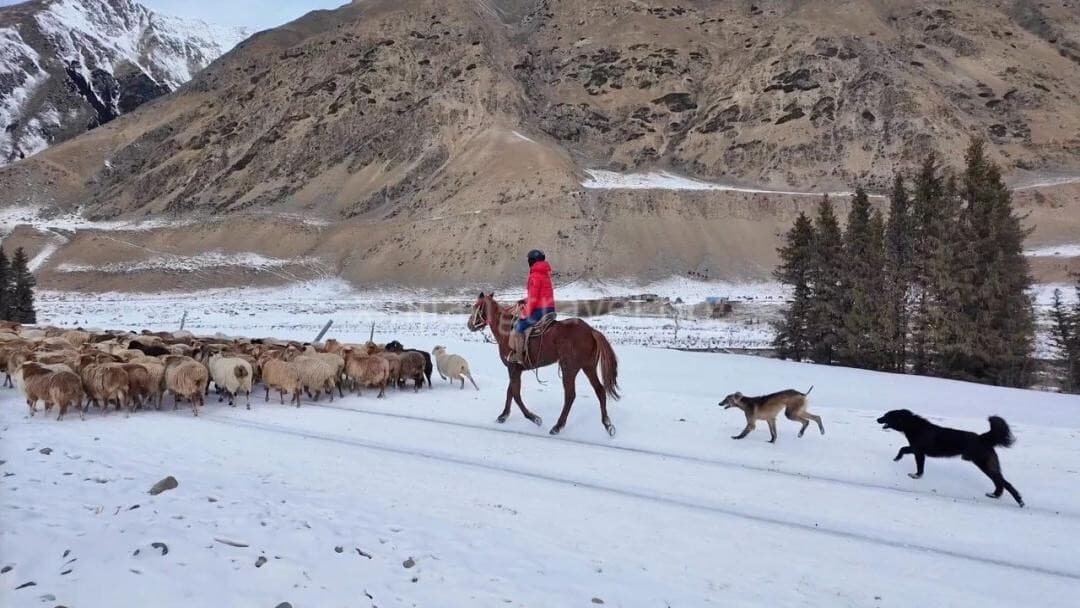
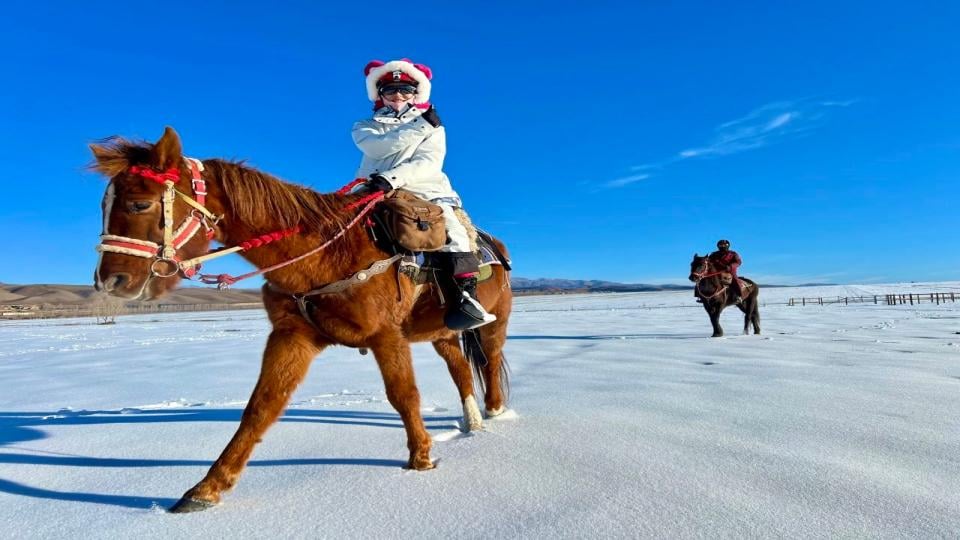
In winter, the iconic "Tianmas treading snow" creates a breathtaking scene. The Tianma Ice and Snow Tourism Season (typically from late December to March) brings an "Ice and Snow Wonderland" with snow sculptures, ice activities, and horse-drawn sleighs, highlighting the horses' resilience and grace in the cold – a truly romantic and magical experience.
Deep Dive into Horse Culture: More Than Just Watching
The Tianma Festival is not just about watching horses. If you have a deeper curiosity about horse culture, the Tianma Cultural Park is a must-visit. It is about 15 kilometers from Zhaosu town, a 20-minute drive away.
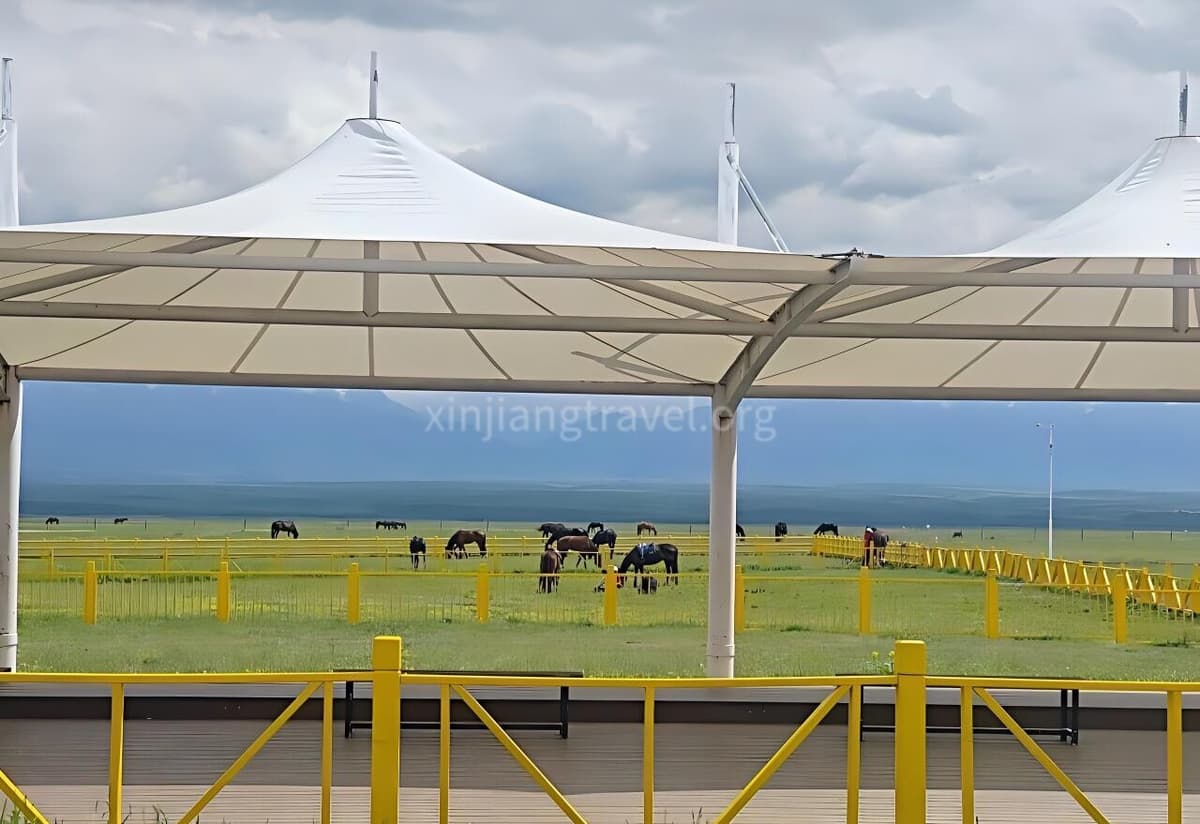
Inside the park are neat rows of clean stables housing Ili horses, Akhal-Teke horses, and European warmbloods. You can observe them up close, even gently stroke their faces — but always ask a groom's permission first. Many horses are used to visitors; they will curiously poke out their heads and sniff your hand. That warm, moist touch creates an instant connection.
There is also a small museum that tells the story of horse breeding in Zhaosu from the Wusun Kingdom to today — ancient saddles, stirrups, whips, and a rubbing from a Han Dynasty brick relief showing galloping Tianmas that look remarkably like today's Ili horses.
The most thrilling experience is riding a horse yourself. The park offers professional riding services for all levels. Beginners learn how to mount, hold the reins, and use their legs to give commands, then take a slow walk inside an arena. Experienced riders can choose a grassland trail ride, led by a local herder, that lasts two or three hours and takes you deep into the prairie to visit a real herder family. Many visitors say after their ride: "The view from horseback is completely different." When you look from the saddle toward the distant snow-capped peaks and endless grassland, you understand why the grassland people cherish their horses — they are not just transport, but partners, family members, and symbols of freedom.
Nature and Cuisine of Zhaosu: Extended Journeys Before and After the Festival
The Tianma Festival is spectacular, but Zhaosu's charm goes beyond it. Stay an extra two or three days to explore nature and cuisine.
First is the Xiata Ancient Trail, about 75 km from the county town. Entering Xiata Gorge, you see snow mountains, glaciers, forests, grasslands, and rivers unfold in layers. The most spectacular sight is the Muzart Glacier, glowing deep blue in the sun. You can hike for three or four hours or rent a horse for a leisurely ride. Along the way, you will pass herders' yurts, where you will be warmly invited in for a bowl of hot milk tea.
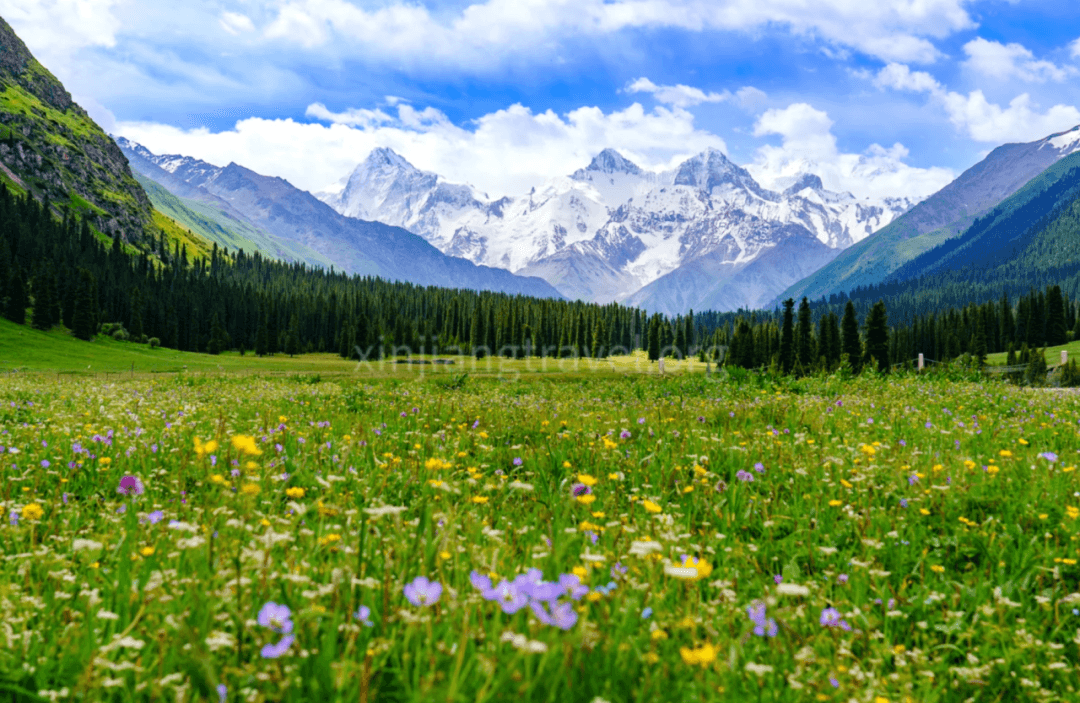
Zhaosu Wetland Park is the main venue for the horse-bathing performance, and the wetland itself is beautiful. In summer, waterbirds nest among the reeds; in winter, rime frost coats the branches. Early morning and late evening are golden hours for photography. In June and July, millions of mu of rapeseed and purple Zizania flowers bloom — gold and purple interwoven against the snow-capped Tianshan peaks, spectacular and romantic.
For food, Naren (horse meat with noodles) is a must-try: thinly sliced smoked horse sausage over handmade noodles with hot broth — rich and smoky. Wild mushroom soup noodle uses high-altitude yellow mushrooms to make a savoury broth with hand-pinched noodles — warm and comforting. There are also classic Xinjiang dishes like hand-held lamb, whole-roasted lamb, and naan with stewed meat. Finally, do not miss kumis — slightly sour and fizzy, like grassland champagne. The locals say, "Drink kumis, make grassland friends."
Practical Travel Guide: A Must-Read for International Visitors
Best time: Mid-July to late July. Temperatures 15–25°C (59–77°F); a light jacket is needed for mornings and evenings. This is also the peak bloom of rapeseed and purple Zizania flowers.
Getting there: The most convenient way is flying to Zhaosu Tianma Airport (opened in 2022). The flight from Urumqi takes about 1.5 hours; flights are limited, so book early. Alternatively, fly to Yining (more flights), then rent a car or take a bus to Zhaosu. The drive takes about 2.5 hours, passing the scenic but winding Yizhao Highway.
Local transport: The county town is walkable, but attractions are scattered. Renting a car is best. Alternatively, hire a taxi for the day — about 500–800 RMB.
Accommodation: County hotels cost 600-1000 RMB/night; book one month in advance.
Things to keep in mind: Altitude 2,100 meters. Avoid strenuous activity on your first day and drink plenty of water. The plateau sun is intense — bring a hat, sunglasses, and sunscreen. The day-night temperature difference is large; pack a fleece or a light down jacket.
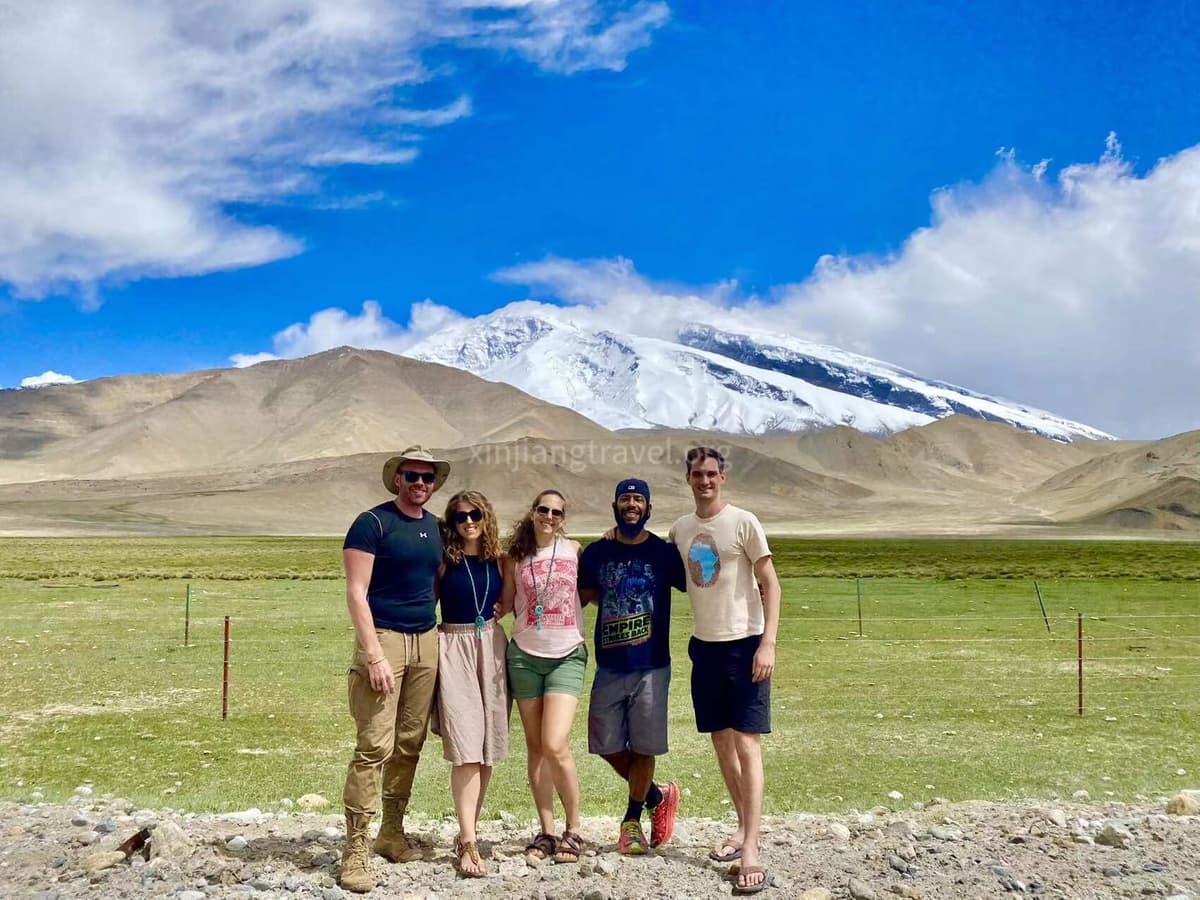
Conclusion: A Journey of Freedom and Connection
On the grassland, a saying goes: "The horse is the wing of the prairie." With horses, faraway places become reachable. The Tianma Festival gives the grassland's horses a stage and travelers from around the world a chance to grow wings and experience the freedom of galloping across the earth.
When you leave the festival, you take away more than photos and videos. You might remember the shy smile of the young Kazakh who taught you to ride; the bowl of salty, fragrant milk tea inside a yurt, offered by warm, rough hands; the bonfire party late at night, where strangers held hands and danced in a circle, firelight dancing on every face — no borders, no language barriers.
Today, Zhaosu is no longer remote. Planes fly in, roads are paved, and mobile signals cover most of the grassland. Yet some things have never changed: the dusty smell of a galloping herd, the morning horn call of a herder, and the magical moment when a bowl of kumis turns a stranger into a friend.
If you are planning a different kind of journey to Xinjiang, put the Zhaosu Tianma Festival on your map. In July, the snow mountains, flower seas, galloping horses, and smiling faces await you. Come see the Tianmas that have been running since the Han Dynasty. Come feel the prairie wind blow your worries away. Come experience a journey of freedom, speed, and human connection.
Yining-Xiata
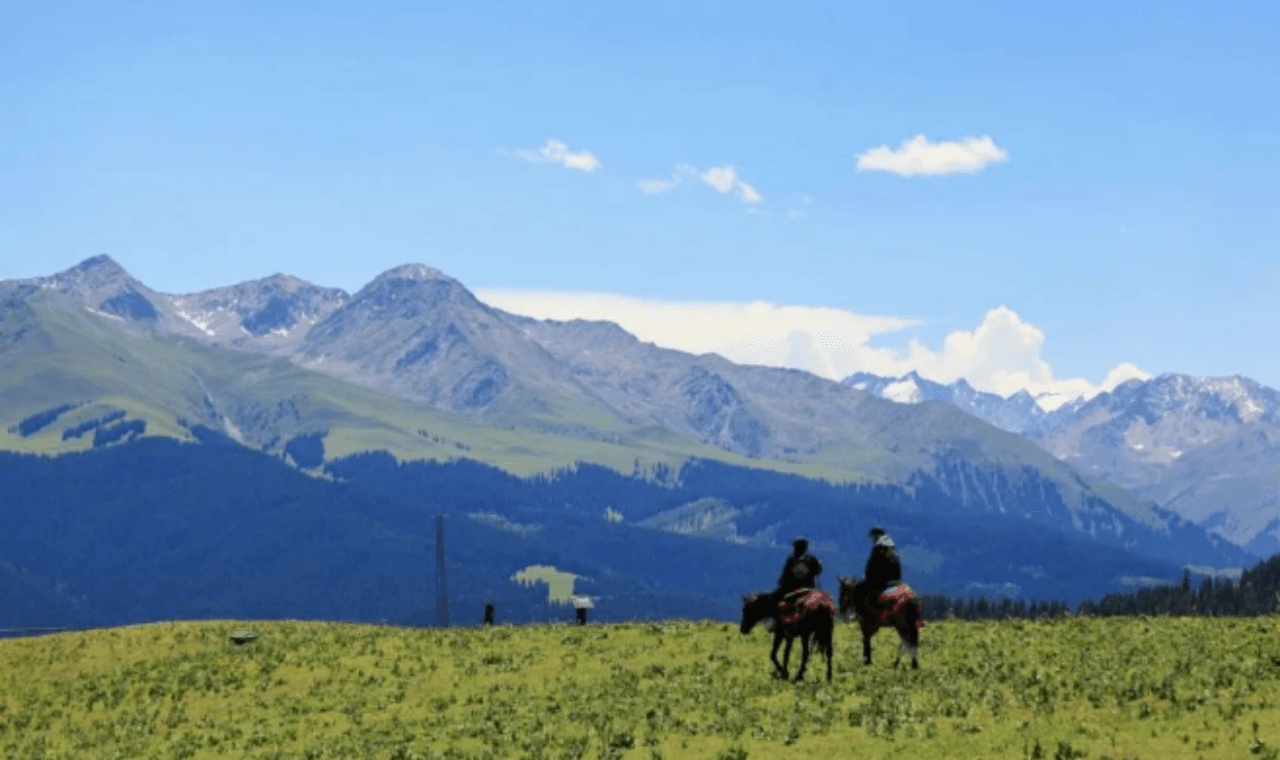
Embark on an unforgettable 6-day Ili horseback adventure, where riding takes center stage! Traverse the enchanting Zhaosu Grassland on horseback, immersing yourself in the stunning natural beauty and experiencing the authentic charm of the nomadic lifestyle.
Yili-Zhaosu
Embark on a 6-day magical Zhaosu snow horseback riding tour, where snow-draped grasslands, enchanted pine forests, and the majestic Tianshan Grand Canyon await. Gallop across pristine landscapes, savor unique experiences like cozy herder visits. This tour blends thrilling exploration with serene winter beauty.