
20 years of pioneer in xinjiang tourism for overseas travelers
Born Here, Know Best, Your Journey's Blessed
No Shopping. No Detour, 99% Excellent Review

contact UsOn Wechat
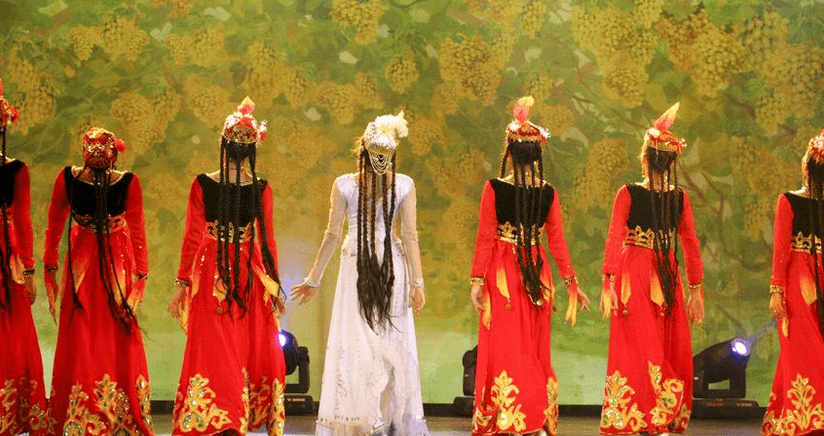
Since ancient times, Xinjiang has been inhabited by many ethnic groups. It has long been known as “the home of songs and dances” and the peoples are known far and wide for being excellent at singing and dancing. Uygur, Kirkiz, Mongolian, Xibo, Uzbek, Tartar and Manchu are all good singers and dancers. The ancient music of the Western such as Qiuci Music, Shule Music, Gaochang Music and Yizhou Music, made great contributions to the ancient Chinese civilization. Influenced by the civilizations exchanged on the ancient Silk Road, and the exchanges and integration of the Eastern and Western cultures, song-and-dance styles in the region have developed their own unique charm and stand out as sparkling jewels among all song-and-dance arts of China.
All ethnic nationalities in Xinjiang love singing and dancing. Tourists will enjoy singing and dancing not only in festivals, but also on the streets and farming-fields, even in the grape trellis. They will be pleased to watch the performances or take part in them. The splendor of Xinjiang's songs and dances is attributed to all ethnic groups. The vastness of the land, the variety of the population I terms of ethnic nationalities, the differences of cultural backgrounds as well as people's working modes, lifestyle, mindset and aesthetic tendencies have resulted in the immense diversity and richness of the arts.
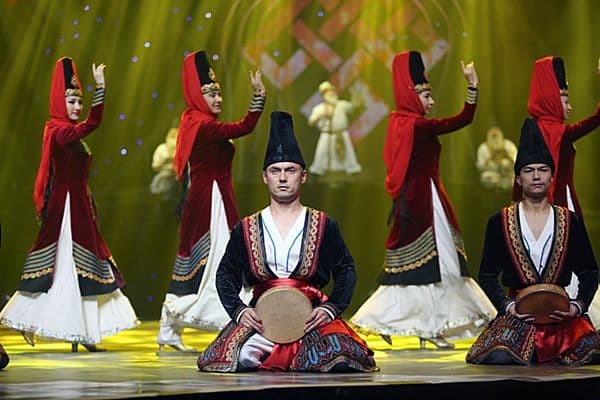
As for dances, different ethnic groups carry their distinct characteristics. Uygur folk dances are distinguished by head and wrist movements. Their clever coordination is enhanced by the typical posture of tilted heads, thrust chests and erect waists. Furthermore, their music is also splendorous. Known as the “mother of Uygur music, ” the Twelve Muqam is large-scale sets, consisting of sung poetry, stories, dance tunes, and instrumental sections. The music of other ethnic groups cannot match the gigantic and neatly arranged system of the Twelve Muqam.
“Meshrep” is traditional entertainment with a long history. All people, men or women , old or young, like to participate in performances. There are no strict limitations on numbers of players or performance time. Besides, it can be played everywhere at anytime on festivals or at wedding celebrations, with singing and dancing in a warm and festive atmosphere. “Meshrep” is the most popular entertainment activity among the Uygur people.
Unstrained and vigorous, Dolan is an ancient folk dance popular among Uygur people. Dolan is an ancient name for Uygurs living in several places in the Tarim Basin. The Uygur people living in the counties of Meget, Bachu, Shache, and Awati call themselves “Dolan”, and the place in which they live “Dolan'. Dolan music and dances are said to describe hunting and characterized by light rhythms, humorous performance and strong emotion. Men and women , young and old, love them. It is greatly favored by all the people in Xinjiang.
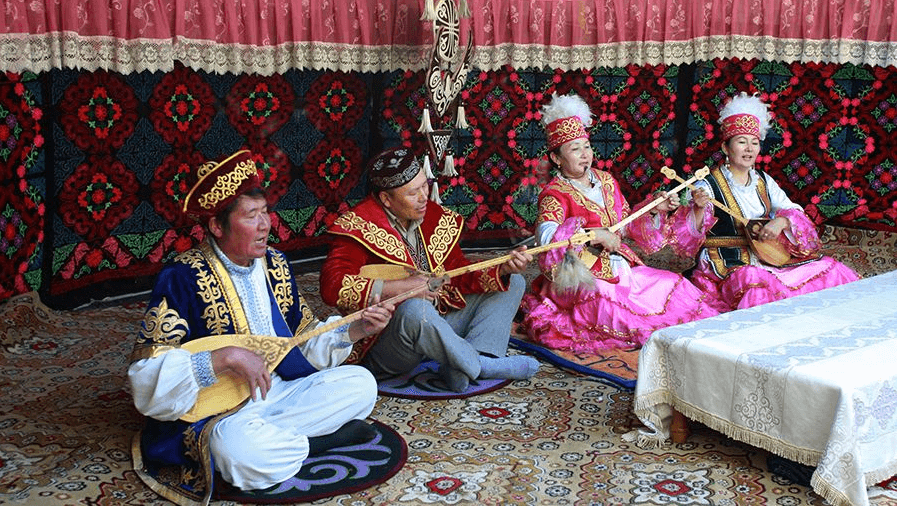
Kazaks love to sing impromptu. A saying says “horses and songs are two wings of Kazaks”. Kazaks living in mountain areas and pasture like playing Dongbula mandolin while singing. Aken performance is the gift of the folk arts. Akens are those who are folk Kazak poets. They are herdsman. Akens, who are different from poets, singers and instrument performers, must sing out poems spontaneously and sing and play the Dongbula mandolin at the same times as well. Aken's songs chiefly come from Kazak's history, culture and the daily life. Akens are greatly respected among Kazaks.
The Mongolian horse-head fiddle (the MorinKhuur), epic “Jianger” and Turhut's folk dances are very famous. Shawuerdeng prevails in the Mongols folks and is a distinctive traditional dance of Mongolians in Xinjiang. The Tajiks living on the Pamirs like playing flute made by eagle-wing bones and imitating the eagle and swan movements in their dances. Their songs and dances are characterized by strong ethnic flavor. As a mater of fact, all the ethnic peoples in Xinjiang are good at singing and dancing. Presenting the diversity of Xinjiang's ethnic nationalities, the melodious music and colorful dances offer a window for people to know about Xinjiang.
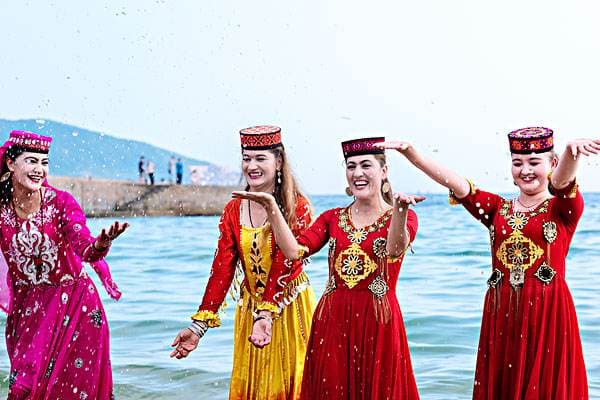
Since ancient times, Xinjiang has been inhabited by many ethnic groups. It has long been known as “the home of songs and dances” and the peoples are known far and wide for being excellent at singing and dancing. Uygur, Kirkiz, Mongolian, Xibo, Uzbek, Tartar and Manchu are all good singers and dancers. The ancient music of the Western such as Qiuci Music, Shule Music, Gaochang Music and Yizhou Music, made great contributions to the ancient Chinese civilization. Influenced by the civilizations exchanged on the ancient Silk Road, and the exchanges and integration of the Eastern and Western cultures, song-and-dance styles in the region have developed their own unique charm and stand out as sparkling jewels among all song-and-dance arts of China.
All ethnic nationalities in Xinjiang love singing and dancing. Tourists will enjoy singing and dancing not only in festivals, but also on the streets and farming-fields, even in the grape trellis. They will be pleased to watch the performances or take part in them. The splendor of Xinjiang's songs and dances is attributed to all ethnic groups. The vastness of the land, the variety of the population I terms of ethnic nationalities, the differences of cultural backgrounds as well as people's working modes, lifestyle, mindset and aesthetic tendencies have resulted in the immense diversity and richness of the arts.
As for dances, different ethnic groups carry their distinct characteristics. Uygur folk dances are distinguished by head and wrist movements. Their clever coordination is enhanced by the typical posture of tilted heads, thrust chests and erect waists. Furthermore, their music is also splendorous. Known as the “mother of Uygur music, ” the Twelve Muqam is large-scale sets, consisting of sung poetry, stories, dance tunes, and instrumental sections. The music of other ethnic groups cannot match the gigantic and neatly arranged system of the Twelve Muqam.
“Meshrep” is traditional entertainment with a long history. All people, men or women , old or young, like to participate in performances. There are no strict limitations on numbers of players or performance time. Besides, it can be played everywhere at anytime on festivals or at wedding celebrations, with singing and dancing in a warm and festive atmosphere. “Meshrep” is the most popular entertainment activity among the Uygur people.
Unstrained and vigorous, Dolan is an ancient folk dance popular among Uygur people. Dolan is an ancient name for Uygurs living in several places in the Tarim Basin. The Uygur people living in the counties of Meget, Bachu, Shache, and Awati call themselves “Dolan”, and the place in which they live “Dolan'. Dolan music and dances are said to describe hunting and characterized by light rhythms, humorous performance and strong emotion. Men and women , young and old, love them. It is greatly favored by all the people in Xinjiang.
Kazaks love to sing impromptu. A saying says “horses and songs are two wings of Kazaks”. Kazaks living in mountain areas and pasture like playing Dongbula mandolin while singing. Aken performance is the gift of the folk arts. Akens are those who are folk Kazak poets. They are herdsman. Akens, who are different from poets, singers and instrument performers, must sing out poems spontaneously and sing and play the Dongbula mandolin at the same times as well. Aken's songs chiefly come from Kazak's history, culture and the daily life. Akens are greatly respected among Kazaks.
The Mongolian horse-head fiddle (the MorinKhuur), epic “Jianger” and Turhut's folk dances are very famous. Shawuerdeng prevails in the Mongols folks and is a distinctive traditional dance of Mongolians in Xinjiang. The Tajiks living on the Pamirs like playing flute made by eagle-wing bones and imitating the eagle and swan movements in their dances. Their songs and dances are characterized by strong ethnic flavor. As a mater of fact, all the ethnic peoples in Xinjiang are good at singing and dancing. Presenting the diversity of Xinjiang's ethnic nationalities, the melodious music and colorful dances offer a window for people to know about Xinjiang.

