
20 years of pioneer in xinjiang tourism for overseas travelers
Born Here, Know Best, Your Journey's Blessed
No Shopping. No Detour, 99% Excellent Review

contact UsOn Wechat
When traveling in Xinjiang, it's nice to greet local people and engage in a brief chat with them. It's always exciting and enjoyable to learn something new, isn't it?
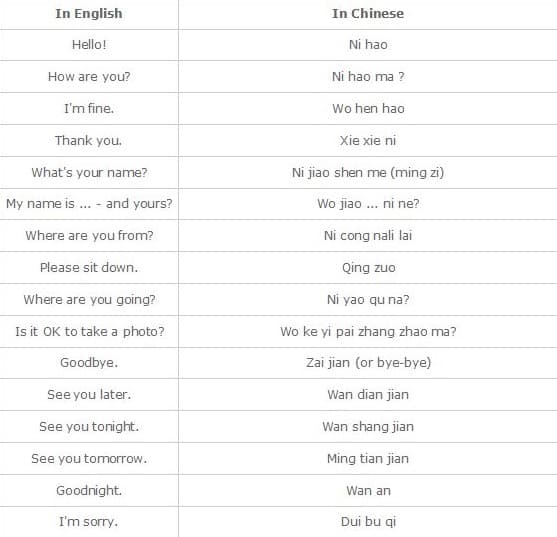
Below are some common greeting words to help you interact with locals.
"Ni Hao" translates directly to "You Good" and can be a very generic greeting term. It is pronounced like "nee how" in English. You can say it when you meet your Chinese friends, walk by them in the hallway, or sit down next to a new friend at dinner, etc. It can be loosely used in all situations where you may say "hi" or "hello" in American English.
"Xie Xie" means "Thank you". It is pronounced like "Shi-e Shi-e" or "Zhi-Zhi"(if that is not too confusing). It can be used whenever you want to say thank you to someone.
"Bu Ke Qi" means "You're welcome". It is pronounced like "Boo Ker(British accent without the "r") Chi"
"Tai Hao Le!" means "Wonderful!". It is pronounced like "Thai Hao Lah". This can be applied to many situations as you may suspect, such as someone agreeing to see you again, someone giving you a business card, etc..
You can say "Da Jia Hao!" when opening a speech or as a beginning when you wanna say something in front of many people. Open the speech by saying "Da Jia Hao!" which can be directly translated into "How's everyone today?", "Hello everyone!", ""Wish everyone well!", or "Good day, everyone!"
"Na Li Na Li" is a standard response to someone's compliment, including compliments to your spouse. Do not say "Xie Xie" (Thank you) when you receive compliments. It is not the Chinese way. Instead, you can say "Na Li Na Li" (pronounced as "Nah Lee Nah Lee") to show your humble attitude.
Remember to repeat each phrase twice, except for "Na Li Na Li," which is already a repetitive phrase. This repetition helps you sound more like a native speaker. For example, instead of saying "Ni Hao," say "Ni Hao Ni Hao!" When repeating, say the phrase a little softer the second time and keep repeating to fade out smoothly. Don't worry—no one will laugh at you. Instead, they will help you improve your pronunciation.
Except for Mandarin Chinese which is generically used in Xinjiang, some languages, such as Uyghur, Kazak, and Mongolian, are used among local ethnic groups.
"Xie Xie" means "Thank you". It is pronounced like "Shi-e Shi-e" or "Zhi-Zhi"(if that is not too confusing). It can be used whenever you want to say thank you to someone.
"Bu Ke Qi" means "You're welcome". It is pronounced like "Boo Ker(British accent without the "r") Chi"
"Tai Hao Le!" means "Wonderful!". It is pronounced like "Thai Hao Lah". This can be applied to many situations as you may suspect, such as someone agreeing to see you again, someone giving you a business card, etc..
You can say "Da Jia Hao!" when opening a speech or as a beginning when you wanna say something in front of many people. Open the speech by saying "Da Jia Hao!" which can be directly translated into "How's everyone today?", "Hello everyone!", ""Wish everyone well!", or "Good day, everyone!"
"Na Li Na Li" is a standard response to someone's compliment, including compliments to your spouse. Do not say "Xie Xie" (Thank you) when you receive compliments. It is not the Chinese way. Instead, you can say "Na Li Na Li" (pronounced as "Nah Lee Nah Lee") to show your humble attitude.
Remember to repeat each phrase twice, except for "Na Li Na Li," which is already a repetitive phrase. This repetition helps you sound more like a native speaker. For example, instead of saying "Ni Hao," say "Ni Hao Ni Hao!" When repeating, say the phrase a little softer the second time and keep repeating to fade out smoothly. Don't worry—no one will laugh at you. Instead, they will help you improve your pronunciation.
Except for Mandarin Chinese which is generically used in Xinjiang, some languages, such as Uyghur, Kazak, and Mongolian, are used among local ethnic groups.

