20 years of pioneer in xinjiang tourism for overseas travelers
Born Here, Know Best, Your Journey's Blessed
No Shopping. No Detour, 99% Excellent Review

contact UsOn Wechat
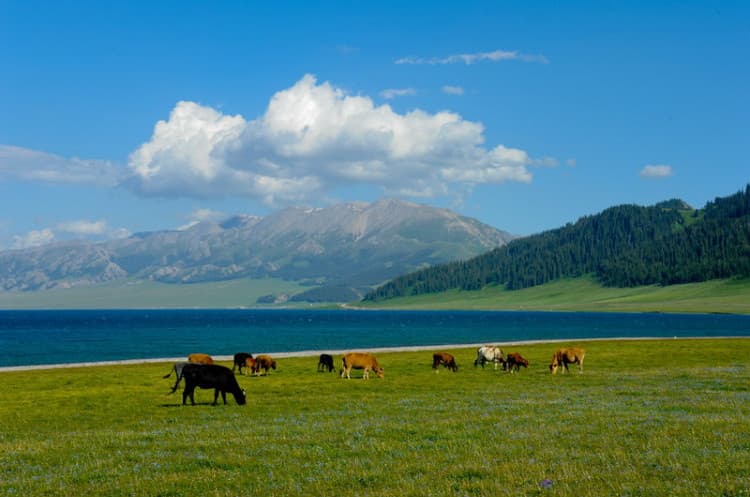
Sayram Lake lies in the western Tianshan Mountains, southwest of Bole, and makes a rewarding stop before or after exploring the Ili Valley. Its appeal is the space: an open blue lake, grassland along the shore and higher slopes that give a very different view from the water’s edge. You may also see it written as Sailimu Lake on maps and booking pages.
Give the lake at least half a day of its own. A visit from Yining also needs the outward and return drives, while staying nearby allows you to divide sightseeing between an afternoon and the following morning. Choose your transport and overnight location before trying to fit every named viewpoint into the day.
Allow around three to four hours at the lake for a selective visit, or most of a day for a broader circuit with walks and a meal break. These are sightseeing allowances, not driving times from your hotel.
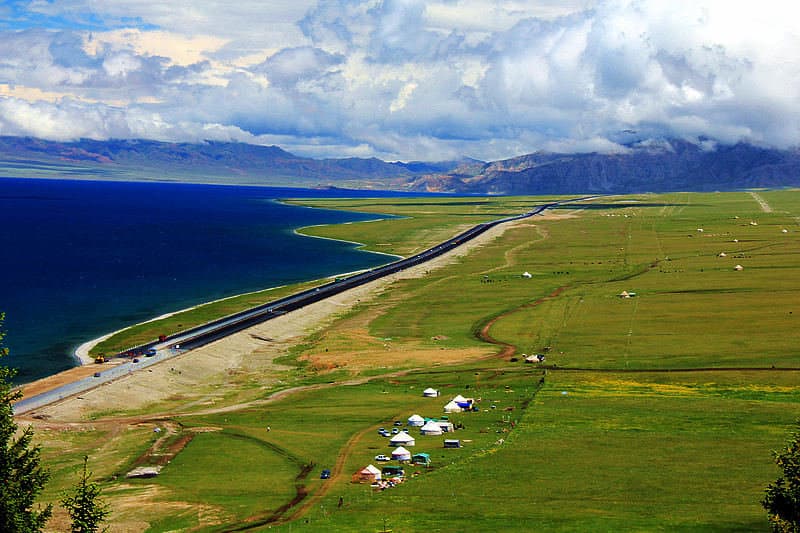
The road around the lake is roughly 90 kilometres, so visiting opposite shores involves substantial travel even before you stop. A complete circuit can be worthwhile, but it is not necessary to appreciate the lake. Two contrasting stops with time to walk often work better than repeatedly getting out for the same photograph.
| Time available | A realistic approach | What to leave out |
About three hours at the lake | Choose one section of shoreline and two stops with a clear return arrangement. | A complete circuit and a lengthy climb. |
A full sightseeing day | Travel around the open lake road, selecting four or five stops and a proper lunch break. | Trying to visit every named viewpoint. |
One night nearby or inside the scenic area | Split the visit into two sessions, with early or late photography only where access supports it. | A long onward drive immediately after a pre-dawn start. |
For older travellers or families, reduce the number of stops before reducing the time at each one. Getting out of the vehicle, reaching the path and returning to the correct parking area all take time.
Yining is a sensible base if Sayram Lake is part of an Ili Valley holiday. As a planning estimate, allow roughly two to three hours each way between central Yining and the eastern visitor-centre area, depending on the route, traffic and hotel location. Lake sightseeing, meals and entrance formalities come on top of that.
The sequence is straightforward: leave your Yining hotel, reach the agreed entrance, complete the lake visit and return to Yining. With a driver, settle whether the same vehicle enters the scenic area or waits outside while you use the shuttle.
The Guozigou corridor lies on the approach between the lake and the Ili Valley. Travelling across Guozigou Bridge and stopping somewhere with a view of the bridge are different arrangements. If you want a photograph, ask for a legal viewing stop with its own access and parking; the expressway bridge is not a place to pull over.
Bole is useful when arriving from the east or building a route that continues towards Ili after the lake. Allow approximately one and a half to two hours from Bole city to the eastern visitor-centre area as a planning estimate, rather than treating an airport or railway arrival as arrival at the lake.
Give your driver the actual station or airport name, arrival time and amount of luggage. A pickup from a railway station may involve a different journey from a hotel pickup in Bole.
If continuing to Yining, agree the lake exit and onward transfer together. A one-way arrangement can avoid returning to Bole simply to collect luggage or change vehicles.
Urumqi is too far away for a relaxed lake excursion and return on the same day. Use the westbound road journey as a transfer day, or compare rail to Bole followed by a booked road connection.
After a long drive, a short lakeside visit and a nearby overnight stay are more comfortable than attempting the full circuit before continuing to Yining. Another option is to sleep in Bole and start the lake visit the next morning.
A day-tour bus or booked transfer can work, but the return arrangement matters as much as the outward journey. Ask for the exact departure point, lake drop-off, included sightseeing transport and final meeting place.
Do not assume an outbound bus ticket includes the lake shuttle or a return seat. If travelling independently, confirm both directions before leaving the city, especially outside the main summer season.
Hiring a driver in Yining does not automatically mean that vehicle can drive around Sayram Lake. Your booking needs to distinguish the transfer to the entrance from permission and charges for entering the lake circuit.
Admission is charged for visiting the scenic area. A sightseeing-bus ticket covers the transport specified by that product. A vehicle-entry service fee applies to an authorised vehicle entering the circuit; it is not a replacement for each passenger’s admission.
The vehicle service charge introduced on 20 August 2026 is based on the vehicle’s registered seating capacity:
| Registered vehicle capacity | Vehicle service charge |
Five seats or fewer | RMB 120 per vehicle |
Six or seven seats | RMB 180 per vehicle |
Eight to nineteen seats | RMB 300 per vehicle |
Twenty seats or more | RMB 600 per vehicle |
Ask for a quotation that separates passenger admission, vehicle access and the driver’s transport charge. If staying overnight, also confirm whether the ticket and vehicle reservation cover the following day and any re-entry. Do not calculate the total from an old “admission plus self-drive” price quoted per person.
The eastern visitor-centre area is the most useful default meeting point for a first visit. However, “East Gate” may refer to different buildings, parking areas or checkpoints in older directions. Use the current entrance location supplied with your booking.
A route entering from the east and leaving towards the south can suit onward travel through Guozigou to Yining, when that exit is operating for your vehicle. Do not assume the southern exit also accepts arriving vehicles, or that the sightseeing bus follows your driver’s proposed route.
Before boarding, obtain the current route map and identify the stops you want. Ask where to wait after each visit, whether you may board again, and which service returns to your meeting point.
A full bus circuit and a shorter out-and-back visit are not interchangeable. If the bus only continues around the lake, getting off at a distant stop commits you to the remaining transport journey even if you spend little time sightseeing.
Confirm the last useful return bus before choosing your final walk. Ticket-office hours, vehicle access and shuttle operating hours are separate; a late-opening checkpoint does not mean a sightseeing bus is still available.
The official booking service is identified as 赛里木湖旅游, or Sayram Lake Tourism. Before paying through a platform, ask how your foreign passport will be recorded and checked, and whether a separate vehicle reservation is required.
Carry the original passport associated with the booking. If a form only accepts a Chinese identity-card number, contact the scenic-area service or your booking agent for a supported arrangement rather than using another person’s details.
Choose stops for different experiences: a close view of the water, a meadow walk and an elevated outlook. The following places are spread around the lake; they are not all within walking distance of one another.
Moon Bay is on the eastern side, making it a useful early stop after entering from the east. The broad sweep of shoreline gives you a first impression of the lake’s scale without requiring a hill climb.
Use the designated parking or shuttle stop, then follow the open path towards the shore. It is a sensible choice for a short visit or for travellers who want to save their energy for later.
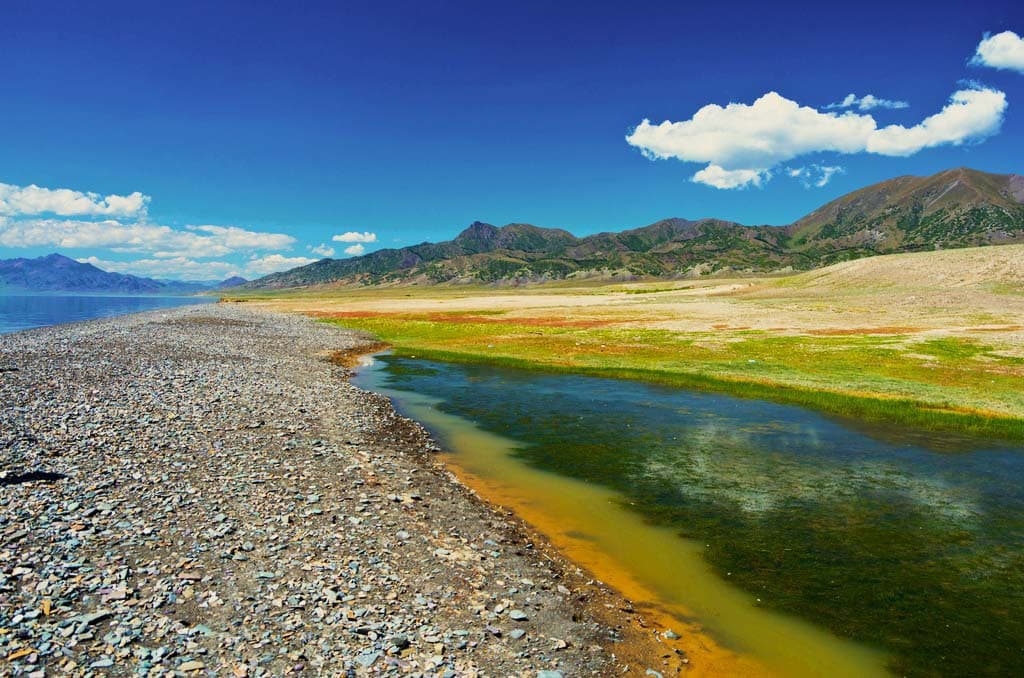
Qinshuitan, on the northern side of the lake circuit, suits visitors who want to linger near the shoreline rather than look down from a height. The stony edge and changing water colour provide a different foreground from the open meadows.
Allow time to walk beyond the first busy photograph point where the marked route permits. Uneven stones can make the final approach less comfortable than the paved parking area suggests; choose a shorter path if balance or mobility is a concern.
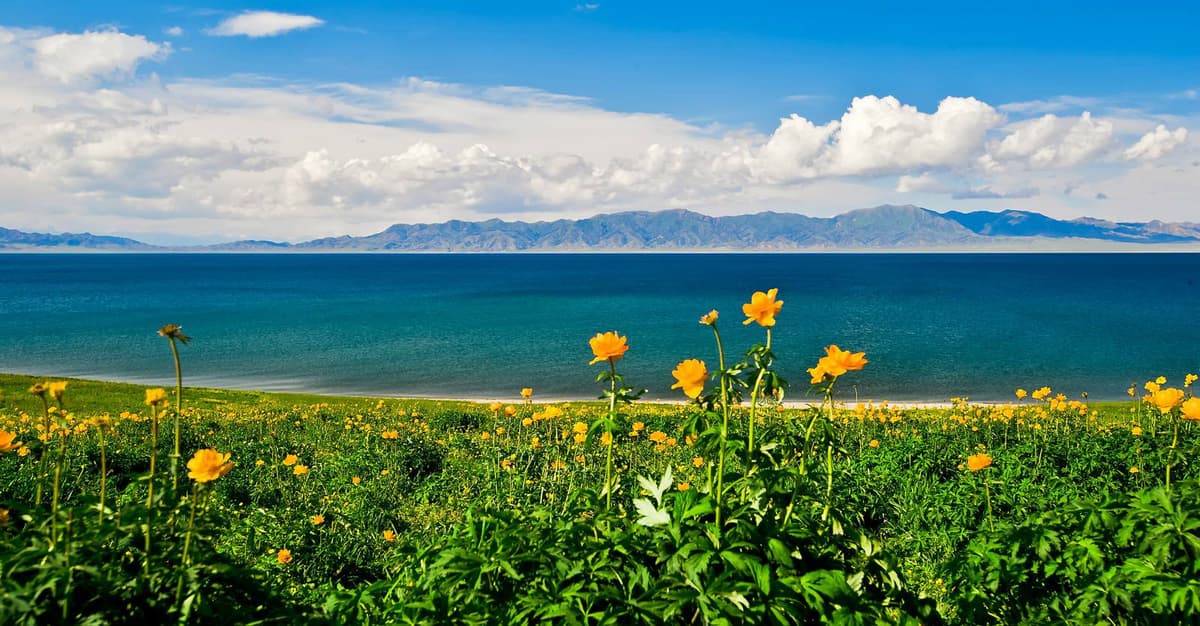
Xihai Grassland, on the western shore, is worth prioritising when you want grassland in the foreground and the lake beyond. During the greener months, this is a stronger contrast to Moon Bay than another brief stop at a similar stretch of stones.
Walk on the established paths rather than crossing a flower-covered meadow for a photograph. Flower density and grass colour vary through the season, so give the stop more time when the conditions suit your interests.
Kele Yongzhu is in the western to southwestern part of the circuit. Its springs and indented shoreline make it a useful stop for slower observation and close views of the water.
Birds may be present, but a sighting should be a bonus rather than the reason to promise this stop to children. Keep away from nesting or resting birds, and do not feed them. If the day is already running late, choose between this stop and another western-shore walk.
Songshutou lies on the southern side and offers a higher perspective through a forested hillside. It is the clearest contrast to the flat shoreline stops, but it requires an uphill walk rather than a photograph immediately beside the vehicle.
Choose it when you have time, suitable footwear and reasonable visibility. The climb can take a substantial part of your visit, depending on how far you go. For a mixed-ability group, agree a lower meeting point and return time instead of expecting everyone to reach the highest viewpoint.
Start and finish at the eastern visitor-centre area, with transport arranged for a return to the same entrance. Visit Moon Bay first, then continue to Qinshuitan for a longer shoreline stop. Return along the permitted road or confirmed transport connection.
This is an out-and-back plan, not a complete circuit. It works with an authorised driver who can provide that movement; shuttle users should choose it only if the operating route supports the return. Otherwise, ask for a shorter section that does.
Eat before entering or bring a simple lunch, and use the remaining time to sit or walk beside the lake. Leave out Songshutou and the western shore. For a visitor starting in Yining, this is still a full-day outing once both road journeys are included.
Start at the eastern entrance after an early departure from Bole or Yining, or after a night nearby. Follow the permitted circuit towards Moon Bay and Qinshuitan, continue around the northern and western shores to Xihai Grassland, then consider Kele Yongzhu and Songshutou before the agreed exit.
Keep the first two stops relatively short if the meadow walk is your priority. Take lunch at an operating food outlet along your confirmed route, or use a packed lunch at a permitted stopping place. Do not postpone eating until you reach a particular restaurant that has not been confirmed open.
For an onward journey to Yining, an authorised southern exit can fit naturally. If you must return to the eastern entrance to meet transport, include that final road section in the day. The sightseeing-bus version must follow its actual stopping order and return service.
If queues or weather reduce your time, omit the Songshutou climb first. If walking uphill is the main reason for your visit, do the opposite: protect time for Songshutou and reduce the number of shoreline stops.
On the arrival day, visit the eastern and northern shore at an easy pace, then check into your accommodation. Choose an evening viewing location that you can legally reach and leave using the transport already arranged.
The following morning, make one purposeful outing rather than repeating every stop. Continue around the western and southern shores if heading to Yining, or keep the morning shorter if returning towards Bole.
An overnight stay is most valuable when it removes a difficult early or late transfer. Confirm the hotel’s position, access rules and next-day ticket arrangement before paying extra for a room described as “near the lake”.
June and early July are useful starting points for a trip focused on meadow colour, with the exact flowering sequence depending on the year and location. Snow may remain on higher mountains while the lower grassland is already green.
Give Xihai Grassland more time if flowers are your priority, and keep room to stop where the display is strongest on the day. Do not build the entire trip around a fixed date for one flower species.
July and August suit a fuller lake visit, with more daylight for several stops. The lake’s elevation—about 2,070 metres—means the shore can still feel cool and windy even when Yining is hot.
Carry a warm layer and a windproof jacket on the walk, not just in a suitcase. A sunny arrival is not a reason to leave them with a driver who may be meeting you elsewhere.
As the grass changes colour, the attraction shifts from flowers towards the contrast between pale meadows, blue water and the surrounding mountains. September can work well for this, but cold spells and snow become increasingly relevant later in the season.
For photography, protect time for favourable light rather than adding more stops. Gloves and an insulating layer make a stationary wait much more comfortable than a light summer outfit.
Winter visits are about the frozen landscape and exposed lakeshore, not completing the summer itinerary unchanged. Blue ice, clear ice and trapped bubbles depend on freezing conditions and snow cover; arriving in a particular month does not guarantee them.
Choose a small number of open stops, with a warm vehicle or operating indoor place between outings. Wear insulated footwear with grip, a warm outer layer, gloves and protection for your ears and face. Finish according to the road and return arrangements, rather than waiting for sunset at any cost.
View the ice from open visitor areas. Do not step onto an unapproved section of frozen lake, even if other people have done so. During freezing and thawing periods, a beautiful surface is not evidence that it is safe to walk on.
Stay close to the lake when early or late light is central to your trip. Stay in Bole or Yining when the lake is primarily a daytime stop and city accommodation better suits the rest of your route.
| Location | Best reason to choose it | Question to settle before booking |
Inside the scenic area | Less repeated travel through an entrance | Can you actually reach the desired shore at the required time? |
Near the eastern visitor centre | A convenient start the next morning | Is the property outside the ticketed area, and how do you reach the checkpoint? |
Bole | A city base for the eastern approach | How early will your return transfer leave? |
Yining | Meals, city sightseeing and onward Ili travel | Are you comfortable with both lake-transfer journeys that day? |
A lake-view room may face the water from a distance or across a road. Ask for the property’s map pin, the walking route to the shore and whether fences or controlled access intervene.
For sunrise, confirm the entrance and transport arrangement before choosing a hotel. Staying just outside the gate does not grant entry before the operating checkpoint opens. Similarly, a room inside the scenic area does not guarantee a vehicle pickup before dawn.
You do not need an expensive lakeside room for a satisfying visit. A hotel near the eastern visitor centre, followed by a full daytime circuit, is a reasonable alternative if your priority is walking and scenery rather than a particular early photograph.
Arrange the substantial meal around your route: breakfast before departure, lunch during the lake visit and dinner where you are staying. Carry water and a simple snack so a closed outlet does not force you to rush the next stop.
If arriving late at a lakeside property, ask when its kitchen closes and whether it can accommodate your dietary needs. Do not assume every small restaurant can prepare a vegetarian meal without meat stock or understands an allergy from a single English word.
In strong wind, shorten exposed shoreline walks and drop the hill climb. Keep a jacket accessible and choose a viewing stop with an easy return to the vehicle. A warm car helps only if it is waiting at the place where your walk ends.
For toilets, use the visitor-centre facilities and signed stops around the circuit before setting out on a longer path. The scenery is continuous; toilets and food services are not.
For photographs, stay in the designated visitor areas rather than stopping on the road or climbing onto a vehicle. Keep a child’s spare layer, any essential medication and your passport in a small bag that stays with you during shuttle journeys.
Yes. A focused visit to Moon Bay and a second accessible shoreline stop can be worthwhile. Confirm a return connection rather than assuming you can reverse the sightseeing bus route.
Only if the vehicle is authorised and reserved to enter the scenic circuit. A transfer booking to the visitor centre alone does not provide that access.
Yes, if you shorten the route and have a confirmed exit or overnight arrangement. Choose one lake walk rather than starting a circuit that leaves little daylight for the return.
Start with a short shoreline visit near a designated stop. Ask about the actual path surface and drop-off distance; Songshutou’s uphill route is optional.
Not necessarily. Confirm the ticket’s validity, number of entries and vehicle-reservation conditions separately, particularly when sleeping outside the scenic area.
Yes, it can fit a journey towards or from Yining. Viewing it from the vehicle and visiting a legal viewpoint are different plans, so agree any additional stop with the driver.
Plan for shoreline sightseeing rather than swimming. Stay within the permitted visitor areas and do not interpret an accessible bank as permission to enter the water.
Settle them together if you want sunrise, sunset or a winter stay. The best room for your trip depends on how you can reach it and where you need to go the next day.
Combine Sayram Lake with a longer journey through the Ili Valley. Compare the time allocated to the lake, onward drives and grassland visits, and choose an itinerary that leaves room for walks rather than a succession of brief photo stops.
The eight-day Ili summer itinerary includes a Sayram Lake excursion from Yining alongside grassland destinations. It suits travellers who want the lake within a wider summer journey rather than as a separate overnight photography trip.