
20 years of pioneer in xinjiang tourism for overseas travelers
Born Here, Know Best, Your Journey's Blessed
No Shopping. No Detour, 99% Excellent Review

contact UsOn Wechat
Many people heard of Xinjiang Turpan as an important stop on Silk Road for its fantastic ruins and Buddhism history, but here i will talk about the importance of grapes on its identity.
Known Turpan in its Uyghur name, the Chinese call it Tufan or Tulufan. Located in the far west region of China, the Xinjiang Uyghur Autonomous Province, Turpan sits on the famous Silk Road. As such, the city provides excellent access to several millennia-old ruins, with its history spanning over 6,000 years.
The origin of the name Turpan is unclear, but two possible meanings are ‘the lowest place' in Uyghur, but also ‘the fertile land' in Turki (Uyghur originated from a Turki language). Though the name and current location of Turpan originated from the Ming Dynasty around the 16th century, the importance of the area goes back to ancient time. Indeed, the ancient towns of Yarkhoto (or Jiaohe) date from 108 BC, and Gaochang from 328AD, when each in their epoch ruled and expanded their trade along the Silk Road.
Grape Valley
Thanks to its hot and dry conditions, as well an impressive irrigation system via the Karez Wells which brings melting snow water from Tianshan Mountains, Turpan is famous for its grapes. It is even considered as the center of grape production in China, and the whole town is a living vineyard.
One of the better-known areas is Grape Valley located in the Flaming Mountains. It is considered the farm basket of the region, producing an impressive variety of fruits and vegetables. But vineyards is really what the region is about, as one can tell from its name.
Note that Grape Valley is a rather commercial endeavor. The 8-km long valley features hotels, restaurants, a theme park, shops and is overall described as a touristy place. Located on one of the sides of the Flaming Mountains, the area is surprisingly refreshing in comparison to the scorching heat of the mountains.
Turpan Vineyards
For those looking for a more authentic feel, simply wander with the vineyards around xinjiang Turpan, and appreciate the natural beauty without the crowd.
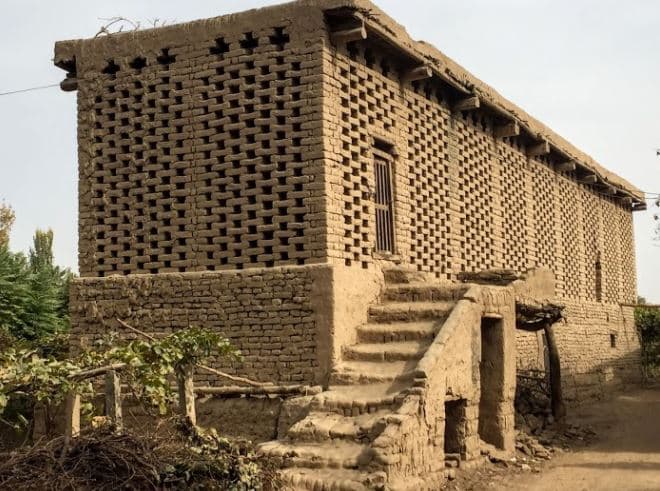
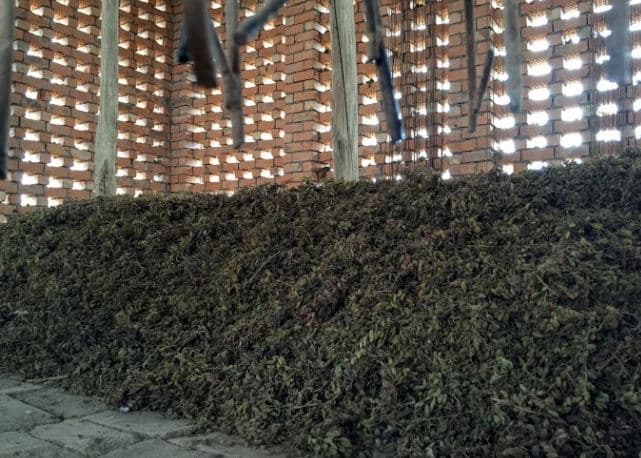
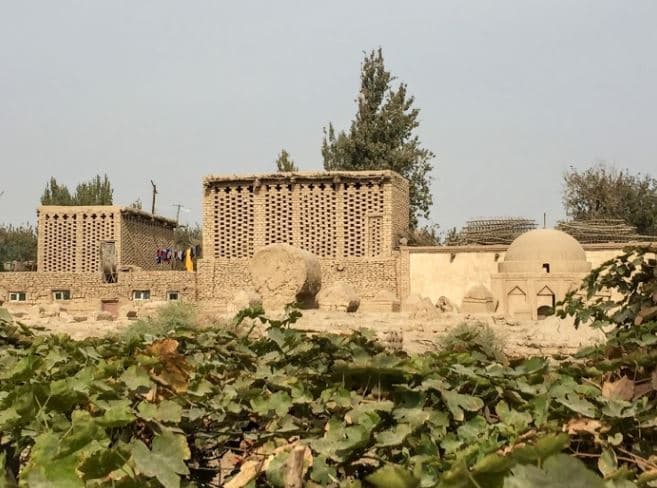
Beside this clutter of chunces, it was very common to see an individual chunce above a house. Chunces were also very prominent in the old town, a testament to the importance of raisins in the Turpan culture.
The depth of the grapes' culture is present in every corner as almost all houses in the old town have vineyards.
Any little garden or backyard has its grapes, which makes also walking around the older part of the city a pleasant stroll. Even when walking by the mud houses down the narrow streets in downtown xinjiang Turpan, we could see the green plants rising from the ground and covering doors, walls, and other construction.
Vines falling over the main entrance
As an example of local traditions, our hostel had a large vine-covered patio, which provided a welcome shade from the hot sun. It also produced with grapes ready for the picking. We passed many courtyards with similar traditional covers.
Raisins & Wine Tasting
Over ten different grapes specialties are sold through the different vineyards, though the most famous ones are the seedless white grape, the Manaizi (mare nipple grape) and the Wuhebai (white seedless grape) in Chinese. Today, the grapes production from around xinjiang Turpan represent 80% of China's total output.
Many stores sold the different varieties, from the park sites entries offering local raisins to the tourists, to main markets displaying piles after piles of dry raisins. We found the best raisins in one of the local supermarket, which was offering five different kinds. We tasted them all and decided to purchase three different types. Each had a different shape and color, from a short-shaped light green raisin to a longer thick brown one.
I have to say that since we tasted the raisins of Turpan, it spoiled our taste buds and we haven't been able to find as delicious and flavorful raisins. Maybe we need to go back and set up a direct distribution line to satisfy our raisin cravings.
 5 Days Urumqi And Turpan Tour
Many people heard of Xinjiang Turpan as an important stop on Silk Road for its fantastic ruins and Buddhism history, but here i will talk about the importance of grapes on its identity.
Known Turpan in its Uyghur name, the Chinese call it Tufan or Tulufan. Located in the far west region of China, the Xinjiang Uyghur Autonomous Province, Turpan sits on the famous Silk Road. As such, the city provides excellent access to several millennia-old ruins, with its history spanning over 6,000 years.
The origin of the name Turpan is unclear, but two possible meanings are ‘the lowest place' in Uyghur, but also ‘the fertile land' in Turki (Uyghur originated from a Turki language). Though the name and current location of Turpan originated from the Ming Dynasty around the 16th century, the importance of the area goes back to ancient time. Indeed, the ancient towns of Yarkhoto (or Jiaohe) date from 108 BC, and Gaochang from 328AD, when each in their epoch ruled and expanded their trade along the Silk Road.
Grape Valley
Thanks to its hot and dry conditions, as well an impressive irrigation system via the Karez Wells which brings melting snow water from Tianshan Mountains, Turpan is famous for its grapes. It is even considered as the center of grape production in China, and the whole town is a living vineyard.
One of the better-known areas is Grape Valley located in the Flaming Mountains. It is considered the farm basket of the region, producing an impressive variety of fruits and vegetables. But vineyards is really what the region is about, as one can tell from its name.
Note that Grape Valley is a rather commercial endeavor. The 8-km long valley features hotels, restaurants, a theme park, shops and is overall described as a touristy place. Located on one of the sides of the Flaming Mountains, the area is surprisingly refreshing in comparison to the scorching heat of the mountains.
Turpan Vineyards
For those looking for a more authentic feel, simply wander with the vineyards around xinjiang Turpan, and appreciate the natural beauty without the crowd.
Beside this clutter of chunces, it was very common to see an individual chunce above a house. Chunces were also very prominent in the old town, a testament to the importance of raisins in the Turpan culture.
The depth of the grapes' culture is present in every corner as almost all houses in the old town have vineyards.
Any little garden or backyard has its grapes, which makes also walking around the older part of the city a pleasant stroll. Even when walking by the mud houses down the narrow streets in downtown xinjiang Turpan, we could see the green plants rising from the ground and covering doors, walls, and other construction.
Vines falling over the main entrance
As an example of local traditions, our hostel had a large vine-covered patio, which provided a welcome shade from the hot sun. It also produced with grapes ready for the picking. We passed many courtyards with similar traditional covers.
Raisins & Wine Tasting
Over ten different grapes specialties are sold through the different vineyards, though the most famous ones are the seedless white grape, the Manaizi (mare nipple grape) and the Wuhebai (white seedless grape) in Chinese. Today, the grapes production from around xinjiang Turpan represent 80% of China's total output.
Many stores sold the different varieties, from the park sites entries offering local raisins to the tourists, to main markets displaying piles after piles of dry raisins. We found the best raisins in one of the local supermarket, which was offering five different kinds. We tasted them all and decided to purchase three different types. Each had a different shape and color, from a short-shaped light green raisin to a longer thick brown one.
I have to say that since we tasted the raisins of Turpan, it spoiled our taste buds and we haven't been able to find as delicious and flavorful raisins. Maybe we need to go back and set up a direct distribution line to satisfy our raisin cravings.
5 Days Urumqi And Turpan Tour

